Posted by Managementguru in Business Management, Human Resource, Organisational behaviour, Principles of Management, Project Management, Training & Development
on Mar 19th, 2014 | 0 comments
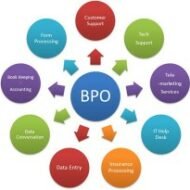
Call Centre Challenges The emergence of numerous “call centers” in developing countries like India and China, has posed some serious threats to the employees of these concerns. The concept of call center is a new find of the modern era, where they handle volumes of business process outsourcing for the developed countries. What are the various operations carried on in a call center? They handle inbound and outbound customer care services, telemarketing services, e-mail management services, pay roll accounting, help desk and many more back end activities. Benefits of Outsourcing: It proves to be a win-win situation for both the parties; the outsourcing company benefits from cheap labor, and the company that does the job earns good pay in the form of foreign exchange. But one has to understand the nuances of the call center operations; how it can be really worked out to one’s benefit? If you have a direct link with the outsourcing company, there is no need for you to share the profit. If the job is sublet to you, then your share gets reduced down the line. And also, the pay comes in a cycle of 45 days or so. So, it becomes mandatory that you should have the wherewithal to rotate your own funds for that 45 day period time, to fulfill establishment costs, power costs, salary and other miscellaneous expenses. What is the Pressure Situation? Let’s not get into the details of how to establish a call center and the necessary infrastructure to start one. The business has created a pressure situation, as it calls for erratic work hours and disturbed eating and sleep patterns. Definitely, it affects the youth, who form the major population of call centers, psychologically and socially as well. The erratic work schedules, (they work round the clock in shifts) the intense work pressure to achieve targets eventually leads to a pressure cooker like stress situation. Their altered sleep cycle is dangerous to both their physical and mental health. It is an evident fact that more number of persons working in this industry has started complaining about their physical and mental problems like Anxiety Depression Relationship-related problems Headaches Disturbed appetite Hearing loss Changes in thyroid and adrenaline levels Loss of weight Obesity and Smoking to reduce immense tension is also witnessed. The call center business has been a flourishing business in developing nations, though recently we tend to see a lull in the market, owing to the government regulations of the developed nations. Even the economy of developed countries, has taken a huge plunge owing to the recent economic recession. Naturally, when their financial markets have become unstable, they would not want to outsource to low-cost developing countries. The BPO’s or KPO’s (business process outsourcing and knowledge process outsourcing), as they are called should not become a fad, instead, developing nations can also concentrate on indigenous business clients, that are in need of their services. Note: India is the leading country for offshore outsourcing. The offshore outsourcing industry started in India and it has been able to grow the IT and BPO export sector to $47 billion and capture more than half the offshore outsourcing...

Posted by Managementguru in Decision Making, Human Resource, Organisational behaviour, Principles of Management, Training & Development
on Mar 19th, 2014 | 0 comments

Grading employees’ performance helps identify strengths and areas for improvement, fostering growth and productivity. It ensures fair evaluations and supports career development within the organization. Organizational Development Organizational Development denotes an overall and comprehensive development of an organization supported by the entire team of employees working for that organization. A useful technique in the management process that serves as a measure of performance and productivity is “performance evaluation” or performance appraisal. Performance refers to the degree of accomplishment of the task that makes up an individual’s job. Performance appraisal serves the following purpose To assess the present levels of employee performance. To understand the future needs in training and development based on the strengths and weaknesses of the employees. To provide feedback on their performance. Serves as a basis for reward allocation, such as, increase in pay scale, promotions and many other decisions like, confirmations, transfer, demotion etc., Establishes performance standards and offers scope for improvement. Acts as a motivational tool for workers to perform better. Checks and facilitates employees who exhibit poor performance. Also assesses behavioral pattern of the employees. People who work for big corporate companies identify themselves with the objectives of the company and expect feedback, either in the form of a compliment or criticism. Compliments act as morale boosters to perform better and criticism though initially might puncture the ego, induces the potential to perform, to prove oneself. Managers should never be reluctant on their part to appraise subordinates on the job expectations and demands. In an activity as important as managing, there must be no pitfalls to measure performance as accurately as possible. The Appraisal Process The next important aspect in the appraisal process would be deciding the content to be appraised. Individual task outcomes where performance is evaluated on the outcomes delivered by the individuals, evaluation of personal characteristics and traits or behavior are done to rate the employees as to where they stand in terms of performance. Appraisal Techniques The widely used managerial technique in the appraisal process is evaluating performance against verifiable objectives, which truly makes sense, because the employees would be blind folded if they don’t have the right direction to proceed. Evaluation can be done in a comprehensive, periodic or continuous fashion. It all depends on the nature of work done, company practice and other situational factors. Say, for instance, performance review can be done after the completion of a major project, that makes sense, doesn’t it? Periodical reviews Formal reviews can be supplemented and supported with frequent and short informal reviews, for the superior- subordinate relationship to prosper and to keep communication channels open. All said and done, performance review based on verifiable objectives, although gives better vision and clarity, doesn’t allow the manager or subordinate to grow individually. It does not help in personality development; the emphasis ever being focused on accomplishing the operating objectives. The 360 Degree Appraisal The latest approach of performance evaluation is the 360 degree appraisal that well suits the managerial cadre. It provides for performance feedback from the full circle of daily contact, that a manager might have, ranging from customers, peers, subordinates, boss etc. , This also fits into organizations that have introduced teams, employee participation and total quality management...
Posted by Managementguru in Business Management, Human Resource, Organisational behaviour, Principles of Management, Training & Development
on Mar 19th, 2014 | 0 comments
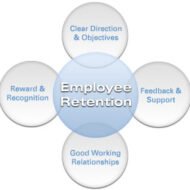
New Paradigms in Employee Retention What is Employee Retention: It refers to the various policies and practices which let the employees stick to an organization for a longer period of time . It refers to the ability of an organization to retain its employees. HRM Practices: A company to ground itself successfully in the chosen field of activity should adhere to sound human resource management practices, as it is firmly believed that human resource is an asset and investment in human capital paves way for comprehensive development. Many firms fail, in spite of being resourceful in terms of capital, infrastructure and technology. The reason shall be attributed to ineffective handling of human skills or misappropriation of human potential. Human resource management involves not only in recruiting and selecting the right people but also empowering them by suitable training to enhance their technical skills and expertise to perform tasks. The Purpose of Training: Training ultimately aims at converting theorists to performers and orients itself towards accomplishing the enterprise objectives. Big corporate companies concentrate on talent acquisition from the pool of fresh graduates and experienced hands in the IT industry as well. They create a lively corporate atmosphere with “an intelligence network” contributing to the success of the organization. Recruitment and Selection: If you have a feeling that, recruitment and selection are mere procedures to be followed for the sake of selection of human resource, kindly change that notion. These are the crucial steps which determine the fate of your organization. People from different disciplines form a team to achieve the goals and objectives of your organization. Leading a group with such diversity is a feat in itself. Selecting knowledge workers whom you believe will achieve your corporate mission and devising the human resource practices in accordance with their work-life balance will yield great results. Training Programmes: Training programs are developed for different spheres of activity by experienced trainers under the guidance of the top management. Proper training to the trainees ensures maximum work done in minimum time. Training not only makes individuals more informative and knowledgeable but also action buffs. Learning is a key process in training that brings about the desired change in behavior. Corporate companies are also concerned about the career prospects of employees working for them, as they are very well aware of the fact that providing lateral and vertical growth prospects for their workers is the only possible way to retain them. Another way for employee retention is to offer compensation on par or higher than industry standards and periodic review of their pay or compensation in accordance with the performance standards. This method of evaluation is suitable only for companies where workers are highly self motivated and have the capability to understand what it takes to reach the next level in their career ladder. Flexi-Timings: Flexibility is introduced in work life by some of the big corporates who try to visualize the practical problems faced by their employees, particularly women, who come to work. They offer “flexi-timings” in work and support by running “crèche” to nurture new borns. It has been proved that a small siesta after lunch improves the brain activity. The HR policies formulated by the management must encompass all the elements needed for a holistic vision, mission and business growth. This can be made possible by maximizing the efficiency of human capital that adds value to the organization. Note: Companies will also continue to remain generous with pay packages but the big change will be that they will invest a lot more in training and development. “Acquiring talent is much more expensive than grooming...
Posted by Managementguru in Human Resource, Organisational behaviour, Principles of Management, Training & Development
on Mar 19th, 2014 | 0 comments
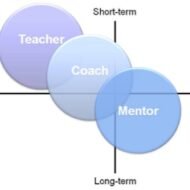
Coaching and Mentoring are the two strategic pillars of a business organisation without which the employees would be mere robots working without job satisfaction. The Definition. A coach is someone who provides guidance to a client on their goals and helps them reach their full potential. A mentor is someone who shares their knowledge, skills and/or experience, to help another to develop and grow. Objectives of Coaching The main purpose of coaching is to develop the employee as an effective perfomer. It involves the following: 1) Helping him to realise his potential as a manager. 2) Helping him to understand himself – his strengths and his weaknesses. 3) Providing him an opportunity to acquire more insight into his behaviour, and analyse the dynamics of such behaviour. 4) Helping him to have better understanding of the environment. 5) Increasing his personal and inter-personal effectiveness through effective feedback. 6) Encouraging him to set goals for further improvement. 7) Encouraging him to generate alternatives for dealing with his problems and prepare an action plan. 8) Helping him to review in a non-threatening way his progress in achieving various objectives. 9) Providing empathetic atmosphere for sharing and discussing his tensions, conflicts, concerns and problems. Download this Coaching Goals planner that will help you in measuring the outcome effctively. 👇 Coaching-Goals-PlannerDownload Objectives of Mentoring The main purpose of mentoring is to provide opportunity to young people to share their concerns and get both moral support and guidance for their development. It involves the following : 1) Establishing a relationship of trust 2) Modeling beahviorual norms for the young person 3) Listening to the person’s concerns and problems 4) Helping him to search alternative solutions for the problems 5) Sharing own relevant experiences 6) Responding to his emotional needs, without making him depend on the mentor 7) Developing long-lasting, personal, and informal relationship. Who is your most trusted advisor when it comes to important issues affecting your business? A small stats in percentage. Fellow business owner – 31Business coach – 24Family member – 18Accountant – 8Employee – 6Consultant – 4Friend – 3Lawyer – 2Other – 4 In which areas would a business coach have the most impact for your business? Strategic planning – 31PR / Marketing / Social media – 14Leadership – 11Succession planning – 9Managing change – 8Profitability – 8Productivity – 7Employee relations – 5Other – 7 Five Tips for Coaching Employees Define your role as a coach Create a safe environmentHelp them define and verbalize their answers, directions and actions. 2. Listen to what is said Be curious, Seek to understand“Tell me more….” “What’s happening….” 3. Observe what is heard and seen Focus on just the factsShare what you observe providing a judgement-less summary.“Here is what I heard you say….”“So it sounds like you are or want to….” 4. Validate what is felt -share the emotion and acknowledge it 5. Empower what is possible – Forward the thinking, explore, options showing faith and optimism. If you are like most of us, you are constantly striving for more engaged employees. Engagement not only leads to higher job satisfaction and lower turnover but also increases productivity and revenue. But how do we boost engagement among our teams? The answer is through coaching. 80% of those who have received coaching report positive impact in areas such as work performance, communication skills, well-being and business management strategies. Download this Achieving Goals Planner to form an idea about effective habits. 👇 Achieving-Goals-PlannerDownload 65% of employees in a strong coaching culture are highly engaged. Organisations with strong coaching cultures report revenues above those of their industry peer group and report higher employee engagement. While more and more organisations are using coaches as a key strategy...
Posted by Managementguru in Human Resource, Organisational behaviour, Principles of Management
on Mar 19th, 2014 | 0 comments
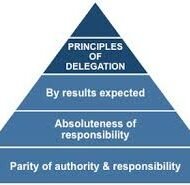
You Can Delegate Authority, but Not Responsibility Responsibility of a Manager: A corporate manager is accorded with the huge responsibility of leading his subordinates in the right direction, by giving proper insights on the tasks to be accomplished. The success rate depends on how well he delegates his authority down the line to get things done. The art of delegation results not only in down sizing his work pressure but also in the empowerment of subordinates, that elevates them to a higher plane of understanding and achievement. An Excerpt from The Art of Delegation: Developing This Essential Managerial Skill Delegation helps you handover the authority of certain tasks to capable team members so that you free up your time to work on more pressing issues. But you still remain responsible to get those completed in proper way. Hence it is essential to have a status check or communication with the team member on regular basis. Accountability of Subordinates: The subordinates, when entrusted with the responsibilities of performing a task by themselves and the necessary authority to make decisions within the area of their assigned duties, are obliged to perform. The necessary assistance and training for the new assignment has to be planned for, by the manager to make them perform as per the expected standards. The thing is right people should be chosen for the entrusted job. They should possess the zeal and enthusiasm to deliver the desired output. Some people perform beyond expectations and they should be rewarded with additional responsibilities. Whatever the case may be, it is a wise thing to delegate simple assignments at the initial stage, and proceed with more challenging jobs depending upon the caliber of the incumbent. THE ENTREPRENEUR’S GUIDE TO DELEGATION Clear and Clever Delegation: Clear and clever delegation facilitates to build a formal organization structure, where the subordinates are trained well and they look up to the manager for direction and guidance. Although the authority is delegated, the manager is held accountable and answerable to the management for the performance output or the end result. Some managers hesitate to delegate, just for the reason that their weaknesses might get exposed. Some don’t have confidence in their subordinates. Some even fear that they might lose their power if the subordinate is very shrewd and exceeds the expectations. Managers fail because of poor delegation; the reasons being personal attitude of managers in delegating authority. Let us understand some of the basic principles to be adhered to while delegating: The authority delegated to subordinates should be adequate enough to ensure their ability to accomplish the expected results. Authority can be delegated but responsibility can never be delegated. Responsibility of subordinates is “performance” and that of managers is “responsibility for the action of their subordinates”. One cannot be held responsible for a task if he has only limited authority. There need to be a balance between authority and responsibility. The presence of a single superior will invoke greater feeling of personal responsibility among the subordinates. Lack of receptiveness on the superior’s part will incur greater loss in terms of performance and efficiency. Instead, a manager should develop a trustful attitude towards his subordinates and should have the patience to explain the policies, objectives and guidelines and give sufficient authority to perform a duty. HOW WELL EMPLOYEES KNOW ABOUT YOUR ORGANIZATION? Although initially the efforts taken to train a subordinate is time consuming, the more empowered he becomes, less is your time taken to accomplish the enterprise objectives. The superior must be able to create a climate of mutual trust and goodwill, to make delegations effective in the light of expected...