Posted by Managementguru in Business Ethics, Business Management, Entrepreneurship, Organisational behaviour, Principles of Management
on Mar 15th, 2014 | 0 comments
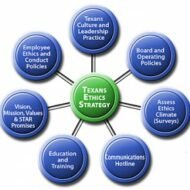
The Origin of Unethical Behavior Ethical considerations in business are important to managers as it is to individuals in their personal lives. Personal life and business life cannot be perfectly separated with respect to moral judgements. A number of factors have been established as significant in making ethical standards a primary concern of business managers. What are Values? For the individual, the job is the centre of life, and its value must be, in harmony with the rest of life, if he is to be a whole and healthy personality. In an industrial society. The values tend to become those of the entire corporate culture. The public is insisting that business leaders are, in fact, responsible for the general social welfare and that the manager’s responsibilities go far beyond those of running the business. Even if the manager insists on a narrow definition of his role as possible, it is, however, essential that he takes these intangibles into consideration since they are the real motivating force in an organization. Expectations of the Society: If an organization did not behave in accordance with the social systems and expectations, it may not merely lose its market share but face another piece of legislated control and might also lose its very right to exist. Many a times managers may be forced to compromise their personal ethics and moral values in order to achieve organizational goals. Everyday ethical decisions are usually made between the lesser of the two evils rather than obvious right and wrong. Often it may be difficult for the manager to free himself from taking a biased attitude and look at issues objectively. In spite of good intentions, he becomes involved in the situation and it becomes difficult to retreat and take a detached point of view in examining the issue from an ethical standpoint. In the light of these problems, certain examples can be cited to answer the question as to what constitutes unethical behavior. Padding expense accounts to obtain reimbursement for questionable business expense. Revealing confidential information of trade secrets. Giving or accepting gifts or favors. Using company property and/or materials for personal use. Leaving the job without abiding by the sales contract. Being severely critical of competitors. Attempting to corner opportunities by bribing public officials. Price discrimination, unfair trade practices, unfair pricing etc. , Dishonesty in fulfilling contracts. Politics inside the organization. Unless and until the professional manager puts the interest of the organization in front of his own, places the duty to the society above his duty to the organization wholeheartedly, there is no point in talking about ethics in theory. Though a number of firms spend their time, money and energy in formulating statements, in reality their enthusiasm is lost in practice. The gap between the espoused and practiced values creates a dissonance in the minds of the people, and as a result in the...

Posted by Managementguru in Business Ethics, Business Management, CSR, Entrepreneurship, Principles of Management
on Mar 15th, 2014 | 0 comments
![Code of Ethics]()
Institutionalize Your Code of Ethics Business Ethics is a term we often come across in the world of corporate business. Ethics generally distinguishes between the right and the wrong. But you might argue, what is right for one person may not be for the other. “True! But there are certain principles that are widely accepted by everyone that guides the behavior of individuals or a business enterprise. Shall we say that Business Ethics is an UNWRITTEN CODE OF CONDUCT which governs the conduct of a business enterprise and also helps it in reaching the right decision? CSR CORPORATE SOCIAL RESPONSIBILITY comes into the big picture when you talk about business or professional ethics. When a person gears up himself to start a business, he studies the market as to how supportive it would be to carry on his business. He segments the market, evaluates the demography, approaches financial institutions like banks for loans, creates a big cacophony about the government’s red tapism to acquire licenses to do his business and when all these criteria accords a green signal he ventures into the market with a confidence that is backed up by all the above factors. Say by the end of the first year, he has done great business and the time has come for income tax or sales tax payments, a small voice cuckoos from within, asking him to think twice or to venture the possibilities of EVADING TAX. Once he tastes the essence of success and the POWER OF MONEY he deviates from the RIGHT CONDUCT and BEHAVIOR. He conveniently abstains himself from performing his duties towards customers, employees, government, share holders, stake holders and others. Mind you, being ethical is a statutory phenomenon and not a thing to be taken for granted. If your motivation and effort is oriented only TOWARDS PROFIT, thriving longer in the market will become a matter of concern. Every action has an equal and opposite reaction: “Whatever is that you take, you have to repay.”This is applicable both in personal life as well in business. Yogis’ have ascertained the fact time and again that you have to dissolve your karma or past actions to be a liberated soul. Neo world scientists also second this thought,” every action has an equal and opposite reaction. “Being ethical is not that demanding or tough as you have conceived it to be. In simpler terms, it even teaches you to be highly compassionate towards your fellowmen. Various aspects affecting ethical behavior in a business organization would be: Policies regarding moral duty and obligation Accounting ethics Corporate culture Ethics in management development programmes Dealing with “gray areas” Disciplinary procedures Review and updating the ethical code Increased concern about the well informed public Government regulations Value based management practices Enlightening the managers of top cadre Rewards and recognitions for people with right conduct and the list goes on and on. Corruptions, Bribery, Black marketing are some of the JARGONS that are strictly prohibited words and actions in the dictionary of ethics. Sound ethical practices not only create an IMAGE for your company, but also the recognition among your own employees that you could relish. Being ethical is not that difficult, only that it calls for undeterred determination and inbuilt...
Posted by Managementguru in Business Management, Entrepreneurship, Human Resource, Leadership, Principles of Management
on Mar 13th, 2014 | 0 comments
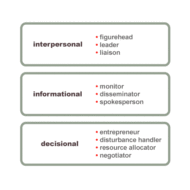
Research on Managerial Roles by Henry Mintzberg and Peter Drucker Henry Mintzberg, the canadian academic observed a few managers and analysed their behaviors and arrived at some conclusions which are listed in the table below. He also identified and attributed ten managerial roles of significance in correlation with the managerial functions. S.NoManagement Functions% of time spent1.Relating to external environment1.82.Planning and setting Objectives19.53.Decision-making6.04.Organising15.05.Leadership and inter-personal role28.46.Communication12.67.Control12.78.Staffing4.1 This table very clearly explains the role of a manager as a leader and the extent of influence he exerts on his sub-ordinates. Proper planning and goal-setting are the key contributors for the successful functioning of a firm. LEADER VS. MANAGER Coming to the managerial roles they can be classified as, 1. Interpersonal roles 2. Informational roles 3. Decisional roles Inter-Personal Roles: Figurehead role– The function is more of a ceremonial nature, like attending the family functions of employees, greeting visitors and a manager performs the symbolic duties of a head of the organization.Leader– He has to plan the HR requirements and motivates the staff to perform well. “Managers are people who do things right; leaders are people who do the right thing.” Remember a manager has to be a leader whereas it is not so in the case of a leader.Liaison– The manager acts as a link between the organization and the external environment to build image and rapport. Informational Roles: Monitor– The manager has to update himself with the current scenario in order to utilize the information for organizing and prompt decision-making.Disseminator– The manager has to communicate and distribute information to his subordinates to effectively accomplish the enterprise objectives.Spokesperson– Efficiently has to communicate the company’s policies to prospective clients and others. Decisional Roles: Entrepreneur– He has to be innovative by adapting to the changes in the environment. He has to be adventurous, persistent and strategic during tough times.Disturbance handler– He has to find appropriate solutions to problemsResource allocator– He has to apportion and allocate resources properly besides delegating authority to the work forceNegotiator– He has to negotiate resources outside and conflicts inside the organization. MANAGERIAL DIMENSIONS Managing: Science or Art? One perspective is Managing, like all other disciplines- whether medicine, music composing or even cricket is an art. It is “know-how.” Still managers can use the organized knowledge about management to perform better. So let us put it this way, Managing as practice is an art; the organized knowledge underlying the practice may be referred to as a science. Let them be complementary to each other and be present in peaceful co-existence. Drucker “ON MANAGERIAL FUNCTIONS ” – A manager has to look after The specific purpose and mission of a firmIncrease productivity by making the employees more productiveConsiderate about social impacts and social responsibilities In his view, the areas a manager has to focus and concentrate are 1. Market standing 2. Innovation 3. Productivity 4. Financial and Physical resources 5. Profitability 6. Manager performance and development 7. Worker performance and attitude 8. Public responsibility He says that business has only two functions- marketing and innovation. While others were concentrating on products and commodities, he concentrated on people and their performance. His “management by objectives- MBO ” became a very popular concept though it faced criticism. MBO according to Drucker is a philosophy that rests on a concept of human action, behaviour and motivation. It sets personal goals (both shortterm and longterm) to be achieved by each individual working for the organization and coverts them into challenges to be accomplished, thus motivating the individuals. The Effective Manager The effective manager is a situational manager who evaluates each approach in the light of circumstances and selects the one that most effectively and efficiently achieve individual...
Posted by Managementguru in Business Management, Human Resource, Organisational behaviour, Principles of Management
on Mar 13th, 2014 | 0 comments
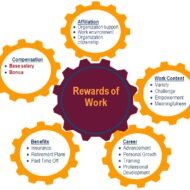
Operative Functions of HRM Staffing Staffing is one of the managerial functions. But this function is normally performed by the HR managers for all the departments of the firm. In most organizations, the HR department establishes personnel policies and coordinates the HR functions of all the departments. This function is also called the operative function or HRM function. It includes, amongst others, the processes of hiring, training, compensating, appraising and retaining employees, and attending to their labour relations, health and safety, and equality concerns. Procurement Procurement refers to a string of activities undertaken by the HR managers for filling the present and future vacancies of the organization. The activities include job analysis and designing, HR planning, recruitment and, finally, the selection of suitable employees. Here, job analysis refers to both the determination of specific tasks and responsibilities connected to a job and identifying the skills, knowledge and abilities required for the job holder. HR planning involves choosing and placing the right person at the right job and at the right time. Recruitment involves gathering a pool of applicants from which suitable employees may be selected. Lastly, selection involves screening, testing, interviewing and hiring the most suitable employees for the organization. SCOPE AND CHARACTERISTICS OF HRM Development Development here refers to both employees’ training and management development. HR managers are accountable for conducting and supervising training and development programmes for employees. The very purpose of a training and development programme is to increase the employees’ competencies in their job by improving their knowledge, skills and abilities. Training and development is widely accepted as a method for enhancing the employee skills, increasing the individual and organizational performance, improving the employee morale, and achieving the business growth and success. Compensation Compensation refers to the determination of the pay scale and other benefits for the employees. Establishing and maintaining the pay system of an organization is one of the principal jobs of the HR managers. They must devise ways to ensure fair and equitable pay rates. In addition, HR managers should regularly manage the performance evaluation system of the organization, and continuously design reward systems such as performance-linked incentive plans and bonus and flexible work schedules. Maintenance The maintenance function aims at retaining efficient and experienced employees in the organization. This calls for creativeHR practices. In this regard, HR managers are responsible for offering a wide range of HR programmes covering occupational safety, health promotion and physical fitness, canteen facilities, recreation activities, transportation programmes, employee suggestion schemes, career counselling and growth for creating a positive work environment. OBJECTIVES AND FUNCTIONS OF HRM Integration It consists mainly of industrial relations and aims at ensuring good relations between the management and the employees. HR managers have to implement industrial relations programmes that would ensure ethical and fair treatment in disciplinary action, grievance redressal, and career management processes. They should also counsel the employees and the management to prevent and, when necessary, resolve disputes over labour agreements or other labour relation issues. It is to be understood here that the functions of HRM can vary widely from one organization to another, depending upon its nature, size, and objectives. For instance, a smaller organization may follow a shorter HRM process with a greater emphasis on functions like procurement and compensation and little or no priority for activities like training and development and industrial relations maintenance. On the contrary, large organizations may pursue a longer and more comprehensive HRM process to meet the requirements of both the management and the workforce. WANNA TAKE A HR QUIZ N CHECK YOUR HR IQ? 1. The development and application of employees’ skills and energies to accomplish the goals and objectives of the...
Posted by Managementguru in Business Management, Human Resource, Organisational behaviour, Principles of Management
on Mar 13th, 2014 | 0 comments
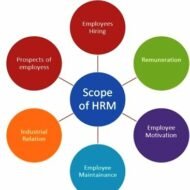
Scope and Characteristics of HRM 1. Personnel aspect: concerned with manpower planning, recruitment, selection, placement, transfer, promotion, training and development, lay off and retrenchment, remuneration, incentives, productivity, etc.; 2. Welfare aspect; dealing with working conditions and provision of amenities such as canteens, crèches, rest and lunch rooms, housing, transport, medical assistance, education, health, safety, recreation facilities, etc.; and 3. Industrial Relations aspect: the legal part which covers union-management relations, joint consultation, collective bargaining, grievance redress and disciplinary procedures, settlement of disputes, etc. Small Business Management and Marketing Essentials CHARACTERISTICS OF HUMAN RESOURCE MANAGEMENT: 1. It is an art and a science: The art and science of HRM is indeed very complex. HRM is both the art of managing people by recourse to creative and innovative approaches; it is a science as well because of the precision and demanding application of theory that is required. 2. It is pervasive: Development of HRM covers all levels and all categories of people, and management and operational staff. No discrimination is made between any levels or categories. All those who are managers have to perform HRM. It is pervasive also because it is required in every department of the organisation. All kinds of organisations, profit or non-profit making, have to follow HRM. 3. It is a continuous process: First, it is a process as there are number of functions to be performed in a series, beginning with human resource planning to recruitment to selection, to training to performance appraisal. To be specific, the HRM process includes acquisition (HR planning, recruitment, selection, placement, socialisation), development (training and development, and career development), utilisation (job design, motivation, performance appraisal and reward management), and maintenance (labour relations, employee discipline, grievance handling, welfare, and termination). Second, it is continuous, because HRM is a never-ending process. 4. HRM is a service function: HRM is not a profit centre. It serves all other functional departments. But the basic responsibility always lies with the line managers. HRM is a staff function – a facilitator. The HR Manager has line authority only within his own department, but has staff authority as far as other departments are concerned. 5. HRM must be regulation-friendly: The HRM function has to be discharged in a manner that legal dictates are not violated. Equal opportunity and equal pay for all, inclusion of communities in employment, inclusion of tribal’s and farmers in the benefits and non-violation of human rights must be taken care of by the HRM. 6. Interdisciplinary and fast changing: It is encompassing welfare, manpower, personnel management, and keeps close association with employee and industrial relations. It is multi- disciplinary activity utilising knowledge and inputs from psychology, sociology, economics, etc. It is changing itself in accordance with the changing environment. It has travelled from exploitation of workers to treating them as equal partners in the task. 7. Focus on results: HRM is performance oriented. It has its focus on results, rather than on rules. It encourages people to give their 100%. It tries to secure the best from people by winning the whole hearted cooperation. It is a process of bringing people and organization together so that the goals of each are met. It is commitment oriented. 8. People-centred: HRM is about people at work both as individuals and a group. It tries to help employees to develop their potential fully. It comprises people-related functions like hiring, training and development, performance appraisal, working environment, etc. HRM has the responsibility of building human capital. People are vital for achieving organizational goals. Organizational performance depends on the quality of people and employees. 9. Human relations philosophy: HRM is a philosophy and the basic assumption is that employees are human beings and not a factor of production like...