Posted by Managementguru in Business Management, Human Resource, Leadership, Principles of Management
on Mar 1st, 2014 | 0 comments
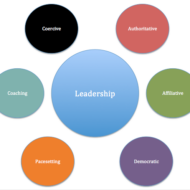
One of the key concepts of leadership is that everyone has innate leadership skills that can be ‘polished’ and developed. In excellent organizations, everyone, regardless of title or position, is encouraged to act like a leader. One of the principles of effective leadership is “to make sure that other people will be willing to follow you. Unfortunately, management education doesn’t place enough emphasis on leadership skills.” The functions of a leader can be defined as follows: 1. Taking the initiative – A leader initiates all actions necessary for the purpose of warranting the health and growth of the enterprise in a competitive economy. 2. He identifies group goals 3. He represents the organization 4. He acts as an arbitrator 5. To assign reasons for his actions 6. To interpret the objectives of organization 7. To guide and direct the organization 8. To encourage team work 9. He manages the organization Top 50 Quotes That Show the Road to Success This exemplary leadership model by kouzes and posner will give you a fair idea on how a leader should set behavioral and performance standards in an organization. Leadership Styles Every leader has his own style that can be defined as a leader‘s behavior towards group members. It refers to the pattern of behavior which a leader embraces in influencing the behavior of his subordinates in the organizational context. Different leadership styles can be categorized as follows. 1. Autocratic Leadership Autocratic leadership is also known as authoritarian, directive, leader centered or monothetic style. Under this style, leader concentrates all authority in himself, instructs a subordinate as to what to do, how to do it, when to do it etc. He also exercises close supervision and control over his subordinates. There are three categories of autocratic leaders a. Strict Autocrat – A strict autocrat believes on negative authority and gives orders which the subordinates must accept. He may also use his powers to disperse rewards to his group. b. Benevolent Autocrat – The benevolent style aids in accomplishing high productivity in many situations and he can develop effective human relationship. His motivational style is usually positive. c. Manipulative Autocrat – A manipulative autocrat leader is one who makes the subordinates feel that they are participating in decision making process even though he has already taken the decisions. 2. Participative Leadership This style is also called as democratic, consultative, group centered or ideographic style. A participative leader is one who consults and welcomes his subordinates to participate in decision making process. Under this style, subordinates are freely allowed to communicate with the leader and also with their fellow subordinates and take their own initiative. 3. Laissez Faire or Free-rein Leadership Under this style of leadership, the leader mostly depends upon the group and its members to establish their own goals and make their own decisions. The leader is passive and assumes the role of just another member in the group. Only very little control is exercised over group members. This style is also known permissive style of leadership. This style is appropriate only in certain situations where the manager can leave a choice to his groups. A leader is supposed to possess these discretionary skills required at different times and during interaction with different people… Qualities of a successful leader The following are the major innate qualities in a successful leader. 1. Physical features like height, weight, health and appearance 2. Intelligence 3. Emotional stability 4. Human relations 5. Empathy 6. Objectivity 7. Motivating skills 8. Technical skills 9. Communicative skills 10. Social...

Posted by Managementguru in Organisational behaviour, Principles of Management
on Mar 1st, 2014 | 0 comments
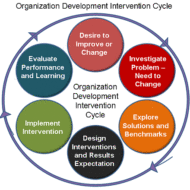
Organizational Development Training and development is an important aspect of human resource development. However the traditional methods and approach of T&D has its own limitations in that the focus is on individual development and behavior modification. This has seldom produced organizational development and hence in 1960’s an integrated approach called the ‘OD’ or organizational development was developed. Meaning and definition of organizational development (o.d.) “A process used to enhance both the effectiveness of an organization and the well being of its members through planned interventions.” OD is the systematic application of behavioral science knowledge for the purpose of improving productivity, efficiency, effectiveness and overall health of the total organization. The applied interventions attempt to modify the beliefs, assumptions, values, attitudes and standards of both the individuals and groups thereby transforming the organizational culture for the betterment of system as a whole. FEATURES OF ORGANIZATIONAL DEVELOPMENT: HUMANISM: The focus is on the employees, their attitude and inter-personal relationships. An organization is a network of people whose emotions, outlook and cohesiveness are more important than monetary and other physical aspects because it is they who take the organization to the next higher level. This is made possible by open communication, free and frank discussions of problems with employees by the managers, inter-personal trust and above all, sense of belongingness, comradeship and team spirit. PROBLEM-SOLVING NATURE: The purpose of an OD intervention is to solve a problem. The employees themselves are given the opportunity to identify the problem by Survey Feedback and find a suitable solution through analysis. This is a cyclic process and also called as “Action Research”. SYSTEMS APPROACH: OD is concerned with not the structure or persons per se, but with the interplay of structure and persons. LEARNING THROUGH PARTICIPATION: The participants of the learning process are none other than the employees. They unlearn old things and learn new things by identifying, analyzing and finding the right solution to the bottlenecks. TOP MANAGEMENT SUPPORT AND INVOLVEMENT: OD intervention is successful only when top management involvement is full-fledged and ensures participation from all levels of managers and all departments in such an exercise. MULTIPLE INTERVENTIONS: Intervention takes place at various levels, individual as well as group and the purpose is molding desirable work culture and leadership styles suitable for the organization. ROLE OF CONSULTANT: Employing an external consultant will be more appropriate as he is less susceptible to influences and more objective. He acts as the change agent facilitating co-ordination and stimulation. CONTINGENCY PLANS: Alternate plans are also devised if in case the original plan fails; the idea is one that of trial and error, hence the need for contingency plans and approach to OD problem. RENSIS LIKERT’S OD FRAMEWORK: Rensis Likert’s 4 system OD framework aims at moving towards truly participative system. Care and caution must be adhered to steer the system gradually from where the organization now works. He also introduced diagnostic analysis to find what causes the current problem. His three part diagnostic analysis includes: A. OUTPUT CAUSES: Low productivity, absenteeism, declining profit B. INTERVENING CAUSES: Organization structure, control, policy and leadership C. ROOT CAUSES: Attitude, motivation level, empowerment and organization culture Tips for Organization Development OD CULTURE: “The OD paradigm values human and organizational growth, collaborative and participative processes and a spirit of enquiry.” Brown and Covey have made some attempts to identify OD values from the following: Norms and Values: Respect for people: People are the most important of all resources. So giving due respect and importance to people induces the creativity and innovation in them. Trust and Support: Trust, openness and supportive climate improve organization culture and empowerment. Power Equalization: This emphasizes hierarchical authority, control and centralization. Confrontation: Do not...
Posted by Managementguru in Organisational behaviour, Principles of Management
on Mar 1st, 2014 | 0 comments
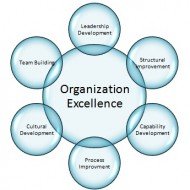
Organisational development is not an overnight transformation; it is indeed a gradual process that has to be implemented systematically and in tandem with the external environment. Listed here are some of the relevant organizational development techiniques or interventions that help employees to become more productive. A. Sensitivity Training The notion is to change the attitude and behaviour of individuals involved in the group rather than the technical skill or knowledge. The term sensitivity refers to the psychological aspect of human mind that has to be shaped to act in accordance with the expectations of the group. One’s own weakness is exposed and members understand how others react towards them. Stress is on Group Dynamics and tackling inter-relationship problems. The idea is to improve the behaviour of people in order to maintain smooth inter-personal relationship without anybody’s power or influence. Members are encouraged to have an open, heart to heart talk to develop mature relationship. Employee Engagement & Retention The Process: Sensitivity group is a small discussion group without any leader. The trainer raises a question and allows the members to proceed with the discussion, the focus being feelings and mutual respect. There is no set task or agenda and members try to analyse the immediate problem by having open discussion instead of applying logic and rationale. Free and frank discussions lead the members through periods of shock, anger, frustration, hostility, all for the better understanding of one another. Improve People Management and Build Employee Engagement Feedback includes videotape of the proceedings and guidance from the trainers. Members unlearn old things through shock and change the present behaviour to improve their behaviour pattern. Individual emotions and inter-relationship pattern are primarily focused upon in sensitivity training. Sensitivity training borders on psychotherapy where the emotions as well as body language are taken into consideration. The expressions may be any one of the following: 1. Gestures 2. Screaming 3. Physical contact B. Survey Feedback Here the discrepancies among a group are weeded out using questionnaires, which identify the difference in perceptions amongst the same working family, group or department. The data collected is tabulated and distributed for taking part in the deliberations. This forms the basis for further discussions. Discrepancies if any can be sorted out by open discussions with all concerned, defending and opposing till a consensus is arrived at. Here the focus is on ideas and not on persons who put up those ideas. C. Process Consultation A firm may either seek the support of 1. Expert from within the organisation: Though he might be knowing the crux of the problem, his emotional involvement might block him from seeing the problem in the right perspective. Moreover the outcome of the result might be a ‘biased one’ due to internal politics. 2. An outside expert: This person with his vast knowledge, experience and similar problem encounters may have the know-how of resolving the problem but may lack the necessary insight of that particular problem. The organisation must see to that process consultation is done through an external expert with the needed support provided by the authorities from within the organisation. D. Team Building Team building is attempted at the group or inter-group level. The objective is to improve co-ordination thereby improving the performance as a group. 1. Goal setting 2. Development of inter-personal relations 3. Role analysis to identify roles and responsibilities 4. Team process analysis are the key features of team building. E. Inter Group Development One of the major challenges for firms involved in development is tackling inter departmental conflicts. Such dysfunctional conflicts may exist between a. Line and staff b. Production and materials c. Finance and production What is Group Dynamics? As sensitivity...
Posted by Managementguru in Economics, Entrepreneurship, Human Resource
on Mar 1st, 2014 | 0 comments
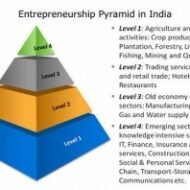
Entrepreneurship in Developing Economies Entrepreneurial development is a complex process of change. It has been recognized as an important ingredient of economic development. The development of entrepreneurial activity depends upon the closely interlinked economic, social, cultural, religious and psychological variables. Developing countries of late have adopted a deliberate policy of promoting and encouraging small enterprises as a strategy, for the overall development of their countries. Practical Problems Faced by Developing Countries The numerous problems confronted by developing countries such as, a high rate of population growth, a relatively low rate of economic growth, a low level of capital income with nearly fifty percent of the population subsisting below the poverty line and mounting increase in the figures of educated unemployed-all these check the growth of entrepreneurial activities. Countries have to plan realistically, mobilize and harness resources, have control over factors of growth and development and give direction to the development process. Naturally then, the national and economic goals will be focused towards: Production and productivity to be increased in the primary, secondary and tertiary sectors Maximum harnessing and utilization of material and human resources Solving problems of unemployment Having a check on population growth Equitable distribution of wealth and income To increase the purchasing power parity To increase the gross national product To increase the real per capita income Improving the quality of life Industrial Development The larger scope and potential to achieve these goals lie in the development of the industrial sector of the national economy, and the only alternative to raise the level of living is development of industries. Here, we are not merely concerned with certain quantum of growth and development in the industrial field. Theoretically, the desired quantum of industrial development could be supported by a few large investments and capital intensive units run by a small number of big entrepreneurs. But what is envisaged is to have the same quantum of industrial development with a wider spread consisting of large number of small entrepreneurs all over the country. This would result in development of small scale and tiny sector industries all over the country and would generate employment opportunities to the educated unemployed, skilled people and other potential entrepreneurs from various segments of the society. Scenario of Asian Countries Most of the Asian countries like India and China are encouraging and promoting entrepreneurial development leading to industrial and economic development. India is now a hot spot for automobiles and its accessories. Being a cost-effective core market for auto components sourcing for global auto makers, the automotive sector is a potential sector for entrepreneurs. Entrepreneurs are risk bearers, find resources and fill market gaps that would be missed by larger, more bureaucratic organizations. Entrepreneurs improve the social welfare of a country by harnessing dormant, previously overlooked talent. Surplus manpower which is considered a great liability can be converted into assets once those with potential are selectively groomed for self-employment and enterprise formation, leading to further job...
Posted by Managementguru in Entrepreneurship, Human Resource
on Mar 1st, 2014 | 0 comments
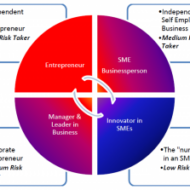
The Spirit of Entrepreneurship In the modern competitive business environment, not all graduates of various disciplines like engineering, management and the like can aspire for white collar jobs. The recent global recession has made the prospective job seekers think twice about working in foreign countries. Self employment has become the order of the day. Being your own boss is truly inspiring and motivating at least in theory. When it comes to reality, we need to know exactly what does it take to become an entrepreneur by starting a small business or taking over the business run by your predecessors. Why we need more entrepreneurs? Various avenues have been opened up thanks to communication and transportation that has brought the world under a single huge umbrella. Also small industries face minimum risk as the investments are marginal and they have the liberty to try a number of innovations like combination of new products new materials new methods of production new markets new sources of materials and even New forms of organization. Being a competitor in an open market, minimum profit and constant revenue inflow are assured and also they can enjoy the benefit of minimum fluctuation in the product price as it is determined by the market and not by individuals. Want to know 10 Daily Habits of Most Successful Entrepreneurs? Scope of entrepreneurial activity: Either you can be a subsidiary to large scale business or you can engage yourself in supply of repair services with small engineering establishments or you can go for small cottage industry businesses like cutlery, furniture, jewelry, fruit canning, soap making etc., Being fairly labor intensive, you can provide economic solution by creating employment and income opportunities in urban and rural areas with relatively low cost of capital investment. Business process outsourcing has been in recent times the magic happening in countries like India, China etc., where the foreign investors take advantage of cheap labor, time and efficient communication skills of the population. Knowledge process outsourcing has also become popular and it stands as a testimony of the rising power of Asian countries over the west. “Small is beautiful” and you can make it big in the small scale business industry if you are Innovative and productive Provide personalized services to the customers Identify and target the right markets This ensures “WINNING THE GAME OF BUSINESS“. An economy grows only when it has large number of enterprises accelerating the economic growth prospects of that particular country. The export policies of all nations have become more flexible owing to globalization, liberalization and...