Posted by Managementguru in Business Ethics, Organisational behaviour, Principles of Management
on Feb 24th, 2014 | 0 comments
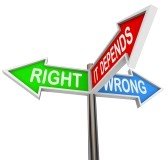
Business Ethics Business ethics can be defined as the principles and standards that establish acceptable conduct in business organizations. The acceptability of behaviour in business is determined by customers, competitors, government regulators, interest groups, and the public, as well as each individual’s personal moral principles and values. Many consumers and social advocates reckon that businesses should not only make a profit but also consider the social implications of their activities. We define social responsibility as a business’s obligation to maximize its positive impact and minimize its negative impact on society. Although many people use the terms social responsibility and ethics interchangeably, they do not mean the same thing. Business ethics relates to an individual’s or a work group’s decisions that society evaluates as right or wrong, whereas social responsibility is a broader concept that concerns the impact of the entire business’s activities on society. There are good business reasons for a strong commitment to ethical values: 1. Ethical companies have been shown to be more profitable. 2. Making ethical choices results in lower stress for corporate managers and other employees. 3. Our reputation, good or bad, endures. 4. Ethical behaviour enhances leadership. 5. The alternative to voluntary ethical behaviour is demanding and costly regulation. Points to Ponder relating to behavioral ethics: 1. What conflicts of interest have you personally experienced in personal or professional roles? 2. If you perceive a potential conflict for yourself, what are some ways you might ensure that this conflict doesn’t lead to unethical behavior for you and others? 3. When have others’ conflicts of interest impacted how you or those you know were treated? 4. What types of policies can or do organizations implement to try to reduce conflicts of interest or their costs? 5. Why do you believe conflicts of interest are so pervasive in society? Why don’t we take more steps to avoid them? 6. Why is it so hard for individuals to recognize their own conflicts of interest, and how is this impacted by behavioral biases? Conflict of Interest: Conflict of interest arises when there is a clash between responsibility and reward. Say, if a doctor decides to be more business-like, if a judge decides to favor one party, if a ruling party favors a decision not good for the masses, what will happen? A conflict of interest exists when a person must choose whether to advance his or her own personal interests or those of others. Wal-Mart Stores, Inc., may have the toughest policy against conflict of interest in the retail industry. Sam Walton, the late founder of Wal-Mart, disallowed company buyers from accepting so much as a cup of coffee from suppliers. The Wal-Mart policy is black and white and leaves no room for interpretation, and it is probably a factor in helping Wal-Mart reduce...

Posted by Managementguru in Business Management, Operations Management, Principles of Management
on Feb 24th, 2014 | 0 comments
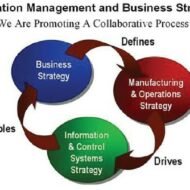
The management of conversion or transformation process which accepts inputs and delivers usable goods and services is what is called “operations management.” The inputs may be in the form of, capital, material, labor, technology, information, machines etc. The process takes place in an effective and efficient manner through operations planning, design, management and control. Don’t forget to download the 3 page Project Planner Printable at the end of this post 👇🏻 Absolutely Free Earlier it was called, production or manufacturing management. Since operation is a general term in a productive environment whose output may be goods or services, the term operations management has become more appropriate. The Aim of a Good Operational Management Would be High level of productivityCompetitive cost and qualityTimely deliveryProducing goods as per the requirements of the consumer, that is customer oriented.Flexibility and responsiveness in the production of goods and services Production or operation in the three important sectors of an economy, namely, agriculture, industry and service, creates national wealth and serves as an index for the growth of that economy. One has to understand the link between operations management and other functional areas to appreciate its scope. The goals of the operations strategy has to necessarily be in tandem with the overall corporate strategy to accomplish the goals of a firm. Scope of Operations Management From marketing department, cues regarding customer preference and market segmentation in terms of product, price and volume are supplied to the production department, based on which the production planning is concluded. From Research and development comes the product design and process technology. Human resource is an integral part of production process and also a crucial input. Man power planning by the human resource department plays a major role in recruiting, selecting, training, evaluating and empowering labor force. Operations Strategy The great diversity in products and services available in the market should be taken into consideration before deciding on your operations strategy. At one end we have custom made products that are designed and manufactured to suit the specific needs of the consumers. For instance, custom made shoes, shirts, suits, furniture etc. Here the emphasis is on quality and delivery where the customer is not very much bothered about the price. At the other end manufacturers go for highly standardized products that are available “off the shelf.” Say, home appliances, detergents, soaps etc., here the product differentiation is very minimal and the focus is on competitive pricing as the material is available in plenty. Economy of Scale A customized product would require a manufacturing set up that can handle a wide variety of general products. The sequence of operations for each product would vary in the manufacturing system making a customized product. So, a process oriented manufacturing system is designed, where similar facilities doing similar operations are grouped together and departmentalized. Standardized products go for a product focused manufacturing system, to reduce the “through put” time as large volumes are required. To be cost effective, each product should have a dedicated line of production to take advantage of the “economy of scale.” Intermediate types of products also find their place in the market and they are produced in a production layout that has a mix of product and process orientation. Here a whole range of products and services are created for the benefit of the customers. In a long term basis, manufacturers should aim to develop new technology, environmentally viable products, increase R and D activity, update skills of work force and managers and focus on development of new products, process and innovations....
Posted by Managementguru in Operations Management, Project Management
on Feb 24th, 2014 | 0 comments
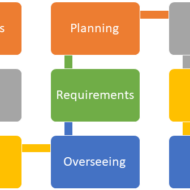
Significance of Operations Management: Business firms need to formulate brilliant operations strategies in order to survive in the market for long. Focus on finance and marketing alone is not sufficient to compete in the global market. The emergence of innovative products and processes from leading companies in different parts of the world is a clear-cut evidence to prove the significance of operations function. Operations management is gaining importance, thanks to public awareness on quality and its applicability in service operations too. Advent of Industrial Revolution: Until the advent of machinery, each and every nation was dependent on agriculture, which was the prime economic activity. After the industrial revolution of the eighteenth century, mechanization in a large scale converted agricultural economy to an industrial economy. Slowly scientific principles were introduced into production activities to make it more systematic and thus “Production Management” evolved. Now service operations have also gained momentum and since the concepts and techniques of production management are applicable to service operations too, it is rightly called as “Operations Management.” Operations management functions at three different levels. Strategic levelTactical levelOperational level Strategic level: At the strategic level, the operations manager must have a long term vision, as to shape up the company’s success in the light of strategic decisions taken, with the approval of the top management. His area of concern would be, New product developmentNew process developmentProduct re-designProcess re-designProcess layoutProduct layoutFacility locationAggregate capacity planningPlanning co-ordination with finance and marketing departments Tactical level: At the tactical level, the operations manager is concerned about the planning and scheduling operations of the desired output. His area of concern would be: Designing a suitable inventory systemPlan for the work force and train them effectivelyQuality control systemMaintenance andReliability assurance system. Operational level: At the operational level, the job of the operations manager is to accomplish the “set targets”, by performing various coordinating and controlling functions. His area of concern would be: Ordering materials at the right timeScheduling productionScheduling workers as per production requirementControlling quality of goods and services producedFollow up of various schedules for proper implementationMaintaining and updating equipment and system reliabilityOn the job skill development of workers, etc. These functions are by no means exhaustive, but only indicative. The process of planning and control operations is not done in water tight compartments, but are interactive and integrative feeding on one another and also aligned in line with the overall corporate objectives. The strategies are evolved for the purpose of efficient utilization of the available resources as well as to predict the changes in the external business environment that calls for suitable action to limit their impact on the goals of the organization, in terms of cost, quality and...
Posted by Managementguru in Operations Management, Project Management
on Feb 24th, 2014 | 0 comments
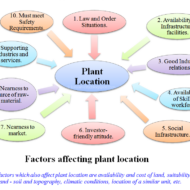
Locational Attributes for a Plant Layout The location of an industrial plant plays a vital role in determining its success. Management should weigh the pros and cons of the location in terms of cost and revenue as each location might influence these variables in different proportions. Let us try to understand the need for a new facility location. Entrepreneurs interested in starting a new business venture or a small-scale enterprise has to look out for appropriate location for plant installation. Manufacturers who plan to expand their product range needs additional plant capacity Multinational corporations trying to establish their markets through subsidiaries Obsolete plants have to be shut down and new location has to be identified. The location attributes described below are fundamental in the decision to locate an industry. Although for particular firms some are more important than others, a significant shortfall in an area’s ability to provide even one of these may greatly reduce the attractiveness of that site. Labor The management will be interested in such locations where there is adequate supply of labor. Some operations need skilled labor and some unskilled. The cost of labor is an important factor to be considered as it influences labor productivity. However, low labor cost is not necessarily an advantage, if the workers are poorly educated and trained. The management has to be mentally prepared to pay for skilled labor who have the training and experience needed for the planned operation. Energy resources Electricity and water are major energy resources needed for production activities. For example, a textile mill needs to have round the clock power supply, for continuous production and a dyeing plant is in need of copious water supply. These industries will be on the look out for a location that has abundant energy resources available at low cost. Transportation The industry has to be located near the market so that the produce can quickly reach the market making the transportation costs minimum. Domestic trade heavily relies upon road transport as there are numerous service providers and there is well-developed infrastructure connecting even the remotest of locations. International trade takes place through either airways or waterways. In places like Kerala, inland waterways help in transporting merchandise within the domains of the territory. Raw materials availability Many businesses depend on materials of various types such as unprocessed raw materials for use in manufacturing and finished goods for inventory, in wholesale and retail establishments. The availability and cost, including transportation costs of these materials are critical location factors. Other Factors Other factors that influence location decisions are government regulations, climate and environmental quality of an area, soil texture, and attitudes of state and local governments’ etc. The economic viability of a project is undoubtedly enhanced by appropriate location. The location should also conform to environmental protection laws to maintain the ecobalance of that particular habitat. Organizations are expected to dispose of with the effluents in a systematic manner and this has to be kept in mind while choosing a location. The GEMBA Walk: A gemba (and sometimes genba) walk is the term used to describe personal observation of work – where the work is happening. The original Japanese term comes from gembutsu, which means “real thing.” It also sometimes refers to the “real...
Posted by Managementguru in Business Management, Operations Management
on Feb 24th, 2014 | 0 comments

Design of an Ideal Plant Layout Approach to proper layout: When a new plant is erected, a good deal of expertise is used by management for executing the design of an ideal plant layout. A comprehensive approach with regard to the placement of machineries, location of stores, inspection cabins, tool rooms, maintenance wings, receiving and shipping departments, toilets, canteens and other handling equipments, is necessary for achieving quick and smooth production at the least cost. There is no set pattern of layout for all plants. What is suitable for a giant plant will not be fit for a small factory. What goes well with a processing industry may not match a job industry. But, the basic principles governing a plant layout are more or less the same. Cost of Production: The all time concern of big industries is the ever rising cost of production. Their priority would be mass production or continuous production to factorise the economy of scale. This is possible where industries are involved in producing highly standardized products. Industries involved in the production of customized or specialized products, catering to premium customers, cannot go for mass production since it is not a feasible option. They have to dedicate separate lines of production for different products. Invariable of the type of production, all industries need to cut down their costs wherever possible. The only possible solution is to design a suitable layout that facilitates uniform and minimum movement of materials thus avoiding wastage, minimization of production delays and avoidance of bottlenecks. An ideally laid plant layout reduces manufacturing costs through reduced materials handling, reduced personnel and equipment requirements and reduced in-process inventory. It is amazing how industries in Japan have mastered the art of employing Just-in-time concept, which focuses on continuous improvement and increases the rate of return on investment by reducing the in-process inventory and associated costs. The importance of plant layout would be better appreciated if one understands the influence of an efficient layout on the manufacturing function. An efficient plant layout would definitely incorporate the following aspects: Economies in handling-cut down material handling costs that account for 30-40 percent of the manufacturing cost Effective use of available space-especially in urban areas, where every inch of available space is an asset. Minimization of production delays-on time delivery schedules and speedy execution will help. Improved quality control-to reach expected standards of production Minimum equipment investment-by planned machine balance and location Identification and rectification of bottlenecks-don’t allow materials to pile up at any place of production, don’t allow workers to be lethargic, keep the machines in the best of condition to speed up operations. Better production control-facilitated by a planned layout Better supervision-a good plant layout enables the supervisor to have a hawks eye on the entire shop floor Improved utilization of labor-process flow should be planned in such a way that workers should be equipped all the time without any lull Improved employee morale-by providing better working conditions, employee facilities, increased earnings, reduced accidents etc. , Scope for Expansion: A good plant layout must also have scope for expansion or revision in future. Even best layouts become obsolete over a period of time, so revisions ranging from minor alterations to a complete dismantling of the existing structure and installation of a new layout become necessary from time to time. Manufacturers, who are keen to survive the global competition, must consider revising their layouts which should fall in line with technological and market...