Posted by Managementguru in Business Management, Strategy
on Feb 18th, 2014 | 0 comments
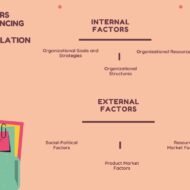
The basic factors that influence policy formulation are 1. The objectives of a business firm 2. Its management structure 3. Economic and financial resources available to it at a particular point of time 4. Attitudes, social values and norms of the top management 5. Fiscal and monetary policies of the government 6. Policies of sister concerns and business associations 7. Government regulations and control measures 8. Public opinion and expectations from business etc. You can never evade your responsibility towards the society and your policies must incorporate statements that reflect your interest in the welfare of the society. In corporate business environment, where voluminous business activity is carried on, corporations have very well understood the fact that, acquisition and utilization of resources from the society has to be repaid in the form of contributions to societal welfare. Otherwise their image might get tarnished. Moral and ethical values of a society also influence the mind set of business persons. In countries like India, where people ardently follow traditions and customs, a business person hailing from such a family will definitely try to maintain minimum ethical standards both in personal as well as business environments. Policy Aspects: Business policies cover all the functional areas such as production, marketing, personnel and finance aspects. Major policies pertaining to overall objectives, procedures and control affect the organization as a whole. Minor policies on the other hand, cover relationship in a segment of an organization, with considerable emphasis on details and procedures. Such policies are an outgrowth of major policies and preserve their unity of purpose. They meet the day-to-day requirements of the departments and are generally decided at the sectional and departmental levels. Various Corporate Policies: Strategic business policies cover aspects such as product-mix, promotion-mix, market-mix, administrative policies etc.; HR policies cover a wide range of aspects such as pay, promotions, recruitment, selection, induction, training and development, pension, disciplinary action, quality of work life and so on. So, to attain clear-cut objectives, firms need related business policies, in the absence of which, the firm may lose grip and direction in the overall management of the...

Posted by Managementguru in Business Management, Strategy
on Feb 17th, 2014 | 0 comments
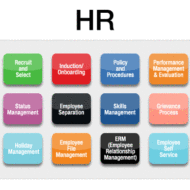
What are Policies? Business activities should be based on some solid principles that serve as guidelines for direction. These principles are nothing but policies which help a business firm in attaining its goal. Policy does not tell a person exactly what to do, but it does point out the direction in which to go. While objectives are goals or ends to be sought, policies are a general rule of action which helps in attaining a goal. Policy Statements Statements released by corporate firms generally highlight the major policies behind their action. For instance, if a firm says that its aim is to provide the customers with products that are competitive in terms of quality, price, weight and contents, it tries to sum up the recurring problems in the industry and assures the customers that it will serve the customers in the true spirit of business. What is the meaning of Policy Formulation? Policies are generally formulated by the officials of the top management cadre, as policies reflect the mode of thought and principles underlying the activities of an organization. Policies guide a firm in the following aspects. Thinking Decision making Conduct of business Enterprise operations Problem solving So, it is evident that each policy contains two components, a “principle” and a “rule of action”. Corporate policies are statements of directions, guidance for corporate thinking, corporate behavior and action, and therefore cover a very broad area. Such policy formulations are made in the light of challenges posed from the external environment exposing the strengths and weaknesses of the organization. Here are some key corporate policies that companies often prioritize to ensure smooth operations, compliance, and a healthy workplace culture: Code of Conduct and Ethics Policy: Sets standards for professional behavior, integrity, and ethical practices within the organization. Equal Opportunity and Non-Discrimination Policy: Ensures a workplace free from discrimination and promotes diversity and inclusion. Workplace Safety Policy: Outlines measures to ensure employee safety, including adherence to health and safety regulations. Leave and Attendance Policy: Defines rules for work hours, attendance, leave entitlements, and time-off procedures. Data Protection and Privacy Policy: Details the handling of sensitive personal and corporate information, ensuring compliance with data protection laws. Anti-Harassment and Bullying Policy: Establishes guidelines to prevent and address harassment, fostering a respectful work environment. Whistleblower Policy: Provides employees a secure way to report unethical or illegal activities without fear of retaliation. Compensation and Benefits Policy: Describes salary structures, incentives, bonuses, and benefits offered to employees. Employee Grievance Policy: Offers a clear procedure for resolving employee concerns and disputes. Corporate Social Responsibility (CSR) Policy: Focuses on the company’s commitments to social, environmental, and ethical responsibilities. IT and Cybersecurity Policy: Provides rules for using company technology and safeguards against cyber threats. Confidentiality and Non-Disclosure Policy: Protects sensitive company information from unauthorized sharing....
Posted by Managementguru in Marketing, Strategy
on Feb 17th, 2014 | 0 comments

What is Branding? What is a branding strategy? The process involved in creating a unique name and image for a product in the consumers’ mind, mainly through advertising campaigns. Brand = Trust What is the meaning of Brand Identity? A brand name adds a unique value proposition to a company offering differentiated products across a wide spectrum. It is an important component of a firm’s corporate identity. The logo that represents a brand is just not a symbol but is a source of commitment to the customers. It implies the benefits or added values that the company offers to satisfy its customers. Logos are a way to reach your customers in the initial stages when your company is in the offing. After a certain period of time, it becomes an icon that represents your company’s efficacy and achievement in terms of quality, price, customer service etc. Nowadays there is a pressing need for corporate firms to target both domestic and international markets. They have to create and establish local as well as global brand identity. A brand name tells the customer what to expect and it personifies your organization. Why in the First Place a Company Needs a Brand Identity? See, it proves to be the most vital part of your marketing plan. How do you expect to reach your customers and convince them that you are there in the market to offer a superior product range than that of your rivals? You have to keep in constant touch with your customers and this is where a brand name comes in as a source of strength, as a promotional tool to speak for your product’s credibility and quality. You have to ask yourself the following questions while planning to develop a branding strategy: Does your brand create a feeling of trust in the minds of the customers? Does your brand deliver the benefits that it has promised to? Does your brand connect with the customers well at an emotional level? Is everybody including your competitors are aware of your brand? Strategic Equations for Success You need to revitalize your think tank by including strategies that will hit the target on the right note. One way is to re-launch your existing products under new brand name to give a fresh lease of life to the products as well as attract new customers Another way is to introduce new product range, where the existing brand may not be suitable for the new product line Making the products more attractive and appealing by making small modifications in packing Also your brand can include a new range of similar products to be offered from your end. The brand strategy gives momentum to your business and aligns the activities of your organization towards successfully accomplishing the corporate objectives. It should be always remembered that branding is the only way to develop loyal customers....
Posted by Managementguru in Business Management, Strategy
on Feb 17th, 2014 | 0 comments
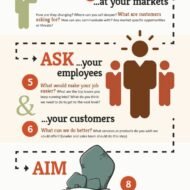
What is Strategic Management There are three core elements to be discussed when it comes to strategic management. Analysis Decision Action Strategic management is nothing but taking the organization or project or process to the next higher level by implementing strategic actions. When we say strategic action or plan of action, it concerns both the internal and external environment thoroughly analyzed, to decide upon the future course of action. Strategic management is oriented towards future development with the present environment and past experiences serving as the premises. Definition of important terms: Strategic Management: Strategic management consists of the analysis, decisions, and actions an organization undertakes, in order to create and sustain competitive advantages. Competitive Advantage: A firm having an edge over its competitors. For example, Narasus Coffee has established its foot hold very strongly in South India, because of its unique flavor. The advantage can be in the form of uniqueness, service, customer satisfaction or availability. Distinctive Competence: Strategy is all about being different from everyone else. Sustainable competitive advantage is possible only through performing different activities from rivals or performing similar activities in different ways. Think about this, if you do not keep your eyes and ears open as to how your competitors are planning to capture the market, where will you be in the next two or three years? Suppose you are running a restaurant that offers multicuisine menus, what will be your plan of action to make it distinctive from your competitors and where would you want the facility to be located? And how will you popularize your service? Crux of Strategic Management: So, what do we mean by strategic analysis? Analysis or interpretation of strategic goals of the organization and also of the internal and external environment of an organization. Vision Mission Goals Objectives All these are some of the means by which an organization devises its short term and long term plans and actions. Say, you are running a blog, your blog will be yet another blog among the millions of other blogs to start with. Two things to be considered if you want to survive and sustain. 1. Your blog should be unique in order to attract audience- Returning visitors are the key to success. 2. Search Engine Optimization is equally important to satisfy the search engines who are the carriers. In modern corporate firms, there is a separate wing established for strategic planning. Next is strategic decisions: Ask yourself the following questions! 1.What industries should we compete in? 2.How should we compete in those industries? 3.Domestic or international arena? Broadly speaking, in an automobile industry a car manufacturer would have to compete both with competitors in his own niche and other niches, say two wheeler manufacturers. He must analyze why a person would want to buy a four wheeler instead of a bike, whether he owns a product that would satisfy the buyer in terms of service and features, what part of the demography he should target and what would be the value added services he might offer to the buyers, e.g., insurance and loan. Strategic decisions are taken by the owners or senior executives of the top level management. Next, what do we mean by strategic action? 1. Allocation of resources- financial, human and other physical resources 2. Structuring the organization to bring the intended strategies to reality Focusing on two basic questions, 1· How should we compete in order to create competitive advantages in the marketplace? For example, managers need to determine if the firm should position itself as the low-cost producer, or develop products and services that are unique which will enable the firm to charge...
Posted by Managementguru in Economics
on Feb 17th, 2014 | 0 comments

Significance of Privatization Privatization that has gathered momentum since around the 1980’s has become the hallmark of the new wave of economic reforms sweeping across the world. It refers to the transfer of ownership or management of an enterprise from the hands of the public sector to private sector. It also means the withdrawal of the state from an industry or sector, partially or fully. Privatization marks a change from dogmatism to pragmatism and amounts to a reversal of policy. It is evident that the economic growth rate has multiplied ever since privatization has come into existence. What is Privatization? 1. The transfer of ownership of property or businesses from a government to a privately owned entity. 2. The transition from a publicly traded and owned company to a company which is privately owned and no longer trades publicly on a stock exchange. Performance of Public Sector: The performance of state owned enterprises in many countries have, by and large been far from satisfactory. This may be attributed to the prevalence of bureaucracy and red tapism in most of the public sector administration. They have often put large burdens on public budgets and external debt. Economic inefficiencies in the production activities with high costs of production, inability to innovate and costly delays in delivery of the goods produced are some of the shortcomings of the public sector. There is also ineffectiveness in the provision of goods and services such as failure to meet intended objectives, diversion of benefits to elite groups, and political interference in the management of enterprises. The relationship between the management and the labor unions is strained owing to the expansion of bureaucracy. Why Privatization? These problems have led many governments to undertake programmes of public sector reform. One Such reform is privatization of publicly managed activities to discard the inefficiencies and improve the economic growth rate. For privatization to succeed: Privatization cannot be sustained unless the political leadership is committed to and unless it reflects a shift in the preferences of the public arising out of dissatisfaction with the performance of other alternatives. Now-a-days, private sector enterprises have started dominating even core industries like petroleum, power and communication under the leadership of visionaries who may be the heads of the states or owners of such private organizations. Public services to be provided by the private sector must be specific or have a measurable outcome. Consumers should be able to link the benefits they receive from a service to the costs they pay for it. Since they will then shop more wisely for different services. Privately provided services should be less susceptible to fraud than government services if they are to be effective. Equity is an important consideration. Privatizing the state owned enterprises reduces corruption and the benefit goes to the society. The process encourages entrepreneurship and leads to intense development of capital market. Governments usually want to sell the least profitable enterprises, those that the private sector is not willing to buy at a price acceptable to the Government. The Government may even fear that if it gives a free rein to the private sector management, its power might be at stakes. All said and done most of the governments view privatization as an important strategy of economic...