Posted by Managementguru in Quiz Corner
on May 26th, 2014 | 0 comments
Quiz of the Week #1 Match the Slogans with the Respective Firms! 1. “Your World. Delivered” AT&T AMAZON 2. “Forever New Frontiers” AIR CANADA BOEING 3. “Built for the Road Ahead” HYUNDAI FORD 4. “Connecting People” NOKIA SONY 5. “Innovation.” 3M ATI TECHNOLOGIES 6. “Think Different.” MICROSOFT APPLE COMPUTER 7. “The Company for Women” AVON OLAY 8. “The ultimate driving machine.” AUDI BMW 9. “Have it your way.” BURGER KING MC DONALDS 10. “This is the Power of the network. now.” CISCO SYSTEMS SUN MICROSYSTEMS Anything above 50 is good. Above 60 is appreciable, above 80 is laudable. And a 100 means – “You are...

Posted by Managementguru in Human Resource, Organisational behaviour, Principles of Management, Strategy
on May 24th, 2014 | 0 comments
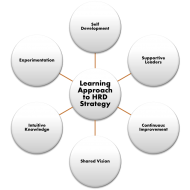
What are Learning Organizations? Need for Learning Organizations: The ever evolving, dynamic business environment and the complex relationship among various countries in the political and business arena necessitate the need for a learning organization. This becomes essential for organizations to be flexible and be able to respond to change which is the only enduring source of competitive strength. What is a learning organization? A learning organization is the term given to a company that facilitates the learning of its members and continuously transforms itself. Learning organizations develop as a result of the pressures facing modern organizations and enables them to remain competitive in the business environment. Learning is used to reach their goals and avoid repeating mistakes. Employees learn to link their personal goals to organizational goals and link rewards to key measures of performance. The managers learn to design systems and procedures to motivate learning process and to encourage employees to feel free to share information and take risks. Characteristics of a learning organization: It nurtures a climate of trust in the organization and people are encouraged to learn and develop their #knowledge and skill sets. It inspires human resources in the immediate external environment such as customers, suppliers, creditors etc., to learn as and when possible. The whole business policy revolves around #HRD strategy. The organization subjects itself to continuous transformation in which learning and working run hand-in-hand. Learning Based Techniques: Organizational learning concept is the latest OD (#Organizational Development) technique. #Ernst & Young, the largest #accounting firm has set the following procedures for learning purpose. Managers play a vital role in this transformational process of learning. They are responsible for choosing employees who are willing to and capable of learning, and must ensure that the participants in the program are trainable. They must get the support of #trainees and others. Trainees must be appraised about the benefits that will result from training and the managers also should enjoy the support of supervisors, #co-workers and their sub-ordinates. This is very essential to facilitate learning process, to ensure availing of honor and respect of peers and sub-ordinates. The opinion of trainees, supervisors, co-workers and sub-ordinates must be obtained on the content of training, the location and the time and duration of the training. Managers also play a key role in assisting others in goal-setting and meeting those goals. Goal setting is necessary to improve their performance and direct their attention to specific #behavior that needs to be changed. Managers may assist the sub-ordinates and peers to identify tools and resources for acquiring knowledge. Managers must also focus on providing performance feedback as it serves two objectives; it provides information on performance and serves as a motivating tool. Managers should urge their employees to analyze their performance, identify weaknesses and take action to overcome weaknesses. Managers may assist the employee to transfer the learned skills/knowledge to work. It will be a wiser move to design #training methods in such a way as to enable the trainees to practice skills on their jobs between training sessions. DOWNLOAD THE PDF VERSION...
Posted by Managementguru in Change management, Human Resource, Organisational behaviour
on May 20th, 2014 | 0 comments
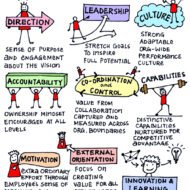
Organizational Climate – An Analogy Organizational climate is a measure of the feel of the internal environment of an organization which is perceived by an outsider and/or an employee according to their business with the organization. Organizational climate has a great effect on employees’ behavior. If the climate of an organization is open and friendly, employees feel relaxed and if it is very formal, then such a comfort level may not be felt. Climate for an organization is somewhat like personality for a person. “Just as every individual has a personality that makes him/her unique, an organization has a climate that clearly distinguishes its personality from other organizations. Human religionists introduced the concept of organizational climate in the late 1940’s. Now this has become a very useful metaphor for thinking about and describing the social aspects of a firm. Some definitions: “A set of characteristics that describe an organization and that i. Distinguish one organization from another ii. Are relatively enduring over a period of time and iii. Influence the behavior of people in the organization.” – Forehand and Gilmber “A mutually agreed internal (or molar) environmental description of an organization’s practices and procedures.” – Benjamin Schneider (1975) “A relatively ending quality of the internal environment that is experienced by the members, which influences their behavior and can describe in terms of values of a particular set of characteristics of the organization.” – Renato Tagiuri (1968) Features: It is an abstract and intangible concept. But it exercises a significant impact on the behavior and performance of organization members. It is the perceived aspect of organization’s internal environment. It refers to the relatively enduring characteristics which remain stable over a period of time. It gives a distinct identity to organization and differentiates it from others. It is a total expression of what the organization is. It is the summary perception which people have about organizations. It is a multi-dimensional concept. It consists of all organizational factors – authority pattern, leadership pattern, communication pattern, control etc. Elements of Organizational Climate: Individual Autonomy: The extent to which employees are entrusted with to make decisions, the degree to which they are free to manage themselves and have the freedom to exercise their responsibility come under the purview of individual autonomy. Position Structure: It means the extent of direct supervision, formalization and centralization in an organization. Reward Orientation: The degree to which an organization rewards individuals for hard work or achievement. It will be high when an organization orients people to perform better and rewards them for doing so. Task Orientation: If the outlook of the top management is task oriented, the employees will have to speed up the pace of work to please their bosses. Relations Orientation or Consideration: Here the climate is conducive and supportive where the managers are relations-oriented while dealing with their sub-ordinates. The needs and aspirations of the workers will be given due importance resulting in enhanced team spirit. Job Satisfaction: The workers feel happy if the jobs are designed to allow the worker to use their innovative skills. Morale: Morale represents a composite of feelings, attitude and sentiments of organizational members towards the organization, superiors and fellow workers. If it is high, there will be an atmosphere of co-operation and if it is low, there will be conflicts and poor co-operation among the workers. They will also feel dis-oriented in their work. Control: The control systems may be either rigid or flexible. An impersonal or bureaucratic atmosphere is seen in the former situation where the scope of self-regulation will be minimum. DOWNLOAD THE PDF...
Posted by Managementguru in Business Management, Entrepreneurship, Marketing, Principles of Management
on May 15th, 2014 | 0 comments

Industries whether small or large function in an environment of controllable and uncontrollable variables. A small enterprise has to constantly interact with the market in which it has to operate and is also exposed to the risk of other environmental factors. Its marketing efforts must stay fine-tuned to suit the requirements of the market in general and the needs and wants of the customers in particular. They have to develop an exceptional market orientation in light of Intensified industrial activity Increased competition and Increased discerning capacity of customers. Need for Market Assessment The marketing orientation outlook will drive an entrepreneur to seek answers to many questions relating to market segments, marketing inputs, product quality, price structure, technology of manufacture etc., before setting up the venture. This exercise will facilitate him/her to move ahead with greater degree of confidence and tackle the problems that may arise during the later stages, in a professional manner. Market Composition Analysis of market demand, the competitive situation and trade practices are vital for a sound market assessment. The market is composed of a large variety of customers who differ in their likes and dislikes, options, preferences, education, employment, income and status. The location of customers also differ, some may be located nearer and others in distant places. Factors that help a firm to decide the target segment which is of special interest Resource availability Scale of operation and its Impact on profitability The identification of the customer groups aids in making an estimate of the market demand for the product chosen. Look for Competitive Situation Once the market demand has been estimated, one has to look for the competitive situation prevailing in the market as a firm cannot just pursue its own policies without considering what the competitors are up to. The nature and extent of competition will place several constraints on the marketing policies of a firm and a thorough analysis of the same will help in pricing and also in identifying the gaps and opportunities that will be available for exploitation. Opportunity Evaluation An intelligent and experienced entrepreneur would weigh an opportunity as follows: How large is the gap between demand and supply in the market and what is the nature of competition in the market for the product? Whether the product is covered under any of the promotional policies of the government, so that, either entry into business or competition in the market is facilitated. Whether there is any special product/service specific problem that he/she will face and can avail of any part of promotional policies, to soften the impact of these problems. Based on such product-market-policy, policy-product-market type of analysis, the entrepreneur will finally conclude if the opportunity is worth investing...
Posted by Managementguru in Operations Management, Principles of Management, Technology
on May 12th, 2014 | 0 comments
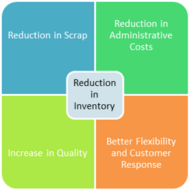
Just in Time Manufacturing Concept JIT Philosophy: With the progression in product-process technologies and the hybrid manufacturing systems, the Japanese have been perfecting a manufacturing system called ‘Just in Time’ or ‘JIT’. This JIT operating system is nothing but a production strategy that strives to improve business return on investment by reducing in-process inventory and associated carrying costs. The JIT purchasing system has emphasis on timing to supply materials just in time for use on the factory floor. Equally important emphasis is given to close and long term relationship with a few suppliers. The suppliers in JIT manufacturing are geographically closely located. Specifications: Producing and delivering finished goods ‘just in time’ to be sold Partly finished goods ‘just in time’ to be assembled into finished goods Parts ‘just in time’ to go into partly finished goods Materials ‘just in time’ to be made into parts. Loose specifications instead of rigid product specifications are used which leads to best use of supplier specialization and expertise for low cost and better quality. Frequent deliveries (daily deliveries) of small lots of exact quantities required are supplied directly to the shop floor avoiding large inventories, paper work and double inspection. The JIT system underlines the mutual confidence between buyer and supplier and long term relationship. This leads to investment by the supplier for the benefit of the buyer in terms of plant and equipment for improvement of quality, reduction of cost and shortening manufacturing lead times. Where does the responsibility lie? ‘The responsibility for the quality rests with the manufacturer of the part’ is the principle behind this Japanese practice. The primary responsibility for quality is transferred from quality control department to the production department. The quality control is considered a line function rather than staff function. The processes are designed to have less specialization on the part of workers. The physical layout is arranged in such a way that workers can operate two or three machines effectively and thereby become multifunctional. Good Quality First Time Every Time: Workers are organized in small closely linked groups thereby building team work. The production for each stage is planned in small lot sizes just meeting the needs of the subsequent stage. The system is such that even if one item produced is substandard, it would affect subsequent processes causing shortages and exposing the process or worker who has produced substandard item. This acts as a great motivator to produce good quality first time, every time. This also heightens the awareness among the workers about the inter dependence of processes. Taiichi Ohno, Father of the Toyota Production System saw this as an attribute rather than a problem. He used an analogy of lowering the water level in a river to expose the rocks to explain how reducing inventory showed where production flow was disrupted. Once bottle necks were exposed, they could be rectified or removed. Since one of the main barriers was rework, lowering inventory shoved each shop to improve its own quality. Just-in-time is a means to improving performance of the system, not an end. The result of the Japanese manufacturing system is quite pervasive in the areas of: Reduction in inventory Reduction in scrap Reduction in work Reduction in indirect costs Reduction in spare Reduction in administrative costs Increase in motivation of workers Increase in quality Better response to customers Better system flexibility and quicker response. What is kanban? Kanban is Japanese for “visual signal” or “card.” Toyota line-workers used a Kanban (i.e., an actual card) to signal steps in their manufacturing process. The system’s highly visual nature allowed teams to communicate more easily on what work needed to be done and when. It...