Posted by Managementguru in Business Management, Entrepreneurship, Labor Management, Operations Management, Principles of Management
on Mar 31st, 2014 | 0 comments
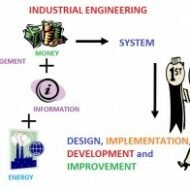
Operations Research-Emphasizing the need of Math in Management Business is all about “demand versus supply”. And as is always the case, industries operate in a tight situation, with limited resources and heavy demand, trying to make the ends meet. The production of required quantity with the available resources needs an approach that is quantitative and logical as well. This can be obtained by weighing the odds and choosing the right kind of decision that suits your business plan, be it production, distribution, marketing, selling or any business situation, where there is a need to compare and contrast between alternating decisions, to arrive at an optimal solution. High end mathematical concepts in Operations: Operations research comes into the picture in such situations, wherein, high end mathematical concepts and models are applied to problem situations, to first define the problem and then extract the best possible solution by quantifying the resources available. Quantitative data is then converted into linear equations to maximize the productivity and profit. Profit maximization is generally aimed by most of the firms that operate with limited potential and operations research helps to achieve this through optimal use of the available resources. Application of Scientific Methods: The emphasis is on application of scientific methods, use of quantitative data, goals and objectives and determination of the best means to reach them. Once the data is collected, it is carefully evaluated and the relationship among data is established, which helps in defining the problems and goals. The problem is represented logically to decide the course of action. Say, for example, Linear Programming represents each and every problem situation in the form of a linear equation and tries to allocate resources in an optimal fashion. Alternate decisions are evaluated and the decision that yields the best result in terms of productivity and profit is considered. Measure of Effectiveness: How do you measure profit? The measure of effectiveness will be determining the rate of return on investment, and every possible solution can be weighed against this measure. Theories of probability are also used to predict the success rate of the combinations of variables executed in different ways. But one has to understand that only some variables are controllable and others are not. Say, if the economy experiences inflation or recession, your predictions will undergo a drastic review in purview of the fluctuations in the economy. Similarly availability of labor is always a constraint, either labor is not available or they demand more pay. Simplex Methods: Since voluminous data is involved, computers with multi processors are used to manipulate the data. Mathematical tools like simplex methods, integer programming, graphical methods, transportation and assignment techniques, simulations, game theory and queuing theory can be very well applied to solve complex problem situations with ease. Today’s business world demands more sophistication in terms of technical updations. Evolution of Opeartions Research Techniques: Operations Research dates back to the Second World War period, and the accelerated growth of this discipline in recent years can be attributed to the fact that, researchers have found this useful in solving economic and political problems too. At the same time, critics point out that, application of operations research proves advantageous only to those people who are accustomed to the usage of rapid computing machines and understand the complex mathematical formulae and relationships. Note: Energy: The oil industry was one of the earlier users of operations research techniques to help manage their refinery processes, and operations research technologies are heavily used by all the major oil companies. Manufacturing: Manufacturing organizations continue to use operations research to optimize factory operations. Transportation: Operations researchers execute logistics for air traffic control, trucking, and railroads. Real-time dispatching and delivery truck...

Posted by Managementguru in Business Management, Change management, Decision Making, Principles of Management, Training & Development
on Mar 31st, 2014 | 0 comments
Evaluating the Importance of Decision Making Successful decision making is one that is devoid of any ambiguity or tentativeness. Although there is a wide range of choice and alternative techniques to arrive at a decision, timely decision making is what adds value to the decision. The objective is to execute the action plan immediately to avoid delays that might prove costly in terms of productivity. Defensive behavior of managers: Managers who are the key figures to make decisions sometimes play defense to avoid action, blame or change. They exhibit a variety of defensive behaviors which is a wasted effort; this also makes the workers lethargic in their attitude. Avoiding action is considered to be the best political strategy. Some managers always talk about the rules and regulations that have been followed for ages in that company and want every action to be rigidly adhered to the precedence and neither allows nor admits the need to consider the nuances of a particular case. Policies and Procedures: Policies and procedures are of course the prerogative of the top level management, but it is the duty of the manager to suggest reforms in those policies that are obsolete by bringing it to the perusal of the ultimate authorities. How long will you sing the same song “The rules clearly state that”! Also don’t try to pass the buck or play duals, that clearly showcases your inability to handle things and nobody nowadays is prepared to believe false pretense. Expectation of Sub-Ordinates from the Superiors: Subordinates look up to their superiors for support as well as quick solutions for problems of any kind that comes their way; only a person who is quick in reacting to situations with presence of mind and consideration is well liked by and approved of. If you distance yourself from problems or try to prolong a task in lieu of your inability to make a decision, in the short run it might prove helpful in covering up making you look busy and productive. But what happens in the long run? It leads to organizational rigidity and stagnation in terms of productivity and a sag in the morale of the employees. Fifty Models for Strategic Thinking Playing it Safe is not Always Safe: Playing safe is not always safe. Some managers always like to lead a team that has taken up viable projects with a high probability of success. There is no pain but lots of gain. This tactics makes you devoid of risk taking -which according to me is the prime and supreme quality that a manager or a team leader must possess or at least try to develop. Also taking a neutral position in #conflict situations makes you a dull leader and not a person to be much sought after. What is the result of Poor Decision Making? The first and foremost thing that managers have to understand and admit is that, poor decision making is the root cause of failed course of action. They should have the guts to admit and take up the responsibility for the negative outcome and not to seek some strategically helpless defense mechanisms. Making others a scapegoat for your helplessness doesn’t shield you for long but puts you in the defending territory forever. Ddefensiveness delays decisions, affects organizational success, sets a bad precedence, increased group conflicts, interpersonal tensions and leads to unreliable evaluations. The long and short of the discussion clearly highlights the importance of recruiting not only a qualified manager but a committed and reliable person who has the ability to take risks and tackle crisis situations with ease and steer the organization smoothly without any hitches by greasing it...
Posted by Managementguru in Organisational behaviour, Principles of Management, Strategy
on Mar 31st, 2014 | 0 comments
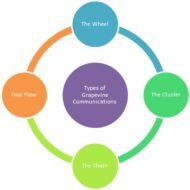
What is Grapevine? In every organization there exists an informal channel of communication called the grapevine in operation. It is called so because it stretches throughout the organization in all directions irrespective of the authority levels. Organizational Benefits that come along with Grapevine It is quite natural for a group of people working together to be interested in one another and talk about appointments, promotions, retrenchments or even domestic affairs. Some people derive extraordinary pleasure from gathering such ‘secret’ information and transmitting it to others. They are the leaders who control the grapevine. Soon this info reaches everybody and becomes an ‘open secret.’ Grapevine is more a product of a situation than of a person. Certain situations like insecurity of service, uncertainty over promotions, special increments to a colleague, certain innovations in the organization that are likely to affect the job prospects of the employees, are sure to activate the leaders of the grapevine that instantly spreads all kinds ofrumors in the organization. Communication Network of an Organization: The channel’s network is in a horizontal fashion as the communication is only between the workers of the same level of hierarchy. Apprehensions experienced by workers on matters like promotions and retrenchments become an obsession with them. Talking about them may not alleviate their fears, but it certainly provides them emotional relief. The existence of the grapevine proves that the workers are interested in their associates. The very fact they talk among themselves helps to promote organizational solidarity and cohesion. The management should work up this kind of situation to their advantage. How? Well, all information cannot be transmitted to the employees through the official channels. If there is some useful information unsuitable for being transmitted through official channels, it can be done through grapevine. The speed with which information is transmitted through the grapevine is just remarkable. Spot the Key Persons: The management should try to spot out the key persons involved in this process and keep them well informed to block harmful rumors reaching the employees. Also the grapevine can be used as an “acid test “to check the pulse of the employees. If there is any false rumor the management should immediately use the official channels to contradict and to dispel the fears from the minds of the employees. Grapevine might be Harmful Too: One of the major drawbacks of the grapevine is that it may spread baseless or distorted news which may sometimes prove harmful even to the employees. The information is sometimes incomplete leading to ambiguities. The swiftness with which the grapevine transmits information may even be damaging, before the management becomes aware of it and can take any rectifying steps. How to Handle the Rumor-Mongers? If the workers are associated with decision-making, the rumor-mongers will be automatically frustrated. If the workers are already aware, say, that the plant is to be modernized but the modernization process is not going to involve any retrenchments, the arrival of new machinery and engineers will not cause any undue apprehensions among them. Thus the harmful effects of the grapevine can be successfully counteracted. Organisations should indulge themselves in sending positive signals to the employees to win their trust and...
Posted by Managementguru in Business Management, Change management, Human Resource, Organisational behaviour
on Mar 30th, 2014 | 0 comments
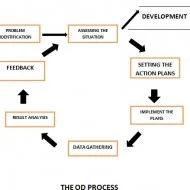
Integrated Organizational Development Organizational Development : in short OD, is a systematic, integrated and planned approach to improving enterprise effectiveness. Corporate firms can achieve success only when the available #resources are put to optimal use. Optimisation implies, deriving the best out of the limited or scarce resources. A firm is comprised of many departments, all of which compete for the same kind of resources and it becomes a tough proposition for the #management to allocate the resources suitably to different cost and #responsibility centers. The point is, changing needs of an organization has to be keenly observed by the management and if it senses a need for organizational development in any one of the disciplines, it should immediately employ appropriate #interventions to improve the #performance and #productivity. Culture – The Fundamental Aspect: Organizational development involves a paradigm shift in its culture, which is the fundamental aspect. It does not just mean finding solutions to problems. It is a process of managing change in an organization, resulting in behavioral changes in #employees for the good of the organization. Firms adopt different interventions to bring in changes in the behavior of employees through learning. The aim of introducing interventions would be to meet the short term and long term #objectives of the firm in an integrated fashion. Only when the employees are suitably appraised about the objectives and trained accordingly, their mindset gets tuned in to perform as per the expected standards. Intervention Techniques: Intervention techniques focus on shifting the individual’s focus from “me” to “us.” Before delving into the types of interventions, one might wonder why an organization needs to incorporate such interventions at the first place. The reasons may be attributed to the following: Some kinds of problems keep recurring to the surface. Even after solving a particular problem, another one of similar nature erupts. Productivity improvement techniques are not effective. Any amount of effort fails to yield the desired result. Employee morale is low and the top management is unable to pinpoint any particular reason for the undesired development. How to Overcome #Resistance from Employees’ End? Intervention techniques encourage employees to come out with suggestions and take part in decision making as well for the betterment of the organization. Though initially there might be a resistance to change, as it is natural for humans to resist change, gradually the workforce understands the importance of initializing the change that might have a direct bearing on them and their working environment. A holistic change is what is needed for an organization to rise as a whole to greater heights. #Group Training: Group training is a vehicle for individual change. It improves the listening skills, empathy, capability of being sensitive to fellow workers’ needs, interpersonal skills, and desired behavior in a social setup etc., Trainees selects the problem issues that are of interest to them, the setting being informal and unstructured and most interestingly there is no external force to structure the discussion. But it may be noted that the trainer interferes in extreme cases where the discussions turns out to be #counterproductive and destructive. #Survey Feedback: Survey feedback is another kind of intervention that gathers data from employees at different levels regarding the problem issues, through questionnaires and the feedback of the survey is analyzed by the top management to find the loopholes or bottlenecks hindering the development. This has been a popular organization development technique since time immemorial and still followed suit. These programs are useful in improving the #quality of work life and employee productivity. Analysis of the effectiveness of intervention programmes and evolving right research designs to measure the variables before and after the change, shall reveal the...
Posted by Managementguru in Business Management, Change management, Decision Making, Entrepreneurship, Human Resource, Leadership
on Mar 30th, 2014 | 0 comments

Power and Balance in Corporate Governance Power has the ability to disorient a person’s behavior and attitude. When properly used it leads to height of efficiency, when misused it calls for calamity and disorientation in the entire business firm. It is nothing but the authority that comes with your job which has to be utilized for constructive purpose and at the same time to ascertain that things are “going in the right direction.” Precise use of power leads to a congenial atmosphere in your business arena”. Otherwise in course of time you might have to tackle warfare with your subordinates and the “undercurrent of animosity” might ruin your business success. How it affects Inter-Personal Relationship: When we talk about POWER it usually fits well into the top level management cadre, as managers and senior managers are assigned with huge powers in order to lead the firm in times of crisis as well as maintain the consistency of the nature of the firm. So when there is abuse of power consciously or unconsciously, people create a space between themselves and that particular person who misuses the power. So the result would be a lack of interpersonal relationship between the manager and the employees. Managers generally acquire and use influence that has its impact not only on the behavior of the individuals, but also on the organizational effectiveness as a whole which in turn affects productivity. Use Power as a Constructive Tool: In fact, authoritative behavior is often misunderstood by most of the managers in the business setup; there is a need for the managers to skillfully use their power in order to extract work from their teams as well as to maintain a balance between the extent to which authority must be used and the tolerance level of the employees’ (mind set). So it is more of a psychology which involves much critical analysis on the part of the manager to understand the constructive aspects of his authority and how employees at a lower level will always look up to him for support and guidance and not indifference. Power covers and affects the following important aspects, Discretion Crisis management Dependence of employees Responsibility Leadership Governance Interpersonal relationship Change management Environmental influences Reward systems Collaborative management Success of the firm and so on. In order to maintain his own integrity as well as the organisations’ the manager must be able to appreciate the relevance of power in management just by not looking into the literature but act in accordance with the situation. A detailed analysis of power dynamics makes the manager more effective in dealing with behavior inconsistencies in the organization. Try to be more open in your communication and make your employees feel that “You are always there” to support and guide them. This in turn will make your “Boss to have a second look at you” for a promotional pay. This discussion is from the manager’s perspective and there is more to be discussed and considered from an employee’s...