Posted by Managementguru in Marketing, Principles of Management, Project Management, Strategy, Technology
on Mar 25th, 2014 | 0 comments
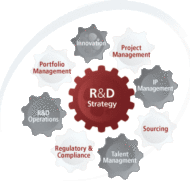
Research and Development – Strategic Key for Competitive Advantage Product Innovation and Process Improvement: With the increasing pace of liberalization and ferocity of competition in the corporate business world, it is mandatory for the firms to invest in research and development activities to sustain in the market. In most of the developing countries, scant attention has been paid to research and development activities. A survey indicates that countries like Japan and United States of America spend 2.8 percent of their Gross National Product on R and D, while it is a mere 0.9 percent of the Gross Domestic Product in the case of some Asian countries. What role does research & development play in the industry and economy? Why it is important for the developing countries to invest more on R and D? In spite of the tax rebate offered by most of the governments for R and D, why industries don’t contribute much to indigenous research? Global Competition: It becomes difficult for business organisations to compete in national and international markets both on quality and cost fronts, primarily because of absence of strong base in science and technology. Third world nations are used to buying technology from developed nations, that make them dependent and technology starved. Limited resource is another problem faced by these business firms, the allocation of which becomes difficult owing to rising costs. Invasion of Multinational and Trans national Giants: Another serious aspect to be considered is the invasion of multinational and transnational giants in every sector due to liberalization, globalization and privatization policies of the developing nations. This leads to panic in the industry, as a result of which, the business firms either go for forged alliances or infuse large amounts of funds into R and D activities hurriedly, both of which is a futile exercise to protect themselves from the onslaught of transnational companies. Science and Technological Advancement: The wiser move for the business firms to withstand the competition on an international level, would be to build their empires on a sustainable basis, by honoring the scientific and technological efforts. A thorough knowledge of all the research activities progressing around the world proves useful in managing their activities and operating with limited resources. This demands a long term plan that will support, strengthen and nurture the specified area of science base selected for research and development. Research Management: A well devised research management programme will help the business firms to formulate short and long term technical plans that aid in the research programme. It is very important for a country to encourage the budding population to become more research oriented, that will help the nation prosper in terms of science and technology, besides which, it also helps in the growth of one’s own economy. Chanakya’s 7 Secrets of Leadership The Research and Development strategic management lays emphasis on formulating plans, that support the short and long term objectives of a business firm, by employing innovative minds in the process and periodically reviewing and restructuring strategies in the light of changing demands of the society. The focus of an R and D manager should be on appraisal of technological and competitive environment, assessment of corporate strengths and weaknesses and making strategic decisions, while formulating R and D...

Posted by Managementguru in Business Management, Decision Making, Principles of Management, Strategy
on Mar 24th, 2014 | 0 comments
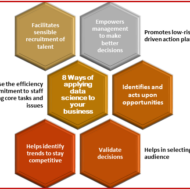
Growth Strategies In Business What are Growth Strategies? The means by which an organization plans to achieve its objective to grow in volume and turnover. The dynamic business environment calls for periodical changes in the business definitions, in terms of customer groups, customer functions and alternative technologies to broaden their scope for expansion. Growth can never be achieved by a business enterprise, if there is no proper planning for diversification of its business activities across a broad spectrum. Expansion strategies are followed when an organization aims at high growth, by improving its overall performance. A Small Note on Data Science and Analytics Data analytics help companies improve operational efficiency, drive new revenue and gain competitive advantages. To leverage this technology, companies need to understand the core of their data and determine the outputs that they are looking for. In fact, data-driven companies that utilize Business Analytics achieve a competitive advantage. The companies can improve their strategies by keeping in mind the customer focus. Big data analytics efficiently helps operations to become more effective. Expansion Strategy: Expansion strategies have a profound impact on the internal configuration as well as internal functioning of an organization. The business firms bear the risk of moving in an entirely new direction, where there is an equal chance for failure as that of success. If only a manufacturer plans to diversify or expand in a field that complements his present business activity, does it make any sense. What is the fun in venturing into a business activity about which you have no knowledge or scope? Expansion through concentration: This involves investment of resources in a product line for an identified market with the help of proven technology. A firm may attempt to intensify its focus on existing markets through market penetration strategies. Or new users may be targeted for existing products or alternatively it may introduce new products in existing markets by concentrating on product development. Concentration policy relies on the principle of “A known devil is far better than an unknown angel.” It is a very difficult task for firms to capture new markets or to gain acceptance for new products in existing markets. Expansion through integration: A company attempts to widen the scope of its business activities in such a manner that it results in serving the same set of customers. The alternative technology dimension of the business definition undergoes a radical change. Firms try to move up or down in the value chain to meet the demands of the customers by integrating adjacent activities. Expansion through co-operation: It may include mergers, takeovers, joint ventures and strategic alliances. Two firms try to combine their resources, capabilities and core competencies to pursue mutual interests to develop, manufacture or distribute goods and services. Expansion through internationalization: International strategies are formulated in the wake of globalization where most of the developing countries have liberalized their economic policies facilitating foreign direct investments, generating foreign exchange. Many multinational and transnational companies are setting up their operations in developing countries to factorise the economies of scale and to enjoy the advantages of cheap labor and availability of resources. Stability Strategy: Many firms go for stability strategies that are devoid of any risks. They are quite contented with the modest profit gained from the present business activity and try to maintain the same level of performance, until and unless there is a pressure from the market in the form of competition. Only few firms have that adventurous attitude to take risks in order to have a sustainable competitive...
Posted by Managementguru in Business Management, Decision Making, Organisational behaviour, Principles of Management, Strategy
on Mar 24th, 2014 | 0 comments

STRATEGIC PLANNING Strategic planning is the primary step in the process of strategic management [Strategic management is a comprehensive topic that covers almost all the functional aspects of the organization] which can be outlined from at least two perspectives: First, strategy is the “broad programme for defining and achieving the objectives of an organization and implementing its mission”. Secondly, “It is the pattern of the organization’s response to the external environment over a period of time”. A strategy that takes a broad and typically long range focus is called strategic planning. MBA Application Strategies for Top Business Schools Strategic planning is the process that classifies the long range goals of the organization and opts for the precise means (strategies and polices) for achieving these goals, allocates resources, and develops long range plans to reach the destination. Watch this Video to Understand the Overview of Strategic Planning Process Time-Horizon: Strategic planning takes into account the extended time horizon. There may not be any immediate impact out of strategic planning, but the consequences in the long-run prove to be gradual and significant as well. It provides with the necessary action plans to make a difference in vital areas concerning development. You can always associate innovativeness with strategy since it explores new paradigms and tries to enhance the impact. When the size of organizations expands, they are broken down into strategic business units (SBU’S) for the purpose of functional excellence. These units are expected to operate as if they were relatively independent businesses. WHY STRATEGIC LEADERSHIP IS IMPORTANT A Tailor Made Approach: A tailor made approach is essential when it comes to strategy development the systematic analysis of the factors associated with customers and competitors (the external environment) helps the organization to meet the challenges of modern society. More and more organizations are focusing on formal approaches and concepts for planning their long range process. Specifically these challenges are a result of increasing rate of change, the complexity of manager’s jobs, the increasing importance of fitting the organization into external environment, and the increasing lag between the preparation of plans and their implementation in future. Resource Allocation: Strategic planning is an organization’s process of defining its strategy or course, and making decisions on resource allocations to pursue this strategy. Managers must be adequately geared up for strategic planning. The goals of the organization must be made plain and not unclear. Each business unit should be categorized based on its performance level to decide on the resource share to be allocated. You need to infuse cash flow into ineffectual units and divest funds from dying units into other profitable ones. The ultimate aim is to build up star performers that will be the perennial source of income or revenue generation. There should be a strong linkage between planning and control. The assessment of strategic plans of the business units must be made periodically and effectively. TOP FIVE REASONS WHY STRATEGIC PLANS FAIL SWOT Analysis: SWOT analysis is a strategic planning technique used to evaluate the Strengths, Weaknesses/Limitations, Opportunities, and Threats. Planning is the primary step for control as it provides several standards and benchmarks of control. Planning extracts commitment. Some times planning highlights the objectives only and the planning premises may not be fully reliable. Threats are to be considered as challenges and must be converted into opportunities. Two heads are better than one is the philosophy of brain storming where a group of people with knowledge and expertise assemble to lay out clear plans that will steer the organization smoothly even in times of rough...
Posted by Managementguru in Business Management, Decision Making, Human Resource, Labor Management, Strategy, Training & Development
on Mar 23rd, 2014 | 0 comments

INDUSTRIAL RELATIONS STRATEGY THE INDUSTRIAL DISPUTES ACT, 1947: An Act to make provision for the investigation and settlement of industrial disputes, and for certain other purposes. It is a universally accepted fact that maintaining industrial peace is of significant importance as it yields higher productivity and arrests industrial unrest. Conflicts manifest themselves in the form of strikes, poor productivity, absenteeism and attrition. These are symptoms of growing conflicts which the management has to weed out right at the start and remove the discontent amongst their employees. Relationships can always be complex or they can always be simple depending on your attitude, how you look at it. In a larger scale, definitely it is a complex phenomenon that has to be dealt with utmost care, as feelings and emotions take lead during problem situations and logic and discipline are conveniently forgotten. Employee Participation: Employee participation is the only way to promote industrial democracy and peace. In course of time it becomes a business strategy and takes the shape of self-management when the pressure of management is eased out to a larger extent. Always remember that the confidence on your workers proves to be the key that opens the door of trust and reciprocation. Workers also understand the storm and turbulence that the management experiences in terms of finance and selling. Proper Training: Proper training given to the heads of various departments in terms of attitude, language, behavior, presence of mind and employee motivation helps the management to avoid unnecessary conflicts. Training given to the union leaders of various capacities on the other hand boosts up their confidence and make them feel as “one” with the management. Social relations are always not to be taken for granted as it determines your integrity and success in the business society. Some golden rules or strategies to make your working smooth and avoid conflicts and strikes. (Works out for both sides) Put yourself in other man’s shoe to know or understand why the other side has taken that particular “stand” or position and many a time we come to know it is only due to misguided apprehensions, mistaken beliefs or just fear of change that is an inherent quality in humans. They resist change as it is simply their habit. The negotiator who represents your side should be agreeable, affable and he should be able to project your ideas and claims in a proper manner and also he should protect your interest. See to it that he doesn’t fall bait to some attractive offers from the other side. Approach the problems with an “open mind”; don’t give space for rumors and gossips. Let the conversation between you and your opponents (not enemies) be fair and square and straight forward. Also don’t try to beat around the bush as it is a colossal waste of useful time and energy and of course your hard earned money. Consider union as a partner and not a “necessary evil”. You have to “work-with” and “live-with” them. In fact smooth relations make work easier and concern for the welfare and security of your employees make them come closer to you and contribute more in terms of productivity. Identify the anchor persons who can be dealt “in person” to make things easy for both sides and find out what their very idea of negotiation is, to finish the deal with minimum effort. The management must create a sense of belongingness in the minds of employees. Survival and success of an organization depends solely on the very survival and success of their workers who believe that work is...
Posted by Managementguru in Business Management, Decision Making, Marketing, Organisational behaviour, Principles of Management, Strategy
on Mar 23rd, 2014 | 0 comments

Smart Objectives for Success An objective describes something which has to be accomplished and defines what organizations, functions, departments, teams and individuals are expected to achieve. Objectives may be operational or developmental. When the contribution is oriented towards the accomplishment of corporate objectives, in the light of the organization’s mission, core values and strategic plans, it is termed as operational; personal or learning objectives that involve the improvement of knowledge, skills and performance of individuals is termed as developmental. Objectives must be SMART: S-scientific M-motivating A-achievable R-realistic T-time bound Objectives that are mostly confined to the near future may be termed-short term objectives, which are accomplished in the stipulated time duration. Say, for example, 1000 units of pet bottles have to be produced in a week’s time. If the firm is focused on the overall production plan for the forthcoming year, then it is termed as long term objective. In a production environment, a firm has to initially go for an aggregate plan, where the production capacity of the plant is determined to make the project feasible. The firm has to make doubly sure, whether it is resourceful in terms of physical, financial and human aspects. The work centers are allotted with jobs in a mock trial to check man versus machine co-ordination and compatibility. Pic Courtesy: Digital Information World Proper Planning: Objectives are achieved only when there is proper planning. The top management must take the pains to clearly explain the objectives to all the employees across different levels of organization to facilitate smooth functioning. When the employees understand what is expected of them, the performance gets oriented towards accomplishing the objectives; the employees get proper direction and focus. Delivering Happiness: A Path to Profits, Passion, and Purpose Think of this, what will happen to the sales volume, if the marketing manager does not properly educate his team about the targets to be achieved for that quarter? Definitely there will be a dip in the sales owing to the lethargic and irresponsible attitude of the manager. Ultimately, the organization stands to suffer a loss in terms of time and cost of recruiting a new person to head the marketing department. Right Person for the Right Job: Organizations have to be meticulous while choosing people for the post of managers. The chosen persons must be able to identify themselves with the organization and its objectives, so that they could be a source of inspiration for people down the line. Right people for the right job, at the right place and right time is the success mantra. Objectives have to be periodically revised in the light of changing economic, political and technological developments. How to Stop Worrying and Start Living If not the objectives might become obsolete and in due course you will get stranded amidst the roaring competition. The process of business management aims at managing people and other resources to make a modest profit. How to achieve success in an open market? By clearly setting objectives that serve as tools of motivation and persuasion, a firm can evolve and contribute strategic inputs that make the objectives realistic and...