Posted by Managementguru in Startups
on Apr 10th, 2015 | 0 comments
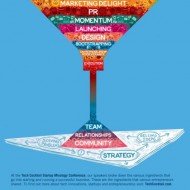
Let’s start the discussion traditionally with a Merriam-Webster definition, a startup means “the act or an instance of setting in operation or motion” or “a fledgling business enterprise.” What does the American Heritage Dictionary suggests is “a business or undertaking that has recently begun operation.” A startup is an organization formed to search for a repeatable and scalable business model. A startup is a business that has the capability to grow very rapidly, ultimately becoming a “real company” with an HR department, divisions, and processes. Steve Blank calls #startups a “temporary organization designed to discover a business model.” Startups, when they begin, have no procedure, no culture, and no recurring business model. All they know is that they have the potential to address a huge market if they can figure their business model out, and then scale quickly enough to stay ahead of the competition. As a founder you set off with a vision of a #product with a set of features and a series of assumptions about all the pieces of the business model. The inevitable questions to be answered are: Who are the customers/users? What’s the distribution channel? How do we price and position the product? How do we create end user demand? Who are our partners or Co-Founders? Where/how do we build the product? How do we finance the company, etc. When you go around and ask people however, startup really means a young company generally building something focused on technology. Every business goes through the same four phases: #Idea Startup Growth Maturity This maps rather well to Steve Blank’s 4 stages described in four steps to the epiphany: Customer discovery Customer validation Customer creation Company creation When is a startup no longer a startup? “A startup is no longer a startup when the product/market fit has absolutely been achieved, profitability or considerable revenue with a path to profitability has been obtained, and if any one person left the company would still survive and not get swayed by the departure.” Being a start-up is mostly about work environment and employee interactions. A start-up graduates to being no longer a start-up when interactions across hierarchies become formalised. For example, if you can no longer walk into the CEOs office to pitch your idea and (s)he does not know you by name, you are no longer working for a start-up. Also, if a company begins to have rules about employee progression (such as you need to spend 2 years before being promoted or moving into a new role etc) then it stops being a start-up. #Companies which have strict rules on which schools to hire from or firm ideas on how many years of experience should be required for which role, are no longer start-ups. I am not saying that start-ups do not have any criterion for hiring but these criterion, in a start-up, these would be based on things other than simply the pedigree or the number of years of experience. Start-ups hire people if they see passion and willingness to go the extra mile rather than for merely the right pedigree. Source: http://www.quora.com/Faguni-Jain Having made the above points – if a company crosses a certain threshold of revenues and/or profits, it should also declassify itself as a start-up – though it can continue to maintain the ‘start-up environment’ for its employees. Some Startup Mantras for Beginners would be: Be Careful with Cofounders Startups Take Over Your Life It’s an Emotional Roller-coaster It Can Be Fun Persistence Is the Key Think Long-Term Lots of Little Things to be considered It’s much more of a grind than glamorous Start with Something Minimal Engage Users Be Willing to Change Your Idea after User Interaction...

Posted by Managementguru in Marketing, Social Media, Startups, Technology
on Apr 8th, 2015 | 0 comments
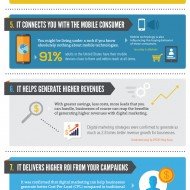
Disclaimer: This content is curated and since information related to digital marketing is available aplenty on the Internet, I thought of compiling data in a sequential and comprehensive manner for the benefit of the readers. One of the easiest, fastest and cheapest ways for businesses to reach consumers today is via the Internet. Read on: Fed Fix: What is Inbound Marketing? This resourceful article explains essential inbound marketing strategies and tactics that companies can use to boost their campaigns’ effectiveness. Digital marketing, also known as Internet or online marketing, is quickly replacing print, television and radio advertisement as the marketing approach of choice for businesses of all sizes. Recent research revealed that 1 in 4 of every business-advertising dollar is dedicated to Internet marketing. Digital marketing uses internet connected devices such as smart phones, laptops and tablets to engage customers online via technologies such as web and email in conjunction with digital customer data such as characteristics and behaviour. Channels include display advertising, search engine optimisation (SEO) and search engine marketing (SEM). It also includes email, RSS, blogging, podcasting, video streams, social networks and instant response messaging. If you are looking for an edge over your competitors, a digital marketing strategy can provide many benefits to today’s savvy business owner. Benefits of Digital Marketing for Small Business 👇 Instant Access Wide reach to internet users in a single click. Cost Effective A well planned and targeted digital marketing campaign can help your business reach your target audience at a lower cost compared to traditional marketing tactics. Open 24/7 Your website is available to your target audience 24/7. Increases Customer Retention and Loyalty Engage with your customers in a more personalised way when you advertise your products and services. Community Building and Reputation Social media provides the perfect platform to build customer loyalty and build strong online reputation. Research Provides the possibility for an immediate response and feedback from today’s connected consumer. It’s Measurable Track your online campaign’s success in real time. Digital Marketing Channels or Campaigns Online marketing doesn’t only revolve around your website. Although this is an important part of it, you should be aware of other channels that will aid your digital marketing strategy. Whether you’re looking at low budget or blow–the- budget campaigns, these forms of digital marketing are ideal for small businesses as you can adapt your activity to suit your financial situation: 👇 Discover a huge collection of digital assets on Social Media Marketing here! 1. Content Marketing Your website is a powerful tool within your marketing strategy. Most of the time this is where you will be directing your customers to when you engage with them so it’s important to ensure you have interesting content to keep your customers on the site for longer. Start by keeping an interesting blog so that you can share relevant content with your customers and draw them to your site. With new technologies, more people are reading content on their mobile phones and tablets than ever before. It’s important to ensure your website is easy to browse and interact with on these different devices so that customers can have a good user experience on the move. 2. Search Engine Marketing Stay ahead of your competitors by driving traffic to your website using Search Engine Optimisation (SEO). It works by optimising your site to increase its organic ranking in search engine results (for example how high up you would appear in a search list on Google), so that customers will be more likely to visit your site. Search engine marketing focuses on improving your ranking using specific methods such as improving your use of keywords (words and phrases...
Posted by Managementguru in Startups
on Apr 5th, 2015 | 0 comments
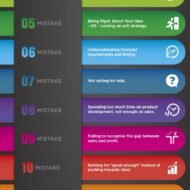
Enjoy this Infographic on a list of “Startup Mistakes to be Avoided.” Source: 15 Startup Mistakes You Should Avoid #startupmistakes #businessplan #teamdevelopment #hiring #vision #interpersonalrelationship #finance Some Brilliant Tweets on Startups – Quote them or Tweet Them What’s the one mistake all entrepreneurs make? http://t.co/hW41Ne6yWL pic.twitter.com/VjT5qgNyMY — CNN International (@cnni) April 4, 2015 Words of #wisdom for the #determined #entrepreneur planning the next big #startup. #Marketing #quotes for #life pic.twitter.com/pPlUGoMP3E — BreMobile Inc. (@BreMobileInc) April 3, 2015 Sure Steps Lead To Great Destinations via http://t.co/ofQajdrNPD #wisewords #knowyourvalue #startup #quotes #success pic.twitter.com/kXVRFCw16H — SuccessFastlane.com (@SuccessFastlane) April 2, 2015 Your Business Tip Of The Day via http://t.co/ofQajdrNPD #businesstips #wisewords #entrepreneur #quotes #Startup pic.twitter.com/2ktrGg7RCh — SuccessFastlane.com (@SuccessFastlane) April 1, 2015 A Series Of Great #Opportunity @10MillionMiler #quote #leadership #entrepreneur #startup #quotes RT @MeredithBlis pic.twitter.com/hZkjwpeRDE — Wright Thurston (@10MillionMiler) April 3,...
Posted by Managementguru in Business Management, Decision Making, Financial Management, Marketing, Sales, Startups, Strategy
on Mar 4th, 2015 | 0 comments

A popular “Corporate Portfolio Analysis” technique is the result of pioneering effort of General Electric Company along with McKinsey Consultants which is known as the GE NINE CELL MATRIX. GE Nine-Box Matrix This is a strategy tool that offers a systematic approach for the multi business enterprises. It helps them to prioritize their investments among the various business units. It is a framework that evaluates business portfolio and provides further strategic implications. Each business is appraised in terms of two major dimensions – Market Attractiveness and Business Strength. If one of these factors is missing, then the business will not produce desired results. Neither a strong company operating in an unattractive market, nor a weak company operating in an attractive market will do very well. The vertical axis denotes industry attractiveness, which is a weighted composite rating based on eight different factors. They are: Market size and growth rateIndustry profit margins Intensity of Competition Seasonality Product Life Cycle Changes Economies of scale Technology Social, Environmental, Legal and Human Impacts What Does the Horizontal Axis Represent? It indicates business strength or in other words competitive position, which is again a weighted composite rating based on seven factors as listed below: Relative Market ShareProfit margins Ability to compete on price and qualityKnowledge of customer and market Competitive strength and weakness Technological capability Caliber of management The two composite values for industry attractiveness and competitive position are plotted for each strategic business unit (SBU) in a COMPANY’S PORTFOLIO. The PIE chart (circles) denotes the proportional size of the industry and the dark segments denote the company’s respective market share. The green zone suggests you to ‘go ahead’, to grow and build, pushing you through expansion strategies. Businesses in the green zone attract major investment. Red indicates that you have to adopt turnover strategies of divestment and liquidation or rebuilding approach. Advantages Helps to prioritize the limited resources in order to achieve the best returns.The performance of products or business units becomes evident. It’s more sophisticated business portfolio framework than the BCG matrix. Determines the strategic steps the company needs to adopt to improve the performance of its business portfolio. Disadvantages Needs a consultant or an expert to determine industry’s attractiveness and business unit strength as accurately as possible.It is expensive to conduct. It doesn’t take into account the harmony that could exist between two or more business units. PORTER’S FIVE FORCES-INDUSTRY...
Posted by Managementguru in Business Management, Marketing, Operations Management, Project Management, Sales
on Feb 3rd, 2015 | 0 comments
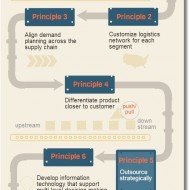
What is Supply Chain Management? Investopedia Supply chain management (SCM) is the streamlining of a business’ supply-side activities to maximize customer value and to gain a competitive advantage in the marketplace. SCM represents an effort by suppliers to develop and implement supply chains that are as efficient and economical as possible. Wikipedia Supply chain management (SCM) is “the systemic, strategic coordination of the traditional business functions and the tactics across these business functions within a particular company and across businesses within the supply chain, for the purposes of improving the long-term performance of the individual companies and the supply chain as a whole.” Business Dictionary 7 Principles of SCM Management of material and information flow in a supply chain to provide the highest degree of customer satisfaction at the lowest possible cost. SCM requires the commitment of supply chain partners to work closely to coordinate order generation, order taking, and order fulfillment. They thereby create an extended enterprise spreading far beyond the producer’s location. Supply Chain Management in Simpler Terms The EFFECTIVE movement and management of materials and information as they flow from their source to the end customer. Supply Chain encompasses purchasing, manufacturing, warehousing, transportation, customer service, demand planning and supply planning. SCM is a daunting task and calls for proper planning and execution. SCM is the control of the supply chain as a process from supplier to manufacturer to wholesaler to retailer to consumer. SCM does not only comprise the passage of a physical product through the chain but also any data that goes along with the product (such as order status information, payment schedules, and ownership titles) and the actual entities that handle the product from stage to stage of the supply chain. OBJECTIVES OF FORECASTING There are Essentially Three Goals of SCM To reduce inventory To increase the speed of transactions with real-time data exchange and To increase revenue by satisfying customer demands more efficiently. When you think of the world’s most efficient and successful performance and supply chains, what comes to mind? For me it is not Wal-mart or Pepsi but Mumbai Dabbawalas – Watch this Video. The Success of Supply Chain of Dabbawalas in Mumbai –Said to be Six Sigma Compliant No over-reliance on technology, all manual operations Create an integrated performance chain, the chief, team leaders and delivery men. Acute visibility Keep it simple. Real simple with a color coding to identify where the food has to be delivered and to whom. Timely Delivery as the shelf life of food is 4-5 hours. Why is it so important for companies to get products to their customers quickly? Faster product availability is significant to increasing sales and there’s a sizeable profit advantage for the extra time that you are in the market and your competitor is not. The earlier and faster you are in the market, the more orders and market share you enjoy. The ability to deliver a product faster also can make or break a sale. If two competitive products appear to be equal and one is immediately available and the other will be available in a week, which would you choose? Supply Chain Management is all about moving goods more quickly to their destination in a strategic and tactical manner. Supply Chain Management Tomorrow The future for Supply Chain Management looks very bright. Two major trends are benefiting Supply Chain Management operations- Customer service focus and Information technology. Successful organisations must excel in both of these areas, the fundamental objective being to “ADD...