Posted by Managementguru in Business Management, Decision Making, Principles of Management, Project Management, Strategy
on Jul 31st, 2014 | 0 comments
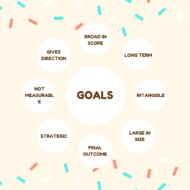
A goal has the word ‘go’ in it. Your goals should go forward in an unambiguous direction. However, goals are more about everything you accomplish on your journey, rather than getting to that distant point. Goals will often go into undiscovered territory and you therefore can’t even know where the end will be.

Posted by Managementguru in Business Management, Entrepreneurship, Financial Management, Project Management, Startups
on Jul 19th, 2014 | 0 comments
What is a Startup Cost? Non-recurring costs associated with setting up a business, such as accountant’s fees, legal fees, registration charges, as well as advertising, promotional activities, and employee training. Also called startup expenses, preliminary expenses, or pre-opening expenses. Let me clarify that this discussion pertains to small and medium size enterprise startup costs and not about capital budgeting. Any project that an entrepreneur wishes to undertake has four factors to be considered. Men Material Machine Money Finance is the lifeblood of any business and to be successful, one must, inject sufficient capital into it. Many businesses fail because of under-capitalization. Seed Money Requirements To determine how much seed money you need to start, you must estimate the costs of doing business at least for the first year. Expenses may be categorized as ‘one-time costs’ such as the fee for incorporating your business or the price of a sign for your building. Some will be ‘ongoing costs’, such as the cost of utilities, inventory, insurance, etc. There is a pressing need for you to bring enough working capital to run the day-to-day business affairs. Without a projected fund flow statement and proposal, no bank or financial institution shall offer you long term loans to run the business. First of all, you need to write the business plan and ask yourself the following questions. Ask yourself these 20 questions to make sure you’re thinking about the right key business decisions: Why am I starting a business? What kind of business do I want? Who is my ideal customer? What products or services will my business provide? Am I prepared to spend the time and money needed to get my business started? What differentiates my business idea and the products or services I will provide from others in the market? Where will my business be located? How many employees will I need? What types of suppliers do I need? How much money do I need to get started? Will I need to get a loan? How soon will it take before my products or services are available? How long do I have until I start making a profit? Who is my competition? How will I price my product compared to my competition? How will I set up the legal structure of my business? What taxes do I need to pay? What kind of insurance do I need? How will I manage my business? How will I advertise my business? Courtesy – http://www.sba.gov/ See ‘Short Term Financing’ to know more about financing your business. The term finance sanctioned in the form of ‘Term Loan’ is required for Land and site development Building and civil works Plant and Machinery Installation expenses and Miscellaneous fixed assets which comprise vehicles, furniture and fixtures, office equipment, workshop and laboratory equipment, distribution of power and water supply etc. Expenditure on infrastructure facilities like water supply, power connection, roads, transportation etc., has to be particularly considered if the units are located in economically backward areas. Startup...
Posted by Managementguru in Business Management, Entrepreneurship, Marketing, Principles of Management
on May 15th, 2014 | 0 comments

Industries whether small or large function in an environment of controllable and uncontrollable variables. A small enterprise has to constantly interact with the market in which it has to operate and is also exposed to the risk of other environmental factors. Its marketing efforts must stay fine-tuned to suit the requirements of the market in general and the needs and wants of the customers in particular. They have to develop an exceptional market orientation in light of Intensified industrial activity Increased competition and Increased discerning capacity of customers. Need for Market Assessment The marketing orientation outlook will drive an entrepreneur to seek answers to many questions relating to market segments, marketing inputs, product quality, price structure, technology of manufacture etc., before setting up the venture. This exercise will facilitate him/her to move ahead with greater degree of confidence and tackle the problems that may arise during the later stages, in a professional manner. Market Composition Analysis of market demand, the competitive situation and trade practices are vital for a sound market assessment. The market is composed of a large variety of customers who differ in their likes and dislikes, options, preferences, education, employment, income and status. The location of customers also differ, some may be located nearer and others in distant places. Factors that help a firm to decide the target segment which is of special interest Resource availability Scale of operation and its Impact on profitability The identification of the customer groups aids in making an estimate of the market demand for the product chosen. Look for Competitive Situation Once the market demand has been estimated, one has to look for the competitive situation prevailing in the market as a firm cannot just pursue its own policies without considering what the competitors are up to. The nature and extent of competition will place several constraints on the marketing policies of a firm and a thorough analysis of the same will help in pricing and also in identifying the gaps and opportunities that will be available for exploitation. Opportunity Evaluation An intelligent and experienced entrepreneur would weigh an opportunity as follows: How large is the gap between demand and supply in the market and what is the nature of competition in the market for the product? Whether the product is covered under any of the promotional policies of the government, so that, either entry into business or competition in the market is facilitated. Whether there is any special product/service specific problem that he/she will face and can avail of any part of promotional policies, to soften the impact of these problems. Based on such product-market-policy, policy-product-market type of analysis, the entrepreneur will finally conclude if the opportunity is worth investing...
Posted by Managementguru in Business Management, Decision Making, Marketing, Operations Management, Project Management
on May 7th, 2014 | 0 comments
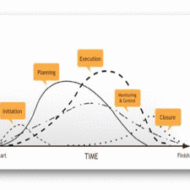
Project Formulation and Project Life Cycle What is a Project? “A temporary endevour leading to a product / service or result ” A project is any series of activities and tasks that: • Have a specific objective to be completed within certain specifications • Have defined start and end dates; • Have funding limits (if applicable); and • Consume resources (i.e. money, time, equipment). Characteristic Features of a Project: • Has a mission or a set of objectives. Once the mission is achieved the project is treated as completed. • Has to terminate at some time or the other (temporary in nature) • The project is one single entity and its responsibility is assigned to one single agency. • Calls for team-work, the members of the team may come from different organizational units, different disciplines, and geographic regions. • Has a life cycle represented by growth, maturity and decay. • Is unique and no two projects are similar, even though the plants set up are identical. The organizations, the infrastructure, the location and the people make the project unique. • Change is a natural phenomenon with every project throughout its life span. Some changes may not have any major impact, but some may change the very nature of the project. • The happenings during the life cycle of a project are not fully known at any stage. As time passes, the details are finalized successively. • Is always customer-specific. The requirements and constraints within which a project must be executed are stipulated by the customer. • Is a complex set of things. Projects vary in terms of technology, equipment and materials, machinery and people, work ethics and organizational culture. • A substantial portion of the work in a project is done by sub-contracting. The greater the complexity of a project, the greater will be the extent of work performed by subcontractors. • Is exposed to risk and uncertainty and the extent of these depend upon how the project moves through the various stages in its life span. • A well defined project has lesser risk and uncertainty, whereas an ill-defined project faces greater degree of risk and uncertainty. Project Life Cycle: The Project Life Cycle refers to a series of activities which are necessary to fulfill project goals or objectives. The different phases are as follows: a) Concept or initialization phase In this phase, the project idea emerges and the #management decides on the need for a project. A project which is well conceived can be later implemented successfully. b) Project Definition Phase •The techno-economic viability of the project is checked •The technical configuration of the project is identified •The performance requirements, sub-systems, key equipments etc.- purchased •The cost estimates with limits are identified •Schedule of implementation is identified c) Growth or Organisation Phase Organizations, during this phase, undertake the following actions: a) Establishing the infrastructure and enabling services for the project b) Project engineering and design c) Setting up Project Organization and staffing d) Appointing a project manager e) Preparing schedules and budgets f) Obtaining necessary licenses and clearances from the Government g) Raising finance h) Developing systems and procedures for monitoring and reviewing project progress i) Procedures for inviting tenders and awarding contracts j) Site preparation and development k) Procuring equipment and materials l) Work packaging This phase covers both paper work connected with project planning and also implementation activities. Planning is necessary to avoid crisis management; it makes the implementation phase to run smoothly. d) Implementation Phase The activities include: 1) The preparation of specifications for major equipment and machineries, 2) Placing orders with vendors for the supply of...
Posted by Managementguru in Decision Making, Project Management, Strategy
on May 4th, 2014 | 0 comments
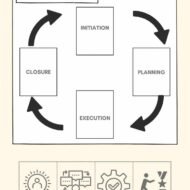
In many segments that rely on a culture of project management, the project officially begins with the official approval of the project, which is not so in the development sector, where the project life more commonly begins with a Project Identification and Screening Phase. The seed of a project arises merely as an idea – a need or opportunity that is weighed, scrutinized, and eventually developed into a project which is managed through the project life cycle. The most critical question one has to ask would be ‘Are we doing the right project?’ Because a problem well understood is half done. Let us Cruise Through the Ideas in Project Identification and Screening Search for New Ideas What are the objectives? *Brainstorm to generate alternative solutions. -Emerging market trends. –SWOT analysis. -Other constraints *Shortlist candidate ideas for detailed scrutiny. Motivation Projects are a means to accomplish -Individual or family objectives -Organizational objectives -National or global objectives Project Identification begins in response to the specific need or the objectives Objectives To increase profitsTo minimize threats of lossesTo become more competitiveTo provide help after a disasterTo train people in a new areaTo reduce pollution in DelhiTo become a successful entrepreneur Download this project planner template to effectively conduct your projects 👇 Minimal-and-Elegant-Project-Planner-TemplateDownload Swot Analysis A tool that detects the strengths, weaknesses, opportunities and threats of an organization. In particular, SWOT is a basic, straightforward model that measures what an organization can and cannot do as well as its probable opportunities and threats. The method of SWOT analysis is to take the information from an environmental analysis and distinguish it into internal (strengths and weaknesses) and external issues (opportunities and threats). Once this is over, SWOT analysis determines what may assist the firm in accomplishing its objectives, and what obstacles must be overcome or minimized to achieve desired results. • Objectives • Experience • Resources • Environment pressures -Keeping these factors in mind an analysis of strengths, weaknesses , opportunities and threats is made to identify and select suitable projects. STRENGTHS • Experience and expertise • Financial position • Capital raising capability • Industrial contacts • Foreign collaborations WEAKNESSES • Newer unfamiliar technologies • Inability to raise huge investments • Lack of experience • Lack of trained personnel • Inability to forecast market trends OPPORTUNITIES • Emerging technologies • New products with new markets • New processes with better features • Special financing schemes • Government and other incentives THREATS • Competitors • Poor state of the economy • Outdated technology • Unprofessional management skills • New products and services BRAINSTORMING • A good means to generate new project ideas • Focus on uninhibited participation by a group • Listing of ideas without suppressing creativity at source • List of ideas subjected to screening and evaluation subsequently Download this meeting notes planner template to effectively conduct your project meetings 👇 Pink-Yellow-Gradient-Project-Meeting-Notes-PlannerDownload SCREENING OF IDEAS Poor Fair Good Vgood Excellent (1) (2) (3) (4) (5) Weight •Cost * 20% •Risk * 30% •Return * 40% •Hazard * 10% •(score = 2×0.2+3×0.3+4×0.4+2×0.1= 3.1) CRITERIA IN SCREENING PROJECTS • Investment • Rate of return • Risk • Likely profit • Payback • Similarity to existing business • Expected life • Flexibility • Environment impact • Competition Let us look at the following example – Reducing Vehicular Pollution in Delhi Ideas Generated in Brain Storming Restrict registration of new vehiclesEnforce strict emission regulations for vehiclesBan diesel run vehicles on roadIntroduce MRTS – Mass Rapid Transport System for the cityEncourage use of car poolsGrow more trees/ green belts in the cityDeclaring no traffic zones in the cityBan vehicles with an age of ten or more years from plying on the roads These and...