Posted by Managementguru in Business Management, Marketing, Principles of Management, Strategy
on Mar 16th, 2014 | 0 comments

Strategies to Tide Over Competition Distinctive Competence: is nothing but a set of unique capabilities that certain firms possess allowing them to make inroads into preferred markets and to gain advantage over the competition. Human brain is the greatest think tank and it evolves new methodologies of business management from time to time in order to sustain as well as win the race. Planning is the key factor that decides the rise or downfall of a business empire. “Where we are?” and “Where we want to be in the next few years?” is how every business leader’s basic thought process must be, without which he cannot proceed further in the competitive corporate environment. If we call planning as the basement of a building, then it should be very precise, clear cut and robust so that the business empire built on this basement will never collapse and it will also serve as a role-model for everyone who aspires to set his foot in the corporate business world. At the corporate level, strategic planning helps to establish the Purpose Mission and Objective for the firm as a whole and “outlines the overall plan to attain them.” Strategy is nothing but a unique set of action plan that will distinguish you from your competitors and make you have an edge over them. Likewise strategic planning is nothing but thinking out of the box to” CREATE YOUR OWN NICHE MARKET” in the business environment. STRATEGIC COMPETENCE takes you to the top of the ladder; but to withhold your position you need to formulate innovative ideas to tide over the challenges in the market. Strategic planning facilitates this process by giving you time frame to complete your short term objectives and long term goals. Infographic Courtesy: The 4 key sources to seek insights for marketing planning Planning for SBU’s: Business level planning is done for the enterprise’s STRATEGIC BUSINESS UNITS or SBU’S. These are individual” cash cows” that makes your business noteworthy and also brings in constant revenue to run your other units successfully even in periods of recession or if a particular product is not that successful as you might have expected it to be. I shall compare a business plan to a travel plan. Both involve planning, resources, capital, marketing and so on. . . Both have starting points but a business plan and its objectives never end and you can never come back to the starting point in a business as that of a travel, because you only expand and grow to greater heights in a business provided your plan is pucca. And also the strategy seeks the integration and control of marketing, finance, production and human resources at the functional level. Strategic Plans at different functional levels: Strategic plans at different levels must be integrated to ensure that they work in tandem and reinforce each other, thereby contributing to the corporate level strategy adopted for the entire corporate group. I would call strategic planning as” INTELLIGENCE DESIGN CHOICE ACTIVITY “adopted by a corporate and it has become an inevitable feature in the directory of the business world....

Posted by Managementguru in Economics, Financial Management, Principles of Management
on Mar 15th, 2014 | 0 comments

Demand vs. Supply- Parameter deciding market equilibrium The success of economic freedom of a country is naturally reflected in the form of human prosperity. Countries like India are evidencing a consistent increase in their annual GDP rates which obviously must have reduced the population percentage living below poverty line; yet this has not been accomplished and the question is, is it really something to do with the economic model or is it the bureaucracy and inefficiency the root cause for the strain in the economy? Flow of Economic Activity: This discussion aims at shedding some light on the flow of economic activity in a free market economy. The elemental players or contributors in a free enterprise market economy are individuals and firms. Individuals who own or control resources (in the form of labor, capital or natural resources), sell these resources to firms and obtain money. These resources which serve as necessary inputs in the production process add value to firms. The money received by individuals is called factor payment which is utilized to fulfill their consumption demands of goods and services. Two distinct areas of interaction exist between the individuals and firms. One is the product market where the products are bought and sold and the other being a market for production factors, where the inputs such as labor, capital and natural resources are traded. What is the activity in a product market? Fundamentally business is all about demand vs. supply. The consumers’ demand has to be met with by the manufacturers. Profit is the primary motive of any firm and the priority of a firm lies in responding to the demands of the consumer market by supplying goods and services to the potential and prospective buyers. Input costs and production technology are the determinants of supply conditions. People’s preferences and earnings decide the elasticity of market demand. The price of the product and quantity sold is a result of the interaction between demand and supply. In a product market money flows from consumers to firms and goods and services flow from firms to consumers. What happens in a factor market? The reverse of those conditions in the product market are seen in a factor market. Here the individual becomes the supplier of production factors and hence the money flows from firms to individuals and factors of production from individuals to firms. Prices and profits control the flow of money and resources through the factor market and flow of money and goods through the product market. What is a Free Market Enterprise? Added advantage of a free market enterprise is that, the effortlessness with which one can enter and exit the market. The activity flow proves advantageous to each person involved .Firms make profits, individuals are satisfied of their consumption demand for goods and services, resource owners are compensated for their services. If an individual is not able to benefit by trading in these markets, he or she is not required to do so or free to leave the market which ensures that nobody is made worse off by voluntary trade in these markets. Essentially countries have to go in for suitable economic restructuring that promotes equality and even distribution of wealth. Wall Street protest in US is a clear-cut indication of strained market economy which is a result of people’s fury against the prevailing economic...
Posted by Managementguru in Change management, Economics, International Business, Principles of Management
on Mar 15th, 2014 | 0 comments

Factors That Influence Global Economy The industrial and business environment of developing countries has been subjected to a sea of changes owing to the economic reforms and policies in the light of globalization, privatization and liberalization. A long term economic vision is necessary for these countries to establish themselves in the global market which facilitates the process of becoming self sufficient in due course of time. Let me present you with a synopsis of how this change can happen and how countries are adapting themselves in lieu of the global economic boom. Multi Brand Retail Markets: Many multinational companies have acquired and are trying to acquire a major part of equity in multibrand retail markets of the host country and sometimes they opt for Joint ventures to factorize the economy of scale which also proves to be a win-win situation for both the parties. Developing countries have altered their economic views on foreign direct investment and are very liberal in their attitude in providing with the necessary licenses. The entry of multinational companies and their potential investment has even altered core sectors like power, oil and telecommunications. Moreover, the benefit of cheap labor, economic subsidies for the start of operations in economically backward regions lures foreign investors. Rush of Entrepreneurship: There is a rush of entrepreneurship in the developing countries, in the form of setting up of small scale industries, cottage industries for which liberal subsidies are provided by the governments to encourage the act of entrepreneurialism. Also people want to go for diversification, mergers and acquisitions in the wake of global competition. Capital Markets’ Role: Capital markets have gained new buoyancy. The rapid growth of stock market and its influence over the international economic scenario have made foreign brokers to keenly follow the market changes for potential investment. The one striking feature of the economy of developing countries is that, it is a self made economy and withstands the pressures of the business cycle, such as recession and inflation, unlike foreign markets that have failed to stabilize their markets owing to what is called sub prime lending, a plan that has failed to achieve the desired economic growth. Instead of making the capital market alive with fresh infusions of funds, it has left many banks and financial institutions bankrupt. Banking Sector: Banking sector has scaled to greater heights and has come under a competitive environment. Deregulation of interest rates to attract potential investors, new technology, products and aggressive marketing usher in new competition; disinvestment of government equity in nationalized banks have made banks to operate as commercial institutions and their services get marketed as branded consumer products. Financial services have emerged as a new business and funding options are aplenty increasing the chances of raising capital. This has evolved as a separate and major source of business fetching revenue to the service providers. Private Sector: Private sector is gaining importance in countries like India, where they have entered all the core industries like oil, mining, telecommunications, road building, railways, ports, civil aviation etc. This serves as a revenue source for the government and this kind of economic restructuring has brought a wave of enthusiasm amongst the potential investors. Imports have become an entrepreneurial activity and are out of the government domain and this has been facilitated by relaxation of licensing hassles. These are some of the recent trends in the developing countries that have captured the interest of multinational...
Posted by Managementguru in Business Ethics, Business Management, Principles of Management, Strategy
on Mar 15th, 2014 | 0 comments

Social Value of Corporate Companies Economic Responsibilities: Ethical and discretionary responsibilities of a business firm are listed in the order of priority. First, a firm has to satisfy its economic responsibilities, followed by fulfilling legal responsibilities in order to survive in the market. Only then, it can think about or focus on purely voluntary actions pertaining to ethical consideration. In this competitive market situation, a business unit has to concentrate on profit making, the primary motive behind any business activity. However; it is easier said than done. You cannot hit the bull’s eye at the very first attempt. A firm has to become economically stable first; only then, it integrates social commitments in its agenda. Arguments for social responsibility: Public image: Socially responsible firms gain more customers and employees feel proud to work for such organizations. Handling the government regulations with ease: Government is a massive institution with long arms. It seeks to regulate business in public interest. Before government stretches its long arms, business persons should discharge their obligations to society. Business is resourceful: With a pool of resources, such as capital, labor and expertise, business is in a better position to tackle social problems and work for social goals. Let business try: It is that many other institutions have failed in handling social problems. So why should not a business enterprise handle social problems? Prevention is better than cure: Social problems have to be handled by the management at some point of time or the other. Problems with labor unions should be handled in a diplomatic way, so that they will not develop into serious social breakdown that consumes most of the management’s time. As a token of gratitude: Business units benefit from society. Based on the commonly accepted principle, that one owes debts of gratitude towards those who benefits us, the corporations have debts that it owes to society. Arguments against social responsibility: Profit maximization is the ultimate goal: Business units are accused of having profit maximization as their goal. Since business operates in a world of poverty and hunger, the economic efficiency of business is a matter of priority and should be the sole mission of business. Society has to pay the cost: The costs of social responsibility will be passed on to the society and the question is can the society bear these additional costs? Lack of social skills: Managers are here to solve economic problems and they do not possess knowledge or skills to provide the right solutions for social problems. Business has enough power: Business already is wielded with enough social power. The society should not take any steps, which will make it stronger. Social overhead costs: Costs on social responsibility is considered a social cost, which will not immediately benefit the business. Why spend money on an object, the benefits of which will be relished only in the future. Lack of broad support: The idea of business involvement in achieving social goals is not widely supported by many groups in society. Business and society are interlinked in many ways and the business has to handle the societal aspects with great care or else it may have to face the consequences arising out of such misappropriation or...
Posted by Managementguru in Business Ethics, Business Management, Human Resource, Principles of Management
on Mar 15th, 2014 | 0 comments
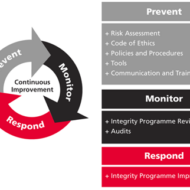
What is Social Audit? A formal review of a company’s endeavors in social responsibility. A social audit is a method of assessing, comprehending, reporting on, and eventually improving an organization’s social and ethical performance. A social audit assists in closing gaps between vision/goal and reality, as well as between efficiency and effectiveness. Social Obligations of Business Organizations: Every business organization has certain social obligations to be duly discharged to employees, government, owners, buyers, public, environment etc. It is a good thing that businesspersons of today have understood their obligations and have been discharging them ably. Social audit scans the scope of the social responsibilities of a business enterprise and evaluates an organization’s social performance. Introduction to 3D Modeling Measure of Social Performance There are no specific measures established to rate the social performance standards of a business enterprise. Nevertheless, business enterprises do not seem to understand the relevance of social audit because much importance is attached with the economic aspects of a business. The features of social audit are listed down for better understanding of the process: The focus is on the social aspect of a business organization rather than its economic aspect. The activities of a firm that has an impact on the society, such as, environmental quality, consumerism, opportunities for women and other disadvantaged people in the society are taken into consideration for analytical purpose. How to measure social performance of companies? Social audit is confined to the process rather than concentrating on the results of social action. It is quite difficult to measure social performance in quantitative terms. How do you quantify social philosophy of management and human values? Qualitative measurement is also relative, as, what appears right to one person may not be so for another. So a combination of quantitative and qualitative data must be used for the purpose of this audit. If an internal auditor does the assessment, there is this problem of loyalty, which will outweigh all the other shortcomings present in the business. If an external consultant is made to assess the situation, he can analyze the situation with no bias but he will not be familiar with the business activity of that particular firm. Therefore, a combination of both can work out well to carry out the assessment as they can complement each other. A New but Necessary Concept Social audit is a new concept, so there are not much standard procedures available to follow. Most companies are at the beginning of the learning curve with this process. When companies do begin audit procedures, they tend to find that the process is more complex than originally contemplated. However, every aspect of business and its management has to be explored and analyzed for the benefit of future generations, so as to take proactive measures to tackle problem situations. Business firms obtain their resources from the society and are dependent on the society to sell their produce too. Hence, it becomes their moral responsibility of caring for the society, within their scope and potential....