Posted by Managementguru in Business Ethics, Business Management, Decision Making, Principles of Management, Strategy
on Mar 11th, 2014 | 0 comments
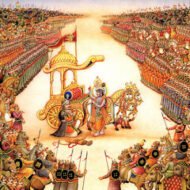
VEDIC MANAGEMENT AND LEADERSHIP INDIAN MANAGEMENT AND VEDIC LEADERSHIP From time immemorial, vedic scriptures and Upanishads have inspired people to acquire knowledge and wisdom about management principles and practices. Great spiritual leaders like Adisankara believed to be the reincarnation of Lord Shiva, Shri Krishna, the reincarnation of Lord Mahavishnu ,Lord Buddha, Shri Ramakrishna Paramahamsa have spoken of the infinite realities of life . The Philosophy of Unlearning: It is really amazing to know that these teachings though popular for their philosophical perspective also are a source of inspiration for management philosophy. These scriptures are excellent guides for attaining focus and help us to unlearn old school of thought and rejuvenate us with proper perspective and approach. Inspiration from Bhagavat Gita: Most of us would have heard about this quote from the Bhagavat Gita- “Do your duty without expectations”- “The fruits of which will be reaped automatically.” I used to wonder if this is possible, but all business men and entrepreneurs will definitely go by this since it proves to be the highest business philosophy too. Businesses thrive when done with a perfect vision , backed up by strong policies and ethical procedures. Adisankara: Adhi sankara has already paved the way for “Equality among the masses” when he realized and reiterated that people cannot be and should not be discriminated based on their caste and creed. His life span was very short-he was hardly 32 years when he left this world, but his preachings are there to stay forever. He was definitely a natural leader in presenting his views with clarity that serve as an eternal guide for mankind. Lord Krishna – A Magnificient Leader: Leaders ought to be natural and inspire people to follow them willingly. Lord Krishna was such a magnificient leader of Dwabara yuga who was a mentor for the Pancha pandavas and Gauravas too. The sad part of the story was Gauravas were not willing or not wise enough to utilise the services of Lord Krishna. We miss many viable business opportunities by oversight like Duryodana, the leader of Gauravas- he was a great warrior but not a good listener. “To be heard, you have to first listen,” I think this is the first step in the process of management Progress is impossible without change and those who are not willing to change cannot change anything. How true these words of George Bernardshaw are! Leaders of next century need to have better adaptive capabilities, cross-functional expertise, a positive attitude towards unlearning and re learning and also develop leadership of various levels of organization. What do Vedic Scriptures say? Coming back to vedic scriptures, they direct the mankind towards purifying the mind so that it becomes the hot seat of infinite energy leading to higher levels of strategic thinking and performance. The problem with us is that we always tend to correlate spirituality with renunciation of worldly life- It is not that; making the energy chakras inside our body live and active is the saarams ( essence) taking us to a heightened level in terms of thinking and action. To be a good leader your health should be fine in three key areas 1. Mental health Intelligence and creativity at its best Increased self-actualisation and self-confidence Greater ability to focus Higher levels of moral judgement Reduced anxiety and depression 2. Physical health Reduced need (or no need) for seeing the doctor for treatment Decreased risk factor for disease Reduction of high blood pressure Decreased alcohol consumption and drug abuse Stress reduction Prevention of ageing and increased longevity Note: It has been scientifically proved that by reciting GAYATHRI MANTRA and performing Sandhya vandanam, which is a natural yoga or pranayama method, your life...

Posted by Managementguru in Business Management, International Business, Marketing, Principles of Management
on Mar 11th, 2014 | 0 comments
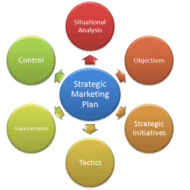
Key Strategies of Global Marketing Globalization means many things to many people. For some it is a new paradigm – a set of fresh beliefs, working methods and economic, political and socio-cultural realities in which the previous assumptions are no longer valid. For developing countries, it means integration with the world economy. It can be better understood if we look it at this perspective- “the world integrated into one huge market”. It calls for the removal of all trade barriers among countries and a perfect competitive market prevails and the stress can lead to many positive and possible outcomes in terms of QualityQuantityUniquenessForeign exchangeBenefits to the host countryIncreased productivity leading toEconomic growth Well, it does not end there. An MNC (multi national company), by operating in more than one country gains r and d, production, marketing and financial advantages in terms ofcost and labor that other competitors may not enjoy. The global company views the world as one market, minimize the importance of national boundaries, sources, and raise capital and markets wherever it can do the job best. Why do companies go global? One reason could be the rapid shrinking of time and distance across the globe thanks to faster communication, speedier transportation, growing financial flows and rapid technological changes. It is being realized that the domestic markets are no longer adequate and rich. Japanese have flooded the U. S. Market with automobiles and electronic goods because the home market was not big enough to absorb whatever was produced. Companies at the first stage of globalization have only passive dealings with foreign individuals and organizations. By the second stage, companies deal directly with their overseas counterparts, though they might continue to use third parties also. The company might decide to set up an import or export department. Next comes the shedding of domestic capacity and floating an international organization and have a direct hand in exporting, importing, and perhaps producing goods and services abroad. Seldom companies reach this stage, even if they do, they recede later. The company can have a strong foothold in the countries it is organizing its activity only by way of * Superior product quality* Demand* Customer preference for that particular product range that the company offer* A dynamic CEO projecting and boosting company’s image,* Brand image* Availability of skilled labor* Licenses* Access to necessary infrastructure* Feasible financial structure* Viability in the long run* Marketing mix Chennai in India has become a hub for so many corporate as well as global companies since the business climate is very favorable and enterprising. Some of the strategies in globalization would be * Deciding whether to go global* Deciding which markets to enter* Deciding how to enter the market* Learning to handle differences* Adjusting the managing process* Deciding organization structure* Selecting a managerial approach. Developing countries like India have adopted new economic policies that are expected to encourage the international companies setting their foot in India, by which it compels many Indian companies to pursue internationalization vigorously. True globalization marks the beginning of a new economic era of growth and...
Posted by Managementguru in Economics, Principles of Management, Project Management, Strategy
on Mar 11th, 2014 | 0 comments

E-Commerce Business Models – Highly Recommended Internet User Statistics in India: 100 Million unique internet users 25 Million Facebook users 20 Million Youtube users 10 Million tweeters Ecommerce market size: 46520 Crores Role of Trade and Commerce: Trade and commerce play a decisive role in boosting up a country’s economy. An economy is said to expand only when a country concentrates on bringing a radical change in its commercial activities. Needless to say, the invention of computers and computer based services, has revolutionized the industry of commerce, where trading is done online. The emergence of “E-Commerce” is a real benefit bestowed on the traders to sell their merchandise in a popular platform called internet. E-commerce has overturned the history of retail selling market, due to the unanimous support of the consumers. Lifestyle Changes: The changing life styles of consumers have led to the evolution of e-commerce as an appealing alternative to terrestrial retail network. Everything has been made simple and easy. All kinds of services are available for the consumer at a mouse click’s distance. Internet gives him the privilege and liberty to happily surf through the net, from the cool confines of his house, to finalize and order a product or service of his choice. Payment systems are again made easy, through PayPal or credit or debit cards, electronically verified and authorized. So, why would consumers wait in a long queue to avail a specific service or drive down to the market place for purchasing their merchandise anymore, when e-commerce presents them all in a platter at their door steps? The Internet – Virtual Market Place: Internet serves as the virtual market place, where exchange of goods and services are quick and convenient. Many big corporate companies have started selling their products online, to manage the stiff competition posed by other competitors and small online vendors. Online presence is necessary to accelerate your profits and retain your market share. Through e-commerce, you also stand a chance to win over the interests of various sections of a society because of global internet penetration. The following list would give you a fair idea about the extensive penetration of e-commerce cutting through various economic layers. You can compete globally with other big merchants, as this is a virtual market arena, devoid of any geographical boundaries. Your prerequisite would be a computer terminal with high speed internet connection and a valid bank account. Electronic fund transfer through Real Time Gross Settlement and Net Banking, through which you are able to receive and transfer funds immediately. Online business works round the clock, so you are accessible 24/7, that really helps you to increase your sales and thus your profit margins. There is no need for credit sales, until and unless you have a dealer network to which you have to extend credit facilities. Payment of tax, electricity bills, telephone bills are now made online through the internet. Firms are able to cut down their costs, in terms of infrastructure, marketing, holding inventory, customer relationship management, information processing etc. , The highlight is, you also get instant feedback on the price and other features of your product or service, that helps you to employ pricing and promotional strategies. Travel industry, consumer electronics, shipping industry, Companies producing fast moving consumer goods, car rentals and so many other industries are thriving in the web market, thanks to e-commerce. Talking about the shortcomings, I must say that internet has not touched millions of people yet across the globe, to enable them to enjoy the benefits and privilege of this new economic system-commerce may not suit certain sectors of business like perishable food items, where time is an...
Posted by Managementguru in Business Management, Human Resource, Organisational behaviour, Principles of Management
on Mar 10th, 2014 | 0 comments

A Purview on Line and Staff Relationship How To Make Line And Staff Work Effectively: Line people “TELL” but staff people “SELL”: The functions of line and staff often overlap and it is the responsibility of line authorities to make decisions and act upon them while staff must assist and counsel them. If the role playing is perfect all the other elements fall into place. Making Line listen to Staff: The line men must be made to understand that the company employs staff experts to assist and advice and it is not fair to undermine them. Keep the Staff informed: It is a must to keep the staff members abreast of the vital matters in order to make correct decisions. Requiring Completed Staff work: 1. Presentation of a clear recommendation based upon full consideration of a problem 2. Clearance with persons affected 3. Suggestion about avoiding difficulties involved 4. Preparation of paper work-letters, directions, job descriptions and specifications are the functions that should be carried out by the staff members on time in order to facilitate the line managers to accept or reject a proposal. Making Staff work as a Way of Life: The duty of staff is not to take credit but downgrade their own contributions. This results in EGO SATISFACTION and also a drive to improve the performance levels. Careless Application of the Staff Device: The staff should not take authority in their own hands though they may be anxious to know about the implementation of their suggestions. How to Influence Without Authority Advantages Of Staff: a) The staff specialists save much time by gathering, analyzing and interpreting the data while line managers are busy at work. b) Complex problems of line men require advice of staff men. c) Staff advice is necessary for technical, political, legal and social decisions. Limitations Of Staff: a) Thinking in Vacuum: Sometimes highly impractical solutions are suggested by the staff men due to lack of experience in implementation. b) Lack of Staff Responsibility: They can easily blame the line manager for the failure of a project since they are not accountable for the end results c) Danger of Undermining the Line Authority: When the top management attaches too much importance to the staff fraternity, there is a danger of staff managers looking down on the line managers d) Problem of Unity of Command: Sometimes the lower level employees will be getting instructions from both the line and staff authorities. Have you ever experienced such conflicts with your managers or colleagues? If so, feel free to discuss about the situation and how you tackled it in the comment section...
Posted by Managementguru in Business Management, Human Resource, Labor Management, Principles of Management
on Mar 10th, 2014 | 0 comments
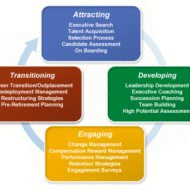
Dimensions of Human Resource Management I would like to brief you on some of the key aspects that mark the paradigm shift in the HR environment towards better management prospects. 1. The Human Resource function has shifted its focus to a much wider canvas that includes Empowerment of EmployeesRestructuring the Organisation and so on. 2. A range of HR sub-systems are involved in Planning The NumbersTypes And Skills Of HrEnsuring Their AvailabilityPlacing In The Right JobPromoting And Nurturing Their Mental HealthHelping Them Develop Special Talent And Skills 3. Human Resource is considered as an “investment” and no more an “expenditure”. Investment in TrainingRe-Training AndContinuous Learning On The Job develops the skills and competences of managers and employees and prove to be an useful investment. 4. The concepts of Learning Organisations AndTeam-Building serves a basis for “Competitive advantage” and “Motivating the employees.” 5. Values that are stressed upon are Co-OperationHarmonisationSynergyTrustBeing Pro-ActiveCollaboration 6. Strategy: VisionMissionObjectivesGoals– How these can be achieved? The techniques that are basically holistic in nature can solve the purpose. Such techniques involve SEWA– Self mastery, Empathy for workers, Worker-directedness and Achievement in performanceABO-Action by Objective Nine Dimensions of an Effective HR Department: What is the reputation of the HR department?What are the criteria (deliverables) that shape HR work?What is the mission or strategy of the capabilities – focused HR department?How is the HR department organised? How does HR facilitate the definition and creation of organisation capabilities?How do we make better HR investment and choices?How do we create HR practices?How does HR go about doing its work? What do HR professionals need to be, know, and do to be effective? Let us make a sincere comparison between the past and the present in terms of HR perspective These techniques produce performers who find their way through any set of given problems, manage themselves and lead the team to a stae of self- realisation. Old model vs New model 1. Job was the basic unit/ Team is the basic unit 2. Relations with environment there handled by the individuals/ Densely networked with environment 3. Information flow was vertical/ now it is vertical, horizontal and holistic 4. Many layers of management / Organisations have become flat 5. Emphasis on structures/ Emphasis on process and literally virtual organisations have evolved 6. Career path upward and linear/ career path lateral and flexible 7. Standardised evaluation and reward system/ Customised evaluation and reward system 8. Ethnocentric/ International 9. Single strong culture/ Multicultural and diversity of viewpoints and...