Currently Browsing: Principles of Management
Posted by Managementguru in Business Management, Marketing, Principles of Management
on Mar 4th, 2014 | 0 comments
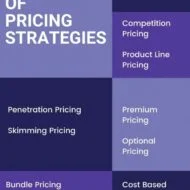
Price Discrimination is nothing but a pricing strategy that charges customers different prices for the same product or service. Price discrimination is adopted by most of the firms in order to group their customers into different segments and fix different prices for each segment for identical products and services. This helps them to increase their revenue as well to cater to the needs of different customer groups. The negative aspect of this exercise is increased administrative costs in segmenting the markets and some people end up paying higher costs. But it has to be remembered that by discriminating prices, firms are able to cut through and exploit all layers of the market, helping them to expand. Elasticity of Demand Price discrimination can be practiced by a firm only which has some control over the price. Backgroung Image Source: Image by Gerd Altmann from Pixabay Obviously a price taker cannot indulge himself in price discrimination. It must be possible to group different markets in terms of price elasticity of demand. Suppose a firm identifies two potential markets, fixes high price for one market and low for another, caution is the key word in that, both the markets should be separable. Otherwise there is the danger of purchasing a product in one market for a lower price and the same being resold in another at a higher price. It might damage the market reputation of the firm as well. Skimming the Profit The process of price discrimination is followed by most of the firms existing in monopolistic and oligopolistic markets, where there is a necessity to exploit potential customers at the earliest in order to skim the profit. Premium customers are targeted first, followed by middle income group and then lower income group. Recent marketing strategies allow middle and lower income group to enjoy all the material comforts and luxuries available for the premium class, by arranging for loans to be settled in equated monthly installments over a period of time. The firms are also engaged in associating themselves with financial institutions and banks, which proves to be a win-win situation for both. Following are some examples cited for your understanding about price discrimination: In legal and medical professions, charging of lower fees to the low income than to high income group.Charging of lower prices abroad than at home for a variety of products and services ranging from books and medicines to movies.Charging of lower prices for elders and children in public transportation and airlines.Charging of lower hotel rates for conventions and meetings.Electronic industry, where the price set initially is high and then it falls down gradually. Firms believe that by offering different prices to different customer groups, can retain the customers and prevent them from switching over to another supplier. Travel agencies offer fanciful package tours with attractive and competent prices that are irresistible. Such is the power of marketing when presented in the right mix targeting the right customers at the right...

Posted by Managementguru in Business Management, Marketing, Principles of Management
on Mar 4th, 2014 | 0 comments

The Realm of Product Innovation A manufacturer or a service provider, who aspires to be successful in a business market, must indulge himself in research, pertaining to consumer preference as well as the various stages of a product life cycle. This will give him a better chance to make his future decisions concerning the product and also the wisdom to evolve strategies accordingly. Developing a product and introducing it into the market demands certain amount of forethought and prudence. The first step is to study the market, to understand consumer preference as well as to gauge whether your product will be appealing to the customers existing in that market. The prerequisite for this would be market segmentation, that is to statistically estimate the demographic quotient (people belonging to different age groups and ethnic societies) of the sample population and decide on the customers whom you want to target. A product’s success depends mainly on two things: 1) Innovation-lateral thinking, by which you let loose of all your unorthodox methods and stick onto some novel ideas of marketing. 2) Customer-oriented marketing rather than product oriented. This customer oriented concept is advocated by modern marketing consultants and it has proven to be a fantastic proposition. More than the actual product, people like to know more about the values that they obtain out of that product. The secret behind success will be to hit the right note, by propagating more about the value added services that go with the product. Expectations Created by the Product When a product is introduced in a market, say, automobiles for example, since every tom, dick and harry is fond of cars and bikes and they talk a lot about it. It is looked upon by prospective customers with great expectations, which might be due to the great hype created by the manufacturer through advertisements in electronic media, papers and magazines. The product as it hits the market will instantaneously make it big, if it has the right mix of intangible and augmented benefits that make customers happy and they feel that they have bought something worth the money paid for. A luxury car is well received by the market, irrespective of the price tag that is stuck to it, just because of the value added benefits such as, delicacy, great speed, high-performance, safety, insurance and warranty. Product Pre-Launch Analysis Before launching a product, industry analysis is a must, as various similar products might exist and it comes to the question of how different and appealing your product is, for market acceptance. Even minor things can make a big difference, say, for instance, if you are able to float the cheapest car, in terms of price but with great fuel efficiency, the results are obvious. The strategy would be to introduce innovations not only in your product but also in your thinking. Best products emerge as a result of tuning in your wavelength with that of the consumers’. Product Life Cycle A product gets introduced, grows, matures, stabilises and slowly withers off, just like a human being. No man is eternal and so is a product. You may argue that some products are in the limelight for more than their share of lifetime. If you keenly observe, that would have been the result of makeover changes to the product in lieu of the change in people’s liking and analysis of market trend. Some products have a second chance to prove their mettle. They go into hibernation for a while and then re-enter when market conditions seems to be favorable. The perspective from which you look at the life cycle of a product may cast a different idea...
Posted by Managementguru in Business Management, Marketing, Principles of Management, Strategy
on Mar 4th, 2014 | 0 comments
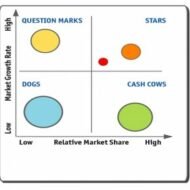
Product Modification – Solid Strategy to Capture Untouched Market Segments There is a pressing need for business firms to bring about changes in the physical attributes of their existing products periodically, to retain the customer base as well as to tide over the competition in the market. A number of factors may prompt the manufacturer to modify his product. To make best use of the technological advancement for the benefit of the firm Modification in lieu of competition To regenerate a product suffering from sales decline Product Attributes: What could be modified; it may be anything, the color, size, material, functional features, styling and engineering, etc., or a combination of these could be considered for modification. Ultimately these modifications should result in products emerging with better quality, features and styling. Consumer goods are offered with a wide range and variety to appease the different taste of the consumers as well as to stand unique in the market; Bathing soaps, talcum powders and cosmetics to name a few. Even producers, who are involved in core industries like textiles and garments, come out with a range of products to cater to the specific requirements of the customers. Product modification is different from product specialization that applies to high end customers whose specifications are based on the end use of the product and the target market. For example, mélange yarn is a specialized product used for producing better color shades for knitted fabrics (hosiery sector). Product modification concentrates more on increasing the appeal of the product by presenting it with attractive and improved attributes like, better packing and features. Strategy to Improve Quality: The strategy of quality improvement aims at increasing the functional performance of the product- its durability, reliability, speed, taste, etc. The added advantages would be versatility, safety and convenience. The benefits of feature improvement includes, Builds company’s image Can aid in winning over the target market Gives free publicity for the firm Infuses enthusiasm in the internal environment of a firm, amongst the sales force and distributors Style Improvement: Style improvement aims at improving the aesthetic appeal of the product. Why do you think automobile manufacturers are in the process of introducing new models of cars every so often? It is a strategy that amounts to style competition rather than quality or feature competition. This kind of style modification has to be done after extensive market research to gauge the preference of the people in the target market and to avoid colossal monetary loss if in case there is a negative feedback from the market. Manufacturers of house hold products can always take the risk of going for small modifications in terms of texture and style as new features can be adapted quickly, dropped quickly and often made optional at the least expense. A firm has to mix and match its product modification strategies to maintain its competitive position and to keep itself abreast of the latest developments in the market...
Posted by Managementguru in Business Management, Marketing, Principles of Management
on Mar 4th, 2014 | 0 comments
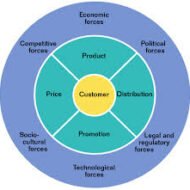
Key Components of Marketing System The core marketing system of a company comprises the suppliers, company, marketing intermediaries and target customers. The success of the company is also affected by competitor’s presence and other segments of public. The management has to watch and plan for all these factors to serve and satisfy the specified set of needs of a chosen target market. Supplier Selection: A company has to choose suppliers who offer the best mix of quality, delivery schedule, guarantee and low cost. Say, a firm involved in manufacturing confectioneries has to procure sugar, cocoa, caramel, milk powder; Labor, equipment, fuel, electricity and other factors of production are also to be obtained. If the company’s product has a good market, it can opt for continuous production. If it is a growing firm, it cannot go for voluminous production, but only supply goods against confirmed orders. In either case, the choice of suppliers is determined by one major factor called ‘cost’. Of course, one can never compromise on quality and so the company has to decide whether to purchase the inputs or make its own. Pic Courtesy : 5 Steps to Successful Supplier Selection The relationship of a company with the suppliers should be of a long-term nature, since any sudden change in the supplier’s environment will have a substantial impact on the company’s marketing operations. Sudden supply shortages, labor strikes and other events can interfere with the fulfillment of delivery promises to customers. This will result in sales decline in the short run and loss of goodwill in the long run. Back orders lead to loss of customers and in course of time their trust. The business firms must plan for alternate source of supply to avoid the risk of over-dependence on any one source of supplier. Company The marketing department has to work in tandem with the other departments of the company namely, finance, production, personnel and research and development, while designing and implementing its marketing plans. Finance department – has to be consulted regarding the availability and deployment of funds to carry out the marketing plans. Production department – to gauge market demand and to decide on the supply of products based on demand. R and D – new product development. Equally important is Digital Marketing which is considered to be an integral part of your promotional activities – What you are seeing above is a depiction of tools that help you in marketing your products online. Marketing intermediaries: Channel members are the link between the company and the customers. Agents and middlemen find customers who are wholesalers or retailers to take on the title and sell the merchandise. Also there are physical distribution firms who assist in stocking and moving goods from the warehouse to the destinations. The marketing executives have to deal with these intermediaries prudently in order to enhance the operational efficiency of the marketing function. Logistic firms, shippers and airliners help to move the goods from one location to another. Competitors: All the business firms in a particular market segment vie for the same resources and customers. A car manufacturing company in an automobile industry has to compete with other car manufacturers as well as with two wheelers. This implies that competition may come in different forms and each company has to identify potential threat from competitors, study their activities and capture their moves to win over the competition. Public: A company has to keep a close watch on people’s preferences to satisfy their requirements and also it is expected to give back something to the society in the form of social welfare measures. Employees belonging to different culture groups with differing attitudes,...
Posted by Managementguru in Business Management, Marketing, Principles of Management
on Mar 4th, 2014 | 0 comments
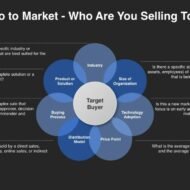
Market Research for Product Line Management Business firms, whether involved in the manufacture of goods or delivery of services, have to understand the importance of marketing research that would give a fair idea about their territory of operations and the scope for development. Let me first clarify the obvious difference between a market research and marketing research. While market research is confined to only a market which comprises of its potential and actual buyers, a marketing research delves deep into and further beyond, covering all areas of marketing including the market. Identification of Consumer Needs: Identification of consumer needs and satisfying them is vital for the emergence of a buyers market. Although firms manufacture goods that are competitive in terms of quality and price, it is the middlemen, the linking factor between the manufacturer and the wholesaler or retailer, that have a commanding grip on distribution, affecting sales volumes. Extensive marketing research will help firms to solve such problems of middlemen and distribution, to cater to the needs of the ever expanding market. Preference of People: People’s preference always changes resulting in a sea change of market conditions. In order to anticipate and meet any such changes, a firm needs to analyze the market conditions on a day to day basis. Also improving the product design helps a firm to retain its customer base. How does a firm survive in the market without knowing the elemental changes that are happening in its immediate environment? Pricing is one of the crucial factors that determine the acceptance ratio of a product or range of products. Information Source: Marketingtutor A separate department is maintained by some top corporate firms to collect relevant information about the pricing strategies of rival companies that helps them to take the market lead, by quoting competitive prices comparatively. Such secret agendas are a need of the hour to outsmart your rivals. Sales Promotion and Advertisement Campaigns: Another component of the research planning is sales promotion and advertisement campaigns. Sales promotion is solely dependent upon the sales force and the marketing manager has to play a key role in integrating their functions to bring out their strengths. The activities of the sales personnel should be oriented towards targets and a mission without a target is like travelling without knowing the destination. Information Source: BBAMANTRA When we talk about advertisements, they not only sell tangible products but also intangible things like morals, values, love etc., So, it becomes even more important for the advertisers to follow some built in standards that does not affect the ethical values of the society concerned and also they should make it a point not to make women a mere object of attraction. The market research that is a part of marketing research includes the study of the following: Market sizeMarket potentialMarket shareMarket segmentsMarket trends and seasonal trendsSales forecastingConsumer profileConsumer preferenceCompetitor analysisMeasuring the price elasticity of demand and much more. Such marketing research helps a firm to develop a comprehensive plan regarding effective training programmes, sales force management, research and development programmers and effective control mechanisms. It also facilitates efficient decision making and the operational tasks of marketing management, thereby contributing to customer satisfaction and efficiency of the...