Posted by Managementguru in Business Management, Principles of Management
on Feb 25th, 2014 | 0 comments
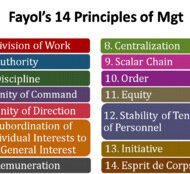
Evolution of Management Theory -II MANAGEMENT PROCESS SCHOOL Henri Fayol (1841-1925) Henri Fayol has propagated 14 principles on management which are very popular. 1. Division of labor: He insists on a high degree of specialization in order to improve efficiency. Both managerial and technical works are amenable to specialization which leads to better work with the same efforts. 2. Authority and Responsibility: Authority can be classified into Official and Personal authority, the former needed by a manager to extract work from the subordinates and the latter emanating from the manager’s own intelligence, integrity, experience, personality, knowledge and skills. Responsibility comes along with authority; one who has the authority should also be able to take up responsibility. 3. Discipline: Obedience, diligence, correct attitude and outward mark of respect is the essence of discipline which exists as an unwritten agreement between the management and its employees 4. Unity of Command: A subordinate must receive orders and instructions from one superior only. 5. Unity of Direction: Activities of similar nature should be grouped under one superior so that the efforts could be streamlined towards the common goal. 6. Sub-ordination of individual’s interest to the Common Goal: The personal interests of an individual (like money, recognition etc.) should not be placed before the goal of the organization, which is maximizing production. 7. Remuneration: Fair and equitable remuneration should be provided to employees to ensure better production and satisfaction. 8. Centralization: The concentration and dispersal of authority must be balanced in an organization 9. Scalar Chain: The authority chain from top to bottom should be followed at all times for the purpose of effective communication. 10. Order: Human and material resources should be co-ordinated so as to be in the required place at the required time. 11. Equity: Fairplay, justice and friendliness is what the employees expect of the organization. 12. Stability of Tenure of Personnel: Too much of Job turn over and rotation affect the work in progress and destruct the stability of the work units 13. Initiative: Subordinates must be encouraged to participate in the decision making process to show their initiative. 14. Espirit De Corps: “In union there is strength and so is team work.” Team spirit and a sense of unity and togetherness should be fostered and administered in an organization. Join Over 290+ Other Entrepreneurs Who Are Using This Course. Become An Outsourcing Master In 30 Minutes James D.Mooney and Allen C.Reilay The Line and the Staff Principle: According to this principle, the line authorities get things done while it recognizes the role of staff authority who are experts in providing guidance and advice. The emphasis is on, · Hierarchial structure · Clear decision · Delegation of Authority and Responsibility · Specialization of Tasks · Co-ordination of activities and · Utilization of staff experts A short course designed to help managers select the right person to join their team! Staff Recruitment THE HUMAN RELATIONS SCHOOL The human behaviorists believed in COLLABORATIVE management which is possible when managers are capable of harmonizing the efforts of individuals at all levels of the organization. This concept draws heavily from psychology and social psychology. · Motivation · Leadership · Communication · Training · Participative management · Group dynamics are assigned importance The important contributors are Elton Mayo, Roethlisberger, Mary Parker Follet, Chester I Bernard, Abraham Maslow and Douglas McGregar. THE EMPIRICAL SCHOOL Case study analogy is the best way to understand management is the idea behind this school of thought. The mistakes of managers are converted into rich experiences over a period of time and the findings are transferred to the practitioners in the management profession. The contributors are, · American Management Association · Harvard Business School · Ernest Dale. However, critics feel that this may not be suitable when it...

Posted by Managementguru in Motivation, Principles of Management
on Feb 25th, 2014 | 0 comments
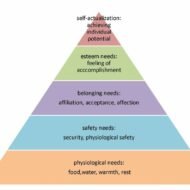
Motivation- Process and Theories “We can take a horse to water but cannot make it to drink”, so goes a saying. A motive is the inner drive or desire that causes a person to act. What is the importance of motivation in management? Well, I will say motivation is “the thing” and understanding human motivation is crucial in managing people. Abraham Maslow’s Hierarchy of Needs Theory with 10 Free Motivational Quotes Some definitions on motivation: 1. This is a total system of study which analyses human needs, motives, drives which cause a person to act or behave in a particular manner he/she does. 2. It is the stimulation of any emotion or desire operating upon one’s will and prompting or driving it to action-Guillerman 3.”Motivation represents a satisfied need which creates a state of tension or dis-equilibrium causing the individual to move in a goal directed pattern towards restoring a state of equilibrium by satisfying the needs.”-Herzberg It has been accepted by psychologists world over that all behavior is motivated and revolves around a desire for satisfying certain needs. Motivation process: NEEDS->DRIVES->GOALS THEORIES OF MOTIVATION: Theories of Motivation are classified into · Content theories and · Process Theories CONTENT THEORIES: A. Maslow’s hierarchy of needs B. Herzberg two factor theory C. Theory ‘X’ and Theory ‘Y’ D. McClelland’s achievement motivation theory E. Clayton Alderfer’s ERG theory PROCESS THEORIES: A. Vroom’s expectancy model B. Porter-Lawler’s model C. Adam’s equity theory Content theories seek to determine what motivates people at work. Priorities are taken into consideration backed up by incentives or goals. Maslow Need Hierarchy Theory (1943) Abraham Maslow postulates that human needs can be organized into a hierarchy of prepotency with the physiological needs at the bottom and self-actualization at the top. He states that as each need gets satisfied the person gets motivated to reach the next higher level. As the person moves up the hierarchy, one finds that esteem needs and self-actualization are more of internal in nature and it solely depends on the individual’s drive. Basic needs -85 % Security or safety needs-70% Social needs- 50% Esteem needs-40% Self-actualization-mere 10% This is the statistics that represents the percentage ratio of satisfaction and once a need is satisfied it “CEASES TO BE A MOTIVATOR.” · PHYSIOLOGICAL NEEDS-Basic needs for the maintenance of body processes such as hunger, thirst, sex and sleep. When these are satisfied, the higher order needs emerge, which dominate a person’s behavior. · SAFETY NEEDS– Needs like freedom from physical harm, need for orderly life and economic security · SOCIAL NEEDS– These emerge when the basic needs are satisfied and denote love, affection and belongingness. · ESTEEM NEEDS– Needs referring to strength, achievement, adequacy and also needs which pertain to recognition, appreciation and achievement. Man values self esteem based on one’s own abilities on one hand, and recognition and reputation on the other. · NEED FOR SELF–ACTUALISTION– When all the above mentioned needs are satisfied the need for self actualization arises. This need is described as the need to become everything that one is capable of becoming. CRITICISM: · There is little empirical evidence to support this theory though it is very popular. · This theory talks only about the needs from an individual’s perspective and does not link it with organizational...
Posted by Managementguru in Business Ethics, Organisational behaviour, Principles of Management
on Feb 24th, 2014 | 0 comments

Business Ethics Business ethics can be defined as the principles and standards that establish acceptable conduct in business organizations. The acceptability of behaviour in business is determined by customers, competitors, government regulators, interest groups, and the public, as well as each individual’s personal moral principles and values. Many consumers and social advocates reckon that businesses should not only make a profit but also consider the social implications of their activities. We define social responsibility as a business’s obligation to maximize its positive impact and minimize its negative impact on society. Although many people use the terms social responsibility and ethics interchangeably, they do not mean the same thing. Business ethics relates to an individual’s or a work group’s decisions that society evaluates as right or wrong, whereas social responsibility is a broader concept that concerns the impact of the entire business’s activities on society. There are good business reasons for a strong commitment to ethical values: 1. Ethical companies have been shown to be more profitable. 2. Making ethical choices results in lower stress for corporate managers and other employees. 3. Our reputation, good or bad, endures. 4. Ethical behaviour enhances leadership. 5. The alternative to voluntary ethical behaviour is demanding and costly regulation. Points to Ponder relating to behavioral ethics: 1. What conflicts of interest have you personally experienced in personal or professional roles? 2. If you perceive a potential conflict for yourself, what are some ways you might ensure that this conflict doesn’t lead to unethical behavior for you and others? 3. When have others’ conflicts of interest impacted how you or those you know were treated? 4. What types of policies can or do organizations implement to try to reduce conflicts of interest or their costs? 5. Why do you believe conflicts of interest are so pervasive in society? Why don’t we take more steps to avoid them? 6. Why is it so hard for individuals to recognize their own conflicts of interest, and how is this impacted by behavioral biases? Conflict of Interest: Conflict of interest arises when there is a clash between responsibility and reward. Say, if a doctor decides to be more business-like, if a judge decides to favor one party, if a ruling party favors a decision not good for the masses, what will happen? A conflict of interest exists when a person must choose whether to advance his or her own personal interests or those of others. Wal-Mart Stores, Inc., may have the toughest policy against conflict of interest in the retail industry. Sam Walton, the late founder of Wal-Mart, disallowed company buyers from accepting so much as a cup of coffee from suppliers. The Wal-Mart policy is black and white and leaves no room for interpretation, and it is probably a factor in helping Wal-Mart reduce...
Posted by Managementguru in Business Management, Operations Management, Principles of Management
on Feb 24th, 2014 | 0 comments
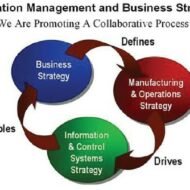
The management of conversion or transformation process which accepts inputs and delivers usable goods and services is what is called “operations management.” The inputs may be in the form of, capital, material, labor, technology, information, machines etc. The process takes place in an effective and efficient manner through operations planning, design, management and control. Don’t forget to download the 3 page Project Planner Printable at the end of this post 👇🏻 Absolutely Free Earlier it was called, production or manufacturing management. Since operation is a general term in a productive environment whose output may be goods or services, the term operations management has become more appropriate. The Aim of a Good Operational Management Would be High level of productivityCompetitive cost and qualityTimely deliveryProducing goods as per the requirements of the consumer, that is customer oriented.Flexibility and responsiveness in the production of goods and services Production or operation in the three important sectors of an economy, namely, agriculture, industry and service, creates national wealth and serves as an index for the growth of that economy. One has to understand the link between operations management and other functional areas to appreciate its scope. The goals of the operations strategy has to necessarily be in tandem with the overall corporate strategy to accomplish the goals of a firm. Scope of Operations Management From marketing department, cues regarding customer preference and market segmentation in terms of product, price and volume are supplied to the production department, based on which the production planning is concluded. From Research and development comes the product design and process technology. Human resource is an integral part of production process and also a crucial input. Man power planning by the human resource department plays a major role in recruiting, selecting, training, evaluating and empowering labor force. Operations Strategy The great diversity in products and services available in the market should be taken into consideration before deciding on your operations strategy. At one end we have custom made products that are designed and manufactured to suit the specific needs of the consumers. For instance, custom made shoes, shirts, suits, furniture etc. Here the emphasis is on quality and delivery where the customer is not very much bothered about the price. At the other end manufacturers go for highly standardized products that are available “off the shelf.” Say, home appliances, detergents, soaps etc., here the product differentiation is very minimal and the focus is on competitive pricing as the material is available in plenty. Economy of Scale A customized product would require a manufacturing set up that can handle a wide variety of general products. The sequence of operations for each product would vary in the manufacturing system making a customized product. So, a process oriented manufacturing system is designed, where similar facilities doing similar operations are grouped together and departmentalized. Standardized products go for a product focused manufacturing system, to reduce the “through put” time as large volumes are required. To be cost effective, each product should have a dedicated line of production to take advantage of the “economy of scale.” Intermediate types of products also find their place in the market and they are produced in a production layout that has a mix of product and process orientation. Here a whole range of products and services are created for the benefit of the customers. In a long term basis, manufacturers should aim to develop new technology, environmentally viable products, increase R and D activity, update skills of work force and managers and focus on development of new products, process and innovations....
Posted by Managementguru in Principles of Management, Training & Development
on Feb 22nd, 2014 | 0 comments

Benefits of Training to Employees Why training is needed for an Employee? Increases Confidence Training creates a feeling of confidence in the minds of employees, who feel comfortable while handling newer challenges. It gives a feeling of safety and security to them at the work place. New Skills Training develops skills, which serves as a valuable personal asset of a worker. It remains permanently with the worker himself. Career advancement The managers can develop their skills to take up higher challenges and work in newer job dimensions. Such an exercise leads to the career development of the employees, who can move up the corporate hierarchy faster. Higher Earnings Higher earnings are a consequence of career development. A highly trained employee can command high salary in the job market and feel more contended. Resilience to change In the fast changing times of today, training develops adaptability among workers. The employees feel motivated to work under newer circumstances and they do not feel threatened or resist any change. Such adaptability is essential for survival and growth of an organization in the present times. Increased Safety Trained workers handle the machines safely. They also know the use of various safely devices in the factory, thus, they are less prone to accidents. Use these popular and handy HR Quotes in your Blogs, Books, Journals, Presentations, Tweets, Facebook posts, Pinterest boards and Instagram posts. EVALUATION PHASE Training Evaluation Once you’ve implemented a training program based on careful needs analysis, how can you be sure that your training translates into real performance improvements? Evaluation can be used to determine whether the training program achieves its objectives. Evaluation can also assess the value of training, identify improvement areas, and identify unnecessary training that can be eliminated. Need for Evaluation Many training professionals agree that evaluation is important to successful training, but few conduct complete and thorough evaluations. Evaluation can seem anti-climatic to the excitement and creativity of creating a new course. Don Kirkpatrick’s 4 Levels of Evaluation One of the most widely used model for evaluating training programs is one that was proposed in 1959 by Donald L. Kirkpatrick. The model maintains that there are four levels to meas ure the quality or effectiveness of a training course. Don Kirkpatrick’s 4 levels of evaluation is the basis of discussion on evaluation of the effectiveness of training programs. Level 1 measures the learner’s reaction to the training program. Level 2 measures learning that has occurred. Level 3 measures changes in behavior on the job as a result of the training program. Level 4 measures the results of the training program as it affects the company’s bottom line. Each level has its advantages and disadvantages. It is important to plan the evaluation process, as the training is being planning. It is important to consider all levels at the outset, even though only one or two levels may be used ultimately. http://www.kirkpatrickpartners.com/OurPhilosophy/TheNewWorldKirkpatrickModel/tabid/303/Default.aspx Design of a Training Programme Some of the typical steps in designing a training programme are: Identification of training needs. Setting training objectives. Organizational set-up for training. Training operations. Evaluation of...