Posted by Managementguru in Accounting, Financial Management, Management Accounting, Principles of Management
on Mar 29th, 2014 | 0 comments

Profitability ratios are metrics that assess a company’s ability to generate income relative to its revenue, operating costs, balance sheet assets, or shareholders’ equity. Profitability ratios show how efficiently a company generates profit and value for shareholders. Accounting Basics for Success in Business and in Life! In general two groups of profitability ratios are calculated. Profitability in relation to sales.Profitability in relation to investments. Profitability Ratios can be Classified into five types Gross profit margin or ratioNet profit margin or ratioOperating profit margin or ratioReturn on AssetsReturn on Equity 1. GROSS PROFIT MARGIN OR RATIO It measures the relationship between gross profit and sales. It is calculated by dividing gross profit by sales. Gross profit margin or ratio = Gross profit X 100 / Net salesGross profit is the difference between sales and cost of goods sold. 2. NET PROFIT MARGIN OR RATIO It measures the relationship between net profit and sales of a firm. It indicates management’s efficiency in manufacturing, administrating, and selling the products. It is calculated by dividing net profit after tax by sales. Net profit margin or ratio = Earning after tax X 100 / Net Sales 3. OPERATING PROFIT MARGIN OR RATIO It establishes the relationship between total operating expenses and net sales. It is calculated by dividing operating expenses by the net sales. Operating profit margin or ratio = Operating costs X 100 / Net sales (0r) Cost of goods sold + Operating expenses * 100 / Net sales Operating expenses includes cost of goods produced/sold, general and administrative expenses, selling and distributive expenses. 4. RETURN ON ASSETS Return on assets is the ratio that is used to measure the company’s ability to generate profit by using its whole resource, the assets. It shows the percentage of the net income or net profit comparing to the average total assets. Return on assets shows how efficient the company is in using the assets to generate profits in a period of time. The high return on assets usually shows that the company performs well in making a profit from the assets it has. Return on assets can be calculated by comparing net income or net profit after interest and tax in the period to average total assets. Return on Assets = Net Profit / Average Total Assets 5. RETURN ON EQUITY Return on equity is the ratio that is used to measure the company’s ability to generate profit by using its investors’ money. It shows the percentage of the net income or net profit comparing to the average total equity. Return on equity shows how efficient the company is in using the investor’s money to generate profits in a period of time. The high return on equity usually shows that the company performs well in making profits from its investors’ money. Return on equity can be calculated by comparing net income or net profit after interest and tax in the period to average total equity. Return on Equity = Net Profit / Average Total...

Posted by Managementguru in Accounting, Financial Management, Management Accounting, Principles of Management
on Mar 28th, 2014 | 0 comments
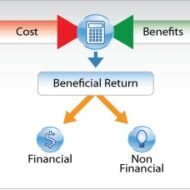
ROI – Return on Investment Ratios PROFITABILITY IN RELATION TO INVESTMENTS Return on gross investment or gross capital employed Return on net investment or net capital employed Return on shareholder’s investment or shareholder’s capital employed. Return on equity shareholder investment or equity shareholder capital employed. 1. RETURN ON GROSS CAPITAL EMPLOYED This ratio establishes the relationship between net profit and the gross capital employed. The term gross capital employed refers to the total investment made in business. The conventional approach is to divide Earnings After Tax (EAT) by gross capital employed. Return on gross capital employed = Earnings After Tax (EAT) X 100 / Gross capital employed 2. RETURN ON NET CAPITAL EMPLOYED It is calculated by dividing Earnings Before Interest & Tax (EBIT) by the net capital employed. The term net capital employed in the gross capital in the business minus current liabilities. Thus it represents the long-term funds supplied by creditors and owners of the firm. Return on net capital employed = Earnings Before Interest & Tax (EBIT) X 100 / Net capital employed 3. RETURN ON SHARE CAPITAL EMPLOYED This ratio establishes the relationship between earnings after taxes and the shareholder investment in the business. This ratio reveals how profitability the owners’ funds have been utilized by the firm. It is calculated by dividing Earnings after tax (EAT) by shareholder capital employed. Return on share capital employed = Earnings after tax (EAT) X 100 / Shareholder capital employed 4. RETURN ON EQUITY SHARE CAPITAL EMPLOYED Equity shareholders are entitled to all the profits remaining after the all outside claims including dividends on preference share capital are paid in full. The earnings may be distributed to them or retained in the business. Return on equity share capital investments or capital employed establishes the relationship between earnings after tax and preference dividend and equity shareholder investment or capital employed or net worth. It is calculated by dividing earnings after tax and preference dividend by equity shareholder’s capital employed. Return on equity share capital employed = Earnings after tax (EAT), preference dividends X 100 / Equity share capital employed. The following are some of the important and basic concepts to be understood in management accounting: EARNINGS PER SHARE IT measures the profit available to the equity shareholders on a per share basis. It is computed by dividing earnings available to the equity shareholders by the total number of equity share outstanding. Earnings per share = Earnings after tax – Preferred dividends (if any) / Equity shares outstanding DIVIDEND PER SHARE The dividends paid to the shareholders on a per share basis in dividend per share. Thus dividend per share is the earnings distributed to the ordinary shareholders divided by the number of ordinary shares outstanding. Dividend per share = Earnings paid to the ordinary shareholders / Number of ordinary shares outstanding DIVIDENDS PAY OUT RATIO (PAY OUT RATIO) It measures the relationship between the earnings belonging to the equity shareholders and the dividends paid to them. It shows what percentage shares of the earnings are available for the ordinary shareholders are paid out as dividend to the ordinary shareholders. It can be calculated by dividing the total dividend paid to the equity shareholders by the total earnings available to them or alternatively by dividing dividend per share by earnings per share. Dividend pay our ratio (Pay our ratio) = Total dividend paid to equity share holders / Total earnings available to equity share holders Or Dividend per share / Earnings per share DIVIDEND AND EARNINGS YIELD While the earnings per share and dividend per share are based on the book value per share, the yield is expressed in terms...
Posted by Managementguru in Financial Management, Management Accounting, Marketing, Principles of Management
on Mar 27th, 2014 | 0 comments
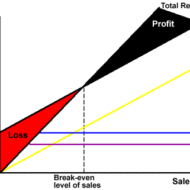
Costing and Profitability Analysis Relationship between Cost of Production and Sales Volume: The cost of production and volume of sales are the inter-dependent determinants of profit. The analysis of cost behavior in relation to the changing volume of sales and its impact on profit is very important to determine the break even level of a firm. The level at which total revenue equals total costs, is said to be the break even level where there is no-profit or no-loss. Sales beyond break-even volume bring in profits. Generally production is preceded by the process of demand forecasting, to decide on the volume of production, the produce of which will be absorbed by the market. Pricing and promotions come at a later stage. Costing is done to predict the costs of production and resultant profits at various levels of activity. Download this comprehensive power-point presentation on Break-Even Analysis. Cost Volume Profit or CVP Analysis: CVP analysis or Cost-Volume-Profit analysis helps a firm to study the interrelationship between these three factors and their effect on clean profit. The process also includes an analysis about the external factors that affect the volume of production, such as market demand, competitor threat and internal factors such as availability of infrastructure, capital and labor force. This CVP analysis is a boon to the managers to locate the bottlenecks that hinder the productivity and find a way out, by adjusting either the levels of activity or controlling the cost. Picture Courtesy : The Power of Break-Even Analysis Pricing: Pricing is the most important factor that makes your product competitive. The costs of production can be classified into fixed costs, variable costs and semi variable costs. Fixed costs remain constant and tend to be unaffected by the changes in volume of output; whereas variable costs vary directly with the volume of output and semi-variable as the name implies are partly fixed and partly variable. Cost accountants of the modern era fully support variable costing for the purpose of cost accounting, listing its merits as follows: Variable costing talks about contribution margin, which is the excess of sales over variable costs. If this is going to be high, sufficient enough to cover the fixed costs, then profit is assured for the firm. It is a key factor to determine the percentage of profit. Variable costing assigns only those costs to a product that varies directly with the changing levels of production, which is helpful in making a distinction of profit made from sales and those resulting from changes in production and inventory. Segregating the costs into fixed and variable is done for the purpose of providing information to reflect cost-volume-profit relationships and to facilitate management decision-making and control. Some applications of variable costing that facilitates management decision making: Profit planning: By increasing the volume of sales or decreasing the selling price of the product. Performance evaluation of profit centres:Like, sales division, marketing department, product line etc., Decide on product priorities: In view of market potential and profit potential Make or Buy Decisions: Depending on the production capacity and sales demand. Budgeting: Flexible budgeting and cost control are possible by variable costing technique and the striking feature is the treatment given to fixed costs, where it is treated as a period cost and not apportioned among all the departments and products that enable the firm to understand the movement of profits in the same direction as that of the sales. Although considered to be a controversial technique and weighed against the conventional methods of costing such as absorption costing, it is believed that it is to stay and exist as the next step in the evolutionary method of cost accounting....
Posted by Managementguru in Financial Accounting, Management Accounting, Principles of Management
on Mar 27th, 2014 | 0 comments
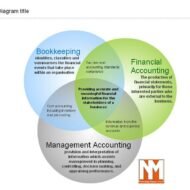
Management Vs. Financial Accounting Management Accounting : The process of preparing management reports and accounts that provides accurate and timely financial and statistical information to the management Financial Accounting : The purpose of accounting is to provide the information that is needed for sound economic decision making concerned with classifying, measuring and recording the transactions of a business. What is Management Accounting: Management accounting is the updated version of what you call financial accounting and the most circulated term in corporate business arena. Management involves planning, organizing, staffing, leading and controlling the resources available in an organization, namely the physical and human resources. Much importance is given to personnel management as they are the priceless assets of any organisation.But it is equally important for a firm to record all its business transactions for future reference and tax audits. Thus the necessity of accounting comes into the fray. Financial Statements Made Easy Functional Difference: Well, accounting means something to do with finance. So, what is the big difference, if it is financial or management accounting? One difference is in the title, and the other in their function. The rationale behind financial accounting is statutory, done for the benefit of shareholders, customers, government regulatory agencies, other external agencies, potential investors and the like. It records all business transactions that are purely monetary in nature and no further analysis is done. Essential for Management Planning: Management accounting is voluntary and reports are prepared to meet the internal needs of management. We talked about planning, for which interpretation and analysis of such quantitative data and other inputs becomes necessary to plan for future needs of management. The main functions being attention direction and problem solving, management accounting is primarily concerned with providing information relating to the various aspects of a business, like cost or profit associated with some portions of business operations. It employs techniques such as standard costing, budgeting, marginal costing, break- even analysis and so on., Inputs also stem from industry data, competitor data, published reports by public and private agencies and research studies findings, thus widening its scope for improvement in business operations. Financial Accounting: Financial accounting is restricted to deal only with “generally accepted accounting principles” and any deviation is considered to be errors for correction. Though it provides valid and authentic information, it lacks timeliness. The former restricts the accountant to a mere book-keeper while the latter transcends the role of the accountant to that of total business information technologist. Here he becomes an evaluator of different functional areas like marketing, production, purchase and personnel. As modern business is huge in size, complex, diversified and decentralized in terms of operations, financial accounting just does not fill the bill, as information is required as when an event happens at various hierarchical levels of an organisation. This infographic from Goodaccountants.com details the industries that employ the most accountants and auditors, and the results are very interesting! Management accounting is inter disciplinary in character and derives inspiration from organizational theory, economics, behavioral sciences, statistics and management. Although the paraphernalia required for management reporting is complex and expensive, it is worth the try, as it tries to compare and contrast the actuals with the standards and bring out variances if any. This is quite useful in determining the cost-effectiveness of a particular project or to be prepared for suitable action. Management accounting is nothing but a management information system where the managers have to be techno-savvy in order to handle the total information resource and project it suitably to the management to take timely actions for the increase in growth, profit and sustainability of the...
Posted by Managementguru in Accounting, Financial Management, Management Accounting, Principles of Management
on Mar 27th, 2014 | 0 comments
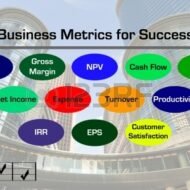
Understanding Net Present Value One method of deciding or not a firm should accept an investment project is to determine the net present value of the project. The net present value (NPV) of a project is equal to the present value of the expected stream of net cash flows from the project, discounted at the firm’s cost of capital, minus the initial cost of the project. The value of the firm will increase if the NPV of the project is positive and decline if the NPV is negative. Thus, the firm should undertake the project if the net present value is positive and reject proposals whose values are negative. This method is considered the best, as it takes into account, the initial investment, and cost of capital and cash inflow over a period. Estimation of Future Cash Flow: One of the most important and difficult aspects of capital budgeting is the estimation of the net cash flow from the project. It is the difference between cash receipts and cash payments over the life of a project. Projected cash flow statement is an important criterion for banks to decide on sanctioning medium and long-term loans to prospective clients. Since cash receipts and expenditures occur in the future, a great deal of uncertainty is involved in their estimation. Some general guidelines are to be followed while estimating cash flows. First; cash flows should be measured on an incremental basis. That is, measurement of the firm’s cash flows with and without the project must be ascertained. Any increase in expenditure or reduction in the receipts of other divisions of the firm resulting from the adoption of a given project must be considered. Effect of Depreciation: Second thing is that, net cash inflow must be estimated on an after-tax basis, using the firm’s marginal tax rate.Third, as a non-cash expense, depreciation affects the firm’s cash flow only through its effect on taxes. The initial investment to add a new product line may include the cost of purchasing and installing new equipment, reorganizing the firm’s production process, providing additional working capital for inventory and accounts receivable and so on. The monetary flows generated by this kind of investment include, the incremental sales revenue form the project, salvage value of the equipment at the end of its economic life, if any and recovery of working capital at the end of the project. The outflow will be in the form of taxes, fixed costs and incremental variable costs. Internal Rate of Return or IRR: Another method of determining the acceptance rate of a project proposal is internal rate of return method (IRR).This is nothing but the discount rate that equates the present value of the net cash flow from the project to the initial cost of the project. The firm should undertake a project if the IRR on the project exceeds or is equal to the marginal cost of capital. Capital Rationing and Pay Back Period: More techniques are available for evaluating the feasibility of investment proposals, like, capital rationing, profitability index, pay back period and others. It is always a good thing to analyze the rate of return on investment before the start of the project. If it happens to be satisfactory, then the firm can take a step forward to finalize the proposal. The cost of capital climbs up when the investment return declines, and the firm is subjected to undue pressures of mounting interest rates and capital depletions....