Posted by Managementguru in Accounting, Financial Accounting, Financial Management, Principles of Management
on Mar 27th, 2014 | 0 comments
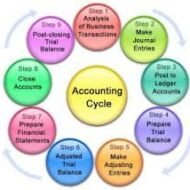
An Analysis to Understand the Art of Accounting Objectives of an Accountant: The pure objective of an accountant would be to record all business transactions that are monetary in nature, in order to ascertain if the company has earned profit or suffered loss during a financial year. The financial position of the company as on a particular date can thus be understood from the accounting journals and ledgers. We are talking about the conventional purpose of accounting. But with the lapse of time, more and more is being expected from accounting, in that, it has to meet the demands and requirements of tax authorities for the purpose of income tax and sales tax returns, government regulations, investors, owners and the management. Thus it can be aptly defined as the art of recording, classifying and summarizing events in a significant manner, that involve money transactions and/ or events that are of financial character, for interpretation. Systematic records for future reference: Book keeping is an accounting practice that tells us how to keep a record of financial transactions. A firm deals with its customers and suppliers, where numerous business transactions take place every day. It is not possible for us to remember every transaction, which we might need it for our reference at a future date. Especially, if it happens to be a credit sale, definitely the necessity of systematic book keeping arises. The owner would like to know, what amount is due from whom, from time to time. To know the financial position of the firm: Every merchant is in business to earn profits. So systematic recording of factual and financial information will facilitate the owner to understand where he stands financially at the end of a financial year, what is his net profit and to pull the ropes tight if credit margin is wide. Further more, he can also understand the nature of his business growth by comparing the accounting records of two consecutive years. Taxation purposes: Some people evade tax, but no one can avoid tax. The main source of revenue generation for government is tax payments from business merchants and corporate companies. You need to pay a percentage as tax, in accordance with profit arising from sales. The accounting records that you maintain contain facts that are taken into account by the taxation authorities as a basis for assessment. https://amzn.to/2sl5aL7 Good evidence in the court of law: To prove your genuinity, in case of some disputes between yourself and the customer or supplier, your records and vouchers, if authentic and valid, are going to speak for you in the court of law as solid evidence. Accounting also answers some of these questions: How well the different departments of business have performed all along? What is the most profitable product line? What are the products whose production has to be increase and what is to be stopped in order to avoid losses? Is the cost of production reasonable or excessive? Is there a need to revise policy decisions to improve the profitability? What will be the future plans of business in the wake of existing results presented to the management? Overall, is the firm proceeding towards the right direction in terms of productivity, profitability and growth? Accounting is not only about recording and classifying, the interesting features being analysis and interpretation, which are the key factors for the development of the organization as a whole. Note: The Comptroller and Auditor General of India (CAG),is the head of the Supreme Audit Institution of India (SAI) CAG is the sole auditor of the accounts of the Central (Union) Government and the State Governments. CAG is also responsible for the audit...

Posted by Managementguru in Accounting, Financial Management, Management Accounting, Principles of Management
on Mar 27th, 2014 | 0 comments
Costing is the technique and process of ascertaining cost whereas cost accounting is the application of costing and cost accounting principles, methods and techniques to the science, art and practice of cost control and ascertainment of profitability.
Posted by Managementguru in Business Management, International Business, Leadership, Marketing, Operations Management, Principles of Management, Sales, Strategy
on Mar 26th, 2014 | 0 comments

Some business firms with a modest and humble beginning make it to the top in a very short span of time. How do you think this is possible? They have a clear strategic vision that guarantees success. Success does not come that easy. You have to have real focus backed up by solid strategies for such resounding success. A strategy is a comprehensive plan of action that sets critical direction and guides the allocation of resources to achieve long-term organizational objectives. Some people formulate strategies and follow suit, some flow along with the stream of situations and react accordingly, rather than merely plotting strategies. Mere strategizing is not enough, you have to look into the actual situation and how it would affect your operations. Learn Sales Hacking Essential sales skills, sales strategies and sales techniques to sell just about anything! Let us have a clear understanding on the reasons for formulating a strategy Business has gone global for many reasons, including reactive ones like, international competition, customer demands and trade barriers, and proactive ones like seeking economies of scale, new international markets, resource access and cost savings. After the liberalization, globalization and privatization processes activated in full swing, many firms have come to the limelight in the international market scenario, which has provided them with a solid head start. Companies have to respond to both changes in the external environment and emerging opportunities. An opportunity not well utilized is an opportunity lost. Rational planning is called for to meet international expansion through workable strategies. International corporate strategy is purely based on the intentions of your firm, the objectives that stem out from your vision and can be materialized by scanning the environment for threats and opportunities, assessing the internal strengths and weaknesses of the firm, considering alternative international entry strategies and firming up on the workable ones. List down the answers to the following questions and you may arrive at a reasonable conclusion on your company’s market standing. Strengths What are your advantages?What is the activity that you specialize in?What is your uniqueness that differentiates you from your competitors? Your own viewpoint and that of the people you deal with is necessary. It is important to be honest and realistic. This exercise helps you and your team to understand the mission and purpose. Weaknesses What is done badly?What could be done better?What should be avoided?What causes problems or complaints? To identify the unpleasant truths as quick as possible is the notion of this exercise. Ascertain Your Priorities After ascertaining the priorities, the strategic management process is carried out with well laid plans, executed by professional strategists followed by implementation of control and evaluation procedures. Any corporate firms go for strategic alliances, that may include, acquisitions, mergers, joint ventures, strategic partnerships, cartel agreements and so on to survive in the international market as well as to exploit the opportunities available in the global market with the available potential resources put to optimal...
Posted by Managementguru in Business Management, Change management, Principles of Management, Strategy
on Mar 26th, 2014 | 0 comments
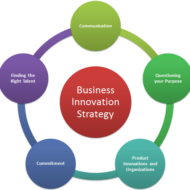
Innovation – The BUZZ Word Execution with Perfection: Technological advancement in the fields of aerospace, computers and communication has transformed the world we live in today, into a ‘GLOBAL VILLAGE.’ While most of the countries look to the U.S to adopt and follow management techniques , it is quite amazing to know that the U.S look to Japan for implementing these techniques more effectively. As we all know that Japanese are very good when it comes to “Execution with Perfection.”The point here is not to establish or brand that one is better than the other but rather to suggest that many countries can contribute to innovative managerial theories and practices and let it be a mutual affair. Management practices and thinking: Innovation is the Buzz word that has defined the paradigm shift in the approach of management practices and thinking. This has helped organizations grow and sustain regardless of competitor and market pressure and challenges. Innovation management gives entrepreneurs the liberty to think out of the box and come up with new ideas leading to the development of new products, processes and services. Change is Inevitable: Change is inevitable and change is the one that never changes. People love variety and it is the responsibility of business people to satisfy the customer wants and requirements. New approaches are required to avoid monotony and stereotyping. “Old wine in a new bottle” concept may come in handy when you feel that your product has reached the saturation point and about to decline in its life cycle. Picture Courtesy: Digital Information World Inspiration from the Internet Let us look at some services available on the Internet that exist as proofs for innovative and strategic thinking: 1. IRCTC – The e-ticketing portal of Indian Railways. Saves lot of time and effort. Connects huge number of metros and small towns. Tatkal scheme is a huge hit and a great revenue generator for the railways. The interface is very user friendly and interactive. 2. Bharat Matrimony – Online matrimonial service that assists brides and grooms to find their perfect partners. Profiles can be created to express your views and expectations on your life partner. 3. Make my Trip – Helps you to plan your travel, ticketing and accommodation, all in one place. Extensive data is available for people’s benefit. 4. Facebook – Gives you the liberty of having your own space to connect with number of people. Helps as well to promote your business. Facebook generates huge revenue through advertisement banners positioned at the right niches. 5. Twitter – Again a social networking portal that helps in link building. Retweets make the scope of you reach wide and bright. Education Portals: Educational portals that offer online learning, management portals that teach online MBA, Auction websites with numerous products at affordable prices, travel websites, online portals for paying tax and duties have transformed the lives of individuals and organizations for good. The full bloom of internet is yet to be seen when many more third world nations will have the opportunity to access the...
Posted by Managementguru in Business Management, Intellectual Property Rights, International Business, Principles of Management, Technology
on Mar 26th, 2014 | 0 comments

The Idea behind Patent Protection In product markets, the problem of imitation poses a great problem for innovators who are deprived of enjoying economic profits fully. If imitators are able to move in rapidly and capture a substantial share of the market, the initial profits earned by innovators may not be sufficient to cover their costs and risks in the long run. However, a substantial delay between the time of innovation and successive entry by competitors may provide the pioneers with decent profits and make invention and innovation a more attractive activity. The patent system, by establishing a period of time during which the firm faces reduced competition, increases the expected return for innovative effort. Product and Process Innovations: A nation by stimulating research and development can increase the prospects of product and process innovations. Governments can encourage such innovations by granting patents. Three criteria must be satisfied to obtain a patent: The invention must be new It must not have been known to the public before the inventor completed it for more than one year prior to a patent application It must be useful and must be non-obvious Picture Courtesy: Basics What are Patents? Patents confer the exclusive right to the use of an idea for a long period (which varies between nations,say,in countries like India, it is seven to fourteen years, depending on the nature of the product) within which the innovator might be able to recover his initial investment. Another reason to grant patents is to provide for widespread disclosure of new ideas and techniques. The main objective of patent protection is to encourage research and development. Patents: Encourage research and invention Induce an inventor to disclose his discoveries instead of keeping them as a secret. Offer a reward for the expenses of developing inventions to the state at which they are commercially practicable; and Provide an inducement to invest capital in new lines of production Granting of Patents: The idea behind granting of patents thus is to benefit the society. Developing countries have to offer patent protection, the lack of which has made many foreign firms shy away from investing in core sectors like pharmaceuticals and biotechnology in these nations. As a result, people of these countries are forced to buy life saving drugs like those for cancer and have to pay ruinous prices. Once patent protection is available, there is a possibility for manufacturing most of the drugs that are being imported, eventually leading to a fall in the price levels. One of the difficult aspects of patent law is the principle that, whether a patent is to be issued to the person who conceives the idea or who first files for a patent. Another international issue involving patents is that, countries allow firms to steal and copy protected ideas, due to lack of severe legal enforcements or lack of interest. Either way it proves detrimental to the interest of the patent holders and such violations have to be strictly prohibited. Note: THE PATENTS ACT, 1970: An Act to amend and consolidate the law relating to patents The Patent Amendment Act,2005 The Patent Rules,2003 and Amendment Rules,2006 are some of the laws that protect patents in...