Posted by Managementguru in Business Management, Change management, Decision Making, Entrepreneurship, Human Resource, Leadership
on Mar 30th, 2014 | 0 comments
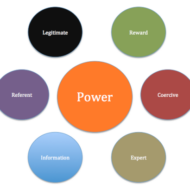
Power and Balance in Corporate Governance Power has the ability to disorient a person’s behavior and attitude. When properly used it leads to height of efficiency, when misused it calls for calamity and disorientation in the entire business firm. It is nothing but the authority that comes with your job which has to be utilized for constructive purpose and at the same time to ascertain that things are “going in the right direction.” Precise use of power leads to a congenial atmosphere in your business arena”. Otherwise in course of time you might have to tackle warfare with your subordinates and the “undercurrent of animosity” might ruin your business success. How it affects Inter-Personal Relationship: When we talk about POWER it usually fits well into the top level management cadre, as managers and senior managers are assigned with huge powers in order to lead the firm in times of crisis as well as maintain the consistency of the nature of the firm. So when there is abuse of power consciously or unconsciously, people create a space between themselves and that particular person who misuses the power. So the result would be a lack of interpersonal relationship between the manager and the employees. Managers generally acquire and use influence that has its impact not only on the behavior of the individuals, but also on the organizational effectiveness as a whole which in turn affects productivity. Use Power as a Constructive Tool: In fact, authoritative behavior is often misunderstood by most of the managers in the business setup; there is a need for the managers to skillfully use their power in order to extract work from their teams as well as to maintain a balance between the extent to which authority must be used and the tolerance level of the employees’ (mind set). So it is more of a psychology which involves much critical analysis on the part of the manager to understand the constructive aspects of his authority and how employees at a lower level will always look up to him for support and guidance and not indifference. Power covers and affects the following important aspects, Discretion Crisis management Dependence of employees Responsibility Leadership Governance Interpersonal relationship Change management Environmental influences Reward systems Collaborative management Success of the firm and so on. In order to maintain his own integrity as well as the organisations’ the manager must be able to appreciate the relevance of power in management just by not looking into the literature but act in accordance with the situation. A detailed analysis of power dynamics makes the manager more effective in dealing with behavior inconsistencies in the organization. Try to be more open in your communication and make your employees feel that “You are always there” to support and guide them. This in turn will make your “Boss to have a second look at you” for a promotional pay. This discussion is from the manager’s perspective and there is more to be discussed and considered from an employee’s...

Posted by Managementguru in Business Management, Change management, Human Resource, Organisational behaviour, Principles of Management, Project Management
on Mar 30th, 2014 | 0 comments
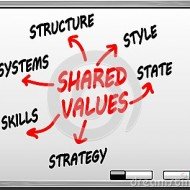
Effective people are preferred to rather than efficient people as the former does the right thing and the latter does things right. Redesigning your workplace not only refers to the infrastructure but also the internal factors that might affect the productivity of your firm. Big corporate firms generally face challenges in the form of Lack of co-operation between subunitsIncreasing complaints from the customersRising Operating costsDip in the moraleMajor changes in technology All these signs are indications of a not so enterprising organizational climate. And it calls for quick decision making regarding introducing some changes that bring some positive development in terms of improved efficiency and increase in productivity. Redesigning Workplace in Response to Exogenous Factors Growth of Organizations The challenges mentioned above may make an organization’s existing structure, management practice or its culture obsolete for the new situation. Growth of an organization should be a result of collaborative effort of all the units of an organization and it is objective and not subjective. An organization is comprised of different elements which interact in deciding the organizational effectiveness. The task or goal, technology, structure, people and the internal and external environment of the firm; all these coexist and hold the firm together. Be it a school, a hospital, a union, a club or a business enterprise the interactive nature of these elements make the process of managing very difficult. Medical tourism and business travel are becoming more popular in Asian countries as it increases the scope of collaboration of industries that can coexist to enjoy a win-win situation. Who is an Effective Manager ? An effective manager anticipates these challenges and proactively initializes a planned change. He strategically prepares the organization to be subject to planned change by manipulating the structure, technology and behavior. Understanding the dimensions of change helps him to manage change better as people are always resistant to change. Modern enterprises right from the start have to install and implement “systems” that are technologically most modern and hire suitable people who are techno-savvy; Because technology rules the world and the development of new software programmes and hardware components feed on themselves every day. Developing an Organization as a Whole Behavior of people is unpredictable but controllable. Individually oriented training and development programmes does not prove much to the benefit of the organization as it creates apprehensions in the minds of the individual that are related to the culture and attitude of his superior and subordinates. The idea of developing the organization as a whole through team building is a better perspective as it renews the enthusiasm of people working for you and as a team they feel more cohesive and adhered. Synergy plays its role in improving the interpersonal relationship amongst the team members. Firms are becoming more modern in their outlook. For instance, a showroom whose purpose is to showcase your products also provides entertainment by its aesthetic value. Only if the customer is impressed by the artistic way of your exhibit, will he enter your showroom. Change is inevitable and it improves the health of an organization. The focus should be on “total system change” and the orientation is towards achieving desired results as a consequence of planned activities. Flat Organizational Structure You would have come across the latest buzz word “flat organizational structure”. This is designed in order to bridge the gap between front line employees and the executive level. If there is only few levels of management, the process of communication is more effective, the art of delegation becomes mandatory and need for participation in the decision making process involves all the employees which in turn reduces bureaucracy. There is no set pattern...
Posted by Managementguru in Business Management, Change management, Principles of Management, Strategy
on Mar 26th, 2014 | 0 comments
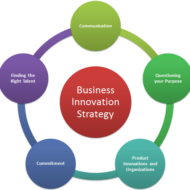
Innovation – The BUZZ Word Execution with Perfection: Technological advancement in the fields of aerospace, computers and communication has transformed the world we live in today, into a ‘GLOBAL VILLAGE.’ While most of the countries look to the U.S to adopt and follow management techniques , it is quite amazing to know that the U.S look to Japan for implementing these techniques more effectively. As we all know that Japanese are very good when it comes to “Execution with Perfection.”The point here is not to establish or brand that one is better than the other but rather to suggest that many countries can contribute to innovative managerial theories and practices and let it be a mutual affair. Management practices and thinking: Innovation is the Buzz word that has defined the paradigm shift in the approach of management practices and thinking. This has helped organizations grow and sustain regardless of competitor and market pressure and challenges. Innovation management gives entrepreneurs the liberty to think out of the box and come up with new ideas leading to the development of new products, processes and services. Change is Inevitable: Change is inevitable and change is the one that never changes. People love variety and it is the responsibility of business people to satisfy the customer wants and requirements. New approaches are required to avoid monotony and stereotyping. “Old wine in a new bottle” concept may come in handy when you feel that your product has reached the saturation point and about to decline in its life cycle. Picture Courtesy: Digital Information World Inspiration from the Internet Let us look at some services available on the Internet that exist as proofs for innovative and strategic thinking: 1. IRCTC – The e-ticketing portal of Indian Railways. Saves lot of time and effort. Connects huge number of metros and small towns. Tatkal scheme is a huge hit and a great revenue generator for the railways. The interface is very user friendly and interactive. 2. Bharat Matrimony – Online matrimonial service that assists brides and grooms to find their perfect partners. Profiles can be created to express your views and expectations on your life partner. 3. Make my Trip – Helps you to plan your travel, ticketing and accommodation, all in one place. Extensive data is available for people’s benefit. 4. Facebook – Gives you the liberty of having your own space to connect with number of people. Helps as well to promote your business. Facebook generates huge revenue through advertisement banners positioned at the right niches. 5. Twitter – Again a social networking portal that helps in link building. Retweets make the scope of you reach wide and bright. Education Portals: Educational portals that offer online learning, management portals that teach online MBA, Auction websites with numerous products at affordable prices, travel websites, online portals for paying tax and duties have transformed the lives of individuals and organizations for good. The full bloom of internet is yet to be seen when many more third world nations will have the opportunity to access the...
Posted by Managementguru in Business Management, Change management, Principles of Management, Project Management, Technology
on Mar 25th, 2014 | 0 comments

Perhaps the most striking influence of technology is found on society. Practically every area of social life and the life of every individual have been, in some sense or the other, changed by the development in technology. AI in Marketing Artificial intelligence (AI) is reshaping how businesses engage with marketing. By analyzing data, personalizing content, and automating tasks, AI is truly revolutionizing the marketing landscape. Personalization One of the key benefits of AI in marketing is its capability to tailor content for each individual customer. Leveraging AI-driven algorithms, companies can craft personalized experiences that truly connect with their audience. Predictive Analytics AI can assist businesses in making more precise predictions regarding consumer behavior. By examining data from previous interactions and purchases, AI can uncover patterns and trends, enabling companies to make better-informed decisions. Visual Search AI-powered visual search is changing the way consumers search for products online. By analyzing an image, AI can identify the product and show similar items for purchase. This makes the online shopping experience more intuitive and seamless. Technology reaches people through business Preferences of people are constantly changing, and this has pushed the business firms to the point, where innovation has become the need of the hour. The new discoveries would remain idle as mere ideas if there were no laboratories to transform the ideas into creations. Technology reaching people through business is one part of the theory. The economic prosperity of a nation depends on technology. High expectations of consumers People are used to technological innovations and breakthroughs and they want variety in every kind of purchase they make. New varieties of products, safer and more comfortable, free from pollution, are to be produced and supplied to affluent sections. This calls for a massive investment in research and development. In countries like Japan, much importance is attached to product design, quality, sophistication, delivery schedules and prices. High expectations need not be considered as problems by business persons but treated as an opportunity to satisfy their customer group. System complexity Technology has resulted in complexity. Modern machines work faster and better, no doubt. However, if there is a technical problem, the presence of an expert is needed to repair the machinery. Again, investment in machinery adds to the cost of capital and hence the merchandise has to be purchased form reliable sources. Social change The change in the technological process undoubtedly has its effect on the society. First, there is a change in the social life, with mobile populations drifting about in search of new centers of employment. If it happens to be an agricultural economy, the result of such a drift would prove disastrous, with society being socially uprooted. Sometimes such a drift may result in new geographical distribution of population. Technological change also brings considerable changes in the family, lifestyle and attitude. The way we cook, communicate, use media and work are all affected by technology. Technological Phases and the Social Systems they Create There are five stages of technological development. Each stage leaves a distinct influence on work and on social system. Sequential progress is made from the lowest level to the highest level, in such a way that these five stages roughly represent the progress of civilization throughout history. Although one phase of technology tends to dominate a nation’s activities at a particular time, other phases will be often practiced at the same time. Technology means change and more change. It forces changes on people whether they are prepared for it or not. In modern history, it has created what is called future shock, which means that change comes so fast and furious that it approaches the limits of human...
Posted by Managementguru in Change management, Human Resource, Principles of Management, Project Management, TQM, Training & Development
on Mar 22nd, 2014 | 0 comments
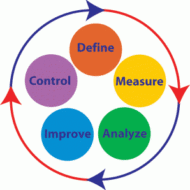
Zero defect achievement – Striving towards perfection! What is TQM: Quality management is all about being proactive and concepts like total quality management and six sigma of recent origin reiterate the fact that hundred percent error free performance is possible the first time and every time. This is what is called as zero defect achievement which most of the companies at corporate level are headed for. The intention is to strive for perfection in work, the way an archer aims for the bull’s eye on a target. It is time for people to cast off their conservative and archaic business practices and think out of the box to enjoy a sustainable competitive advantage driven by quality. Zero defects seek top performance standards the first time and every time. Management scholars offer several suggestions to improve the zero defects programme: The idea of zero defects programme has to be communicated through out the organization right from the top to the bottom level including managers, supervisors and workers. This would harmonize the functions of line and staff. Prerequisites needed for the programme have to be determined and made available. The culture and climate of the firm should be conducive to accomplish the programme. Explain in simple terms about the functions to be accomplished. Design some solid system of recognition. Set up a time schedule as time lines are very important when it comes to product delivery. Spot all the bottlenecks and remove them. Training is absolutely essential– the skill set and mind set of the employees have to be attuned to the goals of the venture. Mock training and rehearsals are helpful. Standardization is the key to the success of this programme. Bench Marking: Total quality management is a process contributing towards quality and bench marking is a means to achieve high quality performance by setting some top notch industry performers as reference points or standards. It is a continuous systematic process employed by a business enterprise to develop business and working processes that integrate the best practices available in the industry. Bench marking is a crucial element in the process of quality management. Quality is one field of production, which reflects the ethical viewpoint and approach of business firms towards the society and other investors or stakeholders. Bench marking is a modus operandi used to: Identify and define customer requirements Plan and establish effective goals and objectives Develop time measures of productivity Become more competitive Determine industry’s best practice The initial step is to decide what is to be bench marked-the product, services, customers or business processes in various departments. The second phase of action is to identify and select your competitors who will set the necessary precedence. With that as reference, decide on your company’s strategies by making meaningful and valid comparisons. Judge the competitor strengths and weaknesses and compare them with that of your own to get a clear picture of your current performance levels and capabilities. This will give you a clear indication on the action plans to be developed and implemented in a phased manner by your organization. Quality management is likely to happen only when all the employees of the organization work as a team with unified principles. Quality demands deep commitment and responsibility from the members of organizations. It calls for intense training to imprint the perception of quality in the minds of...