Posted by Managementguru in Business Management, Motivation, Organisational behaviour, Principles of Management
on Mar 9th, 2014 | 0 comments
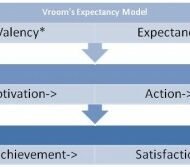
Herzberg and Victor’s Motivation Models Herzberg’s Hygiene Factor Theory Psychologist Fredrick Herzberg asked a basic question to 200 accountants and engineers in firms in and around Pittsburg-“What do people want from their jobs’? He used the critical incident method of obtaining data for analysis. “Think of a time when you felt exceptionally good or exceptionally bad about your job, either your present job or any other job you have had”. The responses obtained were fairly consistent in that, good feelings were associated with job content and bad feelings with job context. The ones on the right side of the table are intrinsic factors leading to job satisfaction and acted as motivators and ones on the left side lead to job dis-satisfaction and were termed as hygiene factors. Hygiene Factors: One has to understand that hygiene factors need not always cause dis-satisfaction; when the managers handle the situation in an amicable manner in terms of company policy, supervision, working conditions, salary and administration, things will be in the right direction but, even if they are adequate, people are never satisfied. These are called Hygiene factors and managers must try to eliminate factors that create discontent among the workers. If we want to motivate people, the real motivators are achievement, recognition, responsibility and growth. We must change the job design in such a way that the work arising out of the job should be challenging, exciting and should offer them a sense of achievement, recognition and growth. HYGIENE FACTORS MOTIVATORS Company policy Achievement Relationship with superiors Recognition Working conditions Work itself Salary Responsibility Relationship with peers Advancement Personal life Growth Relationship with subordinates Status Security CRITICISM: The factors which one particular group of individuals finds to be dis-satisfying may not be applicable for everybody. Factors which are beyond the scope of employees such as policy formulations cannot be considered as hygiene factors. VICTOR H. VROOM’S EXPECTANCY MODEL Valency*Expectancy=Motivation By increasing the positive value of the outcomes through such means as better communication about the outcomes, values and actually increasing them, i.e., the rewards and also by increasing the expectancy of the person by making him believe that the work will really lead him to the desired outcome, organizations can make a strong connection between the work and the...

Posted by Managementguru in Motivation, Principles of Management
on Feb 25th, 2014 | 0 comments
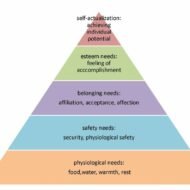
Motivation- Process and Theories “We can take a horse to water but cannot make it to drink”, so goes a saying. A motive is the inner drive or desire that causes a person to act. What is the importance of motivation in management? Well, I will say motivation is “the thing” and understanding human motivation is crucial in managing people. Abraham Maslow’s Hierarchy of Needs Theory with 10 Free Motivational Quotes Some definitions on motivation: 1. This is a total system of study which analyses human needs, motives, drives which cause a person to act or behave in a particular manner he/she does. 2. It is the stimulation of any emotion or desire operating upon one’s will and prompting or driving it to action-Guillerman 3.”Motivation represents a satisfied need which creates a state of tension or dis-equilibrium causing the individual to move in a goal directed pattern towards restoring a state of equilibrium by satisfying the needs.”-Herzberg It has been accepted by psychologists world over that all behavior is motivated and revolves around a desire for satisfying certain needs. Motivation process: NEEDS->DRIVES->GOALS THEORIES OF MOTIVATION: Theories of Motivation are classified into · Content theories and · Process Theories CONTENT THEORIES: A. Maslow’s hierarchy of needs B. Herzberg two factor theory C. Theory ‘X’ and Theory ‘Y’ D. McClelland’s achievement motivation theory E. Clayton Alderfer’s ERG theory PROCESS THEORIES: A. Vroom’s expectancy model B. Porter-Lawler’s model C. Adam’s equity theory Content theories seek to determine what motivates people at work. Priorities are taken into consideration backed up by incentives or goals. Maslow Need Hierarchy Theory (1943) Abraham Maslow postulates that human needs can be organized into a hierarchy of prepotency with the physiological needs at the bottom and self-actualization at the top. He states that as each need gets satisfied the person gets motivated to reach the next higher level. As the person moves up the hierarchy, one finds that esteem needs and self-actualization are more of internal in nature and it solely depends on the individual’s drive. Basic needs -85 % Security or safety needs-70% Social needs- 50% Esteem needs-40% Self-actualization-mere 10% This is the statistics that represents the percentage ratio of satisfaction and once a need is satisfied it “CEASES TO BE A MOTIVATOR.” · PHYSIOLOGICAL NEEDS-Basic needs for the maintenance of body processes such as hunger, thirst, sex and sleep. When these are satisfied, the higher order needs emerge, which dominate a person’s behavior. · SAFETY NEEDS– Needs like freedom from physical harm, need for orderly life and economic security · SOCIAL NEEDS– These emerge when the basic needs are satisfied and denote love, affection and belongingness. · ESTEEM NEEDS– Needs referring to strength, achievement, adequacy and also needs which pertain to recognition, appreciation and achievement. Man values self esteem based on one’s own abilities on one hand, and recognition and reputation on the other. · NEED FOR SELF–ACTUALISTION– When all the above mentioned needs are satisfied the need for self actualization arises. This need is described as the need to become everything that one is capable of becoming. CRITICISM: · There is little empirical evidence to support this theory though it is very popular. · This theory talks only about the needs from an individual’s perspective and does not link it with organizational...