Posted by Managementguru in Business Management, Decision Making, Principles of Management, Project Management, Strategy
on Jul 31st, 2014 | 0 comments

A goal has the word ‘go’ in it. Your goals should go forward in an unambiguous direction. However, goals are more about everything you accomplish on your journey, rather than getting to that distant point. Goals will often go into undiscovered territory and you therefore can’t even know where the end will be.

Posted by Managementguru in Business Management, Financial Management, Marketing, Strategy
on Jul 15th, 2014 | 0 comments
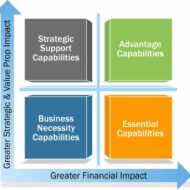
What is Financial Capability? The availability, usage and management of funds have a bearing on the financial capability of an organization and ability to implement its strategies. A financial manager has to pool, deploy and allocate financial resources taking into consideration the capital or long term investments, working capital or short-term liabilities and repayment capacities. Factors that influence financial capability of an organization: 1. Factors related to source of funds: Capital structure, procurement of capital, controllership, financing pattern, working capital availability, borrowing, capital and credit availability, reserves and surplus, and relationship with lenders, banks and financial institutions. 2. Factors related to usage of funds: Capital investment, fixed asset acquisition, current assets, loans and advances, dividend distribution and relationship with shareholders. 3. Factors related to #management of funds: Financial accounting and budgeting systems, management control system, state of financial health, cash, inflation, return and risk management, cost reduction and control, and tax planning and advantages. Typical Strengths that Support Financial Capability: • Access to financial resources • Amicable relationship with financial institutions • High level of credit worthiness • Efficient capital budgeting system • Low cost of capital as compared to competitors • High level of shareholder’s confidence • Effective management control system • Tax benefits due to various government policies The examples given below show how strengths and weakness affect the financial capability of organizations: • A company faced many problems due to instability in the top management, an unfavorable public image, unfavorable government relations etc., but it had inherent strengths like a huge amount- to the tune of Rs.1000 crores invested in fixed assets which the company used for funding its diversification plans. Here we see one particular strength over-shadowing all other weaknesses which can be rectified in due course of time. • A scooter company had collected nearly Rs.1150 crores as advance for booking of scooters, but within five years, its cash position deteriorated owing to sudden and unforeseen cancellation of bookings and withdrawal of deposits, resulting in a huge interest burden. Had the company had a strong financial backup, it would have survived the trouble. Matching strengths and weaknesses with opportunities and threats requires that a firm should direct its strengths towards exploiting opportunities and blocking threats while minimizing exposure of its weaknesses at the same...
Posted by Managementguru in B-Schools, Strategy
on Jul 14th, 2014 | 0 comments

Making It to B-School of Your Choice Without having the right knowledge, right from preparing for competitive exams through filling out applications and landing on the right business school, might prove to be a tough journey. This article focuses on throwing some light on the pre-requisites and procedures involved in applying for B-Schools… In Case you have admits from multiple business schools, what will be the criteria of selection? Teaching methodology Approach Reputation or Brand value Specializations on offer Location Please understand that every business school has its own strength and it is up to you to go for the one that best suits your needs and budget. Now let us look at some of the pre-requisites needed for admission into B-Schools. Academics: 1. Undergraduate or Graduate GPA (Graded Point Average) 2. Academic Excellence 3. GMAT score Work Experience: You level of performance at work speaks for you during your admission. Business schools love to know about your career advancement, leadership qualities, various positions handled and the ability to handle a group. Goals: Try to chart out a list of goals which are in line with what the school has to offer in order to facilitate your position in the job market after the course. Extracurricular activities: Those qualities that you have developed and specialized over a period of time will distinguish you from the rest of the pool and give you an edge. Say, if you are an extempore speaker, you stand a chance to impress your interviewers in GD (group discussion). GMAT Preparation: You need a systemized study plan and practice Aim for a high GMAT score to secure your admission Get yourself enrolled in a reputed coaching center Filling out Applications: You should take some professional help when it comes to strengthening your resume and create poignant #essays to catch the attention of admission committees. Social media has its say to help you find a professional coach and having a fruitful conversation. Interview stage: This by far is an achievement in itself, especially if you are planning to go abroad. Call for an interview implies that the admission committee is impressed with your profile and keen to know more about you. You should research on interview experiences of past students and seek feedback from a trusted friend or a professional coach. A wait list may come as a rude shock but you need not lose hope. Try to follow the instructions stated by the school and go for additional recommendations if they encourage you to update them with changes in your profile. Handling Rejects: Connect with the associated person in the admission office to know the reason for rejection. Work on those weak areas and revise your plan. Gear up to beat the competition and never lose hope. Connecting with an Overseas Educational Consultant: This will help you in knowing the procedures pertaining to each institution of your choice. You would have heard of SOP – Statement of Purpose which is the key to getting admission or visa even if your academic averages are below par. A consultant comes into picture when you have zero knowledge about international application process, visa application, SOP, passport clearance, visa medicals and so on… AK CONSULTANTS – THE CAREER DESIGNERS It might be a little overwhelming if you don’t have a supporting hand because there will be lot of application filling and email transactions back and forth. The author Shyama Shankar is an expert academic content writer on business and management. Being a HR specialist, She likes to supplement information on job interviews, compensation, entrepreneurship and motivation to the readers. The following infographic gives you a clear idea on the...
Posted by Managementguru in Business Management, Decision Making, Marketing, Strategy
on Jul 12th, 2014 | 0 comments

Stability Strategy in Management The Concept: A stable strategy arises out of a basic perception by the management that the firm should concentrate on using its present resources for developing its competitive strength in particular market areas. In simple words, stability strategy refers to the company’s policy of continuing the same business and with the same objectives. When a product is well accepted and has a brand value in the market, the company would want to expand its market base in that particular product segment to win over its competitors. For example, ‘Old Cinthol’ from Godrej, continues to be the trusted choice of most customers and one of the top most brands in soaps. Especially in rural areas, people prefer Cinthol which comes in different sizes in lieu of customer preference. Panneer Soda manufactured by Kalimark, a soft drink available only in southern parts of Tamilnadu is again a long-standing brand preferred by customers belonging to middle class and lower middle class. This indigenous brand is a direct competitor for coke and pepsi, the soft drink giants in the industry. The same applies to “BOVONTO” again a kalimark product whose growth terrorised giants in the likes of COKE and PEPSI. It is said that some of the multi-national companies tried to crush this small but indigenous and successful company by buying all the glass bottles used for bottling the drink from small retailers. All done by paying high price for old bottles and breaking them so that those bottles were not available for the kalimark manufacturers. Putting up a brave fight, Kalimark has introduced pet bottles (plastic containers) and for managing the dearth of containers they have erected a bottling plant also. Recently Kalimark group has reinvented itself with modern technology for production. The shape of Bovonto pet bottle was redesigned and production was increased. Related Posts: TURNAROUND STRATEGY STRATEGY EVALUATION TACTICS OR STRATEGY The Need for Stability Strategy: It continues to serve the customers in the same product or service, market and functional sectors. Its main strategic decisions focus on incremental improvement of functional performance.’ The focus is on maintaining and developing competitive advantages consistent with the present resources and market requirements. Say, if your business is doing well and you are able to factorize the economies of scale with a fairly decent profit, you would not want to go for expansion in the immediate future; instead you would go for, Sustenance Competitor management and Market share Maintenance Man has an inbuilt fear of change and only very few take that extra step to rage forward by being risk-aversive. Stability strategy suits medium-sized growing firms which have to first get well established in the market and wait for the right time to invest and divest. Companies do not go beyond what they are presently doing; they serve the same market with the present products using the existing technology. The essence of stability strategy is, therefore, not doing anything but sustaining a moderate growth in line with the existing trends. Advantages of Stability Strategy: The firm is successfully run and the objectives are achieved and there is satisfactory performance. Therefore, the management may want to continue with the same activities. A stability strategy is less risky. Unless the conditions are really bad, a firm need not take any additional risks. The management doesn’t foresee any change in the environment or opportunity in the market or any threat. When pursuing this strategy, there is no disruption in routine work. The down side of this strategy may be “setting of boredom” where you tend to do routine stuff, but the brighter side is the continuous positive response...
Posted by Managementguru in Business Management, Decision Making, Marketing, Strategy
on Jul 7th, 2014 | 0 comments

What is Portfolio Analysis ? Portfolio Planning is best advised for diversified companies than the more product coherent ones. Portfolio analysis plays a vital role in planning and implementation of various #strategic business units of the organization as a whole. Portfolio planning recognizes that diversified companies are a collection of businesses, each of which makes a distinct contribution to the overall corporate performance and which should be managed accordingly. Companies dealing with a wide #product range and divisions are expected to redefine their strategies for each of the SBU’s or Strategic Business Units. Then they classify these units on a portfolio grid according to the competitive position and attractiveness of a particular product market. What are strategic business units? A strategic business unit is a fully functional and discrete unit of the business that builds its own strategic vision and direction. Within large companies there are smaller specialized divisions that work towards specific projects and #objectives. The strategic business unit, often referred to as an SBU, remains an important element of the company and is accountable to their head office about their operational status. Typically they will operate as an independent organization with a specific focus on target markets and are large enough to maintain internal divisions such as finance, HR, and so forth. Being Strategic: Thinking and Acting with Impact Types of Portfolio Planning: Analytical Planning: Planning is only at the initial level where traditional administrative tools are used. Process Planning: Here planning is a central part of the ongoing #management process and strategic mission is explicit in activities. Advantages of Portfolio Planning: It promotes substantial improvement in the quality of strategies formulated both at the business and corporate levels.It provides a guideline for adopting their overall management process to the needs of each business.It provides selective #resource allocation to the various SBUs.It furnishes companies with a greatly improved capacity for strategic control when portfolio planning is applied intelligently and with attention to its limitations and problems. Since the road to portfolio planning is a long one, companies often face difficulties trying to implement it and cannot realize the full potential of the approach. In implementing portfolio planning, there is a tendency for the focus to be shifted towards #capital investment rather than resource allocation. #Resource Development is the key: Become a Product Manager | Learn the Skills & Get the Job Implementing Corporate Level and Business Level Strategies: Corporate level #strategy is concerned with the strategic decisions a business makes that affect the entire organization. Financial performance, mergers and acquisitions, #human resource management and the allocation of resources are considered part of corporate level strategy.Business level strategy focuses on how to compete in a particular product/market segment or industry. Competitive advantages and distinctive competencies thus become dominant strategic concerns at this level.At the functional level, the primary focus of strategy is efficiency. Boston Consulting Group Matrix: The business policy portfolio models are most popular and useful to understand the firm’s strategic concerns and choices. They define the firm’s scope or domain by highlighting the inter-relatedness of the diverse factors, such as: #Market Growth#Market ShareCash and Cash flow patternsCapital Intensity#Product Maturity BCG Matrix #Stars– Star category represents high growth and high market share– High investments are needed to maintain the share– High cash flow outward movement in this category to maintain status– Usually in the end of the ‘Growth’ #Product Life Cycle stage– Represents emerging and good business for the company, though they need alot of attention and priority #Cash Cows– Represents low growth, high market share– This is the best quadrant of the portfolio as the company basically enjoy the ‘milk’ of success– This is where the...