Posted by Managementguru in Business Management, International Business, Leadership, Marketing, Operations Management, Principles of Management, Sales, Strategy
on Mar 26th, 2014 | 0 comments

Some business firms with a modest and humble beginning make it to the top in a very short span of time. How do you think this is possible? They have a clear strategic vision that guarantees success. Success does not come that easy. You have to have real focus backed up by solid strategies for such resounding success. A strategy is a comprehensive plan of action that sets critical direction and guides the allocation of resources to achieve long-term organizational objectives. Some people formulate strategies and follow suit, some flow along with the stream of situations and react accordingly, rather than merely plotting strategies. Mere strategizing is not enough, you have to look into the actual situation and how it would affect your operations. Learn Sales Hacking Essential sales skills, sales strategies and sales techniques to sell just about anything! Let us have a clear understanding on the reasons for formulating a strategy Business has gone global for many reasons, including reactive ones like, international competition, customer demands and trade barriers, and proactive ones like seeking economies of scale, new international markets, resource access and cost savings. After the liberalization, globalization and privatization processes activated in full swing, many firms have come to the limelight in the international market scenario, which has provided them with a solid head start. Companies have to respond to both changes in the external environment and emerging opportunities. An opportunity not well utilized is an opportunity lost. Rational planning is called for to meet international expansion through workable strategies. International corporate strategy is purely based on the intentions of your firm, the objectives that stem out from your vision and can be materialized by scanning the environment for threats and opportunities, assessing the internal strengths and weaknesses of the firm, considering alternative international entry strategies and firming up on the workable ones. List down the answers to the following questions and you may arrive at a reasonable conclusion on your company’s market standing. Strengths What are your advantages?What is the activity that you specialize in?What is your uniqueness that differentiates you from your competitors? Your own viewpoint and that of the people you deal with is necessary. It is important to be honest and realistic. This exercise helps you and your team to understand the mission and purpose. Weaknesses What is done badly?What could be done better?What should be avoided?What causes problems or complaints? To identify the unpleasant truths as quick as possible is the notion of this exercise. Ascertain Your Priorities After ascertaining the priorities, the strategic management process is carried out with well laid plans, executed by professional strategists followed by implementation of control and evaluation procedures. Any corporate firms go for strategic alliances, that may include, acquisitions, mergers, joint ventures, strategic partnerships, cartel agreements and so on to survive in the international market as well as to exploit the opportunities available in the global market with the available potential resources put to optimal...

Posted by Managementguru in Business Management, Change management, Principles of Management, Strategy
on Mar 26th, 2014 | 0 comments
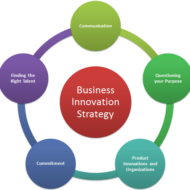
Innovation – The BUZZ Word Execution with Perfection: Technological advancement in the fields of aerospace, computers and communication has transformed the world we live in today, into a ‘GLOBAL VILLAGE.’ While most of the countries look to the U.S to adopt and follow management techniques , it is quite amazing to know that the U.S look to Japan for implementing these techniques more effectively. As we all know that Japanese are very good when it comes to “Execution with Perfection.”The point here is not to establish or brand that one is better than the other but rather to suggest that many countries can contribute to innovative managerial theories and practices and let it be a mutual affair. Management practices and thinking: Innovation is the Buzz word that has defined the paradigm shift in the approach of management practices and thinking. This has helped organizations grow and sustain regardless of competitor and market pressure and challenges. Innovation management gives entrepreneurs the liberty to think out of the box and come up with new ideas leading to the development of new products, processes and services. Change is Inevitable: Change is inevitable and change is the one that never changes. People love variety and it is the responsibility of business people to satisfy the customer wants and requirements. New approaches are required to avoid monotony and stereotyping. “Old wine in a new bottle” concept may come in handy when you feel that your product has reached the saturation point and about to decline in its life cycle. Picture Courtesy: Digital Information World Inspiration from the Internet Let us look at some services available on the Internet that exist as proofs for innovative and strategic thinking: 1. IRCTC – The e-ticketing portal of Indian Railways. Saves lot of time and effort. Connects huge number of metros and small towns. Tatkal scheme is a huge hit and a great revenue generator for the railways. The interface is very user friendly and interactive. 2. Bharat Matrimony – Online matrimonial service that assists brides and grooms to find their perfect partners. Profiles can be created to express your views and expectations on your life partner. 3. Make my Trip – Helps you to plan your travel, ticketing and accommodation, all in one place. Extensive data is available for people’s benefit. 4. Facebook – Gives you the liberty of having your own space to connect with number of people. Helps as well to promote your business. Facebook generates huge revenue through advertisement banners positioned at the right niches. 5. Twitter – Again a social networking portal that helps in link building. Retweets make the scope of you reach wide and bright. Education Portals: Educational portals that offer online learning, management portals that teach online MBA, Auction websites with numerous products at affordable prices, travel websites, online portals for paying tax and duties have transformed the lives of individuals and organizations for good. The full bloom of internet is yet to be seen when many more third world nations will have the opportunity to access the...
Posted by Managementguru in Business Management, Economics, Principles of Management, Strategy, Technology
on Mar 26th, 2014 | 0 comments

Technological Impact on Business Environment and Society The tremendous technological growth that is being witnessed is made possible through extensive programmes of technological research being conducted by many types of researchers working within universities, business, and non-profit research organizations. Technological developments are strong and all pervasive forces of the business environment. Technology is the scientific knowledge to practical problems. Technology feeds on itself and it affects business in two major ways: Through its impact on society in generalThrough its direct influence on business operations and activities. Technology and Economic Growth: Technology affects society. In fact, we feel its effect in our everyday lives. It affects economic growth, our standard of living and our culture. However, some of the effects of technology are highly beneficial and some detrimental. These effects on members of the society may in turn affect business practices. We are surrounded by so much of technology, that we take it for granted and usually do not realize how much it affects us until we have to do without electricity, water, transport or telephone. Technological developments have raised the standard of living. In spite of inflationary pressure and considerably a high degree of unemployment, generally families eat better, wear a wider variety of clothing, and live in more comfortable homes. Technology and Lifestyle: Technology also influences basic aspects of our culture, including religion, education, mobility, health care, art, language, laws and their enforcement. For example, technological advances in health care allow physicians to treat their patients in a virtual environment through video conferencing, which again is helpful in legal environment too for the judges to proceed with investigations on hard core criminals, who need not be produced before the court for security reasons. Creative Destruction: Every new technology is a force involved in creative destruction. Say, television hurts movies, synthetic fibers are considered rival for cotton fiber. The discovery of new technology even sometimes affects economic growth-TV with its high entertainment value takes away productive hours of mankind. Each new technology creates major long term consequences, which are not always foreseeable. How do you justify nations spending more money to develop missiles, nuclear weapons and bombs for the sake of security? Developing nations have to buy technology from foreign countries, as they are not resourceful in terms of capital needed for Research and Development, expertise, patents, licenses, and equipments and so on. This transfer of technology involves huge costs as a result of which a vicious circle is formed, in which weak technology creates dependence and dependence creates weakness. Conserve, Reduce, Recycle: The recent trend can be enumerated through this slogan, “Conserve, reduce and recycle”. The stress today is on clean production measures, advanced robotics, zero-emition vehicles, material recycling and alternative fuels and materials. This change towards love for environment by the technologists is a sure sign of positive...
Posted by Managementguru in Marketing, Principles of Management, Project Management, Strategy, Technology
on Mar 25th, 2014 | 0 comments
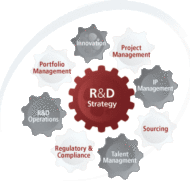
Research and Development – Strategic Key for Competitive Advantage Product Innovation and Process Improvement: With the increasing pace of liberalization and ferocity of competition in the corporate business world, it is mandatory for the firms to invest in research and development activities to sustain in the market. In most of the developing countries, scant attention has been paid to research and development activities. A survey indicates that countries like Japan and United States of America spend 2.8 percent of their Gross National Product on R and D, while it is a mere 0.9 percent of the Gross Domestic Product in the case of some Asian countries. What role does research & development play in the industry and economy? Why it is important for the developing countries to invest more on R and D? In spite of the tax rebate offered by most of the governments for R and D, why industries don’t contribute much to indigenous research? Global Competition: It becomes difficult for business organisations to compete in national and international markets both on quality and cost fronts, primarily because of absence of strong base in science and technology. Third world nations are used to buying technology from developed nations, that make them dependent and technology starved. Limited resource is another problem faced by these business firms, the allocation of which becomes difficult owing to rising costs. Invasion of Multinational and Trans national Giants: Another serious aspect to be considered is the invasion of multinational and transnational giants in every sector due to liberalization, globalization and privatization policies of the developing nations. This leads to panic in the industry, as a result of which, the business firms either go for forged alliances or infuse large amounts of funds into R and D activities hurriedly, both of which is a futile exercise to protect themselves from the onslaught of transnational companies. Science and Technological Advancement: The wiser move for the business firms to withstand the competition on an international level, would be to build their empires on a sustainable basis, by honoring the scientific and technological efforts. A thorough knowledge of all the research activities progressing around the world proves useful in managing their activities and operating with limited resources. This demands a long term plan that will support, strengthen and nurture the specified area of science base selected for research and development. Research Management: A well devised research management programme will help the business firms to formulate short and long term technical plans that aid in the research programme. It is very important for a country to encourage the budding population to become more research oriented, that will help the nation prosper in terms of science and technology, besides which, it also helps in the growth of one’s own economy. Chanakya’s 7 Secrets of Leadership The Research and Development strategic management lays emphasis on formulating plans, that support the short and long term objectives of a business firm, by employing innovative minds in the process and periodically reviewing and restructuring strategies in the light of changing demands of the society. The focus of an R and D manager should be on appraisal of technological and competitive environment, assessment of corporate strengths and weaknesses and making strategic decisions, while formulating R and D...
Posted by Managementguru in Business Management, Decision Making, Principles of Management, Strategy
on Mar 24th, 2014 | 0 comments
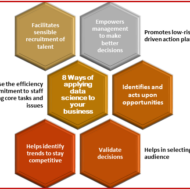
Growth Strategies In Business What are Growth Strategies? The means by which an organization plans to achieve its objective to grow in volume and turnover. The dynamic business environment calls for periodical changes in the business definitions, in terms of customer groups, customer functions and alternative technologies to broaden their scope for expansion. Growth can never be achieved by a business enterprise, if there is no proper planning for diversification of its business activities across a broad spectrum. Expansion strategies are followed when an organization aims at high growth, by improving its overall performance. A Small Note on Data Science and Analytics Data analytics help companies improve operational efficiency, drive new revenue and gain competitive advantages. To leverage this technology, companies need to understand the core of their data and determine the outputs that they are looking for. In fact, data-driven companies that utilize Business Analytics achieve a competitive advantage. The companies can improve their strategies by keeping in mind the customer focus. Big data analytics efficiently helps operations to become more effective. Expansion Strategy: Expansion strategies have a profound impact on the internal configuration as well as internal functioning of an organization. The business firms bear the risk of moving in an entirely new direction, where there is an equal chance for failure as that of success. If only a manufacturer plans to diversify or expand in a field that complements his present business activity, does it make any sense. What is the fun in venturing into a business activity about which you have no knowledge or scope? Expansion through concentration: This involves investment of resources in a product line for an identified market with the help of proven technology. A firm may attempt to intensify its focus on existing markets through market penetration strategies. Or new users may be targeted for existing products or alternatively it may introduce new products in existing markets by concentrating on product development. Concentration policy relies on the principle of “A known devil is far better than an unknown angel.” It is a very difficult task for firms to capture new markets or to gain acceptance for new products in existing markets. Expansion through integration: A company attempts to widen the scope of its business activities in such a manner that it results in serving the same set of customers. The alternative technology dimension of the business definition undergoes a radical change. Firms try to move up or down in the value chain to meet the demands of the customers by integrating adjacent activities. Expansion through co-operation: It may include mergers, takeovers, joint ventures and strategic alliances. Two firms try to combine their resources, capabilities and core competencies to pursue mutual interests to develop, manufacture or distribute goods and services. Expansion through internationalization: International strategies are formulated in the wake of globalization where most of the developing countries have liberalized their economic policies facilitating foreign direct investments, generating foreign exchange. Many multinational and transnational companies are setting up their operations in developing countries to factorise the economies of scale and to enjoy the advantages of cheap labor and availability of resources. Stability Strategy: Many firms go for stability strategies that are devoid of any risks. They are quite contented with the modest profit gained from the present business activity and try to maintain the same level of performance, until and unless there is a pressure from the market in the form of competition. Only few firms have that adventurous attitude to take risks in order to have a sustainable competitive...