Posted by Managementguru in Business Management, Project Management, Startups
on Mar 5th, 2014 | 0 comments

Establishment of a small business and successfully running it, is definitely by no means a small achievement. It is a commendable achievement as entrepreneurs are the backbones of a country’s economy and its growth. Proper planning and understanding the significance of critical factors and determinants affecting a small business paves way for the smooth functioning of your enterprise. What are the prerequisites for running a small business? Any plan or idea to be transformed into a product or a service needs to be categorically put into experimentation and subject to inquiries. Prepare a detailed project report With the help of an external expert consultant get it appraised Let the product be innovative which has hitherto not hit the market, for instance flying cars Plan your geographical area of operations Go for a detailed market survey through questionnaires and giving out free samples Try to gauge the pulse of your target customers Launch your product at the right time Plan your marketing strategy regarding price and promotions Fix up proper capitalization that would meet your financial requirements. Definitely you have to bring in initial working capital of your own and don’t rely solely on bankers for the entire funding. Asset management, fixed capital and working capital management must be absolutely preplanned. Manpower requirements -Right person for the right job and the appropriate number of persons needed to complete a job has to be planned. Their recruitment, selection, training and development forms part of the package. Location and Layout Most important criterion is the location and layout of your manufacturing facility. It should facilitate easy movement of materials to bring the product out to the market in the shortest possible time. Avoid bottlenecks or try to resolve them for smooth production. As we all know technology feeds on itself and more the delay, more competitors and better products throng the market. Keep in mind the end product should always reach the buyer or the consumer at the right time. Plan your reorder level, delivery schedule and lead times in accordance with the orders in hand. Production Inputs Smooth supply of production inputs, uninterrupted supply of power, copious water supply, the nature of the soil (if your product is agro based), proximity to the market and transportation facilities have to be given due importance. Your product has to be compliant in such a way that it should not pollute the environment. So, a proper waste disposal management system should be designed right at the start of your operations. Book-Keeping Proper bookkeeping and maintaining your accounts will please the tax authorities by which you create goodwill for your company and also keep your credit management under controllable limits. Any product centered around the consumer will be a hit and that is “marketing”. If you plan your success formula from your product that is “selling” that might not always be successful. Your distribution channels should be continuous with unbroken links and strong. The kind of self confidence that you exuberate makes you a reliable person and in the long run you become iconic. Technology Updates Businessmen have trained the customers to expect something new everyday, because such is the power of technology and the competitor force. So it is better to keep yourself updated with the latest technology available in the market. Take your product to your customers in a convincing manner by which it proves to be a win-win situation for both sides; profit making and customer satisfaction for the entrepreneur and buying products the money’s worth and the real benefits of the product for the...

Posted by Managementguru in Business Management, Marketing, Principles of Management, Strategy
on Mar 4th, 2014 | 0 comments

A niche market is a specific segment of a larger market with distinct needs and preferences. Finding the right niche is crucial for start-up success. It allows you to focus your resources, differentiate your offerings, and build a loyal customer base. Look For Problems What problems or pain points exist in the market? What needs are not being met? Identifying unmet needs is a key step in finding a profitable niche market. Look for areas where you can provide solutions or improvements. The process of new product development starts with the search for new ideas. Abstract ideas are molded in such a way to suit the market needs. Businesspersons who want to capture a major share of the market have to think out of the box, to tide over the competition. Small things can make a big difference. Monotonous pattern of thinking will not help you in the long run to survive and sustain in the market. The Significance of R&D The objective is to obtain ideas for new products, new attributes for the existing products and new usage for the existing product line. Why do you think so much of investment goes into research and development? The fruits of such R and D activities are reflected in the form of improved sales turn over. Market updates on a daily basis also gives you an excellent feedback about the new products that throng the market. Think about this, it is not possible for every organization to invest such huge sums in R and D which demands technically qualified personnel to carry out the research activities and it is next to impossible that each and every firm in the market can establish the necessary infrastructure for the purpose of research. SWOT Analysis What might be the solution? Companies generally rely on internal sources, customers, competitors, distributors, suppliers and others for new product ideas. The sales force of a firm can provide excellent inputs as they meet customers on a regular basis. Through SWOT analysis, a company can make a conscious, deliberate and systematic effort to identify opportunities that can be profitably exploited. Top management should encourage the employees to think more imaginatively to create a niche market for its product range. The management has to prioritise its objectives first and channelise the efforts of employees accordingly. Steps to be Followed in New Product Development Generation of new product ideas Screening of ideas – It serves the purpose of reducing the large number of ideas generated, to spot the good ones and drop the bad ones. Concept development and testing – An inherent idea must be developed into a product concept, should include the customer, the major customer benefits and the features defining it. Development of marketing strategy – This is helpful in launching the product at the right time and right place to the right people. Business analysis – A review of cost versus profit analysis, estimated size and growth rate of the market segment, estimated sales and market share for the new product in the light of financial feasibility. Development of the product – If the business analysis gives a satisfactory report as to the rate of return on investment and payback period, the R and D department goes ahead with manufacturing the prototype which is the preliminary version of the final product. Test marketing – It provides an opportunity to understand market response to the new product and its proposed marketing programme in a more realistic market environment than in simulated conditions. Commercialization – The product is released into the market, distribution channels are established, thus initiating its life cycle. The success of new products can be attributed to two aspects, one...
Posted by Managementguru in Business Management, Marketing, Principles of Management
on Mar 3rd, 2014 | 0 comments

Customer centric: refers to the orientation of a company to the needs and behaviors of its customers. Product centric: refers to the orientation of a company towards manufacturing and improving the product line. All products that enter the market are not given the kind of welcome which only certain products are able to enjoy. Why is that only few products are top notch and others average performers? The answer is very simple, you need to be customer centric rather focusing on improving your product and its range. What is the fun in making products that go bland over a period of time? Creating an appealing product does not suffice the requirements of the consumers. Understanding the consumer, his needs and preferences makes you a good marketer. “What people want to buy and what you want people to buy are entirely two different entities.” Customer Preferences Marketing is a concept that talks about creating a favorable environment or identifying a niche where you can sell your products comfortably or where the products can sell themselves provided the focus is on the target customer. What companies do now in the name of marketing is nothing but product promotion that exhausts huge chunk of money from the management’s treasury. Business schools have a great role to play in idealizing these concepts for the better understanding of management graduates, make them deliver the right choice of action in real time environment. Marketing starts right from developing a prospective business idea into a concrete business plan followed by branding and promotions. But the product base has to be built upon customer wanton and preferences. Indigenous Products The soft drink “Bovonto” is very popular and a preferred drink in south of Tamilnadu, India and the manufacturers have their plants at various places in Tamilnadu. Although not a big name in the international market, it is a direct competitor for Coke and Pepsi in the southern regions of Tamilnadu. The grape vine is that the product is a perfect “market fit”. To our amusement and amazement, the product has communicated well with the marketplace through taste and quality. Here is the unerring message, ‘Let the product speak for itself’. Indigenous products always gain instant recognition as they connect well with the local people emotionally. If people of each and every country vows only to buy indigenous products, many MNC’s would be out of business and filing for bankruptcy. Such is the power of the market and people who are the owners of the market. What is that ‘X’ factor that makes your product different and unique Let’s look at it from another perspective. Incidentally you happen to develop a great product, and you want to market the product. This situation calls for patenting the product and again it can be made market centric by finding the right market segment for the product and promoting it in such a way that the product content appeals to the market. Tell the masses how your product can solve specific problems through its unique content. What is that ‘X’ factor that makes your product different and unique as well is what you have to communicate to the people whom you are targeting. Facebook has revolutionized the internet marketplace by offering simple and user-friendly interface and a sophisticated niche for each and every individual who wants to make his/ her presence felt. A good business plan is one which incorporates the best of ideas from all spheres of the company, as marketing is not a separate entity, and promotions call for huge investments. Many companies fail to understand the basis of market success which is solving the problem and not selling. Promotions alone...
Posted by Managementguru in Business Management, Principles of Management
on Mar 3rd, 2014 | 0 comments
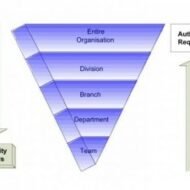
Centralization and De-Centralization Concepts CENTRALIZATION: The term “centralization” has several meanings: Centralization of Performance: Say, if the operations of a company is restricted to a single geographical location, it characterizes centralization of performance. Departmental Centralization: Specialized activities are carried out by a single department, say, maintenance of a whole plant, staff recruitment by HR department etc., Centralization as an aspect of management: This implies restricted delegation and exclusivity of decision-making by the top management. According to Allen, “Centralization is the systematic and consistent reservation of authority at central point in an organization.” According to Weihrich and Koontz, “Centralization (as an aspect of management) is the tendency to restrict delegation of decision-making. What are the special circumstances that force the managers to reserve authority and centralize decision making powers? 1. To facilitate personal leadership 2. To provide for integration 3. To handle emergencies 4. To utilize resources effectively and instantaneously. DECENTRALISATION: It is the tendency to disperse decision making authority in a structured and organized manner. It can be viewed as a philosophy rather than a principle where-in “discretion” plays a major role in deciding which decisions to push down into the organization structure and which to hold near the top. Capital expenditure, Investment analysis and major policy decisions have to be dealt with, by the top management. It is the systematic effort to delegate to the lowest levels of authority except that which can be exercised at central points. TYPES OF DECENTRALIZATION: Three approaches to the concept are: 1. PROFIT CENTRES 2. COST EXPENSE CENTRES 3. INVESTMENT CENTRES Profit Centre: Here the organization is split into divisions on a “product basis” and is given full authority to handle its own scheduled operations, right from placing orders to negotiating the sale of its finished products. Cost Expense Centre: Whenever it is easy to determine the cost of operations, cost centres are established. Cost centres run on “budgets” which acts as a control tool to run the units within the specified budgetary limits. Investment Centre: Useful in the case of big multi-product enterprises where product performance is measured by decentralizing the investment aspect. Each strategic business unit is responsible for the acquisition, use and disposition of fixed resources. Advantages of Decentralization: Managers and executives are relieved form excessive work pressure Even low level employees are involved in decision making thus bringing the decision making process closer to the scene of action. It facilitates product-diversification Creates an opportunity for learning Ensures effective control When a big organization is divided into relatively smaller units, it becomes flexible and also effects close control. Disadvantages of Decentralization: · Conflict arises between people belonging to different levels of the organization · Rising cost · Lack of co-ordination between production and marketing departments · No defined leadership Contingency Factors in Decentralizing: 1. Organizational goals 2. Organizational size 3. Geographical dispersion 4. Technical complexity of tasks 5. Time frame of discussions and decisions 6. Subordinates’ take on issues 7. Planning and control procedures 8. Environmental factors 9. Knowledge and experience of managers Effective Decentralization can be accomplished by · Establishing appropriate centralization · Developing efficient managers · Proper provision for communication and co-ordination · Establishing adequate controls Top management must be willing to delegate authority towards decision making; Middle management must be willing to accept responsibility that is being delegated. Only then effective decentralization is...
Posted by Managementguru in Business Management, Organisational behaviour, Strategy
on Mar 2nd, 2014 | 0 comments
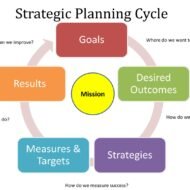
“Planning is bringing the future into the present so that you can do something about it now.” – Alan Lakein. Planning is absolutely essential and every minute you spend in planning saves 10 minutes in execution and gives 100 percent return on energy. We compare the advantages of planning against the consequences for your better understanding. Let’s See the Advantages of Planning First Facilitates opportunity analysis and presents an awareness of the external environmentMinimizes cost as it takes into account all the contributing and limiting factorsIncreases efficiencyRefines culture of an organizationProvides a good directionAlso establishes several measures of controlElicits commitment Disadvantages of Planning Time consumingInvolves excessive paper workSome times over emphasizes only the objectivesPlanning may become lop sided as it entirely depends on the mind set and attitude of people concerned with planningPlanning premises may not be fully reliable Steps to Make Planning Effective Every organization should have a separate planning department. A corporate planning department will take care of all the functions of an organization under one heading.Planning must be all pervasive and even the work force at the bottom level should understand the importance of planning and the planning perspective of the management.The goals must be verifiable and clearGive managers adequate tools and the freedom to trial and errorThe long term and short term goals should be combined together to form a inter locked system and must be viewed as one big single network.Goal setting must be practiced – participation by the employees must be made compulsoryA small idea could turn out into a big plan- don’t ignore suggestions from your subordinates and term them “silly.” What is Strategic Planning Strategic planning has a long term perspective and takes into account the extended time horizon.There may not be any immediate impact arising out of strategic planning, but the results can be experienced in the long run.It gives effort on vital areas. When the size of organizations is huge, they are broken down into STRATEGIC BUSINESS UNITS, treating them as individual businesses for ease of operation and decision making.It is a tailor made approach to match the functioning of an organization to the external environment for meeting the changes in the future. So, i is crystal clear that the advantages of planning outweigh the disadvantages and good plans never...