Posted by Managementguru in Business Management, Economics, Principles of Management, Strategy, Technology
on Mar 26th, 2014 | 0 comments
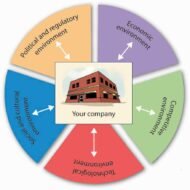
Technological Impact on Business Environment and Society The tremendous technological growth that is being witnessed is made possible through extensive programmes of technological research being conducted by many types of researchers working within universities, business, and non-profit research organizations. Technological developments are strong and all pervasive forces of the business environment. Technology is the scientific knowledge to practical problems. Technology feeds on itself and it affects business in two major ways: Through its impact on society in generalThrough its direct influence on business operations and activities. Technology and Economic Growth: Technology affects society. In fact, we feel its effect in our everyday lives. It affects economic growth, our standard of living and our culture. However, some of the effects of technology are highly beneficial and some detrimental. These effects on members of the society may in turn affect business practices. We are surrounded by so much of technology, that we take it for granted and usually do not realize how much it affects us until we have to do without electricity, water, transport or telephone. Technological developments have raised the standard of living. In spite of inflationary pressure and considerably a high degree of unemployment, generally families eat better, wear a wider variety of clothing, and live in more comfortable homes. Technology and Lifestyle: Technology also influences basic aspects of our culture, including religion, education, mobility, health care, art, language, laws and their enforcement. For example, technological advances in health care allow physicians to treat their patients in a virtual environment through video conferencing, which again is helpful in legal environment too for the judges to proceed with investigations on hard core criminals, who need not be produced before the court for security reasons. Creative Destruction: Every new technology is a force involved in creative destruction. Say, television hurts movies, synthetic fibers are considered rival for cotton fiber. The discovery of new technology even sometimes affects economic growth-TV with its high entertainment value takes away productive hours of mankind. Each new technology creates major long term consequences, which are not always foreseeable. How do you justify nations spending more money to develop missiles, nuclear weapons and bombs for the sake of security? Developing nations have to buy technology from foreign countries, as they are not resourceful in terms of capital needed for Research and Development, expertise, patents, licenses, and equipments and so on. This transfer of technology involves huge costs as a result of which a vicious circle is formed, in which weak technology creates dependence and dependence creates weakness. Conserve, Reduce, Recycle: The recent trend can be enumerated through this slogan, “Conserve, reduce and recycle”. The stress today is on clean production measures, advanced robotics, zero-emition vehicles, material recycling and alternative fuels and materials. This change towards love for environment by the technologists is a sure sign of positive...

Posted by Managementguru in Business Management, Economics, International Business, Principles of Management, Technology
on Mar 26th, 2014 | 0 comments
Transfer of Technology- Commercialisation Vs.Benefit The total influx of technology in underdeveloped countries is from the advanced capitalist countries for obvious reasons, which will be the highlight of this discussion. Multinational corporations play a vital part in technology transfer, the motive being profit maximization for the parent company through their subsidiaries. These corporations act as the principal instrument of technology transfer, either through their subsidiaries or through contractual agreements made with developing countries. The idea is to bring mechanized processes and equipments that are not locally available. Dominance of Technology Supplier: The technology supplier usually takes the upper hand owing to his monopolistic strength that arises from the patent protection for differentiated products and processes. Very often, the terms and conditions of transfer are arbitrarily settled under highly imperfect market conditions by the technology supplying multinationals. Advanced nations have the advantages of reduced population density, even distribution of national wealth, high standard of living, more infusion of capital into research and development, availability of skilled personnel inclined towards research etc. Dependency of Developing Nations: Developing nations on the other hand are subject to the pressures of high population density, uneven distribution of economic wealth (poor people become more poor and the rich even richer), moderate or low living standards etc. Capital drain occurs due to heavy borrowings from the World Bank which leads to increase in the social overheads. In such a situation, it is next to impossible for a developing nation to pump capital into activities concerning research. Bargaining Power of Developing Nations: The bargaining power of developing nations is weak, as they have no access to information about alternate technologies and their sources nor the necessary infrastructure to evaluate the appropriateness of equipments, intermediates and processes. Moreover, the large part of the influx of technology in developing countries is in response to the policy of industrialization through import substitution. Transfer of technology from the developed to the underdeveloped countries is made in a number of ways. They are classified into two broad categories, viz., direct mechanism and indirect mechanism. The direct mechanism includes transfer of technology through banks, journals, industrial fairs, technical co-operation, movement of skilled people etc. Here there is a choice for the developing nation to select the appropriate technology that best suits their requirement. However, this is not the principal form of technology transfer that advanced nations would prefer. Price of Technology: The indirect mechanism implies technology transfer in a “package” or a “bundle” containing technology-embodying equipments, industrial properties like patents and trademark, skill, equity capital, etc. In this system, a local enterprise negotiates with multinational corporations for transport of the required elements of technology, and the terms and conditions are settled through a process of commercial transaction. Since the trading partners are unequal, the terms of contract are invariably restrictive and the price extended for the technology unreasonably high. All the underdeveloped countries, which have opted for growth along the classical path of capitalist development, are in a position to invite multinational corporations, if for no other reason than at least for the diffusion of...
Posted by Managementguru in Business Management, Change management, Principles of Management, Project Management, Technology
on Mar 25th, 2014 | 0 comments

Perhaps the most striking influence of technology is found on society. Practically every area of social life and the life of every individual have been, in some sense or the other, changed by the development in technology. AI in Marketing Artificial intelligence (AI) is reshaping how businesses engage with marketing. By analyzing data, personalizing content, and automating tasks, AI is truly revolutionizing the marketing landscape. Personalization One of the key benefits of AI in marketing is its capability to tailor content for each individual customer. Leveraging AI-driven algorithms, companies can craft personalized experiences that truly connect with their audience. Predictive Analytics AI can assist businesses in making more precise predictions regarding consumer behavior. By examining data from previous interactions and purchases, AI can uncover patterns and trends, enabling companies to make better-informed decisions. Visual Search AI-powered visual search is changing the way consumers search for products online. By analyzing an image, AI can identify the product and show similar items for purchase. This makes the online shopping experience more intuitive and seamless. Technology reaches people through business Preferences of people are constantly changing, and this has pushed the business firms to the point, where innovation has become the need of the hour. The new discoveries would remain idle as mere ideas if there were no laboratories to transform the ideas into creations. Technology reaching people through business is one part of the theory. The economic prosperity of a nation depends on technology. High expectations of consumers People are used to technological innovations and breakthroughs and they want variety in every kind of purchase they make. New varieties of products, safer and more comfortable, free from pollution, are to be produced and supplied to affluent sections. This calls for a massive investment in research and development. In countries like Japan, much importance is attached to product design, quality, sophistication, delivery schedules and prices. High expectations need not be considered as problems by business persons but treated as an opportunity to satisfy their customer group. System complexity Technology has resulted in complexity. Modern machines work faster and better, no doubt. However, if there is a technical problem, the presence of an expert is needed to repair the machinery. Again, investment in machinery adds to the cost of capital and hence the merchandise has to be purchased form reliable sources. Social change The change in the technological process undoubtedly has its effect on the society. First, there is a change in the social life, with mobile populations drifting about in search of new centers of employment. If it happens to be an agricultural economy, the result of such a drift would prove disastrous, with society being socially uprooted. Sometimes such a drift may result in new geographical distribution of population. Technological change also brings considerable changes in the family, lifestyle and attitude. The way we cook, communicate, use media and work are all affected by technology. Technological Phases and the Social Systems they Create There are five stages of technological development. Each stage leaves a distinct influence on work and on social system. Sequential progress is made from the lowest level to the highest level, in such a way that these five stages roughly represent the progress of civilization throughout history. Although one phase of technology tends to dominate a nation’s activities at a particular time, other phases will be often practiced at the same time. Technology means change and more change. It forces changes on people whether they are prepared for it or not. In modern history, it has created what is called future shock, which means that change comes so fast and furious that it approaches the limits of human...
Posted by Managementguru in Business Management, Decision Making, Principles of Management, Strategy
on Mar 24th, 2014 | 0 comments
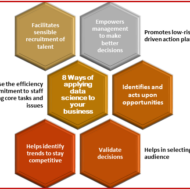
Growth Strategies In Business What are Growth Strategies? The means by which an organization plans to achieve its objective to grow in volume and turnover. The dynamic business environment calls for periodical changes in the business definitions, in terms of customer groups, customer functions and alternative technologies to broaden their scope for expansion. Growth can never be achieved by a business enterprise, if there is no proper planning for diversification of its business activities across a broad spectrum. Expansion strategies are followed when an organization aims at high growth, by improving its overall performance. A Small Note on Data Science and Analytics Data analytics help companies improve operational efficiency, drive new revenue and gain competitive advantages. To leverage this technology, companies need to understand the core of their data and determine the outputs that they are looking for. In fact, data-driven companies that utilize Business Analytics achieve a competitive advantage. The companies can improve their strategies by keeping in mind the customer focus. Big data analytics efficiently helps operations to become more effective. Expansion Strategy: Expansion strategies have a profound impact on the internal configuration as well as internal functioning of an organization. The business firms bear the risk of moving in an entirely new direction, where there is an equal chance for failure as that of success. If only a manufacturer plans to diversify or expand in a field that complements his present business activity, does it make any sense. What is the fun in venturing into a business activity about which you have no knowledge or scope? Expansion through concentration: This involves investment of resources in a product line for an identified market with the help of proven technology. A firm may attempt to intensify its focus on existing markets through market penetration strategies. Or new users may be targeted for existing products or alternatively it may introduce new products in existing markets by concentrating on product development. Concentration policy relies on the principle of “A known devil is far better than an unknown angel.” It is a very difficult task for firms to capture new markets or to gain acceptance for new products in existing markets. Expansion through integration: A company attempts to widen the scope of its business activities in such a manner that it results in serving the same set of customers. The alternative technology dimension of the business definition undergoes a radical change. Firms try to move up or down in the value chain to meet the demands of the customers by integrating adjacent activities. Expansion through co-operation: It may include mergers, takeovers, joint ventures and strategic alliances. Two firms try to combine their resources, capabilities and core competencies to pursue mutual interests to develop, manufacture or distribute goods and services. Expansion through internationalization: International strategies are formulated in the wake of globalization where most of the developing countries have liberalized their economic policies facilitating foreign direct investments, generating foreign exchange. Many multinational and transnational companies are setting up their operations in developing countries to factorise the economies of scale and to enjoy the advantages of cheap labor and availability of resources. Stability Strategy: Many firms go for stability strategies that are devoid of any risks. They are quite contented with the modest profit gained from the present business activity and try to maintain the same level of performance, until and unless there is a pressure from the market in the form of competition. Only few firms have that adventurous attitude to take risks in order to have a sustainable competitive...
Posted by Managementguru in Business Management, Decision Making, Organisational behaviour, Principles of Management, Strategy
on Mar 24th, 2014 | 0 comments
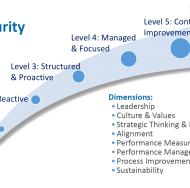
STRATEGIC PLANNING Strategic planning is the primary step in the process of strategic management [Strategic management is a comprehensive topic that covers almost all the functional aspects of the organization] which can be outlined from at least two perspectives: First, strategy is the “broad programme for defining and achieving the objectives of an organization and implementing its mission”. Secondly, “It is the pattern of the organization’s response to the external environment over a period of time”. A strategy that takes a broad and typically long range focus is called strategic planning. MBA Application Strategies for Top Business Schools Strategic planning is the process that classifies the long range goals of the organization and opts for the precise means (strategies and polices) for achieving these goals, allocates resources, and develops long range plans to reach the destination. Watch this Video to Understand the Overview of Strategic Planning Process Time-Horizon: Strategic planning takes into account the extended time horizon. There may not be any immediate impact out of strategic planning, but the consequences in the long-run prove to be gradual and significant as well. It provides with the necessary action plans to make a difference in vital areas concerning development. You can always associate innovativeness with strategy since it explores new paradigms and tries to enhance the impact. When the size of organizations expands, they are broken down into strategic business units (SBU’S) for the purpose of functional excellence. These units are expected to operate as if they were relatively independent businesses. WHY STRATEGIC LEADERSHIP IS IMPORTANT A Tailor Made Approach: A tailor made approach is essential when it comes to strategy development the systematic analysis of the factors associated with customers and competitors (the external environment) helps the organization to meet the challenges of modern society. More and more organizations are focusing on formal approaches and concepts for planning their long range process. Specifically these challenges are a result of increasing rate of change, the complexity of manager’s jobs, the increasing importance of fitting the organization into external environment, and the increasing lag between the preparation of plans and their implementation in future. Resource Allocation: Strategic planning is an organization’s process of defining its strategy or course, and making decisions on resource allocations to pursue this strategy. Managers must be adequately geared up for strategic planning. The goals of the organization must be made plain and not unclear. Each business unit should be categorized based on its performance level to decide on the resource share to be allocated. You need to infuse cash flow into ineffectual units and divest funds from dying units into other profitable ones. The ultimate aim is to build up star performers that will be the perennial source of income or revenue generation. There should be a strong linkage between planning and control. The assessment of strategic plans of the business units must be made periodically and effectively. TOP FIVE REASONS WHY STRATEGIC PLANS FAIL SWOT Analysis: SWOT analysis is a strategic planning technique used to evaluate the Strengths, Weaknesses/Limitations, Opportunities, and Threats. Planning is the primary step for control as it provides several standards and benchmarks of control. Planning extracts commitment. Some times planning highlights the objectives only and the planning premises may not be fully reliable. Threats are to be considered as challenges and must be converted into opportunities. Two heads are better than one is the philosophy of brain storming where a group of people with knowledge and expertise assemble to lay out clear plans that will steer the organization smoothly even in times of rough...