Posted by Managementguru in Business Management, Human Resource, Organisational behaviour, Principles of Management, Project Management, Training & Development
on Mar 19th, 2014 | 0 comments
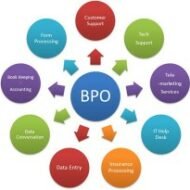
Call Centre Challenges The emergence of numerous “call centers” in developing countries like India and China, has posed some serious threats to the employees of these concerns. The concept of call center is a new find of the modern era, where they handle volumes of business process outsourcing for the developed countries. What are the various operations carried on in a call center? They handle inbound and outbound customer care services, telemarketing services, e-mail management services, pay roll accounting, help desk and many more back end activities. Benefits of Outsourcing: It proves to be a win-win situation for both the parties; the outsourcing company benefits from cheap labor, and the company that does the job earns good pay in the form of foreign exchange. But one has to understand the nuances of the call center operations; how it can be really worked out to one’s benefit? If you have a direct link with the outsourcing company, there is no need for you to share the profit. If the job is sublet to you, then your share gets reduced down the line. And also, the pay comes in a cycle of 45 days or so. So, it becomes mandatory that you should have the wherewithal to rotate your own funds for that 45 day period time, to fulfill establishment costs, power costs, salary and other miscellaneous expenses. What is the Pressure Situation? Let’s not get into the details of how to establish a call center and the necessary infrastructure to start one. The business has created a pressure situation, as it calls for erratic work hours and disturbed eating and sleep patterns. Definitely, it affects the youth, who form the major population of call centers, psychologically and socially as well. The erratic work schedules, (they work round the clock in shifts) the intense work pressure to achieve targets eventually leads to a pressure cooker like stress situation. Their altered sleep cycle is dangerous to both their physical and mental health. It is an evident fact that more number of persons working in this industry has started complaining about their physical and mental problems like Anxiety Depression Relationship-related problems Headaches Disturbed appetite Hearing loss Changes in thyroid and adrenaline levels Loss of weight Obesity and Smoking to reduce immense tension is also witnessed. The call center business has been a flourishing business in developing nations, though recently we tend to see a lull in the market, owing to the government regulations of the developed nations. Even the economy of developed countries, has taken a huge plunge owing to the recent economic recession. Naturally, when their financial markets have become unstable, they would not want to outsource to low-cost developing countries. The BPO’s or KPO’s (business process outsourcing and knowledge process outsourcing), as they are called should not become a fad, instead, developing nations can also concentrate on indigenous business clients, that are in need of their services. Note: India is the leading country for offshore outsourcing. The offshore outsourcing industry started in India and it has been able to grow the IT and BPO export sector to $47 billion and capture more than half the offshore outsourcing...

Posted by Managementguru in Human Resource, Organisational behaviour, Principles of Management
on Mar 19th, 2014 | 0 comments
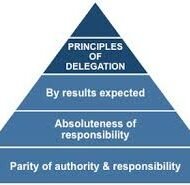
You Can Delegate Authority, but Not Responsibility Responsibility of a Manager: A corporate manager is accorded with the huge responsibility of leading his subordinates in the right direction, by giving proper insights on the tasks to be accomplished. The success rate depends on how well he delegates his authority down the line to get things done. The art of delegation results not only in down sizing his work pressure but also in the empowerment of subordinates, that elevates them to a higher plane of understanding and achievement. An Excerpt from The Art of Delegation: Developing This Essential Managerial Skill Delegation helps you handover the authority of certain tasks to capable team members so that you free up your time to work on more pressing issues. But you still remain responsible to get those completed in proper way. Hence it is essential to have a status check or communication with the team member on regular basis. Accountability of Subordinates: The subordinates, when entrusted with the responsibilities of performing a task by themselves and the necessary authority to make decisions within the area of their assigned duties, are obliged to perform. The necessary assistance and training for the new assignment has to be planned for, by the manager to make them perform as per the expected standards. The thing is right people should be chosen for the entrusted job. They should possess the zeal and enthusiasm to deliver the desired output. Some people perform beyond expectations and they should be rewarded with additional responsibilities. Whatever the case may be, it is a wise thing to delegate simple assignments at the initial stage, and proceed with more challenging jobs depending upon the caliber of the incumbent. THE ENTREPRENEUR’S GUIDE TO DELEGATION Clear and Clever Delegation: Clear and clever delegation facilitates to build a formal organization structure, where the subordinates are trained well and they look up to the manager for direction and guidance. Although the authority is delegated, the manager is held accountable and answerable to the management for the performance output or the end result. Some managers hesitate to delegate, just for the reason that their weaknesses might get exposed. Some don’t have confidence in their subordinates. Some even fear that they might lose their power if the subordinate is very shrewd and exceeds the expectations. Managers fail because of poor delegation; the reasons being personal attitude of managers in delegating authority. Let us understand some of the basic principles to be adhered to while delegating: The authority delegated to subordinates should be adequate enough to ensure their ability to accomplish the expected results. Authority can be delegated but responsibility can never be delegated. Responsibility of subordinates is “performance” and that of managers is “responsibility for the action of their subordinates”. One cannot be held responsible for a task if he has only limited authority. There need to be a balance between authority and responsibility. The presence of a single superior will invoke greater feeling of personal responsibility among the subordinates. Lack of receptiveness on the superior’s part will incur greater loss in terms of performance and efficiency. Instead, a manager should develop a trustful attitude towards his subordinates and should have the patience to explain the policies, objectives and guidelines and give sufficient authority to perform a duty. HOW WELL EMPLOYEES KNOW ABOUT YOUR ORGANIZATION? Although initially the efforts taken to train a subordinate is time consuming, the more empowered he becomes, less is your time taken to accomplish the enterprise objectives. The superior must be able to create a climate of mutual trust and goodwill, to make delegations effective in the light of expected...
Posted by Managementguru in Decision Making, Human Resource, Principles of Management, Project Management, Training & Development
on Mar 19th, 2014 | 0 comments

Crafting a solid career plan is the cornerstone of professional success and personal fulfillment. Whether you’re just starting out or aiming to advance your career, a well-thought-out plan provides clarity, direction, and motivation. In this guide, we’ll explore practical steps to help you devise a career plan that aligns with your passions and goals. Have you ever thought about how to gain insight into yourself? Well, it is high time, if you really want to make it to the top of your career path and it is supposed to be the best personal strategy. Setting up of long-range plans helps you to formulate your career strategies accordingly. To reach the destination, you need to have clear travel plans. Likewise, devising your career plans is inevitable to reach the ultimatum in your work environment. Following is a Five step chart to help you create a solid career plan Self-Evaluation What do you enjoy? What are your priorities? Strengths and weaknesses? Name the things you want from a job? Skills Analysis What are your qualifications and experience? What are your key strengths and skills? What are your biggest achievements to date? What are your areas of development/ which area of interest excites you the most? Set your direction The broad industries that really appeal to you. The types of roles that would suit you best. How these options match your personal preferences? Key skills you’ll need to develop. Commit to a time frame Make milestones for the next six, twelve, eighteen months. How will you achieve your training and education goals? How will you gain additional skills and experience needed? How will you expand your network, and by when? Review your career plan Now you know your goals and how to achieve them, monitor your progress at least every six months to stay on track. The Following Tenets Will Infuse Some Confidence to Those Who Want to Achieve Set your goals high Never settle for less Never under estimate yourself You are born to achieve something You are different from others You possess that “in thing” that is going to take you places Career advancement is something that is not the sole proprietorship of the managerial cadre. It applies to anyone who has the “will” to learn and move forward. One’s attitude towards time, achievement, change, material things, work etc., determines the extent to which he is prepared to pursue his career with a long-range plan. Decision Making Another important aspect of career planning is the tough preposition of decision making. If a qualified and experienced manager is adept in all areas of management, naturally he gets confused as to “which way to go”, when presented with a chance to take up another job, in pursuit of better career prospects such as pay or promotions. People sometimes tend to resist career planning for the fear of making decisions and sometimes due to the fear of failure of achieving goals in the new set up, which might be a big blow to their ego. This dilemma of choosing a goal is commonly noticed in students who want to pursue higher education. Since it involves not only decision making but also determines their capability to be successful in the chosen field of activity. If an individual wants to become a doctor, he or she has to give up to pursue other opportunities, say, to become a lawyer or an engineer. Commitment Furthermore, career advancement means more involvement and commitment, which makes you a quick learner. And in the process to achieve your goals, you become well versed in the area of specialization, however complex the subject or situation may be. Psychology has its role to play in career planning...
Posted by Managementguru in Human Resource, Motivation, Organisational behaviour, Principles of Management, Training & Development
on Mar 18th, 2014 | 0 comments

Promoting Effective Communication in the Work Place A purpose or an idea to be conveyed is needed for communication to happen. The question is how well or how successful you are in transmitting the message (mind you! without transforming it) to the receiver in the proposed meaning, whatever the channel might be! Communication must serve the following functions… Effective Control Motivational expression Information Fundamentally communication helps in controlling the behavior of the members of an organization in several ways. Either formal or informal, it controls the activities of the employees by prescribing certain procedures of communication to be followed when there is a grievance or a difficulty regarding his/her job, the work situation etc. Communication provides Vital Information: Communication also motivates people by clarifying what needs to be done, how to be done and how they are performing and what can be done to improve their performance. Most important function is that communication provides vital information that is crucial for members at all spans or levels to make effective decisions. The feelings of members are also articulated as grapevine in an organization, and in a way it serves as an outlet for their emotional expression. Grapevines: Grapevines are always not harmful, they might even give you information about the pulse of people working for you and if you are really sharp, “you can work it out to your advantage. Communication is always referred to as “oxygen”, we can feel only when it breaks down. Communication plays an important role in managerial and organizational effectiveness. Nevertheless, on the other side it can be the root cause of all the problems in your organization. This excellent infographic on Business Etiquette and Body Language Blunders clearly indicates how body language and gestures influence communication to a greater level. Source: www.thewebsitegroup.uk Effective Communication: In general, effective communication is the prerequisite for any healthy organization and the attainment of its standard objectives. Most of us are in fact aware of how our vocabulary has been modified to reflect political correctness. For instance we have replaced certain words like handicapped, blind and elderly by physically challenged, visually impaired and senior. One must be sensitive to others feelings. Words are the primary means by which people communicate; so due importance must be given for politically correct words both in the society at a larger level and in firms at the micro level. Increasingly, I find people like being addressed by their designation capacities. Even people might get offended if you call them by their first names as it is regarded to be disrespectful. But I think it is always better to address a person giving due respect to his position if you are reporting to him. That way there is no scope for conflicts and strained relationships. Western countries are more modern in their outlook and have a broader perspective on human interactions than the east. Gestures: Words mean different things to different people. In organizations, people of different background work together, so they have their own language of expressing their opinions and ideas. So it calls for a uniformity of language that is well understood and appreciated by all. Gestures also play their part in communicating ideas. So self controlled expressions, proper behavior are also necessary that completes a communication process. Ultimately proper communication leads to… Satisfied employees Effective feedback Organisational efficiency Freedom for suggesting ideas Enhanced interpersonal relationships Closely knit organisational network Encouraging trust and openness. Communication is an on-going process and the purpose is “not to dictate but to make the employees understand the big picture” as to how the process imparts success and viability to the...
Posted by Managementguru in Human Resource, Principles of Management, Training & Development
on Mar 18th, 2014 | 0 comments
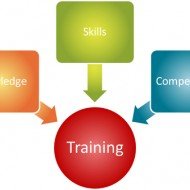
Employee Training – Train Your #Employees to Tone up their Spirit What is Training & Development: process to obtain or transfer #knowledge, #skills and abilities needed to carry out a specific activity or task. Human Resource training is not at all a complex process; with the right kind of supervisors, who impart training and their subordinates being enthusiastic about learning, it seems to be quite an easy job. But, some firms fail to achieve the desired productivity, in spite of good training programmes and availability of efficient workers. The biggest problem being, the failure to impart relevant training, by identifying and analyzing the training needs which too often is not the case. To be successful, firms have to adopt a systematic approach to training process. Training fills the gap between what someone can do and what he should be able to do. The first aim of training is to ensure that, as quickly as possible people can reach an acceptance level in their jobs. Training then builds on this foundation by enhancing skills and knowledge as required to improve performance in the present job or to develop potential for the future. Steps involved in systematic approach of training: 1) Identifying and analyzing training needs: Training should always fall in line with the #objectives of the organization to be achieved and it should be relevant to the context. Running training programmes just for the sake of running it, without defining the purpose, or sending the trainees for a workshop that has nothing to do with what the trainees really need to learn -all these are inappropriate methods of training and it makes the trainees lose their focus and direction. Another problem you will meet in the off-the job training is that, transferring the knowledge to action in the work place. If the objectives are not specified and appraised properly to the trainees, they will not be able to satisfy your expectations. So, a thorough analysis of what people need to know as trainees at different functional levels proves useful in saving much time and labor of the firm. 2) Job analysis-a basis for identification of training needs: The basis for training starts from job analysis, where the organization has to be quite prudent about its specifications and expectations well defined. The indicated specifications may be about, Knowledge -what the worker needs to know in terms of professional, technical, technological, commercial aspects. Skills-Manual, intellectual, perceptual, analytical or social which depends on the nature of the job. A top level employee needs to possess more analytical skills backed up by rational thinking, whereas a lower level employee is only expected to deliver his technical skills properly. Attitudes: The disposition to behave or to perform in accordance with the requirement of the work. This is one of the most important aspects that is neglected by most of the organizations by sheer oversight. If a customer is not properly received in a boutique shop or a restaurant, think what will be the response and reaction of the customer? If a worker does not pay due respect to his superior or boss, what are the chances of his career advancement? Whether it is a production environment or a market environment, firms must teach the trainees to conform to the guidelines regarding #attitude. 3) Prepare your training plans based on the objectives: Decide on the content of the course, as established by job and task analysis and information from performance appraisals. Decide on the training techniques, which may be, Job instruction On-the -job training Coaching Lecturing Computer based training Action learning Interactive video etc., which are a combination of on- the job and off-the job training...