Posted by Managementguru in Business Management, Organisational behaviour, Principles of Management
on Mar 6th, 2014 | 0 comments
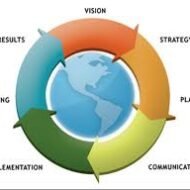
Critical Factors Influencing Corporate Management A corporate management is said to be capable only if it is able to integrate, coordinate and direct the functional capabilities towards overall objectives and common goals of a firm, that have a bearing on an organization’s capacity and ability to implement its strategies. Multitudinous factors affect the functioning of corporate general management system. It differs with each organization with differing objectives and mode of operations. Key Factors or Contributors: The firms must evolve an effective system for corporate planning. The objectives must be realistic and achievable and clear and complete communication of plans to various levels of organization helps in execution of action plans by the respective departments. A pucca management information system is necessary that integrates all the levels through a network of computers, facilitating information processing and task implementation. If the firm is oriented towards a god deal of risk-propensity, chances of rewards are also quite high. You cannot beat your competitors unless you possess a better shade of entrepreneurship in you than others. Competency development backed up by strategy formulations, in the wake of challenges and opportunities in the external environment is well appreciated. Why everybody always talk about strategy? It is one thing that warrants for a sure success, it implies that you are smart enough to think ahead of time, what others have failed to. Don’t you want to set a path forward for the future generations to come? Values that are unique to your organization add to the image of your company. Say, if you project “quality”, as your prime value system, definitely it is going to attract consumers who are very particular about quality unmindful of the price. Slowly the idea gathers momentum and your company’s image gets a boost. But don’t forget that you have to fulfill your commitments in terms of quality without any compromise. Reward systems must be worked out to gear up the morale of top managers who are the achievers of your management objectives. Their track records and degree of commitment should be analyzed to decide on pay and promotions. A favorable organizational climate is inevitable for the organization to progress in the desired direction without any internal politics and power struggles. The role of top management is very crucial in that, it has to identify people with vested interests and bring them back into the groove by making necessary changes in the organization structure or go for weeding out actions if things go out of control. Ultimately, the overall objectives of the organization is what that matters, and people must be trained to accept the organizational changes which form a part of the developmental procedures of management. Social responsibility is much talked about these days, and the corporate firms are in a position to discharge their duties pertaining to social welfare, as part of their corporate management programme.It has become a regular feature of the management process to part with a share of their profit towards a social cause. Corporate management is a comprehensive process that covers all aspects of the management with growth as its motto and social conscience as its...

Posted by Managementguru in Entrepreneurship, Project Management
on Mar 6th, 2014 | 0 comments

How can we define Business? Business is an important institution in the society. Be it for the supply of goods and services; Creation of employment opportunities; Offering better quality of life; Contribution to the economic growth of a country; the role of business is crucial. The subject of business is as interesting as its role in society. The more one reads about it, more interesting does business become. To be successful, you have to have your heart in your business, and your business in your heart. – Thomas Watson Sr. Entrepreneurial activities The increasing number of business schools and institutions signify the importance and the need for training the students on rudiments of business management. Developing countries encourage entrepreneurial activities and view it as a strategy to improve the GDP (Gross Domestic Product). More business activity means increased per capita income and increased standard of living. A business must make profit to succeed. Profit is income minus outgo. It is the main incentive for starting a business. Business people weigh each of their decisions in terms of making profit and avoiding loss. In a corporate environment, business has to aim for wealth maximization apart from profit maximization to increase the shareholder’s wealth in the long run. The scope of business is indeed vast. It all depends on how well you have analyzed and understood the nuances of your business activity, in order to survive and sustain in the market. Supply Chain The supply chain in a business activity involves numerous links in the form of manufacturers, supplier of raw materials to the manufacturer, dealers, logistics, intermediaries, consumers, bankers, advertising agencies, insurance agencies and so on. All these elements have to function in a coordinated manner for the benefit of the consumer. Now days, business has become customer-centric rather than product-centric. This serves both the purpose of product development in lieu of customer needs and customer satisfaction. The multitudinous activities involved in bringing raw materials to the factory and the end product from there to the market constitute business. In addition, a business activity has to comply with legal restrictions and government regulations. A business is also expected to discharge its social obligations to consumers, employees, owners and to other interest groups, which have stakes in business directly or indirectly. Planning and organization Planning and organization are two key principles in running a business enterprise as planning sets up a concrete premise on which action plans can be developed and organized activities assures definite success. Modern business is dynamic. Future business will be knowledge based and brainpower will be in greater demand. Organizations have become flat. Eight to twelve organizational layers have been reduced to two or three. Gone are the days of sheltered markets, subsidies, licenses, quotas and restrictions. Businesspersons are asked to stand on their feet, to eliminate inefficiencies, cut down costs and improve productivity. LoL! It might be said that it is the ideal of the employer to have production without employees and the ideal of the employee is to have income without work. –E. F....
Posted by Managementguru in Business Management, Organisational behaviour, Strategy
on Mar 2nd, 2014 | 0 comments
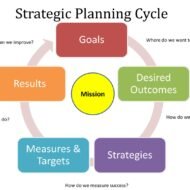
“Planning is bringing the future into the present so that you can do something about it now.” – Alan Lakein. Planning is absolutely essential and every minute you spend in planning saves 10 minutes in execution and gives 100 percent return on energy. We compare the advantages of planning against the consequences for your better understanding. Let’s See the Advantages of Planning First Facilitates opportunity analysis and presents an awareness of the external environmentMinimizes cost as it takes into account all the contributing and limiting factorsIncreases efficiencyRefines culture of an organizationProvides a good directionAlso establishes several measures of controlElicits commitment Disadvantages of Planning Time consumingInvolves excessive paper workSome times over emphasizes only the objectivesPlanning may become lop sided as it entirely depends on the mind set and attitude of people concerned with planningPlanning premises may not be fully reliable Steps to Make Planning Effective Every organization should have a separate planning department. A corporate planning department will take care of all the functions of an organization under one heading.Planning must be all pervasive and even the work force at the bottom level should understand the importance of planning and the planning perspective of the management.The goals must be verifiable and clearGive managers adequate tools and the freedom to trial and errorThe long term and short term goals should be combined together to form a inter locked system and must be viewed as one big single network.Goal setting must be practiced – participation by the employees must be made compulsoryA small idea could turn out into a big plan- don’t ignore suggestions from your subordinates and term them “silly.” What is Strategic Planning Strategic planning has a long term perspective and takes into account the extended time horizon.There may not be any immediate impact arising out of strategic planning, but the results can be experienced in the long run.It gives effort on vital areas. When the size of organizations is huge, they are broken down into STRATEGIC BUSINESS UNITS, treating them as individual businesses for ease of operation and decision making.It is a tailor made approach to match the functioning of an organization to the external environment for meeting the changes in the future. So, i is crystal clear that the advantages of planning outweigh the disadvantages and good plans never...
Posted by Managementguru in Business Management, Organisational behaviour, Principles of Management
on Mar 2nd, 2014 | 0 comments
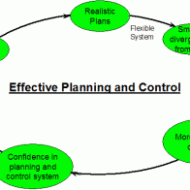
Principles of Planning and Forecasting The guidelines of principles of planning are as follows: 1. Principle of primacy of planning: As discussed earlier planning is the prime function of management and precedes all the other functions. 2. Principle of verifiable objectives: The objectives set must be clear, achievable and verifiable in order to attain a feasible management model. 3. Principle of planning premises: The contributing factors in the external environment are government policies, economic factors, market standing, and consumer preferences etc. that decide the success of planning. Planning is done based on these assumptions but nevertheless, all the factors external to the business have to be thoroughly analyzed to ensure concrete planning. 4. Principle of limiting factor: Cost is one of the major limiting factor; production cost has to be factorized to ensure economy of scale and potential resources needed for a business in the likes of men, material and other physical resources have to be taken into consideration. 5. The commitment principle: Planning and decisions whether short term or long term is valid only for a particular period. The long term plan is nothing but the future impact of today’s decisions. Decisions concerning new product development by a company aims at creating an impact for the next 15 years or so while decisions concerning sales target has to be accomplished on a periodic basis- monthly or quarterly. 6. Principle of flexibility: A plan should be flexible and give room for contingencies like losses incurred through unexpected events. 7. Principle of navigational change: Plans while suggested to have built-in flexibility are also subjected to periodical review in the light of environmental fluctuations. A business can not stick to a long term plan devised originally since it is equally important to check on events and expectations periodically. FORECASTING AND PLANNING: Forecasting is a management technique that relies on both past experiences and present assumptions to predict the future. Again this serves as an important premise for the planning process. The conditions of the external environment though out of one’s control, if properly estimated, can lead an organization to produce wonderful results. TYPES OF FORECSATS: Economic forecast: To gauge the general economic scenario and its effect on sales. Technological forecast: To predict what new technologies can be developed, when and how to bring feasibility to the operations involved. Competition forecast: To look into the competitor strength and tactics and know where one stands. Social forecast: To predict the attitude of people and social conditions. Supplier’s forecast: Reveals the response of suppliers. FORECASTING TECHNIQUES: 1. Quantitative time series analysis: Monthly sales data is plotted in a chart and the past data helps in consolidating the sales volume and fluctuations in sales. Sales trend is determined and the assumption is that, the future will reflect the past and present trend and hence can be projected. If there is a lull in sales, reasons for the decline can be known by taking feedback from various quarters like, suppliers, consumers and employees. 2. Derived forecast: The forecast done for a specific purpose may be reused for another purpose. For example a census data can help you to determine the demography of a particular geographical area that might help you to reach your target customers. 3. Casual methods: If the underlying cause for the variable can be determined, the forecast can be arrived mathematically and produce quite accurate results. Social media marketing is very popular now a days and instantly you know how many hits are received for a particular product and the ratio of conversion into sales. 4. Brain storming: People with knowledge and expertise assemble in order to discuss the pros and cons of a particular idea, be it the launch of a new product, product promotion or withdrawal of a product line. 5. Delphi method: In this method, each and very expert is contacted independently and opinions are drawn...
Posted by Managementguru in Business Management, Decision Making, Principles of Management
on Feb 26th, 2014 | 0 comments

METHODS OF DECISION MAKING A. Marginal income or Cost analysis: This method is used to compare additional revenues arising from additional costs. Break even point is that point in which the cost equals revenue and it can be defined as a no loss, no gain situation. Profit can be enjoyed by a firm only when the revenue exceeds cost that is after crossing the break even point. A manager must have all the necessary data pertaining to total cost and its various components in order to arrive at a decision. B. Cost-effective analysis: This tries to find out the cheapest way in reaching the objective or shall we say the greatest value for expenditure. Mass production facilitates in factorizing the economies of scale where the objective is oriented towards output and sustained availability of the product year round. C. Experience: The mistakes committed become great lessons in due course of time generally and this holds good for managers involved in making crucial decisions. It ensures right decisions to be taken in similar situations. But one has to remember that decisions are inclined to make an impact on future events. So, it is up to the manager to take the right kind of decisions using his intuitions as well as experience. The late chairman of SIMPSONS GROUP, Anantharamakrishnan was very intuitive and under his leadership the organization touched new heights and diversified its activities like never before. Note: Anantharamakrishnan is remembered for his successful business practices, efficient management of the labour unions and for triggering the growth of the automobile industry of Chennai which has earned the city the epithet “Detroit of India”. As a result he himself came to be remembered as the “Henry Ford of South India.” Courtesy: Wikipedia D. Experimentation: Why people go for test-marketing? Because when the factors are intangible, you have to try out every alternative only through experiments or trail and error. Market surveys and questionnaires are useful tools when it comes to launching of a new product in the target market. E. Research and analysis: This involves the application of tools and techniques of operations research to the process of decision making based on mathematical functions. Risk-analysis and Decision-trees are the other methods used that illustrate decision points, chance events, and probability of each course of action. TYPES OF DECISIONS: · Routine and Strategic: Routine- regular decisions involving day to day affairs of the firm- leave procedures, work atmosphere. Strategic decisions are central to the firm’s operations- price fixing, product elimination etc. · Individual and Group decisions: Managers at the top level are inclined to take individual decisions and some important inter-departmental decisions may be taken up by members of the respective groups. · Programmed and Non-programmed decisions: Decision taken by the low-level personnel which are regular and repetitive in nature are programmed-late attendance, medical compensation etc., Non-repetitive and unusual decisions like mergers and acquisitions, collaboration agreements belong to the non-programmed category. · Simple and Complex decisions: Where the problem is simple but the outcome has a high degree of certainty are called mechanistic or routine decisions. Where the problem is simple but the outcome has a low degree of certainty are judgmental in nature. Where the problem is complex and the outcome has a high degree of certainty are analytical and where the problem is complex but the outcome has low degree of certainty are adaptive decisions. MAKING EFFECTIVE DECISIONS: · Timing of decisions: A new product only if introduced into the market at the right time will be a success for which the manager should select the appropriate time for taking the decisions. · Effective communication: The decisions taken should be communicated down the line for effective implementation. · Top management support: The support of top management is indispensable for effective decision-making since it...