Posted by Managementguru in Business Management, Entrepreneurship, Human Resource, Leadership, Principles of Management, Training & Development
on Mar 18th, 2014 | 0 comments

Executive Development – Options are Wide Open Who is an Executive: A person or group having administrative or managerial authority in an organization. While “executive” and “manager” and “leader” are often used interchangeably, “executive” is commonly used to signify the top 5% to 10% of the organization. Executive Development : aimed at developing the skills and competencies of those that (will) have executive positions in organisation. Capabilities of a Good Manager: A good manager can make an organization grow, survive and shine amidst tough competition, if he is bestowed with corporate competencies such as perseverance, capacity to put in hard work, sense of loyalty and responsibility, all of which may be inherited or acquired qualities. Loyalty stems from internalized morality that may be a result of his value system. Executive success is what the organizations should aim for, and firms should try to figure out the fundamental components that make up the success formula or equation. Road to Self-Development: In less developed countries, employees are more than satisfied if they are provided with a job that offers safety and security. Their thinking is restricted to mere physical and biological comforts and does not go beyond that point, where self development and self-actualization come into the picture. In developed countries, the situation is quite different, where the workers aim for empowerment and look for reasons that motivate them to do a job. Money also has its due role to play, and people whose wages are very meager cannot be expected to aim for empowerment, where their single motive is mere survival. Abraham Maslow’s Point of View: Abraham Maslow puts forward the hierarchical needs theory, arguing that, there are five levels of needs for people in general, right from physiological needs at the bottom of the pyramid and need for self actualization at the top, and safety, security and esteem needs coming in between. He points out that, once a need is satisfied, it ceases to be a motivator. This is so evident in our day to day lives, where wants and needs never cease to exist and once a want is satisfied, human mind wanders to catch hold of another. So, organizations should understand and analyze, what factors best motivate their employees, particularly their managers (who might serve as a source of inspiration to their subordinates).It should be remembered that non-availability of jobs leads to dissatisfaction whereas availability of jobs need not motivate employees. Some factors which have been proven to be real motivators are as following: Recognition Opportunities for self development Additional responsibilities(lateral expansion) Timely rewards(in terms of money and appreciation) Security Inculcating a sense of belongingness Conducive corporate atmosphere Corporate culture Good human relations Economic burden makes people less enthusiastic and anxious in developing countries and this hinders them from delivering to their fullest potential. Also the bureaucratic approach followed by conservative firms, autocratic leadership style and lack of supportive atmosphere make people work like automatons devoid of creativity. Such firms may show good results in terms of productivity initially, but in due course has to pay the price, in terms of absenteeism, high attrition rates and less efficiency. It has been proven that job satisfaction is directly proportional to efficiency. When people find a job tedious and monotonous, they tend to lose interest, which will be evident from their lack lustrous performance. Performance management has its bearing on executive success and by providing with ample scope for career advancement and autonomy; managers prove their mettle even within limited scope of resources. Acceleration of executive change implies the development of the executive mind for performing managerial activities in a better way. Note : A survey of CEOs in Fortune 500 enterprises indicated that executives spend little time with their...

Posted by Managementguru in Business Management, Human Resource, Labor Management, Organisational behaviour, Principles of Management, Strategy
on Mar 18th, 2014 | 0 comments
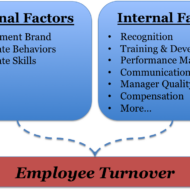
Smart Retention Strategies: Before going into the details of how to handle attrition, the first thing you must understand and realize is this. Each person working for you will have different expectations, perspectives and demands about his job, work environment and compensation respectively. Right at the time of recruiting and selecting the employee, his ideas must be taken into consideration and then it becomes the prerogative of the management whether to hire the person for that particular job. So the first step will be the right person for the right job, giving due importance to the anticipation of the employee who is going to become a member of your business family. Udemy Best Sellers:New Manager Training in Essential SkillsLeadership: Practical Leadership Skills Need for Open Conversation: In case of a small firm or company, it is easy for the manager to have a one on one conversation with each employee to settle his score of grievances then and there. Managers must have an open conversation without room for any ambiguity in the minds of his workers. The manager should try to protect the interest of the employees by representing their demands to the management at the right time. Many employees quit their positions because they have a nagging feeling at the back of their minds that their immediate boss is not the right kind of person to whom they can look up to and ask for support. In big corporates it is not easy to go for a one on one approach. A unique corporate culture that Trains the employees to have an uniform approach to all the systems of routineLed by an effective leader who controls and monitors the behavior and attitude of the workersPossesses sound management practices that make the employees come out with their suggestions freely and induce them to participateProvides satisfactory compensationIncorporates an open door policy catering to the different needs of people and also to the different levels of management, will help the managers to have a healthy relationship with the employees. Human Wants and Needs: Human wants are unlimited and when one want is satisfied, we want more of the same or yet another of a higher order. Approach your workforce to satisfy their craving either in terms of compensation or recognition which will also help to retain your workforce to a greater extent. There should be room for growth, especially for entrepreneurial minds and minds that have parallel thinking. Pic Courtesy: CuteHR Self-Motivation is the Key: Although motivation brings cheer amongst your workforce, self-motivated employees produce better results. Job satisfaction is a relative term; it differs with individuals, some like challenges and some are easily satisfied with an increase in salary quotient. A comprehensive appraisal on the personality of your workforce will give you a clear picture of the IQ (Intelligence Quotient) and EI (Emotional Intelligence) range of your employees which helps in designating employees in the appropriate slots. Such human rationing saves you a lot of time, energy and money as the employees are guaranteed satisfaction in their jobs. Contracts and Agreements: Contracts and agreements bind the employees to the firm only legally. How is that going to help you in terms of productivity? If one of your employees is going to work with discontent, he becomes a problem source spreading the same kind of feeling to others working with him. So it is also necessary for the management to spot out these problem persons either to bring them back into the groove or fire them without any further delay. Rising costs of living and unemployment ratios are really of economic concern, but still we find employees just like that quitting...
Posted by Managementguru in Business Ethics, Business Management, Human Resource, Principles of Management
on Mar 15th, 2014 | 0 comments
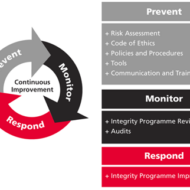
What is Social Audit? A formal review of a company’s endeavors in social responsibility. A social audit is a method of assessing, comprehending, reporting on, and eventually improving an organization’s social and ethical performance. A social audit assists in closing gaps between vision/goal and reality, as well as between efficiency and effectiveness. Social Obligations of Business Organizations: Every business organization has certain social obligations to be duly discharged to employees, government, owners, buyers, public, environment etc. It is a good thing that businesspersons of today have understood their obligations and have been discharging them ably. Social audit scans the scope of the social responsibilities of a business enterprise and evaluates an organization’s social performance. Introduction to 3D Modeling Measure of Social Performance There are no specific measures established to rate the social performance standards of a business enterprise. Nevertheless, business enterprises do not seem to understand the relevance of social audit because much importance is attached with the economic aspects of a business. The features of social audit are listed down for better understanding of the process: The focus is on the social aspect of a business organization rather than its economic aspect. The activities of a firm that has an impact on the society, such as, environmental quality, consumerism, opportunities for women and other disadvantaged people in the society are taken into consideration for analytical purpose. How to measure social performance of companies? Social audit is confined to the process rather than concentrating on the results of social action. It is quite difficult to measure social performance in quantitative terms. How do you quantify social philosophy of management and human values? Qualitative measurement is also relative, as, what appears right to one person may not be so for another. So a combination of quantitative and qualitative data must be used for the purpose of this audit. If an internal auditor does the assessment, there is this problem of loyalty, which will outweigh all the other shortcomings present in the business. If an external consultant is made to assess the situation, he can analyze the situation with no bias but he will not be familiar with the business activity of that particular firm. Therefore, a combination of both can work out well to carry out the assessment as they can complement each other. A New but Necessary Concept Social audit is a new concept, so there are not much standard procedures available to follow. Most companies are at the beginning of the learning curve with this process. When companies do begin audit procedures, they tend to find that the process is more complex than originally contemplated. However, every aspect of business and its management has to be explored and analyzed for the benefit of future generations, so as to take proactive measures to tackle problem situations. Business firms obtain their resources from the society and are dependent on the society to sell their produce too. Hence, it becomes their moral responsibility of caring for the society, within their scope and potential....
Posted by Managementguru in Business Management, Entrepreneurship, Human Resource, Leadership, Principles of Management
on Mar 13th, 2014 | 0 comments
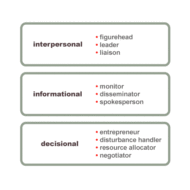
Research on Managerial Roles by Henry Mintzberg and Peter Drucker Henry Mintzberg, the canadian academic observed a few managers and analysed their behaviors and arrived at some conclusions which are listed in the table below. He also identified and attributed ten managerial roles of significance in correlation with the managerial functions. S.NoManagement Functions% of time spent1.Relating to external environment1.82.Planning and setting Objectives19.53.Decision-making6.04.Organising15.05.Leadership and inter-personal role28.46.Communication12.67.Control12.78.Staffing4.1 This table very clearly explains the role of a manager as a leader and the extent of influence he exerts on his sub-ordinates. Proper planning and goal-setting are the key contributors for the successful functioning of a firm. LEADER VS. MANAGER Coming to the managerial roles they can be classified as, 1. Interpersonal roles 2. Informational roles 3. Decisional roles Inter-Personal Roles: Figurehead role– The function is more of a ceremonial nature, like attending the family functions of employees, greeting visitors and a manager performs the symbolic duties of a head of the organization.Leader– He has to plan the HR requirements and motivates the staff to perform well. “Managers are people who do things right; leaders are people who do the right thing.” Remember a manager has to be a leader whereas it is not so in the case of a leader.Liaison– The manager acts as a link between the organization and the external environment to build image and rapport. Informational Roles: Monitor– The manager has to update himself with the current scenario in order to utilize the information for organizing and prompt decision-making.Disseminator– The manager has to communicate and distribute information to his subordinates to effectively accomplish the enterprise objectives.Spokesperson– Efficiently has to communicate the company’s policies to prospective clients and others. Decisional Roles: Entrepreneur– He has to be innovative by adapting to the changes in the environment. He has to be adventurous, persistent and strategic during tough times.Disturbance handler– He has to find appropriate solutions to problemsResource allocator– He has to apportion and allocate resources properly besides delegating authority to the work forceNegotiator– He has to negotiate resources outside and conflicts inside the organization. MANAGERIAL DIMENSIONS Managing: Science or Art? One perspective is Managing, like all other disciplines- whether medicine, music composing or even cricket is an art. It is “know-how.” Still managers can use the organized knowledge about management to perform better. So let us put it this way, Managing as practice is an art; the organized knowledge underlying the practice may be referred to as a science. Let them be complementary to each other and be present in peaceful co-existence. Drucker “ON MANAGERIAL FUNCTIONS ” – A manager has to look after The specific purpose and mission of a firmIncrease productivity by making the employees more productiveConsiderate about social impacts and social responsibilities In his view, the areas a manager has to focus and concentrate are 1. Market standing 2. Innovation 3. Productivity 4. Financial and Physical resources 5. Profitability 6. Manager performance and development 7. Worker performance and attitude 8. Public responsibility He says that business has only two functions- marketing and innovation. While others were concentrating on products and commodities, he concentrated on people and their performance. His “management by objectives- MBO ” became a very popular concept though it faced criticism. MBO according to Drucker is a philosophy that rests on a concept of human action, behaviour and motivation. It sets personal goals (both shortterm and longterm) to be achieved by each individual working for the organization and coverts them into challenges to be accomplished, thus motivating the individuals. The Effective Manager The effective manager is a situational manager who evaluates each approach in the light of circumstances and selects the one that most effectively and efficiently achieve individual...
Posted by Managementguru in Business Ethics, Business Management, Decision Making, Principles of Management, Strategy
on Mar 11th, 2014 | 0 comments
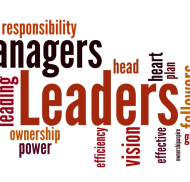
Spirituality and Management The purpose of correlating spirituality and management might present a weird picture to some. Research of the old Hindu scriptures, epics and Vedas disclose the secrets of management etiquettes coated with spiritual sugar which serves as a road map for us to cherish and follow. As an ardent follower of the BHAGAVAT GITA, THE UNIVERSAL BOOK OF SPIRITUAL SCIENCE, it was really amazing for me to know that the core principles of management have already been defined and dealt with that were formulated at a later date by MANAGEMENT GURUS like PETER DRUCKER, HENRY FAYOL, C. K. PRAHALAD and the like. I would like to present four qualities that struck me while I was comparing and contemplating. PERCEPTION AND UNDERSTANDING THE INNER SELF SELF MOTIVATION AND SELF TRANSCENDENCE DUTIES AND RESPONSIBILITIES LEADERSHIP The Leader and the Manager: The LEADER IS BEING FOLLOWED willingly, but a manager has to command individuals in order to adhere to his instructions. So, being a good leader starts from soul searching or understanding the nature of one’s inner self. SELF CONCEPTION gives a different dimension to approach problems. Spiritual experiences induce clarity in thinking that leads to ethical decision making. The spiritual experiences of Arjuna, one of the PANCHA PANDAVAS with LORD KRISHNA made him stronger (at will) and sharper (right perception). Decision Making: “I am the strength of those who are devoid of personal desire and attachment. O Arjuna, I am the legitimate desire in those, who are not opposed to righteousness, “says Lord Sri Krishna. At the war front, Arjuna the GREAT WARRIOR is not sure whether to fight against his own kith and kin. The inspiring words of Krishna motivated him to come out from the state of INERTIA and enter RIGHTEOUS ACTION. It is a testimony of what philosophers call the transcendence from alienation to self confidence to reach ethical decision making. One can never forego his duty or responsibility, be it his personal life or in the management arena. EFFECTIVENESS IS DOING THE RIGHT THINGS EFFICIENCY IS DOING THINGS RIGHT https://www.slideshare.net/parthacharya/management-lessons-from-mahabharata-9806655 Forming a VISION, planning the right Strategies, pooling the resources, hiring right people for the right job, setting goals and objectives, reviewing by MANAGEMENT BY OBJECTIVES, MANAGEMENT BY EXCEPTION, rewards and recognition, all have been dealt with a masterly excellence in MAHABARATHA which talks about the GURUKSHETRA WAR between the PANDAVAS and KAURAVAS or to simply put it, between THE GOOD AND THE EVIL. “The Supreme Lord is situated in everyone’s heart, O Arjuna, and is directing the wanderings of all living entities, who are seated as on a machine, made of the material energy.”Mind can make you LIBERATED OR BONDED that depends upon your WILL to master it or be a slave. Controlling your mind in turn controls your actions and thought process that leads to well augured efforts that proves fruitful to the human race. Leaders are born and not made goes the saying. But if you are able to be THE MASTER OF YOUR MIND, you are a leader made. Management Lessons from THE BHAGAVAT GITA Applicable to both western and Indian school of management, THE BHAGAVAT GITA deals with problems at the GRASS ROOT LEVEL relating to THE HUMAN PSYCHE. https://www.slideshare.net/singhm91/management-lessons-from-bhagvad-gita It enlightens us on all managerial techniques, goading us towards a serene atmosphere and state of affairs in place of the conflicts, stress, and lack of co-ordination, common in most of the enterprises world wide. “Do your duty perfectly, and the results will follow suit”, is the crux of GITA. How many of us can transform ourselves into such personalities? Can we ever overcome the desires...