Posted by Managementguru in Business Management, Organisational behaviour, Principles of Management
on Mar 6th, 2014 | 0 comments
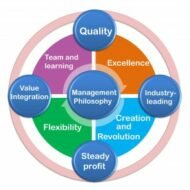
Corporate Philosophy of Management CORPORATE PHILOSOPHY OF MANAGEMENT calls for creating a framework of values, beliefs and ethical standards which are considered to be vital for an effective management. They must be embedded in formal and informal philosophical statements which are then communicated to the fraternity of that organization. From a broader perspective, the LEADER has to have a VISION as to where he is heading his company in the next three to four years. Corporate Objectives provide vision as well as direction and map for bold decisions to be taken regarding NEW MARKETS MARKET SHARE PRODUCTS SERVICES etc. , Now the organization is in a position to decide and prioritise the VALUES AND COMPETENCIES it expects from its managers. For example, if the situation favors the business expansion to new markets, say, European or Asian, then an organization has to develop competence in areas like LANGUAGE AND CULTURE, besides marketing and business skills. Different Philosophies of Management: Well, you might have been inspired with JAPANESE PHILOSOPHY OF MANAGEMENT, EASTERN OR WESTERN PHILOSOPHY OF MANAGEMENT t. But what is the fun? If you don’t have A SOUND MANAGEMENT PHILOSOPHY of your own, to simply put it, you don’t have a broad set of principles to back up your management development process which is a generic one. Ideally speaking, you should be able to develop a concrete SYSTEM that is made up of FOOL PROOF policies and procedures; try to develop a professional team of executives who can take up your vision to the next level; these measures will prove worthwhile in the long run. You are left without any choice but to develop “truly” INTERNATIONAL MANAGERS who could transcend nationally and the location of any specific job consideration. This is what Ideal management philosophy means to me, A holistic vision of the future A solid set of principles(values, beliefs) Sound policy definition Management development programmes Autonomy to my work force Always “yes “to new technology Development of women managers Flexible leadership Social responsibility Contribution to the growth of my Country’s economy Strategic Perspective: Major environmental shifts now demand a more strategic perspective from those who manage and lead in organizations; “GLOBALISING” in the quest for major market share brings in new opportunities for growth and prosperity. Organizations are now espousing values that regard people, not as costs to be minimized, but AS “ASSETS TO BE MAINTAINED AND DEVELOPED.” An open systems approach of management is likely to overcome many of the problems created by the piecemeal approach. Instead of looking at management development in isolation, see it as an integral part of a wider organizational system that takes care of the processes through which people working for the firm take care of themselves leading to self...

Posted by Managementguru in Business Management, Organisational behaviour, Principles of Management
on Mar 6th, 2014 | 0 comments
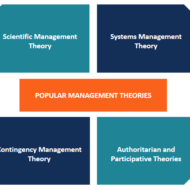
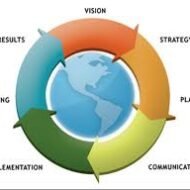
Theory of Management History and Evolution To understand the concept of management, a recap of its history and its slow but steady evolution is absolutely necessary. After the advent of machines, thanks to the industrial revolution of the eighteenth century, management has become an entity by itself. Pic Courtesy: Management Theories Since business activity is increasing by leaps and bounds globally, a more organized set up is called for, which has led to the development of different management concepts. Whether you consider management an art or a science, one definite thing is that, science and art complement each other and not mutually exclusive. Management gurus like Peter Drucker, Henry Fayol, Taylor and others have classified the essential features of management, for the benefit of the industry. Theory comes first followed by practice. Management knowledge certainly improves your style of working. How long do you think, luck, intuition or experience can be relied on, without a scientific knowledge of management. It is a thought to be pondered. Hypotheses Practical experimentation and analysis of theoretical hypotheses, yield better results and in course of time you tend to gain more scientific knowledge. Management is a process of planning, organizing, staffing, leading and controlling. Picture Courtesy: Technofunc.com The management process is applicable to all kinds of organizations and firms, be it a private firm, a government institution, a hospital, a school, a college, an university and other financial, profit making or non profit making NGO’s. This clearly indicates that management is a process that involves individuals who work in groups to accomplish their objectives in an effective and efficient manner. Levels of Management Does management pertain only to the top level management? A big no! It applies to managers at all levels. It is a chain reaction and a successful management totally depends on the synergistic activities of the people belonging to that organization. So, care must be taken by the managers to create and design an internal environment that is conducive for the smooth operations of the firm thus increasing the productivity. This does not mean that the external environment can be overlooked. A manager has to respond to the periodic changes, be it social, technological, economic or political in the external environment also. Management styles Management is a must for every organization and the style of management may vary according to the nature and size of business. Large organizations now-a-days prefer a “flat structure“, as it brings their employees closer and reduces the span of management, thus making communication faster. The more the number of levels, the more the conflict and improper communication. Although management pervades the entire organization, it is the duty of the top management cadre to initiate and maintain consistency in the process of management. All managers (by the term “manager “which is a much generalized term, we denote persons who hold authority to get things done; he may be a financial, administrative, human resource or a production executive) have a common aim, that is to create surplus. To increase productivity, create a suitable environment for the effective performance of their group and to solve crisis situations, they must be capable of seeing the “big picture”. Recent Developments A sea of changes has swept the theory of management area in recent times, owing to the development of different approaches. Management theory is criticized to have all the characteristics of a jungle as numerous management practitioners have recorded their findings in the management history. This led to severe confusion as to what management is, and how things should be organized; however, in modern corporate business world, the managerial activity is directed towards growth, thanks to the...
Posted by Managementguru in Business Management, Organisational behaviour, Principles of Management
on Mar 6th, 2014 | 0 comments
Critical Factors Influencing Corporate Management A corporate management is said to be capable only if it is able to integrate, coordinate and direct the functional capabilities towards overall objectives and common goals of a firm, that have a bearing on an organization’s capacity and ability to implement its strategies. Multitudinous factors affect the functioning of corporate general management system. It differs with each organization with differing objectives and mode of operations. Key Factors or Contributors: The firms must evolve an effective system for corporate planning. The objectives must be realistic and achievable and clear and complete communication of plans to various levels of organization helps in execution of action plans by the respective departments. A pucca management information system is necessary that integrates all the levels through a network of computers, facilitating information processing and task implementation. If the firm is oriented towards a god deal of risk-propensity, chances of rewards are also quite high. You cannot beat your competitors unless you possess a better shade of entrepreneurship in you than others. Competency development backed up by strategy formulations, in the wake of challenges and opportunities in the external environment is well appreciated. Why everybody always talk about strategy? It is one thing that warrants for a sure success, it implies that you are smart enough to think ahead of time, what others have failed to. Don’t you want to set a path forward for the future generations to come? Values that are unique to your organization add to the image of your company. Say, if you project “quality”, as your prime value system, definitely it is going to attract consumers who are very particular about quality unmindful of the price. Slowly the idea gathers momentum and your company’s image gets a boost. But don’t forget that you have to fulfill your commitments in terms of quality without any compromise. Reward systems must be worked out to gear up the morale of top managers who are the achievers of your management objectives. Their track records and degree of commitment should be analyzed to decide on pay and promotions. A favorable organizational climate is inevitable for the organization to progress in the desired direction without any internal politics and power struggles. The role of top management is very crucial in that, it has to identify people with vested interests and bring them back into the groove by making necessary changes in the organization structure or go for weeding out actions if things go out of control. Ultimately, the overall objectives of the organization is what that matters, and people must be trained to accept the organizational changes which form a part of the developmental procedures of management. Social responsibility is much talked about these days, and the corporate firms are in a position to discharge their duties pertaining to social welfare, as part of their corporate management programme.It has become a regular feature of the management process to part with a share of their profit towards a social cause. Corporate management is a comprehensive process that covers all aspects of the management with growth as its motto and social conscience as its...
Posted by Managementguru in Business Management, Leadership, Principles of Management
on Mar 5th, 2014 | 0 comments

Management styles vary by company, level of management, and even from person to person. Let us see the different management styles practised in different parts of the world for your better understanding. Elevate your brand’s presence by featuring your post on Managementguru! With over 13 years of trust and expertise, our business blog is the perfect platform for collaboration. Contact us Managerial practices in Asian countries The managerial practices in Asian countries like Japan, China and India are quite different from that of economically advanced countries in the west. Industrial nations are in a position to adopt managerial approaches that suits their mode of operations and nature of labor force. In Asian countries, a paternalistic or participative leadership style is followed while directive style of leadership pattern suits the west. Basically, this difference arises due to the cultural background of people influenced by their tradition. Japanese management East Asian countries like Japan have a set of cultural norms that cannot be overlooked or sacrificed for the sake of business. Their cultural instincts are very strong and they believe in life long employment. Japanese management practice lays emphasis on seniority and shows great concern for each and every employee. The objectives are set by the lower-level employees and it is passed on to the top-level management for approval. These proposals are scrutinized by the supervisors who tactfully suggest the necessary changes, instead of simply accepting or rejecting the proposed objectives. This creates a sense of belonging and the employees identify themselves with the goals of the company. Participative Style You cannot assure that a participative style of decision making always proves beneficial. Sometimes, managers have to show their individualism by taking tough decisions, when the situation warrants for such an action. Here the leader also becomes the firm decision maker. This is quite common in the west, where the leaders identify themselves with the profession rather than the company. Such solo decision making sometimes result in sub-optimal decisions. We are not going to compare and contrast between the various management approaches and which is better. The discussion aims at throwing light on different approaches and styles of management and how it affects the productivity of an organization. Collective Decision Making Japanese management relies on collective decision making (consensus), where the decision making might take time, but it is implemented quickly. The Japanese management is highlighted in this discussion to demonstrate the effectiveness of their approach which is followed by many western nations to ensure success. The novelty is in the fact that they treat people as human beings and not just another factor in production. The communication flows from bottom to top and back. Care is taken to define the problem with clarity before going for a decision. In the west, managers are criticized to come to conclusions even before defining the problem. Bureaucracy Bureaucracy still prevails in most of the Asian countries hindering the progress of business communities. What started as an amazing administrative legacy has now turned authoritarian. Even if the employee knows what the manager says is incorrect; he has to obey the instructions, just because it is issued by his superior. The people are expected to follow the instructions provided and not to question or suggest. Collective Responsibility Collective responsibility and accountability, an informal organizational structure, common organizational culture and competitive spirit makes participative management approach distinct and successful. When the leader acts as a facilitator and not a dictator, naturally the employees will try to give their best shot. Collective responsibility might sometimes lead to ambiguity of decision responsibility. But individual responsibility and accountability vouches for clear and specific decision responsibility. Quality control circle Quality control circle is another feature that distinguishes Japanese management from others. Workshops are organized in a periodic fashion to arrive at solutions for problem...
Posted by Managementguru in Business Management, Organisational behaviour, Principles of Management
on Mar 3rd, 2014 | 0 comments
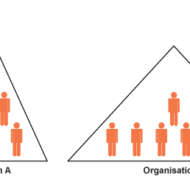
Levels of Organization An organization is a network consisting of people interacting to accomplish the enterprise objectives. The inter relationship is always complex as groups tend to develop conflicts and difference of opinion among themselves and in between. Hence the structure of an organization should be designed to clarify who is to do what task and who is responsible for what results and to furnish decision-making devoid of uncertainty. Organization implies to Recognizing and classifying the required activities Grouping of activities in order to achieve the objectives Appointing a manager and assigning him with the necessary authority to lead each group The provision for co-ordination vertically and horizontally “Organization is the establishment of authority and relationships with provision for coordination between them, both vertically and horizontally in the enterprise structure,” According to Koontz. FORMAL ORGANISATION It implies a formalized intentional structure of roles or positions. Formal organization must be flexible. The formal structure is laid down by the top management The levels are designed on the basis of specialization Purely task oriented and not people oriented Rules are very stringent and everyone is expected to follow them without fail INFORMAL ORGANISATION A network of personal and social relations arising spontaneously as people associate with one another and not restricted by the formal rules or structure. One important aspect of organizing is the establishment of department. Department designates a distinct area, division, or branch of an organization over which a manager has authority for the performance of specified activities. Spontaneous in nature More people oriented Based on religion, culture, common problems faced by the workforce etc., Membership is voluntary and the same person can be a member of many groups. ORGANISATION LEVELS AND SPAN OF MANAGEMENT Why there is a need to organize? To co-ordinate the activities of the people involved in the organization’s functions for which there needs to be certain levels established to facilitate the co-operation effective. There are two types of spans, 1. Wide span 2. Narrow span Pic Courtesy: LumenLearning WIDE SPAN: Wide span of management has fewer organizational levels with more number of sub-ordinates reporting to a superior. Though it proves advantageous for the superior as delegation becomes part of the process and hence work is shared, care must be taken in selecting the right people for completion of tasks and clear policies must be made to avoid confusion. There is this tendency of overloaded superiors to become decision bottlenecks and there exists the danger of superior’s loss of control too. This kind of management needs exceptionally qualified managers to lead the respective groups. NARROW SPAN: Narrow span of management involves many organizational levels with fewer number of employees reporting to a superior. This facilitates close supervision, close control and fast communication between superiors and subordinates. On the contrary, superiors tend to get too involved in subordinates’ work and this kind of management incurs higher costs due to many levels in the organization and there is excessive distance between the lowest and top most levels. FACTORS DETERMINING AN EFFECTIVE SPAN: 1. Training of Subordinates: Well trained subordinates save much time and energy of the superiors and training has to be a continuous process as the technological policies and procedures are subjected to change periodically. 2. Clarity of Delegation of Authority: Clarity implies direction and guidance from the manager’s end to the subordinate. A manager has the responsibility of clearly explaining the task and the methods involved to complete the task in a suitable manner to his subordinates. In cases of machine handling, “On the Job Training” becomes inevitable. If not, the work will not be completed as per the schedule due to lack of clarity. 3. Clarity of Plans: In a production environment, the workers have to be...