Posted by Managementguru in Entrepreneurship, Human Resource
on Mar 1st, 2014 | 0 comments
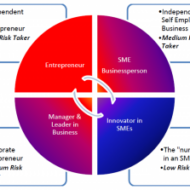
The Spirit of Entrepreneurship In the modern competitive business environment, not all graduates of various disciplines like engineering, management and the like can aspire for white collar jobs. The recent global recession has made the prospective job seekers think twice about working in foreign countries. Self employment has become the order of the day. Being your own boss is truly inspiring and motivating at least in theory. When it comes to reality, we need to know exactly what does it take to become an entrepreneur by starting a small business or taking over the business run by your predecessors. Why we need more entrepreneurs? Various avenues have been opened up thanks to communication and transportation that has brought the world under a single huge umbrella. Also small industries face minimum risk as the investments are marginal and they have the liberty to try a number of innovations like combination of new products new materials new methods of production new markets new sources of materials and even New forms of organization. Being a competitor in an open market, minimum profit and constant revenue inflow are assured and also they can enjoy the benefit of minimum fluctuation in the product price as it is determined by the market and not by individuals. Want to know 10 Daily Habits of Most Successful Entrepreneurs? Scope of entrepreneurial activity: Either you can be a subsidiary to large scale business or you can engage yourself in supply of repair services with small engineering establishments or you can go for small cottage industry businesses like cutlery, furniture, jewelry, fruit canning, soap making etc., Being fairly labor intensive, you can provide economic solution by creating employment and income opportunities in urban and rural areas with relatively low cost of capital investment. Business process outsourcing has been in recent times the magic happening in countries like India, China etc., where the foreign investors take advantage of cheap labor, time and efficient communication skills of the population. Knowledge process outsourcing has also become popular and it stands as a testimony of the rising power of Asian countries over the west. “Small is beautiful” and you can make it big in the small scale business industry if you are Innovative and productive Provide personalized services to the customers Identify and target the right markets This ensures “WINNING THE GAME OF BUSINESS“. An economy grows only when it has large number of enterprises accelerating the economic growth prospects of that particular country. The export policies of all nations have become more flexible owing to globalization, liberalization and...

Posted by Managementguru in Human Resource, Training & Development
on Feb 28th, 2014 | 0 comments
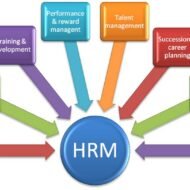
Definitions of Human Resource Management: 1. “A series of integrated decisions that govern employer-employee relations. Their quality contributes to the ability of organisations and employees to achieve their objectives.” (Milkovich & Boudreau, 1997). 2. “Concerned with the people dimension to management. Since every organisation comprises people, acquiring their services, developing their skills, motivating them to higher levels of performance and ensuring that they continue at the same level of commitment to the organisation are essential to achieving organisational goal. This is true, regardless of the type of organisation: viz. government, business, education, health, recreation, or social action.” (Decenzo & Robbins, 1989). 3.”The planning, organising directing and controlling of the procurement, development, compensation, integration, and maintenance of human resource to the end those individual, organisational, and social objectives are accomplished.” (Flippo, 1984). 4. “The organisation function that focuses on the effective management, direction, and utilisation of people; both the people who manage produce and market and sell the products and services of an organisation and those who support organisational activities. It deals with the human element in the organisation, people as individuals and groups, their recruitment, selection, assignment, motivation, empowerment, compensation, utilisation, services, training, development, promotion, termination and retirement.”(Tracey,1994 ) Knowledge Workers Human resource management is therefore understood as the all significant art and science of managing people in an organisation. Increasing research output in behavioral sciences, new trends in managing ‘knowledge workers’ and advances in training methodology and practices have led to substantial expansion of the scope of human resource management function in recent years. HRM is not just an arena of personnel administration anymore but rather a central and pervasive general management function involving specialised staff as assistants to main line managers. Managing employee relationships is the role of the Human Resource department Human Resource Management is a process of valuing and developing people at work, this includes: Recruitment and selection Employee communication and engagement (participation) to increase employee retention Training and development Leadership WHAT IS YOUR GREATEST WEAKNESS Labour turnover & staff retention Labour turnover refers to the proportion of a workforce that leave during a period of time (usually one year) Labour turnover = number of staff leaving during the period x 100 average number of staff Staff retention refers to the ability of a firm to keep its workers. The disadvantages of having a large proportion of staff leaving each year include: The cost of recruiting replacement workers The cost of training the new workers Loss of productivity whilst replacements are found Loss of experienced workers Negative impact on reputation WHAT IS YOUR GREATEST STRENGTH Methods to control turnover: 1. Financial methods of motivation Bonuses Profit share Fringe benefits 2. Non financial methods of motivation Employee engagement and empowerment Training and development Promotion opportunities 3. Improved Human Resource Management procedures Four Fundamental Principles of HRM: Human Resource is the organisation’s most important asset; Personnel policies should be directed towards achievement of ENTERPRISE goals and strategic plans; Corporate culture exerts a major influence on achievement of excellence and must therefore be strengthened with consideration of employee welfare. Whilst integration of corporate resources is an important aim of HRM, it must also be recognised that all organisations are ‘pluralist societies’ in which people have differing interests and concerns, which they defend and at the same time function collectively as a cohesive group. →Evolution of...
Posted by Managementguru in Human Resource, Organisational behaviour, Principles of Management
on Feb 28th, 2014 | 0 comments

In the dynamic world of teams and organizations, conflict is often seen as a roadblock. But not all conflict is bad. Functional conflict, when managed well, can fuel innovation, deepen understanding, and lead to stronger outcomes. However, when it lingers or spirals, even functional conflict can morph into an obstacle. This blog explores practical strategies to transform functional conflict into a catalyst for progress, ensuring it serves its intended purpose: to move the team forward. An Open Frame of Mind Line and staff authority should be open with each other and come out of their compartmentalized state of mind. Rationale thinking and logical action is what is required to understand and resolve conflicts. Be a Manager rather than a Technocrat Specialization has made people to stick to their line of action and they act merely like tech wizards and conveniently forget the human element of flexible mental purview and compromise. Development of each individual’s managerial qualities will minimize conflicts. A manager has to harmonize functions of diverse natures and bring about co-ordination. Think Like an Entrepreneur Thinking about the strength, weaknesses, opportunities and threats an organization faces makes each individual realize that he or she is part of the organization and whatever happens to the firm directly affects his/her stability and security. Make Others Feel a Sense of Achievement It is the job of a manager to appreciate and encourage the achievements of his sub ordinates that bring greater joy in the minds of individuals and motivate them to work for the cause. Interaction Among Functions Cross functional interactions on a continuous basis are found to be useful in preventing and resolving conflicts. Informal groups serve as the best example of a committee consisting of members from different functional groups but with a common interest. These groups can be best identified and utilized by the management to resolve conflicts by seeking the help of the key person in the group. Roles, Responsibilities and the Scope of other Functions The basic requirement is to first clearly define the objectives and sub objectives, the process, the roles of each function as a tool and their rights and responsibilities. One should know the roles and responsibilities of all functions having common interface: their position in the firm as well as their relevance and contribution towards the organizational goals. Communication and Information Sharing The informal communication system helps in achieving group dynamics and cohesion while the formal channels take care of organizational directives. A quick and effective means of communication can considerably reduce the conflict level that arises out of communication disorders. Adequate Planning and Co-ordinations At each operational level, hasty actions must be avoided to stop conflicts from arising. Planning and Co-ordination go hand in hand: Say, if a new product launch is aimed at without proper promotion, what would happen to the success of the project? Evaluation of Functional Performance A standard mechanism must be set to evaluate managerial performance in terms of their ability to achieve an integrated set of objectives in a balanced manner. Necessity of Transparency Transparency is needed at all functional levels or the initiator appears to be tainted with the accusation of having an ulterior motive. In case of big corporate firms all the policy decisions are taken by the board and not by a single person to avoid conflicts. Conflict need not necessarily be viewed as an evil but a disorder to be curbed. Sometimes a conflict might showcase the inherent inflexibility and malfunctions in the firm to be corrected paving way for innovations. Sometimes it causes frustration for the management by preventing synergy amongst the sub-systems. All said and done, conflict once identified have to be immediately dealt with and resolved by the management in...
Posted by Managementguru in Business Management, Human Resource, Principles of Management, Training & Development
on Feb 26th, 2014 | 0 comments

Following are some of the intrinsic motivational techniques employed by the organisations to boost the morale of the employees and thus the productivity. Intrinsic motivation 1. Job Design Arranging work elements to form tasks and a combination of such tasks to form a job is called as job design. Here the focus is on the job. 2. Job Redesign Here the work elements are rearranged into meaningful tasks and combining such tasks to form work modules is the principle behind job redesigning. Each work module is assigned to the respective worker who is capable of performing it efficiently and number of such modules can be combined to form a whole job which is assigned to a group to improve their intrinsic motivation. Here the focus is on the individual workers. 3. Work Modules Work module can be defined as one that is being completed approximately in two hours time. In an eight hours shift there will be four such work modules. Employees are motivated not merely by pay and perks; there should be something more to the job , more challenging and meaningful. The following are some of the methods of job redesign that provide the expected challenge and meaning. Types of Job Redesigning A. Job Rotation Monotonous work makes an employee dull and in order to motivate the employees, the management can think of what is called Job Rotation. To rotate the person or persons from job to job, from time to time. The job to which he is rotated should match his attributes, level of hierarchical position in the organization and compatible with his competence and experience. BENEFITS OF JOB ROTATION: Reduces boredomIncreases motivationIncreases Employment flexibilityAdds experience to a worker’s careerIncreases training motivation LIMITATIONS OF JOB ROTATION Lot of time is consumed as workers need to be trained to suit the new jobAs well increases training costIf the worker does not fit in the new job, he has to continue his routine work which can create a sense of inferiority and loss of moraleReduced productivity during transition periodDemotivates ambitious employees who seek steady employmentIt is generally believed that job rotation reduces turnover of employees in an organization. B. Job Enlargement When a job is expanded horizontally, job enlargement occurs. For example, when an accountant is entrusted with additional responsibilities of following up of orders, dispatch and payments, his job is said to be enlarged. He has to take up variety of tasks and job activities other than book keeping. BENEFITS OF JOB ENLARGEMENT Increases one’s area of responsibilityAids in growth and versatilityFlexibility in deployment LIMITATIONS OF JOB ENLARGEMENT The criticism is, whether there is improvement in the quality of work is a question mark; the workers line of thinking may be like this” Instead of one lousy job, now I have many”!Does not add challenging or meaningful work. C. Job Enrichment When the job expands vertically, it is called job enrichment. If a person is made to involve in quality work, in other words management functions like planning, co-ordinating, controlling and decision-making, it is said to enrich him in terms of experience and expertise. Guidelines for Job Enrichment: Combine tasks When certain tasks are combined to form work modules, it increases skill variety and task identity. ERP or ENTERPRISE RESOURCE PLANNING is a job entity that combines production, marketing, finance, human resource and logistics departments in one go. The software connects all the departments in such a fashion that when an order is placed by a customer, the stock existence, current price of the product, credibility of the customer, delivery schedule are available for the executives of the concerned department in their systems simultaneously so that decisions could be quickly made. Time is saved as the order need not be passed on from department to department thanks to the availability of common information to all the departments at...
Posted by Managementguru in Business Management, Decision Making, Principles of Management
on Feb 26th, 2014 | 0 comments
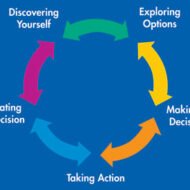
METHODS OF DECISION MAKING A. Marginal income or Cost analysis: This method is used to compare additional revenues arising from additional costs. Break even point is that point in which the cost equals revenue and it can be defined as a no loss, no gain situation. Profit can be enjoyed by a firm only when the revenue exceeds cost that is after crossing the break even point. A manager must have all the necessary data pertaining to total cost and its various components in order to arrive at a decision. B. Cost-effective analysis: This tries to find out the cheapest way in reaching the objective or shall we say the greatest value for expenditure. Mass production facilitates in factorizing the economies of scale where the objective is oriented towards output and sustained availability of the product year round. C. Experience: The mistakes committed become great lessons in due course of time generally and this holds good for managers involved in making crucial decisions. It ensures right decisions to be taken in similar situations. But one has to remember that decisions are inclined to make an impact on future events. So, it is up to the manager to take the right kind of decisions using his intuitions as well as experience. The late chairman of SIMPSONS GROUP, Anantharamakrishnan was very intuitive and under his leadership the organization touched new heights and diversified its activities like never before. Note: Anantharamakrishnan is remembered for his successful business practices, efficient management of the labour unions and for triggering the growth of the automobile industry of Chennai which has earned the city the epithet “Detroit of India”. As a result he himself came to be remembered as the “Henry Ford of South India.” Courtesy: Wikipedia D. Experimentation: Why people go for test-marketing? Because when the factors are intangible, you have to try out every alternative only through experiments or trail and error. Market surveys and questionnaires are useful tools when it comes to launching of a new product in the target market. E. Research and analysis: This involves the application of tools and techniques of operations research to the process of decision making based on mathematical functions. Risk-analysis and Decision-trees are the other methods used that illustrate decision points, chance events, and probability of each course of action. TYPES OF DECISIONS: · Routine and Strategic: Routine- regular decisions involving day to day affairs of the firm- leave procedures, work atmosphere. Strategic decisions are central to the firm’s operations- price fixing, product elimination etc. · Individual and Group decisions: Managers at the top level are inclined to take individual decisions and some important inter-departmental decisions may be taken up by members of the respective groups. · Programmed and Non-programmed decisions: Decision taken by the low-level personnel which are regular and repetitive in nature are programmed-late attendance, medical compensation etc., Non-repetitive and unusual decisions like mergers and acquisitions, collaboration agreements belong to the non-programmed category. · Simple and Complex decisions: Where the problem is simple but the outcome has a high degree of certainty are called mechanistic or routine decisions. Where the problem is simple but the outcome has a low degree of certainty are judgmental in nature. Where the problem is complex and the outcome has a high degree of certainty are analytical and where the problem is complex but the outcome has low degree of certainty are adaptive decisions. MAKING EFFECTIVE DECISIONS: · Timing of decisions: A new product only if introduced into the market at the right time will be a success for which the manager should select the appropriate time for taking the decisions. · Effective communication: The decisions taken should be communicated down the line for effective implementation. · Top management support: The support of top management is indispensable for effective decision-making since it...