Posted by Managementguru in Change management, Organisational behaviour
on Feb 23rd, 2014 | 0 comments
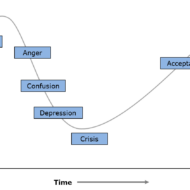
Resistance to change should be considered as a good sign and can be compared to fever while there is a bodily infection. It creates a platform for the firm to find out the causes for resistance and hence the solution. Causes for Resistance to Change Individual Resistance A. Economic factors: When pay is tied up with productivity, resistance arises. B. Habit: It is the habit of humans to resist anything new. C. Fear of the unknown: Freshers always have a feeling of insecurity and uncertainty when they join an organization. D. Change affects emotions and sentiments: People are disturbed both emotionally and sentimentally when there is a change. E. Lack of clarification: People interpret change in different ways; so there is a need for the organization to clarify as to the nature of the change and its implied consequences or implications. F. For the sake of opposing: Illogical and weird opinions are given by the employees just for the sake of opposing. Resistance to change Organizational Resistance A. Built-in-Mechanism: People working in groups experience shock when there is a structural change introduced in the system as they are tuned to a set of rules and procedures. B. Group norms: This also acts as a strong source of resistance acting as a constraint C. Threat to expertise: Technological innovations pose new threats everyday to the non-technical persons D. Threat to established power relationship: If the powers are re-assigned amongst the managerial cadre there arises unrest E. Threat to established resource allocation: Budget reallocations are resisted by departments that are not favored How to Overcome Resistance to Change? Education and Communication: The logic of change must be conveyed to the employees in a convincing manner and full facts must be communicated without an iota of doubt. Participation: It becomes difficult for individuals or groups to resist change when they are made to act as change agents Facilitation and Support: Change agents can offer counseling, training etc to pacify the employees Use of Group Force: Groups can exert more pressure on attitudes, values and behavior and hence, if the group cohesiveness is strong, the change is easier to achieve. Leadership for Change: A strong leader-manager can create a climate for psychology support from subordinates Negotiation: The key persons or individuals whom the management think are potential change agents can be rewarded and brought to the negotiating table Manipulation: Twisting information, creation of false rumors, withholding undesirable information are some of the tactics of manipulation that decrease the intensity of resistance to change. Coercion: Application of force that includes threats of transfers, delay in promotions, negative performance evaluation can decrease the resistance and also the credibility. Manipulation and coercion must be considered as last options to reduce the pressure as generally people will welcome any change that is positive and beneficial to the organization in the long run. It is the responsibility of the management to project the change in a gradual and convincing manner to the...

Posted by Managementguru in Organisational behaviour, Principles of Management
on Feb 22nd, 2014 | 0 comments
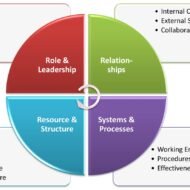
Organizational change is concerned with making things different and change agent is a person or group of persons who act as catalysts to bring about change. Say, managers and outside expert consultants can be called as change agents. What is Organizational Change? This is how you have to Strategise in order to Win Organizational development refers to the overall development of an organization in terms of improving the ability of that organization in tandem with the needs of the external environment and involves a system oriented approach to change. Recommended: Resourceful Guide on Organizational Development from Maryville University titled ” Organizational Development Guide: Definition, Process & Development Models “ Organizational change: All the elements of a social system like people, formal organization, informal organization, operational environment, communication, decision making and patterns of co-operation are bound to change when there is change in the external environment but this gives rise to a positive pressure which acts like a self-correcting mechanism to modify and set right the bottle-necks or loop-holes in the working system. Causes For Change Work force: The increasing awareness and educational qualification among the workforce is responsible for the attitude change. You can expect loyalty from workers above fifty but not workers who fall under the age category thirty. This is because their loyalty is oriented towards their career and not to the employer. Technology change: Internet, telecommunication systems, computers, robotics, flexible manufacturing operations have created a great impact on the working style of firms and necessitated the work force to be tech-savvy in order to survive in the job market. Economic, social, political, and physical environmental changes: Economic– Business cycles, inflation, recession, stock market crashSocial– Changing life styles and preferences of customers is the keyPhysical– Consumers, suppliers, employees, union, shareholders and the governmentPolitical– Political decisions affecting the market, pressure, legal hassles:- all these affect the working of a firm. Changes in competition: Global economy has brought big players from countries like USA, Japan, Germany and the like to compete in the same market and successful organizational are those who have adapted to competitive environment. When we talk about organizational change, we emphasize on “PLANNED CHANGE OR DELIBERATE CHANGE” in order to suit ourselves to the changing environment. Otherwise, according to Darwin’s theory of “Survival of the fittest” you will fade away in due course of evolution. This Infographic clearly reveals the fact that “It is not the strongest of the species that survive, nor the most intelligent, but the one most responsive to...
Posted by Managementguru in Economics
on Feb 17th, 2014 | 0 comments
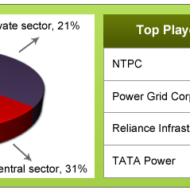
Significance of Privatization Privatization that has gathered momentum since around the 1980’s has become the hallmark of the new wave of economic reforms sweeping across the world. It refers to the transfer of ownership or management of an enterprise from the hands of the public sector to private sector. It also means the withdrawal of the state from an industry or sector, partially or fully. Privatization marks a change from dogmatism to pragmatism and amounts to a reversal of policy. It is evident that the economic growth rate has multiplied ever since privatization has come into existence. What is Privatization? 1. The transfer of ownership of property or businesses from a government to a privately owned entity. 2. The transition from a publicly traded and owned company to a company which is privately owned and no longer trades publicly on a stock exchange. Performance of Public Sector: The performance of state owned enterprises in many countries have, by and large been far from satisfactory. This may be attributed to the prevalence of bureaucracy and red tapism in most of the public sector administration. They have often put large burdens on public budgets and external debt. Economic inefficiencies in the production activities with high costs of production, inability to innovate and costly delays in delivery of the goods produced are some of the shortcomings of the public sector. There is also ineffectiveness in the provision of goods and services such as failure to meet intended objectives, diversion of benefits to elite groups, and political interference in the management of enterprises. The relationship between the management and the labor unions is strained owing to the expansion of bureaucracy. Why Privatization? These problems have led many governments to undertake programmes of public sector reform. One Such reform is privatization of publicly managed activities to discard the inefficiencies and improve the economic growth rate. For privatization to succeed: Privatization cannot be sustained unless the political leadership is committed to and unless it reflects a shift in the preferences of the public arising out of dissatisfaction with the performance of other alternatives. Now-a-days, private sector enterprises have started dominating even core industries like petroleum, power and communication under the leadership of visionaries who may be the heads of the states or owners of such private organizations. Public services to be provided by the private sector must be specific or have a measurable outcome. Consumers should be able to link the benefits they receive from a service to the costs they pay for it. Since they will then shop more wisely for different services. Privately provided services should be less susceptible to fraud than government services if they are to be effective. Equity is an important consideration. Privatizing the state owned enterprises reduces corruption and the benefit goes to the society. The process encourages entrepreneurship and leads to intense development of capital market. Governments usually want to sell the least profitable enterprises, those that the private sector is not willing to buy at a price acceptable to the Government. The Government may even fear that if it gives a free rein to the private sector management, its power might be at stakes. All said and done most of the governments view privatization as an important strategy of economic...