Posted by Managementguru in Business Management, Organisational behaviour, Strategy
on Mar 2nd, 2014 | 0 comments
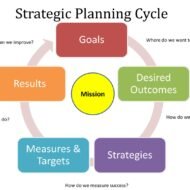
“Planning is bringing the future into the present so that you can do something about it now.” – Alan Lakein. Planning is absolutely essential and every minute you spend in planning saves 10 minutes in execution and gives 100 percent return on energy. We compare the advantages of planning against the consequences for your better understanding. Let’s See the Advantages of Planning First Facilitates opportunity analysis and presents an awareness of the external environmentMinimizes cost as it takes into account all the contributing and limiting factorsIncreases efficiencyRefines culture of an organizationProvides a good directionAlso establishes several measures of controlElicits commitment Disadvantages of Planning Time consumingInvolves excessive paper workSome times over emphasizes only the objectivesPlanning may become lop sided as it entirely depends on the mind set and attitude of people concerned with planningPlanning premises may not be fully reliable Steps to Make Planning Effective Every organization should have a separate planning department. A corporate planning department will take care of all the functions of an organization under one heading.Planning must be all pervasive and even the work force at the bottom level should understand the importance of planning and the planning perspective of the management.The goals must be verifiable and clearGive managers adequate tools and the freedom to trial and errorThe long term and short term goals should be combined together to form a inter locked system and must be viewed as one big single network.Goal setting must be practiced – participation by the employees must be made compulsoryA small idea could turn out into a big plan- don’t ignore suggestions from your subordinates and term them “silly.” What is Strategic Planning Strategic planning has a long term perspective and takes into account the extended time horizon.There may not be any immediate impact arising out of strategic planning, but the results can be experienced in the long run.It gives effort on vital areas. When the size of organizations is huge, they are broken down into STRATEGIC BUSINESS UNITS, treating them as individual businesses for ease of operation and decision making.It is a tailor made approach to match the functioning of an organization to the external environment for meeting the changes in the future. So, i is crystal clear that the advantages of planning outweigh the disadvantages and good plans never...

Posted by Managementguru in Business Management, Organisational behaviour, Principles of Management
on Mar 2nd, 2014 | 0 comments
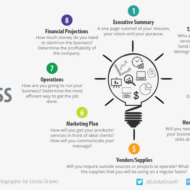
Your business structure will affect a lot of factors – You can start with an initial business structure and change it as your business thrives. But first and foremost you need a solid business plan that details your mission, vision and purpose. These 7 steps in planning will guide you through and give your project a headstart. The business plan cheatsheet is given in a pictorial form for your benefit. ☝️ A. Opportunity Analysis: SWOT analysis– the analysis of strength and weaknesses, opportunities and threats in the external environment is the first and foremost step in planning. The target market, competitor strength, internal weaknesses, customer’s preferences are some of the key areas to be focused. B. Setting objectives: Where we want to be, and what we want to accomplish and when are answered in this step. Each and every employee of the organization has to be apprised about the enterprise objectives in order to achieve the expected or desired result. Management by objectives is one of the proven methods where-in the objectives are set by the subordinates themselves under the guidance of their superior and periodical reviews are conducted to check whether the set objectives are accomplished within the stipulated time. C. Developing Premises: The critical factors that affect the planning process are analyzed thoroughly. Say, government policies, business cycle trends, economic indicators, inflation, tax rates etc are analyzed and the plans are developed based on these premises. D. Identifying Alternatives: It is better to have an alternate plan or plans which helps in deciding the alternate course of action. Alternatives identification is a technique used for identifying different methods or ways of accomplishing the work of the project. For example, brainstorming might be used to discover alternative ways of achieving one of the project objectives. E. Evaluating Alternatives and selecting the suitable plan: The limiting factors can be set as a criterion for evaluating the alternatives. The limiting factors may be cost, time, manpower and other resources. Operations research helps in the assessment of alternatives and selecting the best. Think about this, if plan A fetches you more profit but proves to be expensive and plan B fetches you consistent profit and less expensive, what will be your choice? Even banks look into the fund flows of different projects submitted by clients and select the ones that proves to fetch consistent returns on the long run. F. Formulating Supportive plans: Download this Business Planner Printable which comes in handy when you want to weigh your choices👇 Business-Journal-Planner-1Download Derived plans are those that stem from the main ones that support the basic plan. Recruiting and inducting may be the basic plan of a HR department but training and development is the supporting plan that gives shape to the basic plan. G. Developing Budgets: Budget is referred in financial terms and they are required to control plans. There is always a constraint for resources and hence it is the responsibility of a manager to decide on the investment in a particular plan that will tide away the risk of the...
Posted by Managementguru in Business Management, Organisational behaviour, Principles of Management
on Mar 2nd, 2014 | 0 comments
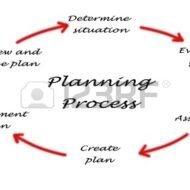
Nature of Organizational Planning What is Planning? “Planning is an intellectual process, the conscious determination of courses of action, and is a continuous process of decision making with built in flexibility.”- Herold Koonz and Weirich Planning is the most basic and primary of all management functions on the premise of which other functions evolve. It would be appropriate to compare planning to the basement or foundation of a building upon which the entire system rests. Planning bridges the gap from where we are to where we want to go. Planning involves selecting the best objectives and deciding on the suitable course of action. When we talk about planning, control is another entity that tags along like inseparable two-sides of a coin. Without planning there is no control and without control planning becomes meaningless. NATURE OF PLANNING: Prime function of management: Planning is the key to all other functions of management like organizing, leading, staffing and controlling. Is a continuous process: Plans need periodic review in the wake of external environment and internal resource potential and thus is a continuous process. Is an intellectual process: What is to be done, when, who and how are the very important questions that loom before a manager before making every decision. He has to use his intellect in order to make the right plans before acting. Is all pervasive: It penetrates right from the top to the bottom level of management, but it is the responsibility of the managers or executives at the top level to make the right moves at the right time. Is flexible: One has to understand that flexibility is restricted when it comes to irretrievable costs already incurred in fixed assets, training, advertising etc. Is goal oriented: Planning starts with setting up of objectives and completely goal oriented. TYPES OF PLANS: Purpose or Missions: Basic task of an organization. For example, teaching and research can be attributed as the basic function of an educational institution; the purpose of business is to produce, distribute goods and make a surplus. Objectives: These are the goals that have to be accomplished by the organization. Corporate companies chart out their production plan well in advance to meet the requirements on time. For this they break the objectives into short term goals i.e., for a quarter based on the sales forecast. This kind of planning gives clarity and direction for the production team to achieve the goals. Strategies: These are the set of action plans designed in order to achieve the future objectives backed up by long term perspective in the wake of environmental analysis and give direction in which the resources have to be channelized. Policies: These are basically the guideline books that direct the course of the organization’s function as what to do and what not to-do. They see to that the decisions made fall well within certain boundaries in order to ensure fair and equitable treatment to all the employees. HR policies govern all the functions related to pay, promotion and other disciplinary mechanisms related to the work force. Procedures: They are programmes designed to carry out the activities of the organization in a specified manner. The procedures for placing a purchase order, payment collection etc., Programmes: A programme is the sum total of goals, policies, procedures, rules, task etc., For example, new product development may be cited as a major programme while promotional campaign may be cited as a supporting programme. Budget: No plan is feasible without a budget allocated to it. A budget is a numberised programme and more of a control device. Revenue budgets, expense budgets, production budgets to name a few. Zero base budget: This kind of budget does not take into account the previous year’s performance record or budget but treats every progarmme afresh and starts working from ground up. Each programme is treated as a separate...
Posted by Managementguru in Financial Management, Principles of Management
on Feb 28th, 2014 | 0 comments
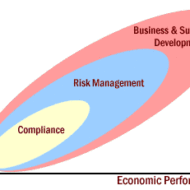
There is no Business Success Without Risk What is the Risk of Taking a Chance in a Business Activity? Business is often viewed as a game or a gamble in which success is always at risk. Think about it, risk is present in every sphere and aspect of our lives and even when you are not running a business. So why the fuss? A thorough knowledge and research of the business activity you are about to perform will give you the needed confidence to go about it. A true business man is an entrepreneur who treats risk as an opportunity rather than a challenge. Business organizations are started with a single purpose, to make profit and then more profit. Only when the organizations grow, there comes the awareness and necessity to think about stakeholders’ interest and working towards a social cause. Initial stages definitely pose threats for the very survival of the organization. Risk is an inherent part of a business as you are not sure about the outcome of your business activity. What are the Chances or Probability? We talk more about probability and chance outcomes when you deal with a particular product. Retail segment is one area where the risk of duplication is high and people have to be cautious and careful in order to protect their copyrights and symbols from being replicated. Mild inflations can benefit the market but recessions put you in doldrums especially if you are dependent on a wholesaler or a manufacturer. Risk can aspect itself in the following ways: Economically- Attrition and effects of global economy Legally- Labor laws and enactments Socially- Expectations from the public in general Government rules and regulations- Government policies and export duties Stakeholder expectations- Wealth maximization and assured profits Environmental – Need to comply with changing standards like waste affluent treatment plants Political scenario- Effects due to changing governments Risk and Uncertainty Risk and uncertainty go hand in hand and you need a risk management template or a model for your reference to solve or manage risks. The first and foremost step would be to identify the risks in your sphere of business activity. Risk documentation or creating a risk profile is an inevitable move for a new organization. This prepares the organization mentally to face challenges in a structured manner and reduces disorientation. It is very important to keep in mind the organisation’s objectives while documenting the risk profile to keep your focus unaltered. Risks evolve continuously and it is the responsibility of the top management to be in line with the market economy to manage the adverse conditions that come in the way. How to Manage Risks? Risk management is an ongoing and continuous process and it cannot be looked upon as a distinct area to be managed by a set of individuals. In a small and upcoming organization the responsibility lies on the shoulders of each and every individual to self assess, evaluate and manage risks and find the right kind of solution that will not be detrimental to the core objectives of the organization. Bigger organizations can afford to have expert opinion by commissioning PROFESSIONALS to identify, assess and manage risks. An overall and broad perspective of risk is what has been analysed here. There are numerous possibilities of risks, whether big or small in magnitude, affecting an organization. A thorough study of the field you are about to venture into, the pros and cons of the business activity, time of launch are few things that will help you to analyse what the market niche warrants for and act accordingly. In further segments, let us look into the factors of risk, identifying and...
Posted by Managementguru in Business Management, Financial Management, Principles of Management, Project Management
on Feb 28th, 2014 | 0 comments
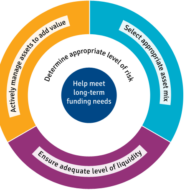
What is Business Risk? It is a term that explains the difference between the expectation of return on investment and actual realization. In CAPITAL BUDGETING, several alternatives of investments are examined before taking an investment decision and only then the Managing Director of the firm along with financial executives gear up for investing in a project that is sound and feasible. Even then the project may not become viable owing to the fluctuations in the economic environment. Money Manipulation So, the million dollar question arises, whether to invest and if invested, will it fetch me profit? See, you cannot have the cake and eat it too. Risk factor prevails in all kinds of environment and we try to over react in a business arena since it involves huge investments. But remember, MONEY WILL MULTIPLY IF YOU MANIPULATE IT WITH CARE. Business firms commit large sums of money each year for capital expenditure. It is therefore essential that a careful FINANCIAL APPRAISAL of each and every project which involves large investments is carried out before acceptance or execution of the project. These capital budgeting decisions generally fall under the consideration of highest level of management. Factors of risk to be considered before investing: Time value of money Pay back period Rate of return on investment(ROI) Uncertainties in the market Cost of debt Cost of equity Cost of retained earnings Factors to be monitored after investing: Maximising profit after taxes Maximizing earnings per share Maintaining the share prices Issue of dividends Ensuring management control Financial structuring Cost of capital refers to the opportunity cost of the funds to the firm I. e., the return on investment to the firm had it invested these funds elsewhere. Servicing the debt and Danger of Insolvency While making the decisions regarding investment and financing, the Finance Manager seeks to achieve the right balance between risk and return. If the firm borrows heavily to finance its operations, then the surplus generated out of operations should be sufficient to “SERVICE THE DEBT” in the form of interest and principal payments. The surplus would be greatly reduced to the owners as there would be heavy Debt Servicing. If things do not work out as planned, the situation becomes worse, as the firm will not be in a position to meet its obligations and is even exposed to the “DANGER OF INSOLVENCY“. Working Capital Management Considering all these factors, we have to come to the conclusion that FINANCIAL MANAGEMENT is like the BACKBONE of a business firm and WORKING CAPITAL MANAGEMENT will be the blood flow infused into the body. Risks are inherent in a business environment whose management is quite possible with the right kind of farsightedness and planning. Luck does not favor anybody who is poor in planning and lack hard...