Posted by Managementguru in Business Management, Principles of Management, Training & Development
on Mar 7th, 2014 | 0 comments

MBO BY PETER DRUCKER Peter Ferdinand Drucker was an influential writer, management consultant, and self-described “social ecologist. Harvard Business Review honored Drucker in the June 2004 with his seventh McKinsey Award for his article, “What Makes an Effective Executive”, the most awarded to one person. The Concept of MBO: Management by objectives was a concept introduced by the doyen of management, Peter Drucker. This concept involves formulation of objectives for the entire organization and which are then broken down into divisional, departmental and finally individual objectives. Objectives are decided on the basis of mutual consultation between managers and employees at the departmental and divisional levels and thus it can be appropriately called an integration of top down and bottom up approaches in management. The specific aim is to make the employees participate in decision making and thus motivate them to perform better. Management by objectives follows a step-by-step procedure that ensures the feasibility of the action plans decided upon. Realistic and achievable plans are set. Activities to be preformed are identified. Logical relationship between the sequences of activities is laid down. Time frame and cost frame are fixed. Resources to be allocated are decided upon. Salient features of the process: Self control and Self direction: The workers exhibit keen self control in that, they self appraise their performance that results in intrinsic motivation. Setting short goals and periodical review to match the current performance with the expected standards greatly boosts the performance of each and every individual and gives him the necessary drive to accomplish the assigned tasks. Periodic progress review: This helps to correct errors and deviations if any. This review is done by managers of higher levels in a constructive way and adequate counseling and guidance can be given to the subordinates to bridge the shortfall if any, in performance. This is possible only when there exists a mutual understanding between the superior and subordinates to find reasons and solve problems together. Reviews need not necessarily pinpoint errors but also revise future plans and actions. The major emphasis of management by objectives lies in its result oriented approach. What is the relationship between management by objectives and motivation? Motivation of an employee can be brought about by financial incentives such as bonus, increments, pay and perks or non-financial incentives such as recognition, appreciation and additional responsibilities. But nothing can equal self-motivation which makes an employee perform with aplomb. As management by objectives is directly linked with goal-setting, performance becomes better and better as the goals are set at a higher level. It involves complete participation from the employees’ end and when specific goals are set by mutual consent of workers and management, the results are magnificent. Many firms practice management by objectives to promote harmony and sense of belonging in the minds of employees as a result of which there is remarkable improvement in performance and productivity. The focus is on improving the job design and work module to make the jobs more meaningful, interesting and...

Posted by Managementguru in Business Management, Organisational behaviour, Principles of Management, Training & Development
on Mar 7th, 2014 | 0 comments
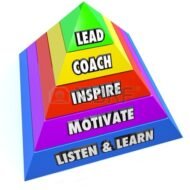
Performance Optimization Through Effective Management An organization is a network of people striving to achieve their targets. So it is a wise thing to synchronize their activities in-order to enhance the harmony and build a strong team as well that protects the network from crumbling by means of mutual trust and behavior. It is imperative for the management to define the structure and hierarchy as well as the techniques that help the organization to efficiently function. Here are some means to make your organization to function efficiently and you’re your team stand apart from the crowd. Training of Subordinates: The better the training of subordinates, the fewer the number of necessary supervisors. Well trained subordinates require not only less of their manager’s time but also less contact with their managers. ‘On the job’ training programmes have found to be more effective in industries which are labor intensive. Coaching and mentoring improve the understanding and efficiency of the workforce and help them to maximize their effort and in turn productivity. Clarity of Delegation of Authority: The most serious symptom of poor organization affecting the span of management is inadequate or unclear authority delegation. If a manager clearly delegates authority to perform a well defined task, a well trained subordinate can get it done with the minimum of manager’s time and attention. But if the subordinate’s task is not clearly defined, either the task will not be performed or it will be a colossal waste of time for the manager to supervise and guide the subordinates’ effort. Clarity of Plans: The character of a subordinates‘ job is defined by the plans to be put into effect. If these plans are well defined, if they are workable, if the authority to undertake them has been delegated, and if the subordinate understands what is expected, little of a supervisor’s time will be required. Such is often the case with a production supervisor, who bears the responsibility of achieving targets within the stipulated time period. If the plans cannot be drawn accurately, subordinates must do much of their own planning where they may lack direction. On the other hand if the superior has setup clear policies to guide decisions and has made sure they are consistent with the operations and goals of the department, work becomes simple and easy for the subordinates to follow. Communication Techniques: If every plan, instruction, order or direction has to be communicated by personal contact and every organization change or staffing problem has to be handled orally, it slows down the managerial activity. The ability to communicate plans and instructions clearly and concisely also tends to increase a manager’s span. At the same time the subordinate’s job is greatly facilitated by superiors who can express themselves well. A manager’s casual easy style may please subordinates, but it reduces the effective span of management and lowers morale as well. Amount of Personal Contact Needed: Many situations cannot be completely handled with written reports, memorandums, policy statements, planning documents and other communication techniques that do not involve personal contact which an executive find it valuable. There are other situations in which the best way of communicating a problem, instructing a subordinate, or “getting a feel” of how people really think is to spend time in personal contact . The high percentage of time spent in meetings and committees might be reduced some what by better training, better policy making and planning, clearer delegation, more thorough staff work, better control system and objectives standard. Studies have revealed that, effective spans were narrower at lower and middle levels of organization but were increased at upper levels and size had little...
Posted by Managementguru in Business Management, Organisational behaviour, Principles of Management
on Mar 6th, 2014 | 0 comments
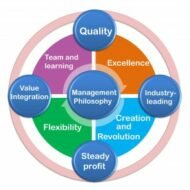
Corporate Philosophy of Management CORPORATE PHILOSOPHY OF MANAGEMENT calls for creating a framework of values, beliefs and ethical standards which are considered to be vital for an effective management. They must be embedded in formal and informal philosophical statements which are then communicated to the fraternity of that organization. From a broader perspective, the LEADER has to have a VISION as to where he is heading his company in the next three to four years. Corporate Objectives provide vision as well as direction and map for bold decisions to be taken regarding NEW MARKETS MARKET SHARE PRODUCTS SERVICES etc. , Now the organization is in a position to decide and prioritise the VALUES AND COMPETENCIES it expects from its managers. For example, if the situation favors the business expansion to new markets, say, European or Asian, then an organization has to develop competence in areas like LANGUAGE AND CULTURE, besides marketing and business skills. Different Philosophies of Management: Well, you might have been inspired with JAPANESE PHILOSOPHY OF MANAGEMENT, EASTERN OR WESTERN PHILOSOPHY OF MANAGEMENT t. But what is the fun? If you don’t have A SOUND MANAGEMENT PHILOSOPHY of your own, to simply put it, you don’t have a broad set of principles to back up your management development process which is a generic one. Ideally speaking, you should be able to develop a concrete SYSTEM that is made up of FOOL PROOF policies and procedures; try to develop a professional team of executives who can take up your vision to the next level; these measures will prove worthwhile in the long run. You are left without any choice but to develop “truly” INTERNATIONAL MANAGERS who could transcend nationally and the location of any specific job consideration. This is what Ideal management philosophy means to me, A holistic vision of the future A solid set of principles(values, beliefs) Sound policy definition Management development programmes Autonomy to my work force Always “yes “to new technology Development of women managers Flexible leadership Social responsibility Contribution to the growth of my Country’s economy Strategic Perspective: Major environmental shifts now demand a more strategic perspective from those who manage and lead in organizations; “GLOBALISING” in the quest for major market share brings in new opportunities for growth and prosperity. Organizations are now espousing values that regard people, not as costs to be minimized, but AS “ASSETS TO BE MAINTAINED AND DEVELOPED.” An open systems approach of management is likely to overcome many of the problems created by the piecemeal approach. Instead of looking at management development in isolation, see it as an integral part of a wider organizational system that takes care of the processes through which people working for the firm take care of themselves leading to self...
Posted by Managementguru in Business Management, Organisational behaviour, Principles of Management
on Mar 6th, 2014 | 0 comments
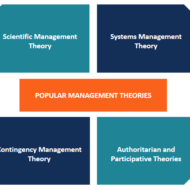
Theory of Management History and Evolution To understand the concept of management, a recap of its history and its slow but steady evolution is absolutely necessary. After the advent of machines, thanks to the industrial revolution of the eighteenth century, management has become an entity by itself. Pic Courtesy: Management Theories Since business activity is increasing by leaps and bounds globally, a more organized set up is called for, which has led to the development of different management concepts. Whether you consider management an art or a science, one definite thing is that, science and art complement each other and not mutually exclusive. Management gurus like Peter Drucker, Henry Fayol, Taylor and others have classified the essential features of management, for the benefit of the industry. Theory comes first followed by practice. Management knowledge certainly improves your style of working. How long do you think, luck, intuition or experience can be relied on, without a scientific knowledge of management. It is a thought to be pondered. Hypotheses Practical experimentation and analysis of theoretical hypotheses, yield better results and in course of time you tend to gain more scientific knowledge. Management is a process of planning, organizing, staffing, leading and controlling. Picture Courtesy: Technofunc.com The management process is applicable to all kinds of organizations and firms, be it a private firm, a government institution, a hospital, a school, a college, an university and other financial, profit making or non profit making NGO’s. This clearly indicates that management is a process that involves individuals who work in groups to accomplish their objectives in an effective and efficient manner. Levels of Management Does management pertain only to the top level management? A big no! It applies to managers at all levels. It is a chain reaction and a successful management totally depends on the synergistic activities of the people belonging to that organization. So, care must be taken by the managers to create and design an internal environment that is conducive for the smooth operations of the firm thus increasing the productivity. This does not mean that the external environment can be overlooked. A manager has to respond to the periodic changes, be it social, technological, economic or political in the external environment also. Management styles Management is a must for every organization and the style of management may vary according to the nature and size of business. Large organizations now-a-days prefer a “flat structure“, as it brings their employees closer and reduces the span of management, thus making communication faster. The more the number of levels, the more the conflict and improper communication. Although management pervades the entire organization, it is the duty of the top management cadre to initiate and maintain consistency in the process of management. All managers (by the term “manager “which is a much generalized term, we denote persons who hold authority to get things done; he may be a financial, administrative, human resource or a production executive) have a common aim, that is to create surplus. To increase productivity, create a suitable environment for the effective performance of their group and to solve crisis situations, they must be capable of seeing the “big picture”. Recent Developments A sea of changes has swept the theory of management area in recent times, owing to the development of different approaches. Management theory is criticized to have all the characteristics of a jungle as numerous management practitioners have recorded their findings in the management history. This led to severe confusion as to what management is, and how things should be organized; however, in modern corporate business world, the managerial activity is directed towards growth, thanks to the...
Posted by Managementguru in Business Management, Organisational behaviour, Principles of Management
on Mar 6th, 2014 | 0 comments
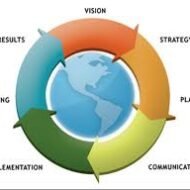
Critical Factors Influencing Corporate Management A corporate management is said to be capable only if it is able to integrate, coordinate and direct the functional capabilities towards overall objectives and common goals of a firm, that have a bearing on an organization’s capacity and ability to implement its strategies. Multitudinous factors affect the functioning of corporate general management system. It differs with each organization with differing objectives and mode of operations. Key Factors or Contributors: The firms must evolve an effective system for corporate planning. The objectives must be realistic and achievable and clear and complete communication of plans to various levels of organization helps in execution of action plans by the respective departments. A pucca management information system is necessary that integrates all the levels through a network of computers, facilitating information processing and task implementation. If the firm is oriented towards a god deal of risk-propensity, chances of rewards are also quite high. You cannot beat your competitors unless you possess a better shade of entrepreneurship in you than others. Competency development backed up by strategy formulations, in the wake of challenges and opportunities in the external environment is well appreciated. Why everybody always talk about strategy? It is one thing that warrants for a sure success, it implies that you are smart enough to think ahead of time, what others have failed to. Don’t you want to set a path forward for the future generations to come? Values that are unique to your organization add to the image of your company. Say, if you project “quality”, as your prime value system, definitely it is going to attract consumers who are very particular about quality unmindful of the price. Slowly the idea gathers momentum and your company’s image gets a boost. But don’t forget that you have to fulfill your commitments in terms of quality without any compromise. Reward systems must be worked out to gear up the morale of top managers who are the achievers of your management objectives. Their track records and degree of commitment should be analyzed to decide on pay and promotions. A favorable organizational climate is inevitable for the organization to progress in the desired direction without any internal politics and power struggles. The role of top management is very crucial in that, it has to identify people with vested interests and bring them back into the groove by making necessary changes in the organization structure or go for weeding out actions if things go out of control. Ultimately, the overall objectives of the organization is what that matters, and people must be trained to accept the organizational changes which form a part of the developmental procedures of management. Social responsibility is much talked about these days, and the corporate firms are in a position to discharge their duties pertaining to social welfare, as part of their corporate management programme.It has become a regular feature of the management process to part with a share of their profit towards a social cause. Corporate management is a comprehensive process that covers all aspects of the management with growth as its motto and social conscience as its...