Posted by Managementguru in Business Management, Strategy
on Feb 17th, 2014 | 0 comments
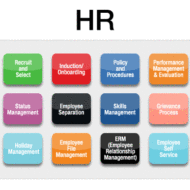
What are Policies? Business activities should be based on some solid principles that serve as guidelines for direction. These principles are nothing but policies which help a business firm in attaining its goal. Policy does not tell a person exactly what to do, but it does point out the direction in which to go. While objectives are goals or ends to be sought, policies are a general rule of action which helps in attaining a goal. Policy Statements Statements released by corporate firms generally highlight the major policies behind their action. For instance, if a firm says that its aim is to provide the customers with products that are competitive in terms of quality, price, weight and contents, it tries to sum up the recurring problems in the industry and assures the customers that it will serve the customers in the true spirit of business. What is the meaning of Policy Formulation? Policies are generally formulated by the officials of the top management cadre, as policies reflect the mode of thought and principles underlying the activities of an organization. Policies guide a firm in the following aspects. Thinking Decision making Conduct of business Enterprise operations Problem solving So, it is evident that each policy contains two components, a “principle” and a “rule of action”. Corporate policies are statements of directions, guidance for corporate thinking, corporate behavior and action, and therefore cover a very broad area. Such policy formulations are made in the light of challenges posed from the external environment exposing the strengths and weaknesses of the organization. Here are some key corporate policies that companies often prioritize to ensure smooth operations, compliance, and a healthy workplace culture: Code of Conduct and Ethics Policy: Sets standards for professional behavior, integrity, and ethical practices within the organization. Equal Opportunity and Non-Discrimination Policy: Ensures a workplace free from discrimination and promotes diversity and inclusion. Workplace Safety Policy: Outlines measures to ensure employee safety, including adherence to health and safety regulations. Leave and Attendance Policy: Defines rules for work hours, attendance, leave entitlements, and time-off procedures. Data Protection and Privacy Policy: Details the handling of sensitive personal and corporate information, ensuring compliance with data protection laws. Anti-Harassment and Bullying Policy: Establishes guidelines to prevent and address harassment, fostering a respectful work environment. Whistleblower Policy: Provides employees a secure way to report unethical or illegal activities without fear of retaliation. Compensation and Benefits Policy: Describes salary structures, incentives, bonuses, and benefits offered to employees. Employee Grievance Policy: Offers a clear procedure for resolving employee concerns and disputes. Corporate Social Responsibility (CSR) Policy: Focuses on the company’s commitments to social, environmental, and ethical responsibilities. IT and Cybersecurity Policy: Provides rules for using company technology and safeguards against cyber threats. Confidentiality and Non-Disclosure Policy: Protects sensitive company information from unauthorized sharing....

Posted by Managementguru in Economics
on Feb 17th, 2014 | 0 comments

Managerial Economics and Decision Making One has to observe the economic prospects of a particular #industry before venturing into it. Most of the people are not aware of the existence of some businesses with fantastic economic characteristics like high rate of return on invested capital, substantial profit margins and consistent growth. How do you think Bill Gates and Warren Buffet were able to make it on the Forbes top millionaires list? Successful leaders focus on the economics of a business for decision making. Economic Aspects of a Market Managerial economics is a #management science that gives you more idea about the economic aspects of a market and how they affect your decision making. This is very important because economic profits play a crucial role in a market based economy., While above normal profits are indicators of expansion and growth, below normal profits cautions you about tightening or retrenchment. Business economics is comprised of several tools of micro and macro economic analysis which are useful in management decision-making that act as facilitators to solve business problems. Micro economic instruments used in this context include demand analysis, production and cost analysis, breakeven analysis, theory of pricing, technical progress, location decisions and capital budgeting . Factors Influencing Management Decisions The macroeconomic concepts that are directly or indirectly related to management decisions include analysis of national income, business cycles, monetary policy, fiscal policy, central banking, public finance, economic growth, international trade, balance of payments, protectionism, free trade, exchange rates and international monetary system. The scope of management science is broad and is closely linked with economic theory, decision sciences and accounting. Traditional economics deals with theory and methodology of management, while managerial or business economics applies these theories to solve business problems. The tools and analytical techniques are useful in providing optimal solutions to business problems. Relationship with economics : Managerial economics borrows concepts from economics to idealize the strategic actions needed for decision making in a problem situation. The analysis of micro and macro economic concepts adds valuable information for the organization. Say, for example, national income forecasting is an important aid for the analysis of business conditions that in turn could be an invaluable contribution to forecast demand for specific product groups. Theories of market structure can be analyzed for market segmentation. Managers have the freedom to choose between the decision alternatives that best suits the objectives of the business enterprise. The challenge is to justify the alternative in terms of cost and benefit. Relationship with decision sciences : Decision models are created to format solutions for problem situations and the process uses techniques such as, optimization, differential calculus and mathematical programming. This also helps to analyze the impact of alternative courses of action and evaluate the results of the model. Economic models provide the organizations with the necessary insight concerning value maximization Relationship to Accounting The accounting data and statements constitute the language of business. The accounting profession has a significant impact on cost and revenue information and classification. A manager therefore must be familiar with the generation, interpretation and use of accounting data. Accounting is also seen as a decision management tool and not as a mere practice of book-keeping. The concepts and practices of accounting can be well applied to improve the economic scope of a project. Economic theory is all about allocating scarce resources between competing ends and managerial economics advocates rules for improving managerial decisions and for efficiently achieving the goals of an...
Posted by Managementguru in Economics, Financial Management, Management Accounting
on Feb 14th, 2014 | Comments Off on Concept of Cost

The concept of cost along with demand and supply constitute three of the basic areas of managerial economics. Analysis of cost is essential when it comes to large-scale production, where the firm is in a position to factorize the economies of scale. For a profit-maximizing firm, the decision to add a new product is done by comparing additional revenues to additional costs associated with that project. Aids in Decision Making Decisions on capital investment are made by comparing rate of return on investment with the opportunity cost of the funds used to make capital acquisition. Costs are equally important in non-profit sector. For example, to obtain funding for a new dam, a government agency has to demonstrate that the value of the benefits of the dam like flood control and water supply, will exceed the cost of the project. It is necessary that we define the term ‘cost’ for better understanding. The traditional definition tends to focus on the explicit and historical dimensions of cost. In contrast, the economic approach to cost emphasizes opportunity cost rather than historical and includes both explicit and implicit costs. Opportunity Cost Opportunity costs are fundamental costs in economics, and are used in computing cost benefit analysis of a project. Such costs, however, are not recorded in the account books but are recognized in decision making by computing the cash outlays and their resulting profit or loss. Opportunity cost is the minimum price that would be necessary to retain a factor-service in it’s given use. It is also defined as the cost of sacrificed alternatives. For instance, a person chooses to forgo his present lucrative job which offers him Rs.50000 per month, and organizes his own business. The opportunity lost (earning Rs. 50,000) will be the opportunity cost of running his own business. Fixed and Variable Cost: A company’s total cost is composed of its total fixed costs and its total variable costs combined. Variable costs vary with the amount produced. Fixed costs remain the same, no matter how much output a company produces. Semi-variable is the type of costs, which have the characteristics of both fixed costs and variable costs. Fixed costs and variable costs comprise total cost. Total cost is a determinant of a company’s profits which is calculated as: Profits = Sales – Total Costs. The cost which remains same, regardless of the volume produced, is known as fixed cost. A variable cost is a corporate expense that changes in proportion with production output. Variable costs increase or decrease depending on a company’s production volume; they rise as production increases and fall as production...
Posted by Managementguru in Accounting, Management Accounting
on Feb 14th, 2014 | 0 comments
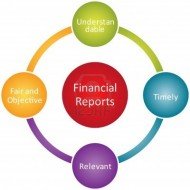
Advantages of Management Accounting It helps to increase the efficiency of all functions of management.It helps in target-fixing, decision-making, price-fixing, selection of product-mix and so onForecasting and Budgeting help the concern to plan the future and financial activities.Various tools and techniques provide reliability and authenticity to carry out the business functions.It is useful in controlling wastage and defects.It helps in complete communication between all levels of management.It helps in controlling the cost of production thus increasing the profit percentage.It is proactive-analyses the governmental policies and socio-economic scenario which helps to assess the external environmental impacts on the organization. Limitations of Management Accounting It is concerned with financial and cost accounting. If these records are not reliable, it will affect the effectiveness of management accounting.Decisions taken by the management accountant may or may not be executed by the management..It is very expensive. Only big concerns can adopt this method of accounting.New rules and regulations are to be framed, hence there is a possibility of opposition from the employees.It is only in the developing stage.It provides only data and not decisions.It is a tool to the management and not an alternative of management. These are the advantages and limitations of management accounting. Characteristics of management accounting Following are the characteristic features of management accounting: First and foremost characteristic is that it provides the necessary information to the management. It might be any data- numbers, gross profit, net profit, comaparitive financial statements, profit and loss account etc.,It is purely analytical.The interpretations help the management in timely decision-making.It adopts a selective technique to arrive at the results.Helps to chart-out the future course of action.Also helps to know the present financial condition of the firm and the respective implications on the stake holders. Various tools of management accounting: MARGINAL COSTINGSTANDARD COSTINGBUDGETARY CONTROLRATIO ANALYSISFUND FLOW ANALYSISCASH FLOW ANALYSIS...
Posted by Admin in Accounting, Management Accounting
on Jan 29th, 2014 | 0 comments

Management accounting combines accounting, finance and management with the leading edge techniques needed to drive successful businesses. The process of preparing management reports and accounts that provide accurate and timely financial and statistical information required by managers to make day-to-day and short-term decisions