Posted by Managementguru in Business Management, Decision Making, Principles of Management
on Mar 6th, 2014 | 0 comments

A Process of Intelligence Effective Decision making is a process of Intelligence, Design and choice activities and “is a central part of the management process”. Decisions are hard to make but once decided there should be no second take. The following steps are involved in the process of Decision-making: 1. Recognizing the problem 2. Deciding priorities among problems 3. Diagnosing the problem 4. Developing alternative courses of action 5. Evaluating alternatives 6. Selecting the best alternative 7. Effective implementation and follow-up action. Recognizing the Problem– Herbert A Simon calls this step as an “intelligent activity“. It is important to find out whether there is any deviation from the past experience. For e.g. Sales might decrease, expense might decrease, sometimes there might be deviations from the plan, sales budget, and competitors may outperform by improved systems. Deciding priorities among the problems: A manager would face many problems at the same time. He should not be bogged down with small and unimportant problems. Some problems can be easily solved by the sub-ordinates. Some may not be important. A manager must see that – he selects carefully the most important problem. Peter Drucker says that “once the right problem is perceived then half of the problem is solved”. A manager must diagnose carefully by asking the following questions. a. What is the real problem? b. What are the causes and effects of the problem? c. Is this problem very important? d. Can they be solved by sub-ordinates? e. Which is the right and most important problem to be solved? Diagnosing the Problem: After choosing the right problem the manager must now start diagnosing the problem. There is no simple answer to the question of how to diagnose the problem, because every individual differs in his or her own way of diagnosing the problem depending on the different background orientations and training. A manager must systematically analyze the problem for identifying the alternative causes of action. Developing Alternative Courses of Action: This step is creative and innovative where a manager analyzes from all perspectives Sometimes a manager can also use a technique called “brainstorming” where a few individuals discuss at length the various possible available alternatives. First of all, a manager must be thoroughly familiar with the problem. This is called saturation. Later, he must think about the problem from several view-points which is called deliberation. Sometimes the manager may not get into the crux of the problem, i.e. there may not be any fruitful result of deliberation, and then the manager might temporarily switch off his conscious search and relax. This process of realization is called incubation. Then after sometime, a flash of light may occur, and the manager may get some insights and ideas. This stage is called illumination. In the last stage, which is called accommodation, the manager resynthesises his ideas into a usable proposal. Evaluating the Alternatives: The manager must now give proper weightage to the positive and negative aspects of the alternatives and evaluate by using some criteria like (a) time; (b) cost; (c) risk; (d) results expected; (e) deviations anticipated; (f) resources available for implementation. Selecting the Best Alternative: This is the most important step where the manager selects the best alternative that will yield maximum profits or results with minimum cost, input or resources. To put it in simple terms, the solution should be able to solve the problem in the best possible way. Effective Implementation and Follow-up Action: Any decision without proper implementation becomes futile and hence proper care must be taken by the manager to pool resources and start implementing the decision taken. In large organizations, follow-up procedures are available in the system...

Posted by Managementguru in Business Management, Marketing, Principles of Management, Strategy
on Mar 4th, 2014 | 0 comments

A niche market is a specific segment of a larger market with distinct needs and preferences. Finding the right niche is crucial for start-up success. It allows you to focus your resources, differentiate your offerings, and build a loyal customer base. Look For Problems What problems or pain points exist in the market? What needs are not being met? Identifying unmet needs is a key step in finding a profitable niche market. Look for areas where you can provide solutions or improvements. The process of new product development starts with the search for new ideas. Abstract ideas are molded in such a way to suit the market needs. Businesspersons who want to capture a major share of the market have to think out of the box, to tide over the competition. Small things can make a big difference. Monotonous pattern of thinking will not help you in the long run to survive and sustain in the market. The Significance of R&D The objective is to obtain ideas for new products, new attributes for the existing products and new usage for the existing product line. Why do you think so much of investment goes into research and development? The fruits of such R and D activities are reflected in the form of improved sales turn over. Market updates on a daily basis also gives you an excellent feedback about the new products that throng the market. Think about this, it is not possible for every organization to invest such huge sums in R and D which demands technically qualified personnel to carry out the research activities and it is next to impossible that each and every firm in the market can establish the necessary infrastructure for the purpose of research. SWOT Analysis What might be the solution? Companies generally rely on internal sources, customers, competitors, distributors, suppliers and others for new product ideas. The sales force of a firm can provide excellent inputs as they meet customers on a regular basis. Through SWOT analysis, a company can make a conscious, deliberate and systematic effort to identify opportunities that can be profitably exploited. Top management should encourage the employees to think more imaginatively to create a niche market for its product range. The management has to prioritise its objectives first and channelise the efforts of employees accordingly. Steps to be Followed in New Product Development Generation of new product ideas Screening of ideas – It serves the purpose of reducing the large number of ideas generated, to spot the good ones and drop the bad ones. Concept development and testing – An inherent idea must be developed into a product concept, should include the customer, the major customer benefits and the features defining it. Development of marketing strategy – This is helpful in launching the product at the right time and right place to the right people. Business analysis – A review of cost versus profit analysis, estimated size and growth rate of the market segment, estimated sales and market share for the new product in the light of financial feasibility. Development of the product – If the business analysis gives a satisfactory report as to the rate of return on investment and payback period, the R and D department goes ahead with manufacturing the prototype which is the preliminary version of the final product. Test marketing – It provides an opportunity to understand market response to the new product and its proposed marketing programme in a more realistic market environment than in simulated conditions. Commercialization – The product is released into the market, distribution channels are established, thus initiating its life cycle. The success of new products can be attributed to two aspects, one...
Posted by Managementguru in Business Management, Marketing, Principles of Management
on Mar 3rd, 2014 | 0 comments

Customer centric: refers to the orientation of a company to the needs and behaviors of its customers. Product centric: refers to the orientation of a company towards manufacturing and improving the product line. All products that enter the market are not given the kind of welcome which only certain products are able to enjoy. Why is that only few products are top notch and others average performers? The answer is very simple, you need to be customer centric rather focusing on improving your product and its range. What is the fun in making products that go bland over a period of time? Creating an appealing product does not suffice the requirements of the consumers. Understanding the consumer, his needs and preferences makes you a good marketer. “What people want to buy and what you want people to buy are entirely two different entities.” Customer Preferences Marketing is a concept that talks about creating a favorable environment or identifying a niche where you can sell your products comfortably or where the products can sell themselves provided the focus is on the target customer. What companies do now in the name of marketing is nothing but product promotion that exhausts huge chunk of money from the management’s treasury. Business schools have a great role to play in idealizing these concepts for the better understanding of management graduates, make them deliver the right choice of action in real time environment. Marketing starts right from developing a prospective business idea into a concrete business plan followed by branding and promotions. But the product base has to be built upon customer wanton and preferences. Indigenous Products The soft drink “Bovonto” is very popular and a preferred drink in south of Tamilnadu, India and the manufacturers have their plants at various places in Tamilnadu. Although not a big name in the international market, it is a direct competitor for Coke and Pepsi in the southern regions of Tamilnadu. The grape vine is that the product is a perfect “market fit”. To our amusement and amazement, the product has communicated well with the marketplace through taste and quality. Here is the unerring message, ‘Let the product speak for itself’. Indigenous products always gain instant recognition as they connect well with the local people emotionally. If people of each and every country vows only to buy indigenous products, many MNC’s would be out of business and filing for bankruptcy. Such is the power of the market and people who are the owners of the market. What is that ‘X’ factor that makes your product different and unique Let’s look at it from another perspective. Incidentally you happen to develop a great product, and you want to market the product. This situation calls for patenting the product and again it can be made market centric by finding the right market segment for the product and promoting it in such a way that the product content appeals to the market. Tell the masses how your product can solve specific problems through its unique content. What is that ‘X’ factor that makes your product different and unique as well is what you have to communicate to the people whom you are targeting. Facebook has revolutionized the internet marketplace by offering simple and user-friendly interface and a sophisticated niche for each and every individual who wants to make his/ her presence felt. A good business plan is one which incorporates the best of ideas from all spheres of the company, as marketing is not a separate entity, and promotions call for huge investments. Many companies fail to understand the basis of market success which is solving the problem and not selling. Promotions alone...
Posted by Managementguru in Business Management, Organisational behaviour, Principles of Management
on Mar 3rd, 2014 | 0 comments
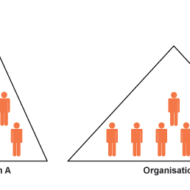
Levels of Organization An organization is a network consisting of people interacting to accomplish the enterprise objectives. The inter relationship is always complex as groups tend to develop conflicts and difference of opinion among themselves and in between. Hence the structure of an organization should be designed to clarify who is to do what task and who is responsible for what results and to furnish decision-making devoid of uncertainty. Organization implies to Recognizing and classifying the required activities Grouping of activities in order to achieve the objectives Appointing a manager and assigning him with the necessary authority to lead each group The provision for co-ordination vertically and horizontally “Organization is the establishment of authority and relationships with provision for coordination between them, both vertically and horizontally in the enterprise structure,” According to Koontz. FORMAL ORGANISATION It implies a formalized intentional structure of roles or positions. Formal organization must be flexible. The formal structure is laid down by the top management The levels are designed on the basis of specialization Purely task oriented and not people oriented Rules are very stringent and everyone is expected to follow them without fail INFORMAL ORGANISATION A network of personal and social relations arising spontaneously as people associate with one another and not restricted by the formal rules or structure. One important aspect of organizing is the establishment of department. Department designates a distinct area, division, or branch of an organization over which a manager has authority for the performance of specified activities. Spontaneous in nature More people oriented Based on religion, culture, common problems faced by the workforce etc., Membership is voluntary and the same person can be a member of many groups. ORGANISATION LEVELS AND SPAN OF MANAGEMENT Why there is a need to organize? To co-ordinate the activities of the people involved in the organization’s functions for which there needs to be certain levels established to facilitate the co-operation effective. There are two types of spans, 1. Wide span 2. Narrow span Pic Courtesy: LumenLearning WIDE SPAN: Wide span of management has fewer organizational levels with more number of sub-ordinates reporting to a superior. Though it proves advantageous for the superior as delegation becomes part of the process and hence work is shared, care must be taken in selecting the right people for completion of tasks and clear policies must be made to avoid confusion. There is this tendency of overloaded superiors to become decision bottlenecks and there exists the danger of superior’s loss of control too. This kind of management needs exceptionally qualified managers to lead the respective groups. NARROW SPAN: Narrow span of management involves many organizational levels with fewer number of employees reporting to a superior. This facilitates close supervision, close control and fast communication between superiors and subordinates. On the contrary, superiors tend to get too involved in subordinates’ work and this kind of management incurs higher costs due to many levels in the organization and there is excessive distance between the lowest and top most levels. FACTORS DETERMINING AN EFFECTIVE SPAN: 1. Training of Subordinates: Well trained subordinates save much time and energy of the superiors and training has to be a continuous process as the technological policies and procedures are subjected to change periodically. 2. Clarity of Delegation of Authority: Clarity implies direction and guidance from the manager’s end to the subordinate. A manager has the responsibility of clearly explaining the task and the methods involved to complete the task in a suitable manner to his subordinates. In cases of machine handling, “On the Job Training” becomes inevitable. If not, the work will not be completed as per the schedule due to lack of clarity. 3. Clarity of Plans: In a production environment, the workers have to be...
Posted by Managementguru in Business Management, Principles of Management
on Mar 3rd, 2014 | 0 comments
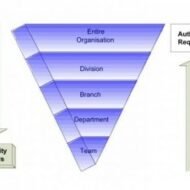
Centralization and De-Centralization Concepts CENTRALIZATION: The term “centralization” has several meanings: Centralization of Performance: Say, if the operations of a company is restricted to a single geographical location, it characterizes centralization of performance. Departmental Centralization: Specialized activities are carried out by a single department, say, maintenance of a whole plant, staff recruitment by HR department etc., Centralization as an aspect of management: This implies restricted delegation and exclusivity of decision-making by the top management. According to Allen, “Centralization is the systematic and consistent reservation of authority at central point in an organization.” According to Weihrich and Koontz, “Centralization (as an aspect of management) is the tendency to restrict delegation of decision-making. What are the special circumstances that force the managers to reserve authority and centralize decision making powers? 1. To facilitate personal leadership 2. To provide for integration 3. To handle emergencies 4. To utilize resources effectively and instantaneously. DECENTRALISATION: It is the tendency to disperse decision making authority in a structured and organized manner. It can be viewed as a philosophy rather than a principle where-in “discretion” plays a major role in deciding which decisions to push down into the organization structure and which to hold near the top. Capital expenditure, Investment analysis and major policy decisions have to be dealt with, by the top management. It is the systematic effort to delegate to the lowest levels of authority except that which can be exercised at central points. TYPES OF DECENTRALIZATION: Three approaches to the concept are: 1. PROFIT CENTRES 2. COST EXPENSE CENTRES 3. INVESTMENT CENTRES Profit Centre: Here the organization is split into divisions on a “product basis” and is given full authority to handle its own scheduled operations, right from placing orders to negotiating the sale of its finished products. Cost Expense Centre: Whenever it is easy to determine the cost of operations, cost centres are established. Cost centres run on “budgets” which acts as a control tool to run the units within the specified budgetary limits. Investment Centre: Useful in the case of big multi-product enterprises where product performance is measured by decentralizing the investment aspect. Each strategic business unit is responsible for the acquisition, use and disposition of fixed resources. Advantages of Decentralization: Managers and executives are relieved form excessive work pressure Even low level employees are involved in decision making thus bringing the decision making process closer to the scene of action. It facilitates product-diversification Creates an opportunity for learning Ensures effective control When a big organization is divided into relatively smaller units, it becomes flexible and also effects close control. Disadvantages of Decentralization: · Conflict arises between people belonging to different levels of the organization · Rising cost · Lack of co-ordination between production and marketing departments · No defined leadership Contingency Factors in Decentralizing: 1. Organizational goals 2. Organizational size 3. Geographical dispersion 4. Technical complexity of tasks 5. Time frame of discussions and decisions 6. Subordinates’ take on issues 7. Planning and control procedures 8. Environmental factors 9. Knowledge and experience of managers Effective Decentralization can be accomplished by · Establishing appropriate centralization · Developing efficient managers · Proper provision for communication and co-ordination · Establishing adequate controls Top management must be willing to delegate authority towards decision making; Middle management must be willing to accept responsibility that is being delegated. Only then effective decentralization is...