Posted by Managementguru in Human Resource, Principles of Management, Training & Development
on Mar 18th, 2014 | 0 comments
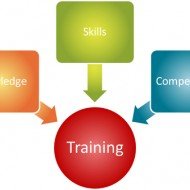
Employee Training – Train Your #Employees to Tone up their Spirit What is Training & Development: process to obtain or transfer #knowledge, #skills and abilities needed to carry out a specific activity or task. Human Resource training is not at all a complex process; with the right kind of supervisors, who impart training and their subordinates being enthusiastic about learning, it seems to be quite an easy job. But, some firms fail to achieve the desired productivity, in spite of good training programmes and availability of efficient workers. The biggest problem being, the failure to impart relevant training, by identifying and analyzing the training needs which too often is not the case. To be successful, firms have to adopt a systematic approach to training process. Training fills the gap between what someone can do and what he should be able to do. The first aim of training is to ensure that, as quickly as possible people can reach an acceptance level in their jobs. Training then builds on this foundation by enhancing skills and knowledge as required to improve performance in the present job or to develop potential for the future. Steps involved in systematic approach of training: 1) Identifying and analyzing training needs: Training should always fall in line with the #objectives of the organization to be achieved and it should be relevant to the context. Running training programmes just for the sake of running it, without defining the purpose, or sending the trainees for a workshop that has nothing to do with what the trainees really need to learn -all these are inappropriate methods of training and it makes the trainees lose their focus and direction. Another problem you will meet in the off-the job training is that, transferring the knowledge to action in the work place. If the objectives are not specified and appraised properly to the trainees, they will not be able to satisfy your expectations. So, a thorough analysis of what people need to know as trainees at different functional levels proves useful in saving much time and labor of the firm. 2) Job analysis-a basis for identification of training needs: The basis for training starts from job analysis, where the organization has to be quite prudent about its specifications and expectations well defined. The indicated specifications may be about, Knowledge -what the worker needs to know in terms of professional, technical, technological, commercial aspects. Skills-Manual, intellectual, perceptual, analytical or social which depends on the nature of the job. A top level employee needs to possess more analytical skills backed up by rational thinking, whereas a lower level employee is only expected to deliver his technical skills properly. Attitudes: The disposition to behave or to perform in accordance with the requirement of the work. This is one of the most important aspects that is neglected by most of the organizations by sheer oversight. If a customer is not properly received in a boutique shop or a restaurant, think what will be the response and reaction of the customer? If a worker does not pay due respect to his superior or boss, what are the chances of his career advancement? Whether it is a production environment or a market environment, firms must teach the trainees to conform to the guidelines regarding #attitude. 3) Prepare your training plans based on the objectives: Decide on the content of the course, as established by job and task analysis and information from performance appraisals. Decide on the training techniques, which may be, Job instruction On-the -job training Coaching Lecturing Computer based training Action learning Interactive video etc., which are a combination of on- the job and off-the job training...

Posted by Managementguru in Business Management, Human Resource, Organisational behaviour, Principles of Management, Training & Development
on Mar 18th, 2014 | 0 comments
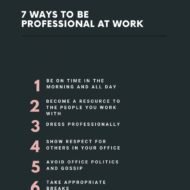
Self Appraisal-Amuse Yourself What is Self Appraisal: Self evaluation process involved in determining the level of self efficacy . By and large, corporate companies go for a one tier system of appraisal-where the supervisor generates a confidential report about his subordinates as and when required. This serves as a basis for the management to decide on increments or promotion for the respective candidate. But the question is, is this system fool proof? Definitely not. There are certain lapses that deserve mention and the management has to design suitable appraisal formats to improve or strengthen the weak areas. Purple Minimalist We Are Hiring Project Manager Poster by managementguru.net Some areas where the appraisal process can take a deviation: A biased report given by the appraiser due to various reasonsPerception of appraiser may be wrongThe appraiser sees the appraisee through his ideas and not from the management’s view point, which may lead to clash of ideas where the appraisee is made the victimFlaws in the design of the appraisal process where the top management may not come to know the real need of the appraiseeAppraisees sometimes don’t identify themselves with the organization and its objectivesAppraisees may not know what kind of behavior traits is expected of them by the management So it is imperative on the part of the management to introduce self appraisal process in its agenda, where the appraisee himself becomes the appraiser. This helps the organization to accomplish its overall objectives in a short time through a high performance system. This kind of appraisal by ‘oneself’ makes each and every employee to clearly understand where he stands against the expected scale of behavior. 7 ways to be professional at work Two-tier system as we may call it will help in the following manner: Participative approach infuses a sense of belongingness amongst the workforcePotential of the appraisee can be brought outThe real problem of the employees is knownHigher level of approach or interest to know or evaluate one’s own behavior is seen. Basically, organizations must examine their assumptions about human behavior and come to a common belief about people. If they believe people are basically “bad” management might go for hiring “watch-out-look-out” supervisors, rigid disciplinary regulations, and separate facilities such as parking, dining and rest rooms. All these clearly spell out the existence of distinction between the management and workforce. If the organization comes to a common agreement that people are basically “good”, entirely the approach will be different. Every worker becomes a manager and uniform treatment is given to both the employees and managers of higher cadre. Essentially in my opinion, no organization or work society will succeed without visionaries and uniform treatment that is consistent with basic principles and ethics. It has to be understood that work attitudes and values are ultimately a company’s best competitive advantage. Note: Larsen & Toubro – Engineering major Larsen & Toubro has developed a competency matrix which lists 73 competencies-that vary across managerial levels-to measure performance and gauge developmental needs of its employees. National Panasonic – The Japanese white-goods major has developed a performance-assessment system driven by Key Result Areas (KRAs). KRAs describe performance goals-business, functional, and behavioural ones-with defined time-frames and are decided jointly by the employee and his manager at the beginning of the...
Posted by Managementguru in Business Management, Human Resource, Labor Management, Organisational behaviour, Principles of Management, Strategy
on Mar 18th, 2014 | 0 comments
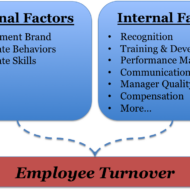
Smart Retention Strategies: Before going into the details of how to handle attrition, the first thing you must understand and realize is this. Each person working for you will have different expectations, perspectives and demands about his job, work environment and compensation respectively. Right at the time of recruiting and selecting the employee, his ideas must be taken into consideration and then it becomes the prerogative of the management whether to hire the person for that particular job. So the first step will be the right person for the right job, giving due importance to the anticipation of the employee who is going to become a member of your business family. Udemy Best Sellers:New Manager Training in Essential SkillsLeadership: Practical Leadership Skills Need for Open Conversation: In case of a small firm or company, it is easy for the manager to have a one on one conversation with each employee to settle his score of grievances then and there. Managers must have an open conversation without room for any ambiguity in the minds of his workers. The manager should try to protect the interest of the employees by representing their demands to the management at the right time. Many employees quit their positions because they have a nagging feeling at the back of their minds that their immediate boss is not the right kind of person to whom they can look up to and ask for support. In big corporates it is not easy to go for a one on one approach. A unique corporate culture that Trains the employees to have an uniform approach to all the systems of routineLed by an effective leader who controls and monitors the behavior and attitude of the workersPossesses sound management practices that make the employees come out with their suggestions freely and induce them to participateProvides satisfactory compensationIncorporates an open door policy catering to the different needs of people and also to the different levels of management, will help the managers to have a healthy relationship with the employees. Human Wants and Needs: Human wants are unlimited and when one want is satisfied, we want more of the same or yet another of a higher order. Approach your workforce to satisfy their craving either in terms of compensation or recognition which will also help to retain your workforce to a greater extent. There should be room for growth, especially for entrepreneurial minds and minds that have parallel thinking. Pic Courtesy: CuteHR Self-Motivation is the Key: Although motivation brings cheer amongst your workforce, self-motivated employees produce better results. Job satisfaction is a relative term; it differs with individuals, some like challenges and some are easily satisfied with an increase in salary quotient. A comprehensive appraisal on the personality of your workforce will give you a clear picture of the IQ (Intelligence Quotient) and EI (Emotional Intelligence) range of your employees which helps in designating employees in the appropriate slots. Such human rationing saves you a lot of time, energy and money as the employees are guaranteed satisfaction in their jobs. Contracts and Agreements: Contracts and agreements bind the employees to the firm only legally. How is that going to help you in terms of productivity? If one of your employees is going to work with discontent, he becomes a problem source spreading the same kind of feeling to others working with him. So it is also necessary for the management to spot out these problem persons either to bring them back into the groove or fire them without any further delay. Rising costs of living and unemployment ratios are really of economic concern, but still we find employees just like that quitting...
Posted by Managementguru in Human Resource, Organisational behaviour, Principles of Management
on Mar 17th, 2014 | 0 comments
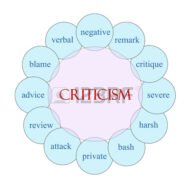
Criticism Makes You Stronger and Sharper “Flattery is telling the other person precisely what he thinks about himself.” –Dale Carnegie “Criticism may not be agreeable, but it is necessary.”-Winston Churchill Critics are always feared for their barbed tongue and piercing comments. If you look at popular figures and celebrities, they tend to give much importance to these comments as they are real tools for self improvement and personal enhancement. Criticism helps improve knowledge, helps all the parties involved and helps one to learn and react to the actions of others. It is also a no-cost source of research that promotes a team spirit as well as a certain broad-mindedness / open mindedness of the human resources of an organization. It is a non-monetary tool of motivation. It helps in achieving organizational goals and objectives, also helps in realizing hidden mistakes, and tackles various bottlenecks. No doubt, it is a mixed blessing! Despite its benefits, it renders the following costs, which are the dark side of the coin: 1. It paves the way to enmity and hostility amongst those who frame policies and those who implement them. 2. It may lead to industrial dispute. It creates an unpleasant, undisciplined atmosphere in an organization. 3. It may result in unhealthy conflicts in an organization, undermining its human resources base. 4. It could also kill the spirit of initiative. 5. A superior may feel hurt or insulted when his subordinates / peers pinpoint his short-comings. Criticism can be made more positive on the following premises: 1. Do not perceive it as something bad or a shortcoming. If you feel it is unworthy of you, turn a deaf ear to it. 2. Give some time for the dust to settle down when someone is rude in his criticism as, with time, its impact will be diluted. 3. If you are criticized unfairly defend yourself and stand by your conviction. 4. Perceive it as a source of potential help in making wise decisions. 5. Do not arm the critic by counter attacking. That blows into a vendetta at times. 6. Do not raise your voice above the voice of critic – let him go ahead and be mild and amicable with him. Criticism is like the proverbial double-edged sword, and so can easily be made more effective as a potential business management tool by selecting leading and conductive spots where critics can come together and draw their views verbally / non-verbally, publicly or anonymously. Perceive critics as a vital source to help solve and implement solutions for the problems raised. Explore the critic’s view fully and freely, providing all sorts of ways in which critics can express their deliberations without...
Posted by Managementguru in Business Management, Entrepreneurship, Human Resource, Leadership, Principles of Management
on Mar 13th, 2014 | 0 comments
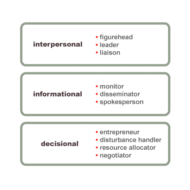
Research on Managerial Roles by Henry Mintzberg and Peter Drucker Henry Mintzberg, the canadian academic observed a few managers and analysed their behaviors and arrived at some conclusions which are listed in the table below. He also identified and attributed ten managerial roles of significance in correlation with the managerial functions. S.NoManagement Functions% of time spent1.Relating to external environment1.82.Planning and setting Objectives19.53.Decision-making6.04.Organising15.05.Leadership and inter-personal role28.46.Communication12.67.Control12.78.Staffing4.1 This table very clearly explains the role of a manager as a leader and the extent of influence he exerts on his sub-ordinates. Proper planning and goal-setting are the key contributors for the successful functioning of a firm. LEADER VS. MANAGER Coming to the managerial roles they can be classified as, 1. Interpersonal roles 2. Informational roles 3. Decisional roles Inter-Personal Roles: Figurehead role– The function is more of a ceremonial nature, like attending the family functions of employees, greeting visitors and a manager performs the symbolic duties of a head of the organization.Leader– He has to plan the HR requirements and motivates the staff to perform well. “Managers are people who do things right; leaders are people who do the right thing.” Remember a manager has to be a leader whereas it is not so in the case of a leader.Liaison– The manager acts as a link between the organization and the external environment to build image and rapport. Informational Roles: Monitor– The manager has to update himself with the current scenario in order to utilize the information for organizing and prompt decision-making.Disseminator– The manager has to communicate and distribute information to his subordinates to effectively accomplish the enterprise objectives.Spokesperson– Efficiently has to communicate the company’s policies to prospective clients and others. Decisional Roles: Entrepreneur– He has to be innovative by adapting to the changes in the environment. He has to be adventurous, persistent and strategic during tough times.Disturbance handler– He has to find appropriate solutions to problemsResource allocator– He has to apportion and allocate resources properly besides delegating authority to the work forceNegotiator– He has to negotiate resources outside and conflicts inside the organization. MANAGERIAL DIMENSIONS Managing: Science or Art? One perspective is Managing, like all other disciplines- whether medicine, music composing or even cricket is an art. It is “know-how.” Still managers can use the organized knowledge about management to perform better. So let us put it this way, Managing as practice is an art; the organized knowledge underlying the practice may be referred to as a science. Let them be complementary to each other and be present in peaceful co-existence. Drucker “ON MANAGERIAL FUNCTIONS ” – A manager has to look after The specific purpose and mission of a firmIncrease productivity by making the employees more productiveConsiderate about social impacts and social responsibilities In his view, the areas a manager has to focus and concentrate are 1. Market standing 2. Innovation 3. Productivity 4. Financial and Physical resources 5. Profitability 6. Manager performance and development 7. Worker performance and attitude 8. Public responsibility He says that business has only two functions- marketing and innovation. While others were concentrating on products and commodities, he concentrated on people and their performance. His “management by objectives- MBO ” became a very popular concept though it faced criticism. MBO according to Drucker is a philosophy that rests on a concept of human action, behaviour and motivation. It sets personal goals (both shortterm and longterm) to be achieved by each individual working for the organization and coverts them into challenges to be accomplished, thus motivating the individuals. The Effective Manager The effective manager is a situational manager who evaluates each approach in the light of circumstances and selects the one that most effectively and efficiently achieve individual...