Posted by Managementguru in Business Ethics, Organisational behaviour, Principles of Management
on Feb 24th, 2014 | 0 comments

Business Ethics Business ethics can be defined as the principles and standards that establish acceptable conduct in business organizations. The acceptability of behaviour in business is determined by customers, competitors, government regulators, interest groups, and the public, as well as each individual’s personal moral principles and values. Many consumers and social advocates reckon that businesses should not only make a profit but also consider the social implications of their activities. We define social responsibility as a business’s obligation to maximize its positive impact and minimize its negative impact on society. Although many people use the terms social responsibility and ethics interchangeably, they do not mean the same thing. Business ethics relates to an individual’s or a work group’s decisions that society evaluates as right or wrong, whereas social responsibility is a broader concept that concerns the impact of the entire business’s activities on society. There are good business reasons for a strong commitment to ethical values: 1. Ethical companies have been shown to be more profitable. 2. Making ethical choices results in lower stress for corporate managers and other employees. 3. Our reputation, good or bad, endures. 4. Ethical behaviour enhances leadership. 5. The alternative to voluntary ethical behaviour is demanding and costly regulation. Points to Ponder relating to behavioral ethics: 1. What conflicts of interest have you personally experienced in personal or professional roles? 2. If you perceive a potential conflict for yourself, what are some ways you might ensure that this conflict doesn’t lead to unethical behavior for you and others? 3. When have others’ conflicts of interest impacted how you or those you know were treated? 4. What types of policies can or do organizations implement to try to reduce conflicts of interest or their costs? 5. Why do you believe conflicts of interest are so pervasive in society? Why don’t we take more steps to avoid them? 6. Why is it so hard for individuals to recognize their own conflicts of interest, and how is this impacted by behavioral biases? Conflict of Interest: Conflict of interest arises when there is a clash between responsibility and reward. Say, if a doctor decides to be more business-like, if a judge decides to favor one party, if a ruling party favors a decision not good for the masses, what will happen? A conflict of interest exists when a person must choose whether to advance his or her own personal interests or those of others. Wal-Mart Stores, Inc., may have the toughest policy against conflict of interest in the retail industry. Sam Walton, the late founder of Wal-Mart, disallowed company buyers from accepting so much as a cup of coffee from suppliers. The Wal-Mart policy is black and white and leaves no room for interpretation, and it is probably a factor in helping Wal-Mart reduce...

Posted by Managementguru in Change management, Organisational behaviour
on Feb 23rd, 2014 | 0 comments
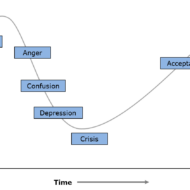
Resistance to change should be considered as a good sign and can be compared to fever while there is a bodily infection. It creates a platform for the firm to find out the causes for resistance and hence the solution. Causes for Resistance to Change Individual Resistance A. Economic factors: When pay is tied up with productivity, resistance arises. B. Habit: It is the habit of humans to resist anything new. C. Fear of the unknown: Freshers always have a feeling of insecurity and uncertainty when they join an organization. D. Change affects emotions and sentiments: People are disturbed both emotionally and sentimentally when there is a change. E. Lack of clarification: People interpret change in different ways; so there is a need for the organization to clarify as to the nature of the change and its implied consequences or implications. F. For the sake of opposing: Illogical and weird opinions are given by the employees just for the sake of opposing. Resistance to change Organizational Resistance A. Built-in-Mechanism: People working in groups experience shock when there is a structural change introduced in the system as they are tuned to a set of rules and procedures. B. Group norms: This also acts as a strong source of resistance acting as a constraint C. Threat to expertise: Technological innovations pose new threats everyday to the non-technical persons D. Threat to established power relationship: If the powers are re-assigned amongst the managerial cadre there arises unrest E. Threat to established resource allocation: Budget reallocations are resisted by departments that are not favored How to Overcome Resistance to Change? Education and Communication: The logic of change must be conveyed to the employees in a convincing manner and full facts must be communicated without an iota of doubt. Participation: It becomes difficult for individuals or groups to resist change when they are made to act as change agents Facilitation and Support: Change agents can offer counseling, training etc to pacify the employees Use of Group Force: Groups can exert more pressure on attitudes, values and behavior and hence, if the group cohesiveness is strong, the change is easier to achieve. Leadership for Change: A strong leader-manager can create a climate for psychology support from subordinates Negotiation: The key persons or individuals whom the management think are potential change agents can be rewarded and brought to the negotiating table Manipulation: Twisting information, creation of false rumors, withholding undesirable information are some of the tactics of manipulation that decrease the intensity of resistance to change. Coercion: Application of force that includes threats of transfers, delay in promotions, negative performance evaluation can decrease the resistance and also the credibility. Manipulation and coercion must be considered as last options to reduce the pressure as generally people will welcome any change that is positive and beneficial to the organization in the long run. It is the responsibility of the management to project the change in a gradual and convincing manner to the...