Posted by Managementguru in Business Management, Change management, Decision Making, Entrepreneurship, Human Resource, Leadership
on Mar 30th, 2014 | 0 comments

Power and Balance in Corporate Governance Power has the ability to disorient a person’s behavior and attitude. When properly used it leads to height of efficiency, when misused it calls for calamity and disorientation in the entire business firm. It is nothing but the authority that comes with your job which has to be utilized for constructive purpose and at the same time to ascertain that things are “going in the right direction.” Precise use of power leads to a congenial atmosphere in your business arena”. Otherwise in course of time you might have to tackle warfare with your subordinates and the “undercurrent of animosity” might ruin your business success. How it affects Inter-Personal Relationship: When we talk about POWER it usually fits well into the top level management cadre, as managers and senior managers are assigned with huge powers in order to lead the firm in times of crisis as well as maintain the consistency of the nature of the firm. So when there is abuse of power consciously or unconsciously, people create a space between themselves and that particular person who misuses the power. So the result would be a lack of interpersonal relationship between the manager and the employees. Managers generally acquire and use influence that has its impact not only on the behavior of the individuals, but also on the organizational effectiveness as a whole which in turn affects productivity. Use Power as a Constructive Tool: In fact, authoritative behavior is often misunderstood by most of the managers in the business setup; there is a need for the managers to skillfully use their power in order to extract work from their teams as well as to maintain a balance between the extent to which authority must be used and the tolerance level of the employees’ (mind set). So it is more of a psychology which involves much critical analysis on the part of the manager to understand the constructive aspects of his authority and how employees at a lower level will always look up to him for support and guidance and not indifference. Power covers and affects the following important aspects, Discretion Crisis management Dependence of employees Responsibility Leadership Governance Interpersonal relationship Change management Environmental influences Reward systems Collaborative management Success of the firm and so on. In order to maintain his own integrity as well as the organisations’ the manager must be able to appreciate the relevance of power in management just by not looking into the literature but act in accordance with the situation. A detailed analysis of power dynamics makes the manager more effective in dealing with behavior inconsistencies in the organization. Try to be more open in your communication and make your employees feel that “You are always there” to support and guide them. This in turn will make your “Boss to have a second look at you” for a promotional pay. This discussion is from the manager’s perspective and there is more to be discussed and considered from an employee’s...

Posted by Managementguru in Business Management, Entrepreneurship, Human Resource, Organisational behaviour, Principles of Management, Training & Development
on Mar 30th, 2014 | 0 comments

What are Values and Beliefs in an Organization? Organizational values are the guiding principles that define ethical behavior, decision-making, and corporate culture. In 2025, with AI integration, sustainability goals, and hybrid work models influencing businesses, values must evolve while staying authentic. Infosys Narayana Murthy on Value System “Our team was unique in its commitment to a strong value system. We believed in putting the interest of the company ahead of our own. We upheld ethical business practices and legal integrity. A robust value system is what distinguishes long-term players from others.” The emergence of ESG (Environmental, Social, and Governance) factors has reinforced the importance of ethical leadership. Core Values of a Future-Ready Organization Organizations in 2025 are actively reshaping core values to suit the dynamic business environment. These values guide employee behavior and corporate strategies: Customer-Centricity – Personalization and data-driven customer experience Employee Well-being – Work-life balance in remote and hybrid settings Competitiveness & Agility – Rapid adaptation to AI & automation Diversity & Inclusion – Creating equitable workplaces Innovation – Fostering technological advancements Sustainability – Environmentally responsible business practices Growth Mindset – Continuous learning and skill development Ethical Governance – Transparent and fair leadership Data Security & Privacy – Compliance with digital regulations Team Collaboration – Strong networks despite digital transformation Beyond Definition: How to Put Values into Action A value-driven company does not just define principles—it integrates them into daily operations, employee training, and leadership policies. Gamification of corporate learning, AI-assisted HR frameworks, and transparent communication drive successful implementation. Leading by Example: Imitation as a Behavioral Catalyst Leadership sets the tone for company culture. Employees subconsciously emulate the behaviors of their leaders, much like students learning from teachers. In 2025, AI-driven mentorship programs enable leaders to inspire teams remotely. Interactive training modules reinforce value-based decision-making. Imitation remains a cornerstone in shaping the workforce, but with enhanced digital engagement. Coercion is NOT the Right Approach: Ingraining Values from Day One Rather than enforcing values through rigid policies, organizations must instill them naturally. Values should be embedded in hiring strategies – Recruit for cultural alignment. Leadership training must focus on emotional intelligence – Influence without coercion. AI-driven behavioral analytics help detect gaps in value adherence early. With AI-enhanced work environments, molding employees to value-driven approaches becomes seamless. Influencing Employees the Right Way: The Role of Every Individual Each role in an organization contributes to reinforcing core values and ensuring long-term success: Clerical Staff – Maintain efficiency and ethical compliance. Supervisors – Organize, control, and enforce value alignment in teams. Managers – Define success, overcome obstacles, and inspire strategic thinking. Senior Leaders – Keep the organization focused on sustainable profitability. Executives – Drive innovation while navigating complexities with integrity. With AI tools and data-driven leadership, maintaining value alignment is easier than ever. Performance of Value-Oriented Organizations in 2025 Companies that prioritize values consistently outperform competitors due to trust, strong employee engagement, and sustainable innovation. Reliance Industries Limited exemplifies value-driven leadership with customer satisfaction at its core. Global firms integrate ESG and AI ethics into corporate strategies, reinforcing long-term credibility. To scale new heights in business, organizations need: ✅ Strong-willed leadership ✅ Adaptive strategies ✅ Sustainability-driven policies ✅ Digital transformation readiness ✅ Passion for innovation Maintaining integrity comes at a price, but organizations with strong values reap exponential rewards in brand reputation, employee loyalty, and customer...
Posted by Managementguru in Business Management, Change management, Human Resource, Organisational behaviour, Principles of Management, Project Management
on Mar 30th, 2014 | 0 comments
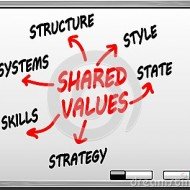
Effective people are preferred to rather than efficient people as the former does the right thing and the latter does things right. Redesigning your workplace not only refers to the infrastructure but also the internal factors that might affect the productivity of your firm. Big corporate firms generally face challenges in the form of Lack of co-operation between subunitsIncreasing complaints from the customersRising Operating costsDip in the moraleMajor changes in technology All these signs are indications of a not so enterprising organizational climate. And it calls for quick decision making regarding introducing some changes that bring some positive development in terms of improved efficiency and increase in productivity. Redesigning Workplace in Response to Exogenous Factors Growth of Organizations The challenges mentioned above may make an organization’s existing structure, management practice or its culture obsolete for the new situation. Growth of an organization should be a result of collaborative effort of all the units of an organization and it is objective and not subjective. An organization is comprised of different elements which interact in deciding the organizational effectiveness. The task or goal, technology, structure, people and the internal and external environment of the firm; all these coexist and hold the firm together. Be it a school, a hospital, a union, a club or a business enterprise the interactive nature of these elements make the process of managing very difficult. Medical tourism and business travel are becoming more popular in Asian countries as it increases the scope of collaboration of industries that can coexist to enjoy a win-win situation. Who is an Effective Manager ? An effective manager anticipates these challenges and proactively initializes a planned change. He strategically prepares the organization to be subject to planned change by manipulating the structure, technology and behavior. Understanding the dimensions of change helps him to manage change better as people are always resistant to change. Modern enterprises right from the start have to install and implement “systems” that are technologically most modern and hire suitable people who are techno-savvy; Because technology rules the world and the development of new software programmes and hardware components feed on themselves every day. Developing an Organization as a Whole Behavior of people is unpredictable but controllable. Individually oriented training and development programmes does not prove much to the benefit of the organization as it creates apprehensions in the minds of the individual that are related to the culture and attitude of his superior and subordinates. The idea of developing the organization as a whole through team building is a better perspective as it renews the enthusiasm of people working for you and as a team they feel more cohesive and adhered. Synergy plays its role in improving the interpersonal relationship amongst the team members. Firms are becoming more modern in their outlook. For instance, a showroom whose purpose is to showcase your products also provides entertainment by its aesthetic value. Only if the customer is impressed by the artistic way of your exhibit, will he enter your showroom. Change is inevitable and it improves the health of an organization. The focus should be on “total system change” and the orientation is towards achieving desired results as a consequence of planned activities. Flat Organizational Structure You would have come across the latest buzz word “flat organizational structure”. This is designed in order to bridge the gap between front line employees and the executive level. If there is only few levels of management, the process of communication is more effective, the art of delegation becomes mandatory and need for participation in the decision making process involves all the employees which in turn reduces bureaucracy. There is no set pattern...
Posted by Managementguru in Financial Accounting, Management Accounting, Principles of Management
on Mar 27th, 2014 | 0 comments
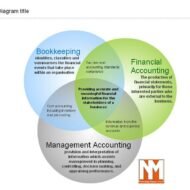
Management Vs. Financial Accounting Management Accounting : The process of preparing management reports and accounts that provides accurate and timely financial and statistical information to the management Financial Accounting : The purpose of accounting is to provide the information that is needed for sound economic decision making concerned with classifying, measuring and recording the transactions of a business. What is Management Accounting: Management accounting is the updated version of what you call financial accounting and the most circulated term in corporate business arena. Management involves planning, organizing, staffing, leading and controlling the resources available in an organization, namely the physical and human resources. Much importance is given to personnel management as they are the priceless assets of any organisation.But it is equally important for a firm to record all its business transactions for future reference and tax audits. Thus the necessity of accounting comes into the fray. Financial Statements Made Easy Functional Difference: Well, accounting means something to do with finance. So, what is the big difference, if it is financial or management accounting? One difference is in the title, and the other in their function. The rationale behind financial accounting is statutory, done for the benefit of shareholders, customers, government regulatory agencies, other external agencies, potential investors and the like. It records all business transactions that are purely monetary in nature and no further analysis is done. Essential for Management Planning: Management accounting is voluntary and reports are prepared to meet the internal needs of management. We talked about planning, for which interpretation and analysis of such quantitative data and other inputs becomes necessary to plan for future needs of management. The main functions being attention direction and problem solving, management accounting is primarily concerned with providing information relating to the various aspects of a business, like cost or profit associated with some portions of business operations. It employs techniques such as standard costing, budgeting, marginal costing, break- even analysis and so on., Inputs also stem from industry data, competitor data, published reports by public and private agencies and research studies findings, thus widening its scope for improvement in business operations. Financial Accounting: Financial accounting is restricted to deal only with “generally accepted accounting principles” and any deviation is considered to be errors for correction. Though it provides valid and authentic information, it lacks timeliness. The former restricts the accountant to a mere book-keeper while the latter transcends the role of the accountant to that of total business information technologist. Here he becomes an evaluator of different functional areas like marketing, production, purchase and personnel. As modern business is huge in size, complex, diversified and decentralized in terms of operations, financial accounting just does not fill the bill, as information is required as when an event happens at various hierarchical levels of an organisation. This infographic from Goodaccountants.com details the industries that employ the most accountants and auditors, and the results are very interesting! Management accounting is inter disciplinary in character and derives inspiration from organizational theory, economics, behavioral sciences, statistics and management. Although the paraphernalia required for management reporting is complex and expensive, it is worth the try, as it tries to compare and contrast the actuals with the standards and bring out variances if any. This is quite useful in determining the cost-effectiveness of a particular project or to be prepared for suitable action. Management accounting is nothing but a management information system where the managers have to be techno-savvy in order to handle the total information resource and project it suitably to the management to take timely actions for the increase in growth, profit and sustainability of the...
Posted by Managementguru in Accounting, Financial Accounting, Financial Management, Principles of Management
on Mar 27th, 2014 | 0 comments
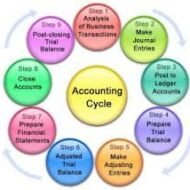
An Analysis to Understand the Art of Accounting Objectives of an Accountant: The pure objective of an accountant would be to record all business transactions that are monetary in nature, in order to ascertain if the company has earned profit or suffered loss during a financial year. The financial position of the company as on a particular date can thus be understood from the accounting journals and ledgers. We are talking about the conventional purpose of accounting. But with the lapse of time, more and more is being expected from accounting, in that, it has to meet the demands and requirements of tax authorities for the purpose of income tax and sales tax returns, government regulations, investors, owners and the management. Thus it can be aptly defined as the art of recording, classifying and summarizing events in a significant manner, that involve money transactions and/ or events that are of financial character, for interpretation. Systematic records for future reference: Book keeping is an accounting practice that tells us how to keep a record of financial transactions. A firm deals with its customers and suppliers, where numerous business transactions take place every day. It is not possible for us to remember every transaction, which we might need it for our reference at a future date. Especially, if it happens to be a credit sale, definitely the necessity of systematic book keeping arises. The owner would like to know, what amount is due from whom, from time to time. To know the financial position of the firm: Every merchant is in business to earn profits. So systematic recording of factual and financial information will facilitate the owner to understand where he stands financially at the end of a financial year, what is his net profit and to pull the ropes tight if credit margin is wide. Further more, he can also understand the nature of his business growth by comparing the accounting records of two consecutive years. Taxation purposes: Some people evade tax, but no one can avoid tax. The main source of revenue generation for government is tax payments from business merchants and corporate companies. You need to pay a percentage as tax, in accordance with profit arising from sales. The accounting records that you maintain contain facts that are taken into account by the taxation authorities as a basis for assessment. https://amzn.to/2sl5aL7 Good evidence in the court of law: To prove your genuinity, in case of some disputes between yourself and the customer or supplier, your records and vouchers, if authentic and valid, are going to speak for you in the court of law as solid evidence. Accounting also answers some of these questions: How well the different departments of business have performed all along? What is the most profitable product line? What are the products whose production has to be increase and what is to be stopped in order to avoid losses? Is the cost of production reasonable or excessive? Is there a need to revise policy decisions to improve the profitability? What will be the future plans of business in the wake of existing results presented to the management? Overall, is the firm proceeding towards the right direction in terms of productivity, profitability and growth? Accounting is not only about recording and classifying, the interesting features being analysis and interpretation, which are the key factors for the development of the organization as a whole. Note: The Comptroller and Auditor General of India (CAG),is the head of the Supreme Audit Institution of India (SAI) CAG is the sole auditor of the accounts of the Central (Union) Government and the State Governments. CAG is also responsible for the audit...