Posted by Managementguru in Business Management, Change management, Principles of Management, Project Management, Technology
on Mar 25th, 2014 | 0 comments

Perhaps the most striking influence of technology is found on society. Practically every area of social life and the life of every individual have been, in some sense or the other, changed by the development in technology. AI in Marketing Artificial intelligence (AI) is reshaping how businesses engage with marketing. By analyzing data, personalizing content, and automating tasks, AI is truly revolutionizing the marketing landscape. Personalization One of the key benefits of AI in marketing is its capability to tailor content for each individual customer. Leveraging AI-driven algorithms, companies can craft personalized experiences that truly connect with their audience. Predictive Analytics AI can assist businesses in making more precise predictions regarding consumer behavior. By examining data from previous interactions and purchases, AI can uncover patterns and trends, enabling companies to make better-informed decisions. Visual Search AI-powered visual search is changing the way consumers search for products online. By analyzing an image, AI can identify the product and show similar items for purchase. This makes the online shopping experience more intuitive and seamless. Technology reaches people through business Preferences of people are constantly changing, and this has pushed the business firms to the point, where innovation has become the need of the hour. The new discoveries would remain idle as mere ideas if there were no laboratories to transform the ideas into creations. Technology reaching people through business is one part of the theory. The economic prosperity of a nation depends on technology. High expectations of consumers People are used to technological innovations and breakthroughs and they want variety in every kind of purchase they make. New varieties of products, safer and more comfortable, free from pollution, are to be produced and supplied to affluent sections. This calls for a massive investment in research and development. In countries like Japan, much importance is attached to product design, quality, sophistication, delivery schedules and prices. High expectations need not be considered as problems by business persons but treated as an opportunity to satisfy their customer group. System complexity Technology has resulted in complexity. Modern machines work faster and better, no doubt. However, if there is a technical problem, the presence of an expert is needed to repair the machinery. Again, investment in machinery adds to the cost of capital and hence the merchandise has to be purchased form reliable sources. Social change The change in the technological process undoubtedly has its effect on the society. First, there is a change in the social life, with mobile populations drifting about in search of new centers of employment. If it happens to be an agricultural economy, the result of such a drift would prove disastrous, with society being socially uprooted. Sometimes such a drift may result in new geographical distribution of population. Technological change also brings considerable changes in the family, lifestyle and attitude. The way we cook, communicate, use media and work are all affected by technology. Technological Phases and the Social Systems they Create There are five stages of technological development. Each stage leaves a distinct influence on work and on social system. Sequential progress is made from the lowest level to the highest level, in such a way that these five stages roughly represent the progress of civilization throughout history. Although one phase of technology tends to dominate a nation’s activities at a particular time, other phases will be often practiced at the same time. Technology means change and more change. It forces changes on people whether they are prepared for it or not. In modern history, it has created what is called future shock, which means that change comes so fast and furious that it approaches the limits of human...

Posted by Managementguru in Business Management, Decision Making, Principles of Management, Strategy
on Mar 24th, 2014 | 0 comments
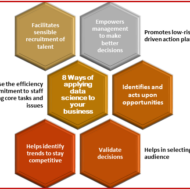
Growth Strategies In Business What are Growth Strategies? The means by which an organization plans to achieve its objective to grow in volume and turnover. The dynamic business environment calls for periodical changes in the business definitions, in terms of customer groups, customer functions and alternative technologies to broaden their scope for expansion. Growth can never be achieved by a business enterprise, if there is no proper planning for diversification of its business activities across a broad spectrum. Expansion strategies are followed when an organization aims at high growth, by improving its overall performance. A Small Note on Data Science and Analytics Data analytics help companies improve operational efficiency, drive new revenue and gain competitive advantages. To leverage this technology, companies need to understand the core of their data and determine the outputs that they are looking for. In fact, data-driven companies that utilize Business Analytics achieve a competitive advantage. The companies can improve their strategies by keeping in mind the customer focus. Big data analytics efficiently helps operations to become more effective. Expansion Strategy: Expansion strategies have a profound impact on the internal configuration as well as internal functioning of an organization. The business firms bear the risk of moving in an entirely new direction, where there is an equal chance for failure as that of success. If only a manufacturer plans to diversify or expand in a field that complements his present business activity, does it make any sense. What is the fun in venturing into a business activity about which you have no knowledge or scope? Expansion through concentration: This involves investment of resources in a product line for an identified market with the help of proven technology. A firm may attempt to intensify its focus on existing markets through market penetration strategies. Or new users may be targeted for existing products or alternatively it may introduce new products in existing markets by concentrating on product development. Concentration policy relies on the principle of “A known devil is far better than an unknown angel.” It is a very difficult task for firms to capture new markets or to gain acceptance for new products in existing markets. Expansion through integration: A company attempts to widen the scope of its business activities in such a manner that it results in serving the same set of customers. The alternative technology dimension of the business definition undergoes a radical change. Firms try to move up or down in the value chain to meet the demands of the customers by integrating adjacent activities. Expansion through co-operation: It may include mergers, takeovers, joint ventures and strategic alliances. Two firms try to combine their resources, capabilities and core competencies to pursue mutual interests to develop, manufacture or distribute goods and services. Expansion through internationalization: International strategies are formulated in the wake of globalization where most of the developing countries have liberalized their economic policies facilitating foreign direct investments, generating foreign exchange. Many multinational and transnational companies are setting up their operations in developing countries to factorise the economies of scale and to enjoy the advantages of cheap labor and availability of resources. Stability Strategy: Many firms go for stability strategies that are devoid of any risks. They are quite contented with the modest profit gained from the present business activity and try to maintain the same level of performance, until and unless there is a pressure from the market in the form of competition. Only few firms have that adventurous attitude to take risks in order to have a sustainable competitive...
Posted by Managementguru in Business Management, Decision Making, Organisational behaviour, Principles of Management, Strategy
on Mar 24th, 2014 | 0 comments
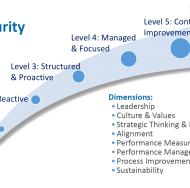
STRATEGIC PLANNING Strategic planning is the primary step in the process of strategic management [Strategic management is a comprehensive topic that covers almost all the functional aspects of the organization] which can be outlined from at least two perspectives: First, strategy is the “broad programme for defining and achieving the objectives of an organization and implementing its mission”. Secondly, “It is the pattern of the organization’s response to the external environment over a period of time”. A strategy that takes a broad and typically long range focus is called strategic planning. MBA Application Strategies for Top Business Schools Strategic planning is the process that classifies the long range goals of the organization and opts for the precise means (strategies and polices) for achieving these goals, allocates resources, and develops long range plans to reach the destination. Watch this Video to Understand the Overview of Strategic Planning Process Time-Horizon: Strategic planning takes into account the extended time horizon. There may not be any immediate impact out of strategic planning, but the consequences in the long-run prove to be gradual and significant as well. It provides with the necessary action plans to make a difference in vital areas concerning development. You can always associate innovativeness with strategy since it explores new paradigms and tries to enhance the impact. When the size of organizations expands, they are broken down into strategic business units (SBU’S) for the purpose of functional excellence. These units are expected to operate as if they were relatively independent businesses. WHY STRATEGIC LEADERSHIP IS IMPORTANT A Tailor Made Approach: A tailor made approach is essential when it comes to strategy development the systematic analysis of the factors associated with customers and competitors (the external environment) helps the organization to meet the challenges of modern society. More and more organizations are focusing on formal approaches and concepts for planning their long range process. Specifically these challenges are a result of increasing rate of change, the complexity of manager’s jobs, the increasing importance of fitting the organization into external environment, and the increasing lag between the preparation of plans and their implementation in future. Resource Allocation: Strategic planning is an organization’s process of defining its strategy or course, and making decisions on resource allocations to pursue this strategy. Managers must be adequately geared up for strategic planning. The goals of the organization must be made plain and not unclear. Each business unit should be categorized based on its performance level to decide on the resource share to be allocated. You need to infuse cash flow into ineffectual units and divest funds from dying units into other profitable ones. The ultimate aim is to build up star performers that will be the perennial source of income or revenue generation. There should be a strong linkage between planning and control. The assessment of strategic plans of the business units must be made periodically and effectively. TOP FIVE REASONS WHY STRATEGIC PLANS FAIL SWOT Analysis: SWOT analysis is a strategic planning technique used to evaluate the Strengths, Weaknesses/Limitations, Opportunities, and Threats. Planning is the primary step for control as it provides several standards and benchmarks of control. Planning extracts commitment. Some times planning highlights the objectives only and the planning premises may not be fully reliable. Threats are to be considered as challenges and must be converted into opportunities. Two heads are better than one is the philosophy of brain storming where a group of people with knowledge and expertise assemble to lay out clear plans that will steer the organization smoothly even in times of rough...
Posted by Managementguru in Business Management, Human Resource, Organisational behaviour, Principles of Management, Training & Development
on Mar 22nd, 2014 | 0 comments
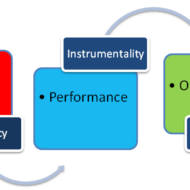
How to create an effective and Sustainable Model for Training and Development? The term “change” is synonymous with competitiveness in modern world and thus corporate firms are in a position to evolve unique, sustainable and strategic training model for employees that will facilitate the following: On one hand the training process motivates the suitable employees to perform well and makes them perceive their role properly in order to accomplish the enterprise objectives. On the other hand the organisation keeps itself abreast by constantly updating and understanding the training needs through Assessment of the external environment and Expectations of the employees in terms of rewards whether intrinsic or extrinsic. Porter and Lawler Model: The Expectancy Motivation Model of Porter and Lawler serves as an inspiration for effective training. The stress is on The value placed on performance outcome by the individual. The degree to which the individual believes that his efforts will lead to attainment of these rewards. Psychological aspect of this model: Almost all individuals are motivated by money ( by the way, Who doesn’t want money!). But money alone does not serve the purpose of motivation. Job satisfaction is a relative term in that different people find different things or elements motivating them in their work environment leading to job satisfaction. It might be Challenge Good inter personal relationship Pay Perks Culture Excellent leader Pressure Stress and the like… Assessment of training need: The training needs must be assessed by the respective organisations considering the following aspects: To transform the individual from the capacity of learner to executor Instil in him confidence to do the job well Relate his job to rewards so that he will try to excel Give your employees scope for career advancement Incorporate technical and technological innovations as part of your training process Physical, emotional and social elements in the internal as well as the external environment must be taken into consideration while training the workforce. Physical– relates to the physical fitness needed to perform the technical skills Psychological– relates to keeping the morale of the employees high at all points and maintaining an amiable work atmosphere Social– relates to the friendly relationship that should exist between the trainer and the trainees and among the trainees. Usefulness of the model: This model lends its support to the training and development process through three steps or stages. Diagnosis stage- Need analysis Formulation stage- Programme planning Evaluation Diagnosis stage: The interplay of ability and role perception Training brings out EFFICIENT as well as DEFICIENT performers. That is one good thing and also making the employee understand the role he is about to play as part of the organisation. Training through learning is one aspect which imparts knowledge and training is considered to be effective if one’s behaviour is modified as per the expectations and demands of the job. Role perception can be misunderstood by some individuals when they might try to exercise undue authority or overlook their duties and responsibilities. Confinement of authority Superior-Subordinate appraisal procedures Clear HR policy formulations are needed to avoid confusion and chaos in role playing. Formulation stage: The effected change through learning is expected to be retained by the employees throughout the career span in the organisation followed by constant grooming. The stress is on the value of the activity to be learnt Giving feedback on the progress of employees towards final training objectives Relate the learning activity to increasing, meaningful materials already studied outside the training programme. Evaluation stage: Training evaluation is particularly necessary when the organisation wants to encourage the competitive spirit amongst the trainers and evaluation is considered as a challenge by itself. If the training provided eliminates obstacles...
Posted by Managementguru in Business Management, Entrepreneurship, Human Resource, Organisational behaviour, Principles of Management, Startups
on Mar 22nd, 2014 | 0 comments
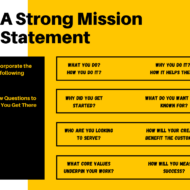
Why mission statements are important? Before going into that, let me first briefly tell you what a mission statement is. Contact Us for Promotions & Partnerships Firms in corporate business arena perform different business activities to earn profit as well as to retain their market share and stand. How does the general public know what they are up to? Is it really necessary for the firms to expose the nature of their activities to outsiders! Well, by explicitly defining the mission of your company, you stand a chance to gain identity, character and image and there is nothing to lose. A mission statement defines the basic reason for the existence of the organization and it clearly reflects your corporate philosophy. The management’s actions also might reflect their mission, in which case the mission statement is not explicitly defined and sometimes it could be deduced from the press statements released by the CEO. Whether defined or not defined, each and every organization has a definite mission that is clearly communicated to all the employees for action. When defined, it also serves as a means to highlight the firm’s social responsibility. Following are the Distinct Characteristics that a Mission Statement Should Possess It should be precise: The mission should neither be narrow as to restrict the activities of an organization nor too broad to make the situation pointless. It should be crystal clear: It should be clear enough to lead to action and not high-sounding and adhere to cheap publicity. It should be feasible: The actions mentioned must be well within the reach of the company and should not be impossible. It should be realistic and achievable. As, credibility is involved, firms must exercise caution when they release their mission statements. Feasibility mainly depends on the resources available that facilitate the firm to work towards the mission. It should be motivating: Motivating both for the employees and the society. Employees must identify themselves with the organization and feel proud that it is worth working for the firm and customers should take pride in associating themselves with that firm. It should be distinctive: It should project your distinctive competence to sustain competitive advantage. Say, if you own a garment shop, you should talk about the range of clothes that you can offer for different sections of the society and you can name yours a “Family Shoppe”, so that people will understand the nature of your business. It should indicate major components of strategy: If the aim of your company is stability, growth, diversification or concentration, all those can be included in your mission statement. It should also indicate how objectives are to be accomplished: The time period, production target, product specialization, product or process differentiation, everything can find their place in mission statements for the benefit of the society and self. Strategic management involves intelligent and timely decision making and mission statements are nothing but components of strategic planning that help the managers to lead the firm with some distinct “ideology” in the form of mission statements. Some Interesting Mission Statements Google’s mission is to organize the world’s information and make it universally accessible and useful. Nike-“Crush Reebok.” Wal-Mart-“To give ordinary folk the chance to buy the same thing as rich people.” Walt Disney-“To make people...