Posted by Managementguru in Business Management, Marketing, Principles of Management
on Mar 4th, 2014 | 0 comments
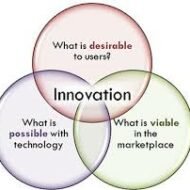
The Realm of Product Innovation A manufacturer or a service provider, who aspires to be successful in a business market, must indulge himself in research, pertaining to consumer preference as well as the various stages of a product life cycle. This will give him a better chance to make his future decisions concerning the product and also the wisdom to evolve strategies accordingly. Developing a product and introducing it into the market demands certain amount of forethought and prudence. The first step is to study the market, to understand consumer preference as well as to gauge whether your product will be appealing to the customers existing in that market. The prerequisite for this would be market segmentation, that is to statistically estimate the demographic quotient (people belonging to different age groups and ethnic societies) of the sample population and decide on the customers whom you want to target. A product’s success depends mainly on two things: 1) Innovation-lateral thinking, by which you let loose of all your unorthodox methods and stick onto some novel ideas of marketing. 2) Customer-oriented marketing rather than product oriented. This customer oriented concept is advocated by modern marketing consultants and it has proven to be a fantastic proposition. More than the actual product, people like to know more about the values that they obtain out of that product. The secret behind success will be to hit the right note, by propagating more about the value added services that go with the product. Expectations Created by the Product When a product is introduced in a market, say, automobiles for example, since every tom, dick and harry is fond of cars and bikes and they talk a lot about it. It is looked upon by prospective customers with great expectations, which might be due to the great hype created by the manufacturer through advertisements in electronic media, papers and magazines. The product as it hits the market will instantaneously make it big, if it has the right mix of intangible and augmented benefits that make customers happy and they feel that they have bought something worth the money paid for. A luxury car is well received by the market, irrespective of the price tag that is stuck to it, just because of the value added benefits such as, delicacy, great speed, high-performance, safety, insurance and warranty. Product Pre-Launch Analysis Before launching a product, industry analysis is a must, as various similar products might exist and it comes to the question of how different and appealing your product is, for market acceptance. Even minor things can make a big difference, say, for instance, if you are able to float the cheapest car, in terms of price but with great fuel efficiency, the results are obvious. The strategy would be to introduce innovations not only in your product but also in your thinking. Best products emerge as a result of tuning in your wavelength with that of the consumers’. Product Life Cycle A product gets introduced, grows, matures, stabilises and slowly withers off, just like a human being. No man is eternal and so is a product. You may argue that some products are in the limelight for more than their share of lifetime. If you keenly observe, that would have been the result of makeover changes to the product in lieu of the change in people’s liking and analysis of market trend. Some products have a second chance to prove their mettle. They go into hibernation for a while and then re-enter when market conditions seems to be favorable. The perspective from which you look at the life cycle of a product may cast a different idea...

Posted by Managementguru in Business Management, Marketing, Principles of Management, Strategy
on Mar 4th, 2014 | 0 comments
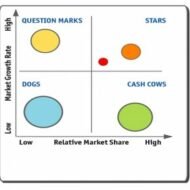
Product Modification – Solid Strategy to Capture Untouched Market Segments There is a pressing need for business firms to bring about changes in the physical attributes of their existing products periodically, to retain the customer base as well as to tide over the competition in the market. A number of factors may prompt the manufacturer to modify his product. To make best use of the technological advancement for the benefit of the firm Modification in lieu of competition To regenerate a product suffering from sales decline Product Attributes: What could be modified; it may be anything, the color, size, material, functional features, styling and engineering, etc., or a combination of these could be considered for modification. Ultimately these modifications should result in products emerging with better quality, features and styling. Consumer goods are offered with a wide range and variety to appease the different taste of the consumers as well as to stand unique in the market; Bathing soaps, talcum powders and cosmetics to name a few. Even producers, who are involved in core industries like textiles and garments, come out with a range of products to cater to the specific requirements of the customers. Product modification is different from product specialization that applies to high end customers whose specifications are based on the end use of the product and the target market. For example, mélange yarn is a specialized product used for producing better color shades for knitted fabrics (hosiery sector). Product modification concentrates more on increasing the appeal of the product by presenting it with attractive and improved attributes like, better packing and features. Strategy to Improve Quality: The strategy of quality improvement aims at increasing the functional performance of the product- its durability, reliability, speed, taste, etc. The added advantages would be versatility, safety and convenience. The benefits of feature improvement includes, Builds company’s image Can aid in winning over the target market Gives free publicity for the firm Infuses enthusiasm in the internal environment of a firm, amongst the sales force and distributors Style Improvement: Style improvement aims at improving the aesthetic appeal of the product. Why do you think automobile manufacturers are in the process of introducing new models of cars every so often? It is a strategy that amounts to style competition rather than quality or feature competition. This kind of style modification has to be done after extensive market research to gauge the preference of the people in the target market and to avoid colossal monetary loss if in case there is a negative feedback from the market. Manufacturers of house hold products can always take the risk of going for small modifications in terms of texture and style as new features can be adapted quickly, dropped quickly and often made optional at the least expense. A firm has to mix and match its product modification strategies to maintain its competitive position and to keep itself abreast of the latest developments in the market...
Posted by Managementguru in Business Management, Marketing, Principles of Management
on Mar 4th, 2014 | 0 comments
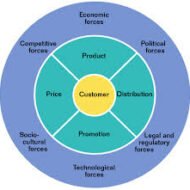
Key Components of Marketing System The core marketing system of a company comprises the suppliers, company, marketing intermediaries and target customers. The success of the company is also affected by competitor’s presence and other segments of public. The management has to watch and plan for all these factors to serve and satisfy the specified set of needs of a chosen target market. Supplier Selection: A company has to choose suppliers who offer the best mix of quality, delivery schedule, guarantee and low cost. Say, a firm involved in manufacturing confectioneries has to procure sugar, cocoa, caramel, milk powder; Labor, equipment, fuel, electricity and other factors of production are also to be obtained. If the company’s product has a good market, it can opt for continuous production. If it is a growing firm, it cannot go for voluminous production, but only supply goods against confirmed orders. In either case, the choice of suppliers is determined by one major factor called ‘cost’. Of course, one can never compromise on quality and so the company has to decide whether to purchase the inputs or make its own. Pic Courtesy : 5 Steps to Successful Supplier Selection The relationship of a company with the suppliers should be of a long-term nature, since any sudden change in the supplier’s environment will have a substantial impact on the company’s marketing operations. Sudden supply shortages, labor strikes and other events can interfere with the fulfillment of delivery promises to customers. This will result in sales decline in the short run and loss of goodwill in the long run. Back orders lead to loss of customers and in course of time their trust. The business firms must plan for alternate source of supply to avoid the risk of over-dependence on any one source of supplier. Company The marketing department has to work in tandem with the other departments of the company namely, finance, production, personnel and research and development, while designing and implementing its marketing plans. Finance department – has to be consulted regarding the availability and deployment of funds to carry out the marketing plans. Production department – to gauge market demand and to decide on the supply of products based on demand. R and D – new product development. Equally important is Digital Marketing which is considered to be an integral part of your promotional activities – What you are seeing above is a depiction of tools that help you in marketing your products online. Marketing intermediaries: Channel members are the link between the company and the customers. Agents and middlemen find customers who are wholesalers or retailers to take on the title and sell the merchandise. Also there are physical distribution firms who assist in stocking and moving goods from the warehouse to the destinations. The marketing executives have to deal with these intermediaries prudently in order to enhance the operational efficiency of the marketing function. Logistic firms, shippers and airliners help to move the goods from one location to another. Competitors: All the business firms in a particular market segment vie for the same resources and customers. A car manufacturing company in an automobile industry has to compete with other car manufacturers as well as with two wheelers. This implies that competition may come in different forms and each company has to identify potential threat from competitors, study their activities and capture their moves to win over the competition. Public: A company has to keep a close watch on people’s preferences to satisfy their requirements and also it is expected to give back something to the society in the form of social welfare measures. Employees belonging to different culture groups with differing attitudes,...
Posted by Managementguru in Business Management, Marketing, Principles of Management
on Mar 4th, 2014 | 0 comments

Product pricing is the strategic process of determining the monetary value for a product, balancing profitability with customer appeal. It considers factors like market demand, competition, production costs, and perceived value to find the optimal price point. Price is one of the crucial components of the marketing-mix and plays an important role to bring about product market integration. It is the only factor that generates revenue, the reason why much research is done before fixing the basic price of a product. In a narrow sense, price is the amount of money charged for a product or a service. But in a broader perspective, it is the sum of all values that a customer gain by exchanging money for using a product or enjoying a service; now, what do you mean by values? It may denote customer satisfaction, endurance, efficiency, effectiveness of the purchase etc. Establish the Pricing Objectives: How does a business firm go about fixing the price? The first step would be establishing the pricing objectives based on the factors that govern the price and ascertaining their relevance and importance in the light of prevailing economic conditions. The firm must provide the customers with the value worth the money paid for. Thus, determining the product value in monetary terms and formulating pricing policies and strategies accordingly is very important. Price is influenced by both external and internal factors. The internal factors that influence pricing may be, Corporate objectives and marketing objectives of the firm-Obviously a firm would like to survive in the market by maximizing its profit followed by retention of market share. To retain the existing customers and to attract new customers, a firm has to focus on “quality” and “customer service”. If you lose an existing customer, it is equivalent to losing ten new customers, as loyal customers increase your customer listing. Where do you want to stand in the market is another question you have to ask yourself! The desirable market positioning of a firm is also dependent on price fixation mechanisms. The characteristics of a product also influence the pricing, as the nature decides the mode and cost of production. Price elasticity or demand of the product-A hardcore business person will never try to penetrate a new market with his existing product or introduce a new product in existing markets without substantial marketing research, since the demand for the product may very form market to market and only by “test marketing” does a firm can acquire some insight about the nature of demand. Cost of marketing-Without proper canvassing you cannot expect your product to hit the right note. There should be sufficient financial planning that well falls in line with your marketing plan. The external factors that influence pricing may be, Market characteristics-Here, industry analysis is needed, to gauge the trend of the products of similar nature and the stage of the industry in its life cycle-whether it has reached the saturation point. If so, how can you expect to make a mark in an industry that is already falling back? Sometimes, the industry might be thriving, leaving behind certain firms that cannot meet the expectations of the industry. In such cases too, caution is to be exercised to predict your chances of success based on your merits and shortcomings. Bargaining power of the customers-you cannot expect to sell premium products in a market where the potential buyers belong to the middle-class category. Even such markets are captured by intelligent marketers who follow the strategy of price skimming. Competitor’s pricing policy-Constant updates about your competitor’s pricing strategy keeps you at bay and also helps you in deciding your game plan. Big corporate firms very...
Posted by Managementguru in Business Management, Marketing, Principles of Management, Strategy
on Mar 4th, 2014 | 0 comments

A niche market is a specific segment of a larger market with distinct needs and preferences. Finding the right niche is crucial for start-up success. It allows you to focus your resources, differentiate your offerings, and build a loyal customer base. Look For Problems What problems or pain points exist in the market? What needs are not being met? Identifying unmet needs is a key step in finding a profitable niche market. Look for areas where you can provide solutions or improvements. The process of new product development starts with the search for new ideas. Abstract ideas are molded in such a way to suit the market needs. Businesspersons who want to capture a major share of the market have to think out of the box, to tide over the competition. Small things can make a big difference. Monotonous pattern of thinking will not help you in the long run to survive and sustain in the market. The Significance of R&D The objective is to obtain ideas for new products, new attributes for the existing products and new usage for the existing product line. Why do you think so much of investment goes into research and development? The fruits of such R and D activities are reflected in the form of improved sales turn over. Market updates on a daily basis also gives you an excellent feedback about the new products that throng the market. Think about this, it is not possible for every organization to invest such huge sums in R and D which demands technically qualified personnel to carry out the research activities and it is next to impossible that each and every firm in the market can establish the necessary infrastructure for the purpose of research. SWOT Analysis What might be the solution? Companies generally rely on internal sources, customers, competitors, distributors, suppliers and others for new product ideas. The sales force of a firm can provide excellent inputs as they meet customers on a regular basis. Through SWOT analysis, a company can make a conscious, deliberate and systematic effort to identify opportunities that can be profitably exploited. Top management should encourage the employees to think more imaginatively to create a niche market for its product range. The management has to prioritise its objectives first and channelise the efforts of employees accordingly. Steps to be Followed in New Product Development Generation of new product ideas Screening of ideas – It serves the purpose of reducing the large number of ideas generated, to spot the good ones and drop the bad ones. Concept development and testing – An inherent idea must be developed into a product concept, should include the customer, the major customer benefits and the features defining it. Development of marketing strategy – This is helpful in launching the product at the right time and right place to the right people. Business analysis – A review of cost versus profit analysis, estimated size and growth rate of the market segment, estimated sales and market share for the new product in the light of financial feasibility. Development of the product – If the business analysis gives a satisfactory report as to the rate of return on investment and payback period, the R and D department goes ahead with manufacturing the prototype which is the preliminary version of the final product. Test marketing – It provides an opportunity to understand market response to the new product and its proposed marketing programme in a more realistic market environment than in simulated conditions. Commercialization – The product is released into the market, distribution channels are established, thus initiating its life cycle. The success of new products can be attributed to two aspects, one...