Posted by Managementguru in Human Resource, Training & Development
on Feb 28th, 2014 | 0 comments
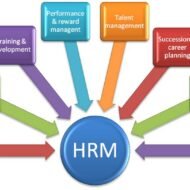
Definitions of Human Resource Management: 1. “A series of integrated decisions that govern employer-employee relations. Their quality contributes to the ability of organisations and employees to achieve their objectives.” (Milkovich & Boudreau, 1997). 2. “Concerned with the people dimension to management. Since every organisation comprises people, acquiring their services, developing their skills, motivating them to higher levels of performance and ensuring that they continue at the same level of commitment to the organisation are essential to achieving organisational goal. This is true, regardless of the type of organisation: viz. government, business, education, health, recreation, or social action.” (Decenzo & Robbins, 1989). 3.”The planning, organising directing and controlling of the procurement, development, compensation, integration, and maintenance of human resource to the end those individual, organisational, and social objectives are accomplished.” (Flippo, 1984). 4. “The organisation function that focuses on the effective management, direction, and utilisation of people; both the people who manage produce and market and sell the products and services of an organisation and those who support organisational activities. It deals with the human element in the organisation, people as individuals and groups, their recruitment, selection, assignment, motivation, empowerment, compensation, utilisation, services, training, development, promotion, termination and retirement.”(Tracey,1994 ) Knowledge Workers Human resource management is therefore understood as the all significant art and science of managing people in an organisation. Increasing research output in behavioral sciences, new trends in managing ‘knowledge workers’ and advances in training methodology and practices have led to substantial expansion of the scope of human resource management function in recent years. HRM is not just an arena of personnel administration anymore but rather a central and pervasive general management function involving specialised staff as assistants to main line managers. Managing employee relationships is the role of the Human Resource department Human Resource Management is a process of valuing and developing people at work, this includes: Recruitment and selection Employee communication and engagement (participation) to increase employee retention Training and development Leadership WHAT IS YOUR GREATEST WEAKNESS Labour turnover & staff retention Labour turnover refers to the proportion of a workforce that leave during a period of time (usually one year) Labour turnover = number of staff leaving during the period x 100 average number of staff Staff retention refers to the ability of a firm to keep its workers. The disadvantages of having a large proportion of staff leaving each year include: The cost of recruiting replacement workers The cost of training the new workers Loss of productivity whilst replacements are found Loss of experienced workers Negative impact on reputation WHAT IS YOUR GREATEST STRENGTH Methods to control turnover: 1. Financial methods of motivation Bonuses Profit share Fringe benefits 2. Non financial methods of motivation Employee engagement and empowerment Training and development Promotion opportunities 3. Improved Human Resource Management procedures Four Fundamental Principles of HRM: Human Resource is the organisation’s most important asset; Personnel policies should be directed towards achievement of ENTERPRISE goals and strategic plans; Corporate culture exerts a major influence on achievement of excellence and must therefore be strengthened with consideration of employee welfare. Whilst integration of corporate resources is an important aim of HRM, it must also be recognised that all organisations are ‘pluralist societies’ in which people have differing interests and concerns, which they defend and at the same time function collectively as a cohesive group. →Evolution of...

Posted by Managementguru in Change management, Human Resource
on Feb 28th, 2014 | 0 comments
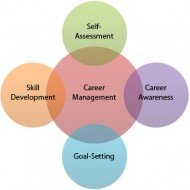
Career Management How to go about Career Management? Career Management is very essential which facilitates smooth transitions from one level to the next higher level in a profession. You cannot decide what to do unless you know what you are going to do or where you want to be tomorrow. Long term personal goals and professional goals are elemental in setting overall targets. According to Stephen P.Robbins, career is “a sequence of life positions occupied by a person during the course of a lifetime. Setting Goals for an Effective Career Your goals may be Long term Short term Personal or Professional Consider if you are goals are Realistic Whether you possess the skill set Achievable within the set time limit (duration) Based on these goals it is important to make long term and short term career plans. Also write down your Experience Skills and Qualification All these basic but vital things will give you a clear picture as to where you stand and what has to be done to improve your skills. Pic Courtesy: Cupcakes and Cashmere EYE Openers While Setting Personal Career Targets A. What do you want to accomplish from two or three years from now? B. What developments and knowledge can make this possible? C. How do you want to prepare yourself to achieve these targets or in what way you want to improve your skills? D. Is there a necessity for check points in the middle of the progress to make the necessary revisions? Tips to Manage Diversifying Careers Adaptability and flexibility are vital to reduce the stress of redundancy. Anticipate the changes and be prepared for anything at any time Look at the ‘Job Loss’ as an opportunity to pursue a new career that interests you. Career Planning A career will be satisfactory only when it interests the person and provides challenge and not by mere compensation or reward. Each organization should plan and help the individual, but every individual should take interest in his career. Career planning entails evaluating abilities and interests and considering alternative career development activities. The process results in Decisions to enter a certain occupation Join a particular organization Accept or decline new job opportunities{relocations, promotions or transfers} Leave an organization for another job or recruitment. Effects of Career Planning In corporate companies, a typical career planning program might include 1. Career counseling by members of the HR department 2. Workshops to help employees evaluate their skills, abilities, and interests to decide on their career development plans 3. Self directed programs to help the workforce guide their own careers through self-assessment and 4. Communication of job opportunities through job postings, videotapes and publications. One has to remember that career counseling may increase the pressure for managers and in turn the organization, as employees either become anxious about their present level of performance and chances for career advancement or they might use the opportunity to demand more from the firm in terms of pay, promotions etc., Key Career Issues of Employees Dual-career couples: When both husband and wife work, their earnings and stress are in surplus Stressors: Children under the age of six need parental care , but the amount of quality time of parents with that of the children is not at all balanced and this causes a heavy stress for both sides emotionally. Work schedule stressors: This increases as a person rises in an organization, job demands increase, with long hours of work and travel, but little time for family and vacation. Relocation: The increase in the number of dual career couple poses problems for many companies when they try to relocate...
Posted by Managementguru in Business Management, Decision Making, Principles of Management
on Feb 26th, 2014 | 0 comments
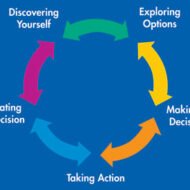
METHODS OF DECISION MAKING A. Marginal income or Cost analysis: This method is used to compare additional revenues arising from additional costs. Break even point is that point in which the cost equals revenue and it can be defined as a no loss, no gain situation. Profit can be enjoyed by a firm only when the revenue exceeds cost that is after crossing the break even point. A manager must have all the necessary data pertaining to total cost and its various components in order to arrive at a decision. B. Cost-effective analysis: This tries to find out the cheapest way in reaching the objective or shall we say the greatest value for expenditure. Mass production facilitates in factorizing the economies of scale where the objective is oriented towards output and sustained availability of the product year round. C. Experience: The mistakes committed become great lessons in due course of time generally and this holds good for managers involved in making crucial decisions. It ensures right decisions to be taken in similar situations. But one has to remember that decisions are inclined to make an impact on future events. So, it is up to the manager to take the right kind of decisions using his intuitions as well as experience. The late chairman of SIMPSONS GROUP, Anantharamakrishnan was very intuitive and under his leadership the organization touched new heights and diversified its activities like never before. Note: Anantharamakrishnan is remembered for his successful business practices, efficient management of the labour unions and for triggering the growth of the automobile industry of Chennai which has earned the city the epithet “Detroit of India”. As a result he himself came to be remembered as the “Henry Ford of South India.” Courtesy: Wikipedia D. Experimentation: Why people go for test-marketing? Because when the factors are intangible, you have to try out every alternative only through experiments or trail and error. Market surveys and questionnaires are useful tools when it comes to launching of a new product in the target market. E. Research and analysis: This involves the application of tools and techniques of operations research to the process of decision making based on mathematical functions. Risk-analysis and Decision-trees are the other methods used that illustrate decision points, chance events, and probability of each course of action. TYPES OF DECISIONS: · Routine and Strategic: Routine- regular decisions involving day to day affairs of the firm- leave procedures, work atmosphere. Strategic decisions are central to the firm’s operations- price fixing, product elimination etc. · Individual and Group decisions: Managers at the top level are inclined to take individual decisions and some important inter-departmental decisions may be taken up by members of the respective groups. · Programmed and Non-programmed decisions: Decision taken by the low-level personnel which are regular and repetitive in nature are programmed-late attendance, medical compensation etc., Non-repetitive and unusual decisions like mergers and acquisitions, collaboration agreements belong to the non-programmed category. · Simple and Complex decisions: Where the problem is simple but the outcome has a high degree of certainty are called mechanistic or routine decisions. Where the problem is simple but the outcome has a low degree of certainty are judgmental in nature. Where the problem is complex and the outcome has a high degree of certainty are analytical and where the problem is complex but the outcome has low degree of certainty are adaptive decisions. MAKING EFFECTIVE DECISIONS: · Timing of decisions: A new product only if introduced into the market at the right time will be a success for which the manager should select the appropriate time for taking the decisions. · Effective communication: The decisions taken should be communicated down the line for effective implementation. · Top management support: The support of top management is indispensable for effective decision-making since it...
Posted by Managementguru in Motivation, Principles of Management
on Feb 25th, 2014 | 0 comments
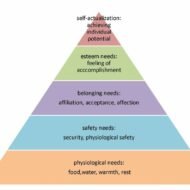
Motivation- Process and Theories “We can take a horse to water but cannot make it to drink”, so goes a saying. A motive is the inner drive or desire that causes a person to act. What is the importance of motivation in management? Well, I will say motivation is “the thing” and understanding human motivation is crucial in managing people. Abraham Maslow’s Hierarchy of Needs Theory with 10 Free Motivational Quotes Some definitions on motivation: 1. This is a total system of study which analyses human needs, motives, drives which cause a person to act or behave in a particular manner he/she does. 2. It is the stimulation of any emotion or desire operating upon one’s will and prompting or driving it to action-Guillerman 3.”Motivation represents a satisfied need which creates a state of tension or dis-equilibrium causing the individual to move in a goal directed pattern towards restoring a state of equilibrium by satisfying the needs.”-Herzberg It has been accepted by psychologists world over that all behavior is motivated and revolves around a desire for satisfying certain needs. Motivation process: NEEDS->DRIVES->GOALS THEORIES OF MOTIVATION: Theories of Motivation are classified into · Content theories and · Process Theories CONTENT THEORIES: A. Maslow’s hierarchy of needs B. Herzberg two factor theory C. Theory ‘X’ and Theory ‘Y’ D. McClelland’s achievement motivation theory E. Clayton Alderfer’s ERG theory PROCESS THEORIES: A. Vroom’s expectancy model B. Porter-Lawler’s model C. Adam’s equity theory Content theories seek to determine what motivates people at work. Priorities are taken into consideration backed up by incentives or goals. Maslow Need Hierarchy Theory (1943) Abraham Maslow postulates that human needs can be organized into a hierarchy of prepotency with the physiological needs at the bottom and self-actualization at the top. He states that as each need gets satisfied the person gets motivated to reach the next higher level. As the person moves up the hierarchy, one finds that esteem needs and self-actualization are more of internal in nature and it solely depends on the individual’s drive. Basic needs -85 % Security or safety needs-70% Social needs- 50% Esteem needs-40% Self-actualization-mere 10% This is the statistics that represents the percentage ratio of satisfaction and once a need is satisfied it “CEASES TO BE A MOTIVATOR.” · PHYSIOLOGICAL NEEDS-Basic needs for the maintenance of body processes such as hunger, thirst, sex and sleep. When these are satisfied, the higher order needs emerge, which dominate a person’s behavior. · SAFETY NEEDS– Needs like freedom from physical harm, need for orderly life and economic security · SOCIAL NEEDS– These emerge when the basic needs are satisfied and denote love, affection and belongingness. · ESTEEM NEEDS– Needs referring to strength, achievement, adequacy and also needs which pertain to recognition, appreciation and achievement. Man values self esteem based on one’s own abilities on one hand, and recognition and reputation on the other. · NEED FOR SELF–ACTUALISTION– When all the above mentioned needs are satisfied the need for self actualization arises. This need is described as the need to become everything that one is capable of becoming. CRITICISM: · There is little empirical evidence to support this theory though it is very popular. · This theory talks only about the needs from an individual’s perspective and does not link it with organizational...
Posted by Managementguru in Business Management, Operations Management, Principles of Management
on Feb 24th, 2014 | 0 comments
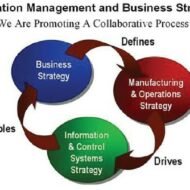
The management of conversion or transformation process which accepts inputs and delivers usable goods and services is what is called “operations management.” The inputs may be in the form of, capital, material, labor, technology, information, machines etc. The process takes place in an effective and efficient manner through operations planning, design, management and control. Don’t forget to download the 3 page Project Planner Printable at the end of this post 👇🏻 Absolutely Free Earlier it was called, production or manufacturing management. Since operation is a general term in a productive environment whose output may be goods or services, the term operations management has become more appropriate. The Aim of a Good Operational Management Would be High level of productivityCompetitive cost and qualityTimely deliveryProducing goods as per the requirements of the consumer, that is customer oriented.Flexibility and responsiveness in the production of goods and services Production or operation in the three important sectors of an economy, namely, agriculture, industry and service, creates national wealth and serves as an index for the growth of that economy. One has to understand the link between operations management and other functional areas to appreciate its scope. The goals of the operations strategy has to necessarily be in tandem with the overall corporate strategy to accomplish the goals of a firm. Scope of Operations Management From marketing department, cues regarding customer preference and market segmentation in terms of product, price and volume are supplied to the production department, based on which the production planning is concluded. From Research and development comes the product design and process technology. Human resource is an integral part of production process and also a crucial input. Man power planning by the human resource department plays a major role in recruiting, selecting, training, evaluating and empowering labor force. Operations Strategy The great diversity in products and services available in the market should be taken into consideration before deciding on your operations strategy. At one end we have custom made products that are designed and manufactured to suit the specific needs of the consumers. For instance, custom made shoes, shirts, suits, furniture etc. Here the emphasis is on quality and delivery where the customer is not very much bothered about the price. At the other end manufacturers go for highly standardized products that are available “off the shelf.” Say, home appliances, detergents, soaps etc., here the product differentiation is very minimal and the focus is on competitive pricing as the material is available in plenty. Economy of Scale A customized product would require a manufacturing set up that can handle a wide variety of general products. The sequence of operations for each product would vary in the manufacturing system making a customized product. So, a process oriented manufacturing system is designed, where similar facilities doing similar operations are grouped together and departmentalized. Standardized products go for a product focused manufacturing system, to reduce the “through put” time as large volumes are required. To be cost effective, each product should have a dedicated line of production to take advantage of the “economy of scale.” Intermediate types of products also find their place in the market and they are produced in a production layout that has a mix of product and process orientation. Here a whole range of products and services are created for the benefit of the customers. In a long term basis, manufacturers should aim to develop new technology, environmentally viable products, increase R and D activity, update skills of work force and managers and focus on development of new products, process and innovations....