Posted by Managementguru in Decision Making, Entrepreneurship, Human Resource, Leadership
on Apr 21st, 2015 | 0 comments
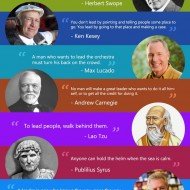
Top Ten Tips for First Time Managers Everybody wants to become a leader. You may vie for it, I might die for it; but in reality not everybody can make a good leader. Leadership does seek persons who are unique in their own way. One unique element which I’ve noticed in managers or leaders is that when they enter the work place, they bring along with them a kind of aura that has the power to make others submissive and polite. Not to say they are over-powering but definitely the sub-ordinates would love to greet their heads with such vigor so as to be in their good books combined with a sense of loyalty laced with respect. This session talks about “First Time Managers” who have reached the position by chance or choice and the etiquettes needed to be bestowed upon that position. 1. Learning is Eternal: “கற்றது கைமண் அளவு, கல்லாதது உலகளவு –This quote by the famous Tamil lady poet Avvaiyar who lived in 13th century reminds you “What you have learned is a mere handful; what you haven’t learned is the size of the world” and exhibited at NASA. It can also be written as “Known is a drop, unknown is an Ocean.” See how appropriate she is in indicating the finer points in our lives- just because you are a team leader or a manager does not mean that you are near perfect. You may be lacking the self-confidence to lead a team or you might be falling short in communicating clearly with the team down the line. It is always better to play along with the team, understand their psychology and at the same time exercise your rights at the right spots. You will stand to gain so much by being flexible and empathetic. 2. Communication is the Key: Here I want to take the help of the ManagementGuru Peter Drucker who prescribed the medicine for better management which is “Management by Objectives.” Keep your team fully informed of project goals, priorities, and all-important deadlines and also involve them to set short term goals. A periodical review of the goals and results would put them in place and make your work easy. Effective communication makes you trust worthy in the eyes of your team, also provides clear direction and a sense of belongingness. 3. Inspire your Team: Passion is one element that is infectious and the other being smile. If you are passionate and sincere in your work, the enthusiasm flows like honey on ice-cream all over the workplace. A good manager creates that “Feel-Good-Factor’ whenever he is around. It is his confidence, emotional stability, communication and determination that gets carried on facilitating effective accomplishment of the enterprise goals. An infographic from AN ETHICAL ISLAND– A great guide for leaders and managers… 4. Be a Friend: Efficient managers understand the pulse of work-force just from their body language and communicating styles. It becomes difficult sometimes to read between the lines when employees are hard nuts to crack and would not explicitly convey or talk about important issues that are bothering them. This may be due to fear, anxiety or peer pressure. These are the times when a manager has to behave like a friend in listening to them patiently to understand the crux of the problem so as to find a suitable solution. 5. Spontaneous appreciation and Mild Criticism: Think about the happiness you derive when somebody appreciates you for a good effort or achievement. The same applies to your team also, right! Appreciation for the sake of appreciating will fetch you only negative results, it has to be spontaneous. Even a mild nod of approval, a...

Posted by Managementguru in Marketing
on Mar 24th, 2015 | 0 comments

Follow ManagementGuru Net’s board Marketing and Product Management on Pinterest. Enrich yourself with info on current marketing trends and how internet helps you in optimizing your customer relationship and experience. It is no surprise that social media has changed the face of digital marketing, or marketing overall for that matter. The transition is so smooth that the line between traditional and digital marketing has been off-set and a great many companies are finally accepting the fact that to win in marketing they ought to have a solid digital #strategy and that strategy should probably include using social media. Following are my top 7 predictions for digital marketing trends in 2015. Email marketing will need to become smarter. Brands that succeed at being human will win. Content marketing will (finally) become about true value. We’ll begin to see a decrease in the number of online marketing strategies businesses employ. Brands who use social primarily for “pushing” sales will die out. “Mobile-first” will replace “mobile-friendly”. Content marketing will become integrated company-wide. Courtesy – 7 Digital Marketing Trends That Will Dominate 2015 New Business Tools & Resources for Marketing Agencies from HubSpot How to Find and Tell Stories to Maximise Your Business Opportunities from Sarah...
Posted by Managementguru in Management Accounting
on Mar 24th, 2015 | 0 comments
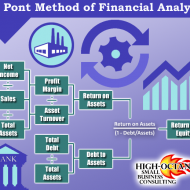
What are the advantages and limitations of ratio analysis? Advantages: It is an important and useful tool to determine the efficiency with which working capital is being managed in a business organization. It is a ‘health test‘ for a business firm in that it can gauge whether the firm is financially healthy or not. It aids the management of business concern in evaluating its financial position and performance efficiency. It clearly shows the trend of changes in the market position (upward, downward or static), as it covers a number of previous accounting (financial) periods. The progress or downfall of a firm is clearly indicated by this analysis. It assists in preparing financial estimates for the future (financial forecasting). It facilitates the task of managerial control to a great extent. It helps the credit suppliers and investors in deciding upon a business firm as a potential investment outlet or desirable debtor. Ideal or Standard ratios can be established which can be used as reference points of comparison for a firm’s progress over a period of time. It communicates important information with relation to financial strength, earning capacity, debt (borrowing) capacity, liquidity position, capacity to meet fixed commitments, solvency, capital gearing, working capital management, future prospects etc. of a business concern. This analysis is also useful for bench marking purpose- to compare the working result and efficiency of performance of a business enterprise with that of other firms engaged in the same industry (inter-firm comparison). It helps the management to discharge their basic functions of planning, coordinating, controlling etc. It serves as an instrument for testing management efficiency too. It acts as a useful tool for deciding on certain policy matters. Limitations: Accounting ratios calculated based on ratio analysis will be correct only if the accounting data on which they are based are correct. It is only an analysis of past financial data. In certain cases ratio analysis might prove to be misleading with regard to profits. Continuous fluctuation in price levels ( or, purchasing power of money) seriously affect the validity or comparison of accounting ratios calculated for different accounting periods and make such comparisons very difficult. Comparisons become difficult also on account of difference in the definition of several financial (accounting) terms like gross profit, operating profit, net profit etc. There is lot of diversity in practice as regards to the measurement of ratios. Different firms use different accounting methods and the validity of comparison is severely affected by window dressing in the basic financial statements. A single ratio will not be able to convey much information. This analysis only gives part of the total information required for proper decision-making. This should not be taken as a substitute for sound judgement. It should not be overlooked that business problems cannot be solved mechanically through ratio analysis or other types of financial analysis. Follow ManagementGuru Net’s board Accounting – Financial and Management Accounting on...
Posted by Managementguru in Human Resource, Leadership, Motivation
on Mar 17th, 2015 | 0 comments

6 Things a Manager Can Learn From MS Dhoni Leading from the front Staying cool Sharing the due credit with fellow-men Encouraging team members to make them better performers Staying Grounded Resource Utilization No, this article is certainly not about our Indian Cricket team’s captain; but he has a lot to offer to prove my point. Yes, I was contemplating about the various leaders- both in the political and economic sectors and how their attitude and perspective has a direct effect on the followers or sub-ordinates. I thought it would be good to start from M.S.Dhoni, the all powerful leader in his own way standing tall and cool. Don’t miss this powerpoint: The powerpoint given here depicts the different leadership styles pertaining to an organization – be it business, service, non-profit or educational. The motive may differ for each of the listed organizations above but all have to function effectively to reach that ulterior motive. There can’t be a second thought or opinion on this and how the emotional quotient of a leader impacts employee motivation and engagement is something phenomenal. It is directly evident from the functioning style of the employees and their attitude even when you just enter an organization. The impact of leadership styles on employee motivation and performance from Shyama Shankar My Bad Encounter: Recently I had been to a dermatologist for a consultation and even before I could inquire about the doctor’s availability, the girl at the front desk was very particular to know if I would be willing to pay three hundred bucks. I was taken aback to know that the fee was two hundred bucks for visiting during regular hours and three hundred for late hours (It was a sunday and late hours meant visiting the doctor after 12 noon). The hundred rupees did not matter to me at all but the way in which the man has trained his staff to put the patients into an uneasy position made me think – “Where service has to be the motto of his profession, money has REWRITTEN the ETIQUETTES in it own cruel way.” Matched Leadership: How to Use Leadership Styles Effectively Leadership style is one of the most debated topics in management which has influenced a great number of managers and employees. Leadership style extensively influences employee’s commitment and dedication. A participative and democratic kind of leader creates a positive work atmosphere, a coercive leader creates an unbalanced and negative atmosphere; nevertheless all kinds of leaders create a serious impact whether negative or positive. Transformational leaders provide a vision and a sense of mission, inspire pride, and gain respect and trust through charisma, as opposed to a simple exchange and agreement,(Bass et al.1990) whereas Transactional leaders communicate with their subordinates to explain how a task must be done and let them know that there will be rewards for a job done well (Avolio et al.1991). Laissez-faire leadership is a passive kind of leadership style, seen as not caring about other’s issues. There is no relationship exchange between the leader and the followers. It represents a non-transactional kind of leadership style in which necessary decisions are not made, actions are delayed, leadership responsibilities ignored, and authority unused. Now it is time to enjoy some funny quotes on Leadership: Only one man in a thousand is a leader of men — the other 999 follow women. Groucho Marx First rule of leadership: everything is your fault. A Bug’s Life The problem with being a leader is that you’re never sure if you’re being followed or chased. Claire A. Murray The key to being a good manager is keeping the people who hate me away from those who are still...
Posted by Managementguru in Management Accounting
on Mar 8th, 2015 | 0 comments

Gross Profit It is a required income statement entry that indicates total revenue minus cost of goods sold. It is the company’s profit before operating expenses, interest payment and taxes. It is also known as GROSS MARGIN. The gross profit on a product is computed as: Net Sales – Cost of Goods Sold (COGS) This concept is well understood if you are able to clearly distinguish between variable and fixed costs. VARIABLE COSTS: Materials used Direct labor Packaging Freight Plant supervisor salaries Utilities for a plant or a warehouse Depreciation expense on production equipment Machinery FIXED COSTS: Fixed costs generally are more static in nature. They include: Office expenses such as supplies, utilities, a telephone for the office, etc. Salaries and wages of office staff, salespeople, officers and owners Payroll taxes and employee benefits Advertising, promotional and other sales expenses Insurance Auto expenses for salespeople Professional fees Rent Variable expenses are logged as cost of goods sold. Fixed expenses are counted as operating expenses (sometimes called selling and general administrative expenses). While gross profit is a monetary entity, the margin is expressed as a percentage. It’s equally significant to track since it allows you to keep an eye on profitability trends. Gross Profit Ratio = Gross Profit / Net Sales The gross profit margin is computed as follows: When the ratio is expressed in percentage form, it is known as gross profit margin or percentage. Gross Profit / Net Sales *100 = Gross Profit Margin It is equal to the net sales minus cost of goods sold and net sales are equal to total gross sales less return inwards and discount allowed. Benefits of calculating gross profit: This ratio determines how efficiently the management utilizes labor and raw materials A company uses its gross income to fund activities such as research and development, marketing etc., which are vital for generating future sales. A prolonged decline in this margin is a cleat-cut indication of sales drop-down and ultimately earnings. Trends in this margin reflect basic pricing decisions and material costs of a company. This profit margin is an accounting measure designed to estimate the financial health of a business or industry. It may be noted that generating a profit margin alone cannot vouch for the financial health of a firm; rather the business must have sufficient cash flow in order to pay its bills and compensate employees. An entrepreneur might compare the return that would be available from a bank or another low-risk investment opportunity to that of his EXISTING profit-margin to gauge whether his startup is doing well. → Profitability...