Posted by Managementguru in Human Resource, Training & Development
on Feb 28th, 2014 | 0 comments

Definitions of Human Resource Management: 1. “A series of integrated decisions that govern employer-employee relations. Their quality contributes to the ability of organisations and employees to achieve their objectives.” (Milkovich & Boudreau, 1997). 2. “Concerned with the people dimension to management. Since every organisation comprises people, acquiring their services, developing their skills, motivating them to higher levels of performance and ensuring that they continue at the same level of commitment to the organisation are essential to achieving organisational goal. This is true, regardless of the type of organisation: viz. government, business, education, health, recreation, or social action.” (Decenzo & Robbins, 1989). 3.”The planning, organising directing and controlling of the procurement, development, compensation, integration, and maintenance of human resource to the end those individual, organisational, and social objectives are accomplished.” (Flippo, 1984). 4. “The organisation function that focuses on the effective management, direction, and utilisation of people; both the people who manage produce and market and sell the products and services of an organisation and those who support organisational activities. It deals with the human element in the organisation, people as individuals and groups, their recruitment, selection, assignment, motivation, empowerment, compensation, utilisation, services, training, development, promotion, termination and retirement.”(Tracey,1994 ) Knowledge Workers Human resource management is therefore understood as the all significant art and science of managing people in an organisation. Increasing research output in behavioral sciences, new trends in managing ‘knowledge workers’ and advances in training methodology and practices have led to substantial expansion of the scope of human resource management function in recent years. HRM is not just an arena of personnel administration anymore but rather a central and pervasive general management function involving specialised staff as assistants to main line managers. Managing employee relationships is the role of the Human Resource department Human Resource Management is a process of valuing and developing people at work, this includes: Recruitment and selection Employee communication and engagement (participation) to increase employee retention Training and development Leadership WHAT IS YOUR GREATEST WEAKNESS Labour turnover & staff retention Labour turnover refers to the proportion of a workforce that leave during a period of time (usually one year) Labour turnover = number of staff leaving during the period x 100 average number of staff Staff retention refers to the ability of a firm to keep its workers. The disadvantages of having a large proportion of staff leaving each year include: The cost of recruiting replacement workers The cost of training the new workers Loss of productivity whilst replacements are found Loss of experienced workers Negative impact on reputation WHAT IS YOUR GREATEST STRENGTH Methods to control turnover: 1. Financial methods of motivation Bonuses Profit share Fringe benefits 2. Non financial methods of motivation Employee engagement and empowerment Training and development Promotion opportunities 3. Improved Human Resource Management procedures Four Fundamental Principles of HRM: Human Resource is the organisation’s most important asset; Personnel policies should be directed towards achievement of ENTERPRISE goals and strategic plans; Corporate culture exerts a major influence on achievement of excellence and must therefore be strengthened with consideration of employee welfare. Whilst integration of corporate resources is an important aim of HRM, it must also be recognised that all organisations are ‘pluralist societies’ in which people have differing interests and concerns, which they defend and at the same time function collectively as a cohesive group. →Evolution of...

Posted by Managementguru in Principles of Management, Training & Development
on Feb 22nd, 2014 | 0 comments

Benefits of Training to Employees Why training is needed for an Employee? Increases Confidence Training creates a feeling of confidence in the minds of employees, who feel comfortable while handling newer challenges. It gives a feeling of safety and security to them at the work place. New Skills Training develops skills, which serves as a valuable personal asset of a worker. It remains permanently with the worker himself. Career advancement The managers can develop their skills to take up higher challenges and work in newer job dimensions. Such an exercise leads to the career development of the employees, who can move up the corporate hierarchy faster. Higher Earnings Higher earnings are a consequence of career development. A highly trained employee can command high salary in the job market and feel more contended. Resilience to change In the fast changing times of today, training develops adaptability among workers. The employees feel motivated to work under newer circumstances and they do not feel threatened or resist any change. Such adaptability is essential for survival and growth of an organization in the present times. Increased Safety Trained workers handle the machines safely. They also know the use of various safely devices in the factory, thus, they are less prone to accidents. Use these popular and handy HR Quotes in your Blogs, Books, Journals, Presentations, Tweets, Facebook posts, Pinterest boards and Instagram posts. EVALUATION PHASE Training Evaluation Once you’ve implemented a training program based on careful needs analysis, how can you be sure that your training translates into real performance improvements? Evaluation can be used to determine whether the training program achieves its objectives. Evaluation can also assess the value of training, identify improvement areas, and identify unnecessary training that can be eliminated. Need for Evaluation Many training professionals agree that evaluation is important to successful training, but few conduct complete and thorough evaluations. Evaluation can seem anti-climatic to the excitement and creativity of creating a new course. Don Kirkpatrick’s 4 Levels of Evaluation One of the most widely used model for evaluating training programs is one that was proposed in 1959 by Donald L. Kirkpatrick. The model maintains that there are four levels to meas ure the quality or effectiveness of a training course. Don Kirkpatrick’s 4 levels of evaluation is the basis of discussion on evaluation of the effectiveness of training programs. Level 1 measures the learner’s reaction to the training program. Level 2 measures learning that has occurred. Level 3 measures changes in behavior on the job as a result of the training program. Level 4 measures the results of the training program as it affects the company’s bottom line. Each level has its advantages and disadvantages. It is important to plan the evaluation process, as the training is being planning. It is important to consider all levels at the outset, even though only one or two levels may be used ultimately. http://www.kirkpatrickpartners.com/OurPhilosophy/TheNewWorldKirkpatrickModel/tabid/303/Default.aspx Design of a Training Programme Some of the typical steps in designing a training programme are: Identification of training needs. Setting training objectives. Organizational set-up for training. Training operations. Evaluation of...
Posted by Managementguru in Accounting, Financial Accounting
on Feb 21st, 2014 | 0 comments
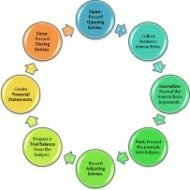
Characteristics and Objectives of Accounting What is Accounting: According to American Institute of Certified Public Accountants (AICPA), “Accounting is the art of recording, classifying and summarizing in a significant manner and in terms of money transactions and events which are, in part at least, of a financial character and interpreting the results thereof.” American Accounting Association (AAA) has defined accounting as “the process of identifying, measuring and communicating economic information to permit informed judgements and decisions by users of the information.” Characteristics of Accounting: i. Accounting is the art of recording and classifying different business transactions. ii. The business transactions may be completely or partially of financial nature. iii. Generally the business transactions are described in monetary terms. iv. In accounting process, the business transactions are summarized and analyzed so as to arrive at a meaningful interpretation. v. The analysis and interpretations thus obtained are communicated to those who are responsible to take certain decisions to determine the future course of business. The Small Biz Doers’ Guide to Small Biz Accounting Objectives of accounting: a. To record the business transactions in a systematic manner. b. To determine the gross profit and net profit earned by a firm during a specific period. c. To know the financial position of a firm at the close of the financial year by way of preparing the balance sheet d. To facilitate management control. e. To assess the taxable income and the sales tax liability. f. To provide requisite information to different parties, i.e., owners, creditors, employees, management, Government, investors, financial institutions, banks etc. ...
Posted by Managementguru in Business Management, Financial Management, Principles of Management
on Feb 21st, 2014 | 0 comments

Every business organisation’s aim is to make profit and more profit. Does it end there? What should be the real motive behind running an organization? Profit maximization alone does not help the organization to firmly plant its feet in the business environment, as the success of an organization in the long run is decided by many critical factors like, market share, value of the company shares, market stand, image etc. So, shall we say, let wealth maximization be the goal of any organization, which focuses on increasing the “earnings per share” of the share holders. What is Profit Maximization? Profit maximization does not take into consideration, the interest of share holders or stake holders, who ought to be the ultimate beneficiaries. Concentrating on short term profits confines a firm and limits its scope and growth whereas; value creation is something that the management should aim for, as it helps to increase the “net worth” of a company. Mere price versus output calculations make firms to operate in a profitable manner, but it should never be the only objective of a firm, as it has the moral and social responsibility to patronize its shareholders by increasing the net worth of the company. Underlying Logic While maximizing profit, a firm either produces maximum output for a given amount of input, or uses minimum input for producing a given output. Thus the underlying logic for profit maximization is efficiency. Under perfect competitive market conditions, profit serves as a perfect measure for the performance of a firm. If profit is the motive of a firm, it fails to consider the time value of money which is an important criterion that decides the success of a firm, and also it values benefits received today and after a period as the same. Moreover the uncertainty factor is there to be considered too. Firms always prefer to have smaller but surer profits rather than larger benefits but less certain. Impact of Taxes When we talk about profits, the next indispensable factor will be the taxes that demand a portion of your profit. Maximizing profits after the payment of taxes facilitates the firm to increase the net profit ratio to serve the best interests of the owners. But, this also fails to maximize the economic welfare of the owners, as it does not take into account, the timing and uncertainty of the benefits. Wealth maximization is the ideal alternative that is consistent with the survival goal and also with the personal objectives of managers such as recognition, power, status and personal wealth. The Right Balance between Risk and Return Mangers while deciding on investment options, seek to achieve a right balance between risk and return. If the firm borrows heavily to finance its operations, care should be taken to ensure that, the rate of return on investment should be sufficient enough to support the payment of interests on borrowings and also to repay the principal. If the firm is not able to “service the debt” there is a danger of the firm becoming bankrupt or insolvent. The firm’s investment and financing decisions are unavoidable and continuous. In order to make rational decisions, the firm must have a goal, which is nothing but the “shareholder’s wealth maximization” which is theoretically logical and operationally...
Posted by Managementguru in Human Resource, Organisational behaviour, Principles of Management, Training & Development
on Feb 20th, 2014 | 0 comments
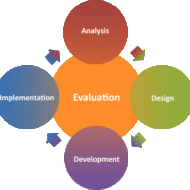
Role of Training Some Definitions of Training: According to Flippo, “Training is the act of increasing the knowledge and skills of an employee for doing a particular job”. Training can also be defined as as “any planned or structured activity or approach designed to help an individual or a group of people to learn as to do things differently or to do different things leading to more effective performance and results”. Role of Training: Training is the best way to reach the enterprise goals in minimum time period with maximum efficiency. 1. Training unlike experience can reduce the time required to reach maximum efficiency. 2. Cost of training in much less than the cost of adding experience . 3. The results of experience sometimes can be accidental. 4. The expected results are very much assured in a well conceived and well conducted training program. 5. Its purpose is to achieve a change in the behaviour of those trained and to enable them to do their jobs better. 6. Training makes newly appointed employees fully productive in lesser time. Identifying Training Needs: There are three elements of training – purpose, place and time. Training without a purpose is useless because nothing would be achieved out of it. The purpose must be identified carefully and now there are a large number of techniques available for establishing training needs. Having identified the purpose of a training programme, its place must be determined i.e. whether it has to be on the job or off the job. Place would decide the choice of training method and also affect its effectiveness. The next element is the time. Training must be provided at the right time. A late training would provide obsolete knowledge, which would be useless for the employees. 1. Organizational Analysis: – Comprehensive analysis of organizational structure, objectives, culture, processes of decision – making, future objectives and so on. Analysis begins with an understating of short term & long-term goals of the organization. Is there adequate manpower to fulfill organizational objectives? Whether the work-force possess required skill & knowledge? Are the employees willing to learn? 2. Task analysis: Thorough analysis of various components of jobs and how they are performed has to be done. Task analysis would indicate whether tasks have changed over period of time & whether employees have adequate skill in performs their tasks. 3. Man Analysis: The focus is on individual, his skill, abilities, knowledge & attitude. Key Indicators are Meeting Deadlines Quality of performance Work behavior...