Posted by Managementguru in Business Management, Human Resource, Organisational behaviour, Principles of Management
on Mar 13th, 2014 | 0 comments
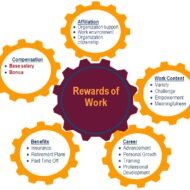
Operative Functions of HRM Staffing Staffing is one of the managerial functions. But this function is normally performed by the HR managers for all the departments of the firm. In most organizations, the HR department establishes personnel policies and coordinates the HR functions of all the departments. This function is also called the operative function or HRM function. It includes, amongst others, the processes of hiring, training, compensating, appraising and retaining employees, and attending to their labour relations, health and safety, and equality concerns. Procurement Procurement refers to a string of activities undertaken by the HR managers for filling the present and future vacancies of the organization. The activities include job analysis and designing, HR planning, recruitment and, finally, the selection of suitable employees. Here, job analysis refers to both the determination of specific tasks and responsibilities connected to a job and identifying the skills, knowledge and abilities required for the job holder. HR planning involves choosing and placing the right person at the right job and at the right time. Recruitment involves gathering a pool of applicants from which suitable employees may be selected. Lastly, selection involves screening, testing, interviewing and hiring the most suitable employees for the organization. SCOPE AND CHARACTERISTICS OF HRM Development Development here refers to both employees’ training and management development. HR managers are accountable for conducting and supervising training and development programmes for employees. The very purpose of a training and development programme is to increase the employees’ competencies in their job by improving their knowledge, skills and abilities. Training and development is widely accepted as a method for enhancing the employee skills, increasing the individual and organizational performance, improving the employee morale, and achieving the business growth and success. Compensation Compensation refers to the determination of the pay scale and other benefits for the employees. Establishing and maintaining the pay system of an organization is one of the principal jobs of the HR managers. They must devise ways to ensure fair and equitable pay rates. In addition, HR managers should regularly manage the performance evaluation system of the organization, and continuously design reward systems such as performance-linked incentive plans and bonus and flexible work schedules. Maintenance The maintenance function aims at retaining efficient and experienced employees in the organization. This calls for creativeHR practices. In this regard, HR managers are responsible for offering a wide range of HR programmes covering occupational safety, health promotion and physical fitness, canteen facilities, recreation activities, transportation programmes, employee suggestion schemes, career counselling and growth for creating a positive work environment. OBJECTIVES AND FUNCTIONS OF HRM Integration It consists mainly of industrial relations and aims at ensuring good relations between the management and the employees. HR managers have to implement industrial relations programmes that would ensure ethical and fair treatment in disciplinary action, grievance redressal, and career management processes. They should also counsel the employees and the management to prevent and, when necessary, resolve disputes over labour agreements or other labour relation issues. It is to be understood here that the functions of HRM can vary widely from one organization to another, depending upon its nature, size, and objectives. For instance, a smaller organization may follow a shorter HRM process with a greater emphasis on functions like procurement and compensation and little or no priority for activities like training and development and industrial relations maintenance. On the contrary, large organizations may pursue a longer and more comprehensive HRM process to meet the requirements of both the management and the workforce. WANNA TAKE A HR QUIZ N CHECK YOUR HR IQ? 1. The development and application of employees’ skills and energies to accomplish the goals and objectives of the...

Posted by Managementguru in Business Ethics, Business Management, CSR, Human Resource, Principles of Management
on Mar 12th, 2014 | 0 comments
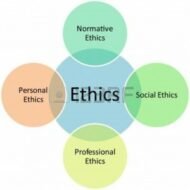
What is the relationship between Corporate Social Responsibility and Business Ethics Business ethics can be defined as the principles and standards that establish acceptable conduct in business organizations. The acceptability of behaviour in business is determined by customers, competitors, government regulators, interest groups, and the public, as well as each individual’s personal moral principles and values. Can Ethics be Taught? I feel that ethics cannot be taught: it is an inbuilt entity and in countries like India where religion is all pervasive in business or any other discipline, this quality is imbibed in every individual right from his birth. The power of money and authority plays a major role in changing a man’s perspective and bureaucratic hurdles and red tapism mar the pace of business development. Businessmen should never compromise ethical principles with short-sighted objectives of amassing material wealth but should develop a spirit of altruism. Management education should focus also on training the individuals to be ethic-savvy apart from being mere decision making authorities satisfied with their designation and power of authority. Employees have the same kind of ethical responsibility towards their organisation and should not misuse time and property and should not place their interests before the enterprise objectives. What is Corporate Social Responsibility? Many consumers and social advocates reckon that businesses should not only make a profit but also consider the social implications of their activities. We define social responsibility as a business’s obligation to maximize its positive impact and minimize its negative impact on society. Although many people use the terms social responsibility and ethics interchangeably, they do not mean the same thing. Business ethics relates to an individual’s or a work group’s decisions that society evaluates as right or wrong, whereas social responsibility is a broader concept that concerns the impact of the entire business’s activities on society. There are good business reasons for a strong commitment to ethical values: 1. Ethical companies have been shown to be more profitable. 2. Making ethical choices results in lower stress for corporate managers and other employees. 3. Our reputation, good or bad, endures. 4. Ethical behaviour enhances leadership. 5. The alternative to voluntary ethical behaviour is demanding and costly regulation. Points to Ponder relating to behavioral ethics. 1. What conflicts of interest have you personally experienced in personal or professional roles? 2. If you perceive a potential conflict for yourself, what are some ways you might ensure that this conflict doesn’t lead to unethical behavior for you and others? 3. When have others’ conflicts of interest impacted how you or those you know were treated? 4. What types of policies can or do organizations implement to try to reduce conflicts of interest or their costs? 5. Why do you believe conflicts of interest are so pervasive in society? Why don’t we take more steps to avoid them? 6. Why is it so hard for individuals to recognize their own conflicts of interest, and how is this impacted by behavioral biases? Unethical behavior,conflicts,personal interests,responsibility What is Conflict of Interest? Conflict of interest arises when there is a clash between responsibility and reward. Say, if a doctor decides to be more business-like, if a judge decides to favor one party, if a ruling party favors a decision not good for the masses, what will happen? A conflict of interest exists when a person must choose whether to advance his or her own personal interests or those of others. Wal-Mart Stores, Inc., may have the toughest policy against conflict of interest in the retail industry. Sam Walton, the late founder of Wal-Mart, disallowed company buyers from accepting so much as a cup of coffee from suppliers. The Wal-Mart policy is black...
Posted by Managementguru in Business Ethics, Business Management, Decision Making, Principles of Management, Strategy
on Mar 11th, 2014 | 0 comments
Spirituality and Management The purpose of correlating spirituality and management might present a weird picture to some. Research of the old Hindu scriptures, epics and Vedas disclose the secrets of management etiquettes coated with spiritual sugar which serves as a road map for us to cherish and follow. As an ardent follower of the BHAGAVAT GITA, THE UNIVERSAL BOOK OF SPIRITUAL SCIENCE, it was really amazing for me to know that the core principles of management have already been defined and dealt with that were formulated at a later date by MANAGEMENT GURUS like PETER DRUCKER, HENRY FAYOL, C. K. PRAHALAD and the like. I would like to present four qualities that struck me while I was comparing and contemplating. PERCEPTION AND UNDERSTANDING THE INNER SELF SELF MOTIVATION AND SELF TRANSCENDENCE DUTIES AND RESPONSIBILITIES LEADERSHIP The Leader and the Manager: The LEADER IS BEING FOLLOWED willingly, but a manager has to command individuals in order to adhere to his instructions. So, being a good leader starts from soul searching or understanding the nature of one’s inner self. SELF CONCEPTION gives a different dimension to approach problems. Spiritual experiences induce clarity in thinking that leads to ethical decision making. The spiritual experiences of Arjuna, one of the PANCHA PANDAVAS with LORD KRISHNA made him stronger (at will) and sharper (right perception). Decision Making: “I am the strength of those who are devoid of personal desire and attachment. O Arjuna, I am the legitimate desire in those, who are not opposed to righteousness, “says Lord Sri Krishna. At the war front, Arjuna the GREAT WARRIOR is not sure whether to fight against his own kith and kin. The inspiring words of Krishna motivated him to come out from the state of INERTIA and enter RIGHTEOUS ACTION. It is a testimony of what philosophers call the transcendence from alienation to self confidence to reach ethical decision making. One can never forego his duty or responsibility, be it his personal life or in the management arena. EFFECTIVENESS IS DOING THE RIGHT THINGS EFFICIENCY IS DOING THINGS RIGHT https://www.slideshare.net/parthacharya/management-lessons-from-mahabharata-9806655 Forming a VISION, planning the right Strategies, pooling the resources, hiring right people for the right job, setting goals and objectives, reviewing by MANAGEMENT BY OBJECTIVES, MANAGEMENT BY EXCEPTION, rewards and recognition, all have been dealt with a masterly excellence in MAHABARATHA which talks about the GURUKSHETRA WAR between the PANDAVAS and KAURAVAS or to simply put it, between THE GOOD AND THE EVIL. “The Supreme Lord is situated in everyone’s heart, O Arjuna, and is directing the wanderings of all living entities, who are seated as on a machine, made of the material energy.”Mind can make you LIBERATED OR BONDED that depends upon your WILL to master it or be a slave. Controlling your mind in turn controls your actions and thought process that leads to well augured efforts that proves fruitful to the human race. Leaders are born and not made goes the saying. But if you are able to be THE MASTER OF YOUR MIND, you are a leader made. Management Lessons from THE BHAGAVAT GITA Applicable to both western and Indian school of management, THE BHAGAVAT GITA deals with problems at the GRASS ROOT LEVEL relating to THE HUMAN PSYCHE. https://www.slideshare.net/singhm91/management-lessons-from-bhagvad-gita It enlightens us on all managerial techniques, goading us towards a serene atmosphere and state of affairs in place of the conflicts, stress, and lack of co-ordination, common in most of the enterprises world wide. “Do your duty perfectly, and the results will follow suit”, is the crux of GITA. How many of us can transform ourselves into such personalities? Can we ever overcome the desires...
Posted by Managementguru in Business Management, Human Resource, Organisational behaviour, Principles of Management
on Mar 10th, 2014 | 0 comments

A Purview on Line and Staff Relationship How To Make Line And Staff Work Effectively: Line people “TELL” but staff people “SELL”: The functions of line and staff often overlap and it is the responsibility of line authorities to make decisions and act upon them while staff must assist and counsel them. If the role playing is perfect all the other elements fall into place. Making Line listen to Staff: The line men must be made to understand that the company employs staff experts to assist and advice and it is not fair to undermine them. Keep the Staff informed: It is a must to keep the staff members abreast of the vital matters in order to make correct decisions. Requiring Completed Staff work: 1. Presentation of a clear recommendation based upon full consideration of a problem 2. Clearance with persons affected 3. Suggestion about avoiding difficulties involved 4. Preparation of paper work-letters, directions, job descriptions and specifications are the functions that should be carried out by the staff members on time in order to facilitate the line managers to accept or reject a proposal. Making Staff work as a Way of Life: The duty of staff is not to take credit but downgrade their own contributions. This results in EGO SATISFACTION and also a drive to improve the performance levels. Careless Application of the Staff Device: The staff should not take authority in their own hands though they may be anxious to know about the implementation of their suggestions. How to Influence Without Authority Advantages Of Staff: a) The staff specialists save much time by gathering, analyzing and interpreting the data while line managers are busy at work. b) Complex problems of line men require advice of staff men. c) Staff advice is necessary for technical, political, legal and social decisions. Limitations Of Staff: a) Thinking in Vacuum: Sometimes highly impractical solutions are suggested by the staff men due to lack of experience in implementation. b) Lack of Staff Responsibility: They can easily blame the line manager for the failure of a project since they are not accountable for the end results c) Danger of Undermining the Line Authority: When the top management attaches too much importance to the staff fraternity, there is a danger of staff managers looking down on the line managers d) Problem of Unity of Command: Sometimes the lower level employees will be getting instructions from both the line and staff authorities. Have you ever experienced such conflicts with your managers or colleagues? If so, feel free to discuss about the situation and how you tackled it in the comment section...
Posted by Managementguru in Business Management, Human Resource, Labor Management, Principles of Management
on Mar 10th, 2014 | 0 comments
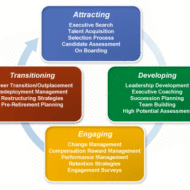
Dimensions of Human Resource Management I would like to brief you on some of the key aspects that mark the paradigm shift in the HR environment towards better management prospects. 1. The Human Resource function has shifted its focus to a much wider canvas that includes Empowerment of EmployeesRestructuring the Organisation and so on. 2. A range of HR sub-systems are involved in Planning The NumbersTypes And Skills Of HrEnsuring Their AvailabilityPlacing In The Right JobPromoting And Nurturing Their Mental HealthHelping Them Develop Special Talent And Skills 3. Human Resource is considered as an “investment” and no more an “expenditure”. Investment in TrainingRe-Training AndContinuous Learning On The Job develops the skills and competences of managers and employees and prove to be an useful investment. 4. The concepts of Learning Organisations AndTeam-Building serves a basis for “Competitive advantage” and “Motivating the employees.” 5. Values that are stressed upon are Co-OperationHarmonisationSynergyTrustBeing Pro-ActiveCollaboration 6. Strategy: VisionMissionObjectivesGoals– How these can be achieved? The techniques that are basically holistic in nature can solve the purpose. Such techniques involve SEWA– Self mastery, Empathy for workers, Worker-directedness and Achievement in performanceABO-Action by Objective Nine Dimensions of an Effective HR Department: What is the reputation of the HR department?What are the criteria (deliverables) that shape HR work?What is the mission or strategy of the capabilities – focused HR department?How is the HR department organised? How does HR facilitate the definition and creation of organisation capabilities?How do we make better HR investment and choices?How do we create HR practices?How does HR go about doing its work? What do HR professionals need to be, know, and do to be effective? Let us make a sincere comparison between the past and the present in terms of HR perspective These techniques produce performers who find their way through any set of given problems, manage themselves and lead the team to a stae of self- realisation. Old model vs New model 1. Job was the basic unit/ Team is the basic unit 2. Relations with environment there handled by the individuals/ Densely networked with environment 3. Information flow was vertical/ now it is vertical, horizontal and holistic 4. Many layers of management / Organisations have become flat 5. Emphasis on structures/ Emphasis on process and literally virtual organisations have evolved 6. Career path upward and linear/ career path lateral and flexible 7. Standardised evaluation and reward system/ Customised evaluation and reward system 8. Ethnocentric/ International 9. Single strong culture/ Multicultural and diversity of viewpoints and...