Posted by Managementguru in Business Management, Change management, Entrepreneurship, Human Resource
on Apr 16th, 2014 | 0 comments

Entrepreneurs are the mechanism by which our economy turns demand into supply. They create new ventures that provide new, improved products and services. Here we list some of the principal qualities of entrepreneurs and how those qualities help in shaping up our economy. Productivity Accelerators: Entrepreneurship raises productivity through technical and other forms of innovation. Entrepreneurs as risk bearers find resources and fill market gaps that would be missed by larger, more bureaucratic organizations. They allow a country to extract every last bit of marginal capacity out of whatever resources exist within the society. Brilliant Tips on Productivity by some Popular Entrepreneurs: Focus on one thing at a time: It may seem like a no-brainer, but multitasking can actually cut back on your productivity. Instead of juggling multiple projects at once, schedule out blocks of time — or even entire days — during which you only focus on one task or one project. Steph Auteri, @stephauteri, Word Nerd Pro Outsource, outsource, outsource: Everything may be a priority, but you are not equally brilliant at everything. Eliminate the unnecessary tasks and outsource your weaknesses so your time and focus is directed to where you’ll make the biggest impact for the business. Kelly Azevedo, @krazevedo, She’s Got Systems Define roles and divide work: Make sure everyone on the team has distinct roles defined, and divide work accordingly. Everyone on a proactive team will want to do everything, and clearly defined roles make it clear who should do what. David Gardner, @david_gardner, ColorJar Job Creators: It is a powerful tool of job creation –Entrepreneurship as a whole contributes to social wealth by creating new markets, new industries, new technology, new institutional forms, new jobs and net increases in real productivity. The jobs constructed through their activities in turn lead to equitable distribution of income which leads to higher standards of living for the population. Entrepreneurship facilitates the transfer of technology. Entrepreneurs play a strategic role in commercializing new inventions and products. They play a critical role in the restructuring and transformation of economy. Their behavior breathes vitality into the life of large corporations and governmental enterprises. Market Competitiveness: They make the markets more competitive and thereby reduce both static and dynamic market inefficiencies. Micro-preneurs working in the informal sector circumvent established government authority when governments and their programmes inhibit economic development. They stimulate redistribution of wealth, income and political power within societies in ways that are economically positive and without being politically disruptive. Social Welfare: They improve social welfare of a country harnessing dormant, previously overlooked talent. They create new markets and help in expansion into international markets. The unique feature of entrepreneurship – that it is a low cost strategy of economic development, job creation and technical innovations. Technology Innovation: Technology entrepreneurship is also important for sustainable development as Nobel Prize Laureate prof. Dan Schechtman puts it: “Technological entrepreneurship is a key to the well-being of the world”. India has been the first among the few developing countries to have assigned a significant and categorical state role to small scale industries from the first Five Year Plan itself, and the small scale sector has emerged as a dynamic and vibrant sector of the economy during the eighties. If the country develops pucca infrastructure and removes the hurdles in the operative environment politically and legally, no doubt the Indian economy will be scaling to greater heights. Surplus manpower (educated and un-educated), which has been a great liability can become an asset once those with potential are selectively groomed for self-employment and enterprise formation, leading to further job...

Posted by Managementguru in Business Management, Change management, Human Resource, Organisational behaviour, Principles of Management
on Mar 31st, 2014 | 0 comments
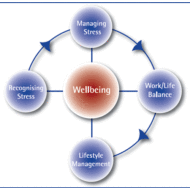
India often looks at Japanese or American models to comprehend the concepts of management. In reality, Indian scriptures can be considered as treasuries of management. The Bhagavat Gita, the Vedas and the Epics highlight the true spirit of working together and the need for de-stressing the self for enhanced performance levels. The idea of NISHKAMYAM (to perform one’s own work without expecting a result) is truly said to be the highest ideology preached by Lord Krishna. What Induces Stress? A dynamic condition in which an individual is presented with an opportunity or confronted with a demand, related to what she or he desires and for which the outcome is uncertain but important, can be called a stressful situation. The consequences of stress in an organizational set up express themselves in the form of physiological, psychological or behavioral symptoms, which are harmful to the individuals who experience high levels of stress. Symptoms of stress: AnxietyDepressionIncreased job dissatisfactionAbsenteeismDecline in productivityRapid turn overHigh blood pressureHeart diseasesHead aches Stress Can be Motivating: While long term stress is harmful to the individual and organization as well, it is said that short term stress serves the purpose of task accomplishment by individuals or groups, within the stipulated time. It serves as a motivation factor rather than a causative agent of frustration. It has been proved by scientists and medical researchers that stress has a direct effect on the metabolism of a person, that causes increase in heart and breathing rates, increase in blood pressure, thus inducing heart attacks. Equally important are the behavioral and attitudinal changes that are created by stress, which cannot be overlooked. Job Satisfaction: Psychological symptoms arise due to job-related dissatisfaction, boredom, work pressure, irritability and procrastination. Sometimes forceful involvement may also lead to decreased job satisfaction. The job to be carried out can be finished at the particular time if the individual is able to give one’s best shot. But when it is performed under stress, they complete the job with dissatisfaction. When the incumbent is asked to perform a task that lacks clarity, naturally ambiguity arises in his mind followed by anxiety. Behavioral Symptoms of Stress Changes in productivity levels, absence, and rapid staff turnover are stress symptoms of behavioral nature. It might be expressed even in the form of increased smoking, consumption of alcohol etc., Say for instance, in production department, when there is a need to supply a product in a very limited time, the workers may be active initially, but the performance slows down when they get totally tired or dissatisfied with the work. Again the demand by the superior adds additional stress that reaches unmanageable levels. Similarly, people taking care of administration, banking, marketing and other office related works fall a prey to stress. How to manage stress? From an organization view point, it is believed that a limited amount of stress may work wonders in terms of performance, with stress acting as a “positive stimulus”. But even low levels of stress are likely to be perceived as undesirable from an individual’s stand point. How could be the notion of management and individuals be different on the acceptable levels of stress? It does not solve the purpose. Individuals have to understand that, they have to live up to the expectations of the management in order to enhance their credit ratings, in terms of promotion and pay. They have to understand that challenges are to be perceived as opportunities to prove their mettle. Self and situational analysis, work analysis, time management and physical well- being are some techniques that practically solve problems of stress. “De-stressing the Self” Techniques for Employees Organisations can reduce stress of the employees...
Posted by Managementguru in Entrepreneurship, Human Resource, Organisational behaviour, Principles of Management, Training & Development
on Mar 31st, 2014 | 0 comments
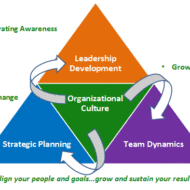
Defining Organizational Culture Business is an integral part of the society; and it influences other elements of the social system, which in turn affect business. The entire sphere of business activities are influenced by the social structure and culture of a society. The social system is influenced by the way the business functions, innovations, transmission and diffusion of information and new ideas etc. Business activities have greatly influenced social attitudes, values, outlooks, customs and traits. However, it is very difficult and, in some cases, almost impossible to change many elements of the social environment in the short run. Hence, a business may have to anticipate and adapt to these uncontrollable external environments. Socio-cultural environment refers to the influence exercised by certain social factors, which are “beyond the company’s gate“. This includes attitude of people towards: Work Wealth Knowledge Family Marriage Religion Education Ethics and social responsibility of business. Belief System Influencing the Action: Culture is something that is evolved in a society over a long period and it represents the unified belief system of a large group of people. An organization can be distinguished from another by way of its culture, since organizational culture is unique in its perspective and methodology. When people from different social backgrounds are made to work under the same roof, a corporate organization acquires a distinct culture. Culture conveys a sense of identity for the organization. It facilitates the generation of commitment to do something noble than one’s own self-interest. Cultural Differences: As business go international, the need for understanding and appreciating cultural differences across countries is essential. Any move from one country to another will create a certain amount of confusion, disorientation and emotional upheaval. Especially, people form Asian countries that migrate to the west are subjected to what is called a “culture shock”, in terms of attitude, working style, language, way of life, dress codes and negotiating styles. Freshers may adapt to these changes quickly, since they are natural and easy to be trained. The problem arises with individuals who had been working under a totally different cultural setup from that of the new cultural environment; they will have to undergo the process of ‘unlearning‘, which is more like swapping old ideas for new ideas. This change process is what both the employees and the management find challenging; but ultimately what needs to be done has to be done. Culture Shock: Multi national and Trans national companies, which have business establishments in different parts of the world, must be prepared to cope with the culture shock. Since huge investments go into their projects, they have to think and analyze about the cultural and social aspects that have a definite impact on the working of organisations. For example, the work attitude of employees in the west might lay emphasis on services and results, oriented towards self-improvement; while that of the Asian counterparts may be patience and sacrifice rooted in emotions and loyalty. Business can be considered as a large social network serving to satisfy economic and social interests; culture acts as the social glue that helps hold the organization together by providing appropriate standards for the behavior of organization members. Slogans of Some Reputed Organizations in the Industry: Nokia: Connecting people Jet Airways: The joy of flying Reliance Industries: Growth is life Citibank: Your citi never sleeps The above cited examples give you a fair idea about what a particular company stands for. The orientation of these companies, expressed in the form of SLOGANS contributed to the successful conduct of their...
Posted by Managementguru in Business Management, Change management, Decision Making, Entrepreneurship, Human Resource, Leadership
on Mar 30th, 2014 | 0 comments
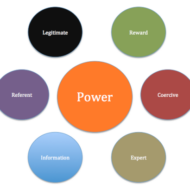
Power and Balance in Corporate Governance Power has the ability to disorient a person’s behavior and attitude. When properly used it leads to height of efficiency, when misused it calls for calamity and disorientation in the entire business firm. It is nothing but the authority that comes with your job which has to be utilized for constructive purpose and at the same time to ascertain that things are “going in the right direction.” Precise use of power leads to a congenial atmosphere in your business arena”. Otherwise in course of time you might have to tackle warfare with your subordinates and the “undercurrent of animosity” might ruin your business success. How it affects Inter-Personal Relationship: When we talk about POWER it usually fits well into the top level management cadre, as managers and senior managers are assigned with huge powers in order to lead the firm in times of crisis as well as maintain the consistency of the nature of the firm. So when there is abuse of power consciously or unconsciously, people create a space between themselves and that particular person who misuses the power. So the result would be a lack of interpersonal relationship between the manager and the employees. Managers generally acquire and use influence that has its impact not only on the behavior of the individuals, but also on the organizational effectiveness as a whole which in turn affects productivity. Use Power as a Constructive Tool: In fact, authoritative behavior is often misunderstood by most of the managers in the business setup; there is a need for the managers to skillfully use their power in order to extract work from their teams as well as to maintain a balance between the extent to which authority must be used and the tolerance level of the employees’ (mind set). So it is more of a psychology which involves much critical analysis on the part of the manager to understand the constructive aspects of his authority and how employees at a lower level will always look up to him for support and guidance and not indifference. Power covers and affects the following important aspects, Discretion Crisis management Dependence of employees Responsibility Leadership Governance Interpersonal relationship Change management Environmental influences Reward systems Collaborative management Success of the firm and so on. In order to maintain his own integrity as well as the organisations’ the manager must be able to appreciate the relevance of power in management just by not looking into the literature but act in accordance with the situation. A detailed analysis of power dynamics makes the manager more effective in dealing with behavior inconsistencies in the organization. Try to be more open in your communication and make your employees feel that “You are always there” to support and guide them. This in turn will make your “Boss to have a second look at you” for a promotional pay. This discussion is from the manager’s perspective and there is more to be discussed and considered from an employee’s...
Posted by Managementguru in Business Management, Entrepreneurship, Human Resource, Organisational behaviour, Principles of Management, Training & Development
on Mar 30th, 2014 | 0 comments

What are Values and Beliefs in an Organization? Organizational values are the guiding principles that define ethical behavior, decision-making, and corporate culture. In 2025, with AI integration, sustainability goals, and hybrid work models influencing businesses, values must evolve while staying authentic. Infosys Narayana Murthy on Value System “Our team was unique in its commitment to a strong value system. We believed in putting the interest of the company ahead of our own. We upheld ethical business practices and legal integrity. A robust value system is what distinguishes long-term players from others.” The emergence of ESG (Environmental, Social, and Governance) factors has reinforced the importance of ethical leadership. Core Values of a Future-Ready Organization Organizations in 2025 are actively reshaping core values to suit the dynamic business environment. These values guide employee behavior and corporate strategies: Customer-Centricity – Personalization and data-driven customer experience Employee Well-being – Work-life balance in remote and hybrid settings Competitiveness & Agility – Rapid adaptation to AI & automation Diversity & Inclusion – Creating equitable workplaces Innovation – Fostering technological advancements Sustainability – Environmentally responsible business practices Growth Mindset – Continuous learning and skill development Ethical Governance – Transparent and fair leadership Data Security & Privacy – Compliance with digital regulations Team Collaboration – Strong networks despite digital transformation Beyond Definition: How to Put Values into Action A value-driven company does not just define principles—it integrates them into daily operations, employee training, and leadership policies. Gamification of corporate learning, AI-assisted HR frameworks, and transparent communication drive successful implementation. Leading by Example: Imitation as a Behavioral Catalyst Leadership sets the tone for company culture. Employees subconsciously emulate the behaviors of their leaders, much like students learning from teachers. In 2025, AI-driven mentorship programs enable leaders to inspire teams remotely. Interactive training modules reinforce value-based decision-making. Imitation remains a cornerstone in shaping the workforce, but with enhanced digital engagement. Coercion is NOT the Right Approach: Ingraining Values from Day One Rather than enforcing values through rigid policies, organizations must instill them naturally. Values should be embedded in hiring strategies – Recruit for cultural alignment. Leadership training must focus on emotional intelligence – Influence without coercion. AI-driven behavioral analytics help detect gaps in value adherence early. With AI-enhanced work environments, molding employees to value-driven approaches becomes seamless. Influencing Employees the Right Way: The Role of Every Individual Each role in an organization contributes to reinforcing core values and ensuring long-term success: Clerical Staff – Maintain efficiency and ethical compliance. Supervisors – Organize, control, and enforce value alignment in teams. Managers – Define success, overcome obstacles, and inspire strategic thinking. Senior Leaders – Keep the organization focused on sustainable profitability. Executives – Drive innovation while navigating complexities with integrity. With AI tools and data-driven leadership, maintaining value alignment is easier than ever. Performance of Value-Oriented Organizations in 2025 Companies that prioritize values consistently outperform competitors due to trust, strong employee engagement, and sustainable innovation. Reliance Industries Limited exemplifies value-driven leadership with customer satisfaction at its core. Global firms integrate ESG and AI ethics into corporate strategies, reinforcing long-term credibility. To scale new heights in business, organizations need: ✅ Strong-willed leadership ✅ Adaptive strategies ✅ Sustainability-driven policies ✅ Digital transformation readiness ✅ Passion for innovation Maintaining integrity comes at a price, but organizations with strong values reap exponential rewards in brand reputation, employee loyalty, and customer...