Posted by Managementguru in Financial Management, Principles of Management
on Feb 28th, 2014 | 0 comments
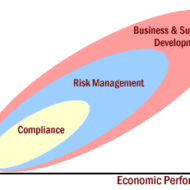
There is no Business Success Without Risk What is the Risk of Taking a Chance in a Business Activity? Business is often viewed as a game or a gamble in which success is always at risk. Think about it, risk is present in every sphere and aspect of our lives and even when you are not running a business. So why the fuss? A thorough knowledge and research of the business activity you are about to perform will give you the needed confidence to go about it. A true business man is an entrepreneur who treats risk as an opportunity rather than a challenge. Business organizations are started with a single purpose, to make profit and then more profit. Only when the organizations grow, there comes the awareness and necessity to think about stakeholders’ interest and working towards a social cause. Initial stages definitely pose threats for the very survival of the organization. Risk is an inherent part of a business as you are not sure about the outcome of your business activity. What are the Chances or Probability? We talk more about probability and chance outcomes when you deal with a particular product. Retail segment is one area where the risk of duplication is high and people have to be cautious and careful in order to protect their copyrights and symbols from being replicated. Mild inflations can benefit the market but recessions put you in doldrums especially if you are dependent on a wholesaler or a manufacturer. Risk can aspect itself in the following ways: Economically- Attrition and effects of global economy Legally- Labor laws and enactments Socially- Expectations from the public in general Government rules and regulations- Government policies and export duties Stakeholder expectations- Wealth maximization and assured profits Environmental – Need to comply with changing standards like waste affluent treatment plants Political scenario- Effects due to changing governments Risk and Uncertainty Risk and uncertainty go hand in hand and you need a risk management template or a model for your reference to solve or manage risks. The first and foremost step would be to identify the risks in your sphere of business activity. Risk documentation or creating a risk profile is an inevitable move for a new organization. This prepares the organization mentally to face challenges in a structured manner and reduces disorientation. It is very important to keep in mind the organisation’s objectives while documenting the risk profile to keep your focus unaltered. Risks evolve continuously and it is the responsibility of the top management to be in line with the market economy to manage the adverse conditions that come in the way. How to Manage Risks? Risk management is an ongoing and continuous process and it cannot be looked upon as a distinct area to be managed by a set of individuals. In a small and upcoming organization the responsibility lies on the shoulders of each and every individual to self assess, evaluate and manage risks and find the right kind of solution that will not be detrimental to the core objectives of the organization. Bigger organizations can afford to have expert opinion by commissioning PROFESSIONALS to identify, assess and manage risks. An overall and broad perspective of risk is what has been analysed here. There are numerous possibilities of risks, whether big or small in magnitude, affecting an organization. A thorough study of the field you are about to venture into, the pros and cons of the business activity, time of launch are few things that will help you to analyse what the market niche warrants for and act accordingly. In further segments, let us look into the factors of risk, identifying and...

Posted by Managementguru in Financial Management, Principles of Management
on Feb 28th, 2014 | 0 comments
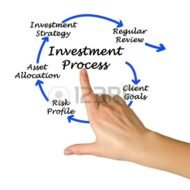
What forms the Basis for your Investment Decisions? Profit seeking is the ultimate aim of corporate management and the finance manager acts as the anchor point of the management structure. He has to provide specific inputs into the decision-making process, with respect to profitability. Corporate Investment Decisions Cost control What are the Cost Centres? It is the finance manager’s responsibility to have an eagle’s eye on rising costs by continuously monitoring the cost centers of his organization. Production department where there is always a need for additional resources or inflow of funds, should be his first target of contol. Costs are incurred by each and every department of an organization, namely, the production, marketing, personnel and of course finance and accounting. It is a difficult task to control the rising costs. That is the reason why, big corporate companies go for annual budget formulation at the start of the year and reformulates the finance plan by comparing actual with the projected figures. This kind of evaluation helps the firm to fix responsibilities for various centers of operation. Resource Allocation A finance manager is the first person to recognize rising costs for supplies or production, and he can make immediate recommendations to the management to bring back costs under control. While cost control talks about allocating resources to different responsibility centers in the desired proportion, cost reduction focuses on conserving the resources. Cost reduction can be achieved through modifying product and process designs, cutting down throughput time, doubling labor productivity, mass customization, standardistion etc., Pricing Price Fixation It is always a joint venture between marketing and finance departments when it comes to price fixation of products, product lines and services. Pricing decisions are important in that, they affect market demand and the company’s competitive stand in the market. Pricing strategies have to be evolved in the wake of existing competitor strategies and market preference. The demand forecast is the prerequisite factor of the production process and in-depth market analysis and understanding is inevitable on the part of the executives. Future Levels of Profit The finance manager is also responsible for charting out the future levels of profit, based on the relevant data available. He has to consider the current costs, likely increase in costs and likely changes in the ability of the firm to sell its products at the established selling prices. So, it becomes clear that, such market evaluation cannot be periodical, as the market is highly dynamic and has to be done in a day-to-day basis. Before a firm commences a project, its discounted future fund flow and expected profits must be ascertained which will serve as a basis for comparison. Risk versus Return: Investment decisions always are risky as the gestation period of invested funds is very long and not to return immediately. Further, the firm has to calculate the time period in which its initial investment can be recovered and the feasibility of the rate of return on its investment. Fund Management The finance manager is engaged in activities like, mobilization of funds, deployment of funds, and control over the use of funds and also he is to evaluate the risk return trade-off. Profit maximization is the fundamental objective of any organization and the finance manager plays a key role in restructuring the financial philosophy of a firm to take it to greater...
Posted by Managementguru in Change management, Organisational behaviour
on Feb 23rd, 2014 | 0 comments
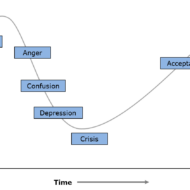
Resistance to change should be considered as a good sign and can be compared to fever while there is a bodily infection. It creates a platform for the firm to find out the causes for resistance and hence the solution. Causes for Resistance to Change Individual Resistance A. Economic factors: When pay is tied up with productivity, resistance arises. B. Habit: It is the habit of humans to resist anything new. C. Fear of the unknown: Freshers always have a feeling of insecurity and uncertainty when they join an organization. D. Change affects emotions and sentiments: People are disturbed both emotionally and sentimentally when there is a change. E. Lack of clarification: People interpret change in different ways; so there is a need for the organization to clarify as to the nature of the change and its implied consequences or implications. F. For the sake of opposing: Illogical and weird opinions are given by the employees just for the sake of opposing. Resistance to change Organizational Resistance A. Built-in-Mechanism: People working in groups experience shock when there is a structural change introduced in the system as they are tuned to a set of rules and procedures. B. Group norms: This also acts as a strong source of resistance acting as a constraint C. Threat to expertise: Technological innovations pose new threats everyday to the non-technical persons D. Threat to established power relationship: If the powers are re-assigned amongst the managerial cadre there arises unrest E. Threat to established resource allocation: Budget reallocations are resisted by departments that are not favored How to Overcome Resistance to Change? Education and Communication: The logic of change must be conveyed to the employees in a convincing manner and full facts must be communicated without an iota of doubt. Participation: It becomes difficult for individuals or groups to resist change when they are made to act as change agents Facilitation and Support: Change agents can offer counseling, training etc to pacify the employees Use of Group Force: Groups can exert more pressure on attitudes, values and behavior and hence, if the group cohesiveness is strong, the change is easier to achieve. Leadership for Change: A strong leader-manager can create a climate for psychology support from subordinates Negotiation: The key persons or individuals whom the management think are potential change agents can be rewarded and brought to the negotiating table Manipulation: Twisting information, creation of false rumors, withholding undesirable information are some of the tactics of manipulation that decrease the intensity of resistance to change. Coercion: Application of force that includes threats of transfers, delay in promotions, negative performance evaluation can decrease the resistance and also the credibility. Manipulation and coercion must be considered as last options to reduce the pressure as generally people will welcome any change that is positive and beneficial to the organization in the long run. It is the responsibility of the management to project the change in a gradual and convincing manner to the...
Posted by Managementguru in Business Management, Strategy
on Feb 17th, 2014 | 0 comments
What is Strategic Management There are three core elements to be discussed when it comes to strategic management. Analysis Decision Action Strategic management is nothing but taking the organization or project or process to the next higher level by implementing strategic actions. When we say strategic action or plan of action, it concerns both the internal and external environment thoroughly analyzed, to decide upon the future course of action. Strategic management is oriented towards future development with the present environment and past experiences serving as the premises. Definition of important terms: Strategic Management: Strategic management consists of the analysis, decisions, and actions an organization undertakes, in order to create and sustain competitive advantages. Competitive Advantage: A firm having an edge over its competitors. For example, Narasus Coffee has established its foot hold very strongly in South India, because of its unique flavor. The advantage can be in the form of uniqueness, service, customer satisfaction or availability. Distinctive Competence: Strategy is all about being different from everyone else. Sustainable competitive advantage is possible only through performing different activities from rivals or performing similar activities in different ways. Think about this, if you do not keep your eyes and ears open as to how your competitors are planning to capture the market, where will you be in the next two or three years? Suppose you are running a restaurant that offers multicuisine menus, what will be your plan of action to make it distinctive from your competitors and where would you want the facility to be located? And how will you popularize your service? Crux of Strategic Management: So, what do we mean by strategic analysis? Analysis or interpretation of strategic goals of the organization and also of the internal and external environment of an organization. Vision Mission Goals Objectives All these are some of the means by which an organization devises its short term and long term plans and actions. Say, you are running a blog, your blog will be yet another blog among the millions of other blogs to start with. Two things to be considered if you want to survive and sustain. 1. Your blog should be unique in order to attract audience- Returning visitors are the key to success. 2. Search Engine Optimization is equally important to satisfy the search engines who are the carriers. In modern corporate firms, there is a separate wing established for strategic planning. Next is strategic decisions: Ask yourself the following questions! 1.What industries should we compete in? 2.How should we compete in those industries? 3.Domestic or international arena? Broadly speaking, in an automobile industry a car manufacturer would have to compete both with competitors in his own niche and other niches, say two wheeler manufacturers. He must analyze why a person would want to buy a four wheeler instead of a bike, whether he owns a product that would satisfy the buyer in terms of service and features, what part of the demography he should target and what would be the value added services he might offer to the buyers, e.g., insurance and loan. Strategic decisions are taken by the owners or senior executives of the top level management. Next, what do we mean by strategic action? 1. Allocation of resources- financial, human and other physical resources 2. Structuring the organization to bring the intended strategies to reality Focusing on two basic questions, 1· How should we compete in order to create competitive advantages in the marketplace? For example, managers need to determine if the firm should position itself as the low-cost producer, or develop products and services that are unique which will enable the firm to charge...
Posted by Managementguru in Business Management, Principles of Management
on Feb 15th, 2014 | 0 comments

Functions of Management MANAGEMENT FUNCTIONS The objective of this topic is to make students understand the functions of management and the role of managers in an organization. The five basic management functions are listed below: · PLANNING · ORGANISING · STAFFING · LEADING · CONTROLLING PLANNING: The managerial activities aid in selecting the objectives, examine and forecast changes, develop policies, procedures and choose future course of action from among alternatives. Planning proceeds from “Where we are” to “Where we want to go.” Planning activities are 1. Analysing the current situation (also called the SWOT Analysis) 2. Anticipating or predicting the future based on the analysis 3. Determination of organizational objectives to be achieved 4. Deciding on the action plan 5. Evolving proper strategies 6. Pooling the resources (physical, financial and monetary) to accomplish enterprise objective ORGANISING: It is a process which integrates people and tasks; In order to achieve their tasks people are given sufficient authority, tools and information. Organising activities include 1. Specification of job responsibilities 2. Grouping of jobs into respective work units 3. Allocation of resources STAFFING: Human resource management is one of the key areas that decides the success of a firm’s activity. Staffing involves the selection of “Right person for the right job.” The activities are 1. Recruitment 2. Selection 3. Training and Development 4. Compensation 5. Promotion 6. Evaluation and 7. Rewarding people to achieve enterprise goals. LEADING: Leadership is the set of interpersonal behaviors that influence people to contribute to the organization and group goals. The activities under this category are 1. Providing proper direction 2. Guidance and Motivation 3. Clarity in communication to the work force CONTROLLING: This is a process that is necessary to keep track of the performace of individuals by setting some standards for direction. The activities include 1. Establishing performance standards enabling the work force to achieve the goals (both short term and long term) 2. Enhancing the employee performance through performance appraisal or rating of work 3. Comparison of performance against the standards to identify deviation or work problems and take corrective measures 4. Bench marking is one of the management techniques that facilitates an organization to uplift its performance levels to the best of industry standards and also catch hold of the strengths of the competitors and rectify the weaknesses prevailing in one’s own firm. CO-ORDINATION: It is regarded as a key function of a manager to bring in harmony among individuals and an effort towards accomplishment of goals. 1. Marginal decision making and 2. Sub Optimisation are some of the new approaches developed in the field of decision making. MANAGERIAL SKILLS: Skill is the resultant effect of knowledge, experience and expertise. It is the ability of an individual to perform a task which is obvious from the results he/ she shows. There are 3 kinds of skills that a manager should possess in order to excel. 1. The Conceptual Skill: Assessing a situation and acting accordingly depicts the manager’s perceiving ability of the abstract elements in force. A manager has to improve this kind of skill as he moves up the ladder in the management level or let us say that he can move up the ladder only if he possesses this kind of skill. · Management Consultants · Managing Director of a firm · President of a company · Economists · Startegists are conceptual analytic experts 2. The Technical Skill: This skill is purely based on one’s knowledge and on the job experience. This is needed at a lower level of management · Computer Operators · Engineers · Accountants · Machine Operators possess this kind of skill 3. The Human Relations Skill: This...