Posted by Managementguru in Business Management, Decision Making, Leadership, Startups, Strategy
on Feb 19th, 2014 | 0 comments
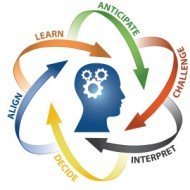
Effective Strategy Generation Why effective strategy generation is necessary? A business enterprise has to generate strategic alternatives and determine the effectiveness of its strategic decisions in order to be successful in the market. Various approaches to strategy formulations exist and it is a real complex phenomenon in that, a wrong strategic execution may produce irreparable consequences which may prove detrimental to the survival of the firm. The method of strategy formation usually follows the traditional approach, based on rational and normative disposition. Sometimes different thought processes may also serve as basic premises for the evolution of new strategies. Intuition: The strategy evolves in the mind of the chief executive without ever being explicitly stated and without the aid of formal procedures. Personal judgment also backs up this process. People with excellent intuition are often remembered for their imagination, drive and expansive vision leading to corporate growth and prosperity. To look into the future with such creativity and brilliance is the basic premise of this approach. Disjointed Incrementalism: This approach towards strategy making reflects an attitude of management having strong preference to act only when there is a need or only when forced to, and then considering a few convenient alternatives involving only small, non-disruptive changes in the organization. This approach is followed by firms that enjoy a pretty decent profit margin in the existing business and possess an exclusive niche in the market; they will not be ready to come out of their cocoons for fear of failure. The firm cannot take the risk of setting unrealistic goals deviating away from the status quo. Pic Courtesy: Account Manager Tips Entrepreneurial Approach: Systematic risk-makers and takers who look for and find opportunities belong to this category. Entrepreneurs view challenges as opportunities and not as problems. Key factor approach: This approach is based on determining the really significant factors that are important in the success of a particular business and concentrating major decisions on it. Say, for instance, a quality product at relatively low price may be a critical factor for a business firm. But eventually it has to achieve this in order to capture the market whence the same critical factor becomes unique to the company and adds value. Integrated approach: Analyzing the present internal and external conditions Identifying and evaluating the present strategy Search for strength and weaknesses viewed within the present strategy and environment Considering changes in the present strategy Generating alternatives unified to resolve the problems and exploit the opportunities Developing alternative unified strategies by combining the various alternatives in each of the problem and opportunity area Evaluation of unified strategy in terms of the enterprise objectives and choosing the strategy that best satisfies the objectives. Strategy formations should conform and comply with the changes in the external environment and the change called for may be in the strategy itself or in the implementation of the...

Posted by Managementguru in Business Management, Strategy
on Feb 17th, 2014 | 0 comments
What is Strategic Management There are three core elements to be discussed when it comes to strategic management. Analysis Decision Action Strategic management is nothing but taking the organization or project or process to the next higher level by implementing strategic actions. When we say strategic action or plan of action, it concerns both the internal and external environment thoroughly analyzed, to decide upon the future course of action. Strategic management is oriented towards future development with the present environment and past experiences serving as the premises. Definition of important terms: Strategic Management: Strategic management consists of the analysis, decisions, and actions an organization undertakes, in order to create and sustain competitive advantages. Competitive Advantage: A firm having an edge over its competitors. For example, Narasus Coffee has established its foot hold very strongly in South India, because of its unique flavor. The advantage can be in the form of uniqueness, service, customer satisfaction or availability. Distinctive Competence: Strategy is all about being different from everyone else. Sustainable competitive advantage is possible only through performing different activities from rivals or performing similar activities in different ways. Think about this, if you do not keep your eyes and ears open as to how your competitors are planning to capture the market, where will you be in the next two or three years? Suppose you are running a restaurant that offers multicuisine menus, what will be your plan of action to make it distinctive from your competitors and where would you want the facility to be located? And how will you popularize your service? Crux of Strategic Management: So, what do we mean by strategic analysis? Analysis or interpretation of strategic goals of the organization and also of the internal and external environment of an organization. Vision Mission Goals Objectives All these are some of the means by which an organization devises its short term and long term plans and actions. Say, you are running a blog, your blog will be yet another blog among the millions of other blogs to start with. Two things to be considered if you want to survive and sustain. 1. Your blog should be unique in order to attract audience- Returning visitors are the key to success. 2. Search Engine Optimization is equally important to satisfy the search engines who are the carriers. In modern corporate firms, there is a separate wing established for strategic planning. Next is strategic decisions: Ask yourself the following questions! 1.What industries should we compete in? 2.How should we compete in those industries? 3.Domestic or international arena? Broadly speaking, in an automobile industry a car manufacturer would have to compete both with competitors in his own niche and other niches, say two wheeler manufacturers. He must analyze why a person would want to buy a four wheeler instead of a bike, whether he owns a product that would satisfy the buyer in terms of service and features, what part of the demography he should target and what would be the value added services he might offer to the buyers, e.g., insurance and loan. Strategic decisions are taken by the owners or senior executives of the top level management. Next, what do we mean by strategic action? 1. Allocation of resources- financial, human and other physical resources 2. Structuring the organization to bring the intended strategies to reality Focusing on two basic questions, 1· How should we compete in order to create competitive advantages in the marketplace? For example, managers need to determine if the firm should position itself as the low-cost producer, or develop products and services that are unique which will enable the firm to charge...
Posted by Managementguru in Economics, International Business
on Feb 16th, 2014 | 0 comments

Economic Growth Strategies A Purview on Economic Growth Strategies for Developing Countries A developing country is one where the per capita income is low relative to that of fully developed countries. In human terms developing countries typically have major population percentage with poor health, low levels of literacy, inadequate dwellings and meager diets. The key to development rests on four fundamental factors namely human resources, natural resources, capital formation and technology. Human resources: A lot of poor countries are forever running hard just to stay in place. Even as a developing nation’s GDP rises, so does its population. So it becomes a mammoth task for such nations to overcome poverty with birth rates so high. Equitable distribution of wealth cannot happen in an economy unless and until it becomes self sufficient. One strategy will be to curb the population, even if such actions run against prevailing religious norms. Strategies for Developement Economic planners in developing countries lay great emphasis on the following strategies of development with regard to human capital: Control disease and improve health and nutrition Improve education, reduce illiteracy and train workers Above all, do not underestimate the importance of human resources. Literate people are knowledgeable and resourceful; their analytical skills help them to weigh the pros and cons of specific social situations that affect their standards of living. Asian countries like India and China with exploding population figures are in a situation to invest their human capital for productive purposes. Pinning Your Way to Profit With Pinterest Natural Resources: Some developing nations with meager endowments of natural resources such as land and minerals have to divide the available resources among the dense population. Perhaps the most valuable of all the resources would be arable land, as most of the people in developing countries employ themselves in farming, which is the primary economic activity. Hence the productive use of land with appropriate conservation, fertilizers and tillage will go- far in increasing a poor nation’s output. More over land ownership patterns are a key to providing farmers with strong incentives to invest in capital land’s yield. When farmers own land, they are more willing to make improvements, such as irrigation systems and undertake appropriate conservation practices. The governments have to think in these lines if their economy is based on agricultural activity: Farmers should be appraised about modern farming techniques and provided with farming equipments and fertilizers at subsidized rates. Note:-nothing should be given as free as freebies make them lethargic and unmotivated. Much of cultivable lands are being destroyed for commercial purposes which have to be checked. Power generation and supply should be copious and uninterrupted as farming, solely is dependent on availability and usage of ground water. Pumping of water is done through jet pumps and electric motors. Budding population can make a marked difference in the field of farming, as it is impossible for a nation to generate white collar jobs for everyone and it definitely elevates the capacity of youth from being mere employees to that of owners. Organic farming has found a place for itself in international market and human capital of developing nations can be employed in research and development of new strains that will facilitate to capture the global market. Capital formation: Rates of productive capital formation are low in developing countries because of deprived income; little can be saved for the future. The financing of growth in poor countries has always been an unstable link in the productive mechanism. Countries should definitely have a balanced and cautious approach when they plan to finance ambitious development programmes as they will be forced to borrow heavily from other developed countries or the World Bank. Technological change and innovations: This is...
Posted by Managementguru in Accounting, Management Accounting
on Feb 14th, 2014 | 0 comments
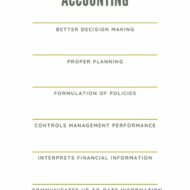
The basic objective of management accounting is to assist the management in performing its functions effectively. The functions of the management are planning, organizing, directing and controlling. What is Management Accounting? Management accounting also is known as managerial accounting and can be defined as a process of providing financial information and resources to the managers in decision making. Management accounting helps in the performance of each of these functions in the following ways: Provides data: Management accounting serves as an important source of data for management planning. The accounts and documents are a store-house of a vast quantity of data about the past progress of the enterprise, facilitating forecasts for the future. Modifies data: The accounting data required for managerial decisions is properly collected and classified. For example, purchase figures for different months may be classified to know total purchases made during each period product-wise, supplier-wise and territory-wise. Analyses and interprets data: The accounting data is probed meaningfully for effective planning and decision-making. For this purpose the data is presented in a comparative form. Ratios are calculated and likely trends are projected. Serves as a means of communication: Management accounting provides a means of communicating management plans upward, downward and outward through the organization. Initially, it means identifying the feasibility and consistency of the various segments of the plan. At later stages it keeps all parties informed about the plans that have been agreed upon and their roles in these plans. Facilitates control: Management accounting helps in translating given objectives and strategy into specified goals for attainment by a specified time and secures effective accomplishment of these goals in an efficient manner. All this is made possible through budgetary control and standard costing which is an integral part of management accounting. Uses qualitative information: Management accounting does not restrict itself to financial data for helping the management in decision making but also uses such information which may not be capable of being measured in monetary terms. Such information may be collected form special surveys, statistical compilations, engineering records, etc. Take the Quiz and Check Your Accounting IQ! 1. The financial statement that reports the revenues and expenses for a period of time such as a year or a month is the Balance Sheet Income Statement Statement Of Cash Flows 2. The financial statement that reports the assets, liabilities, and stockholders’ (owner’s) equity at a specific date is the Balance Sheet Income Statement Statement Of Cash Flows 3. Under the accrual basis of accounting, revenues are reported in the accounting period when the Cash Is Received Service Or Goods Have Been Delivered 4. Under the accrual basis of accounting, expenses are reported in the accounting period when the Cash Is Paid Expense Matches The Revenues Or Is Used Up 5. Revenues minus expenses equals __________ 6. Resources owned by a company (such as cash, accounts receivable, vehicles) are reported on the balance sheet and are referred to as __________ 7. Assets are usually reported on the balance sheet at which amount? Cost Current Market Value Expected Selling Price 8. Obligations (amounts owed) are reported on the balance sheet and are referred to as __________ 9. Liabilities often have the word __________ in their account title. 10. Unearned Revenues is what type of account? Asset Liability Stockholders’ (Owner’s) Equity Scroll Down to Know the Right Answers: ↓ ↓ ↓ ↓ ↓ 1. Income Statement 2, Balance Sheet 3. Service or Goods have been delivered 4. Expense matches the revenue or is used up 5. Net income 6. Assets 7. Cost 8. Liabilities 9. Payable 10. Liability Here are some very resourceful online courses on accounting from udemy – Give it a try: 1. Accounting & Financial Statement...