Posted by Managementguru in Business Management, Organisational behaviour, Principles of Management, Strategy
on Mar 5th, 2014 | 0 comments

Synergy in Management Synergy: The interaction of two or more agents or forces so that their combined effect is greater than the sum of their individual effects. Synergy is the latest BUZZ WORD in the corporate business world. Synergy is the sum total of individual resources that which creates an enhanced effect greater than that of the sum total. Shall I simply say “1+1>2”! It is really amazing how much you can accomplish when it doesn’t matter who gets the credit. Teamwork divides the task and doubles the success. Unity is Strength: Synergy unites the people of an organization as a team and it serves like “BLINKERS FOR HORSES” to reach the goal of the firm without any conflicts amongst the team members. It is a managerial science and the role of top management in synergizing the employees plays a vital role in the success of the organization. As the old saying goes “Unity is Strength” and the new world aspires “Sky is the Limit”. By integrating the team members, having a smooth relationship with labor unions and management staff, a firm can achieve its overall objectives and mission in a very short span of time. Cordial Industrial Relation paves the way for the functioning of the firm without a hitch. Developing Systems for all core areas: The top management has to create “SYSTEMS” for all the core areas; Policies, procedures, rules and regulations, norms etc.,shall serve the common purpose of controlling and guiding all the employees of a firm creating a perfect ambience for efficient performance. The general managers should be the pillars of a firm who shoulder the responsibility of implementing these systems in an objective manner and not in a subjective manner. Scope: Synergy also has its scope outside the organization. The managers should be able to connect themselves with customers, banks, trade associations and also the government with ease. The weather of your firm depends on the psychology of your persona and the collective efforts of your team. If you want your firm to be SUCCESSFUL and UNIQUE, you have to POOL ALL YOUR RESOURCES, be it human, physical, financial or intangible. The competitiveness enjoyed by your firm to capture and win the market marks your strength; the limitations or restrictions that mar the growth of your firm can be overcome by the SYNERGISTIC BOOSTER that you administer into the minds of your employees. Integration is the key word that leads to DISTINCTIVE COMPETENCE, a strength that cannot be copied by other organizations which helps you to make your organization more productive and...

Posted by Managementguru in Business Management, Marketing, Principles of Management
on Mar 4th, 2014 | 0 comments
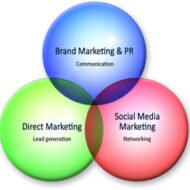
Integrated Marketing: Strategy aimed at combining different marketing methods such as mass marketing, one-to-one marketing, and direct marketing. Marketing in simpler terms means “to take your product to the customers in a convincing manner and coax them to buy it”. And not only that, you need to retain your old customers and lure new customers to your niche. How is that possible! Marketing is a concept that works magic when you project your product in such a way as to attract the customer and also your product should have an edge over that of your competitors’. Many new channels of marketing have flooded the market; the evergreen being advertisements in radio and televisions. The audio visual of your product that is being telecast in a span of thirty seconds to one minute should capture the attention of the viewers and you should see to it that the benefits of your product is communicated to the viewers in a precise manner. The questions that are inevitable to the sales force are, What is your product’s unique selling proposition? What is your distinctive competence? Are you motivating the target audience? Does your product have a brand image? So many things have to be taken into consideration and here comes the word integrated marketing. The exclusive sales force you own is your strength, without which you cannot succeed in the market. Whatever strategies you formulate, action plans you correlate, it is in the hands of your sales team that you are going to capture the market. The marketing plan and ideas have to be communicated to them from the point of conception and the innovative ideas generated from your team can be definitely put into use. Integrated marketing operates on two levels. First the various disciplines of the marketing department that includes, sales force advertising product management new product launch Marketing research, must work in tandem. Secondly, coordination with all the other departments in the firm. After all, business is done for profit. But even then there are some etiquettes to be followed when you are planning to introduce your product into the market. customer satisfaction quality quantity eco friendly Competitive price, are some of the basic principles that go without saying. Besides, the producer also should not deceive the customer or take advantage of the ignorance of the consumer while campaigning for his products. A product should reap you profit and at the same time the customer should get the value for the money paid. A satisfied customer can bring in hundred more customers; it is part of your marketing plan. If you lose one customer then you have lost thousand customers. You cannot bring back a dissatisfied customer into your groove. So the sociology and psychology which you have read only in literature will give you a helping hand in times of need, when you want to satisfy a customer. Integrated marketing combines all the marketing plans; it is a marketing mix that makes a customer happy with the product’s price, availability, promotion and the product as a whole. Hotels and restaurants Hospitals Malls and Departmental stores, are some of the ventures to be mentioned that stands as a testimony for integrated marketing, as they talk about “feasible packages for different classes of economy”. Ultimately marketing can be defined as a network that starts with the customer and ends with the customer in its supply chain...
Posted by Managementguru in Business Management, Marketing, Principles of Management
on Mar 4th, 2014 | 0 comments
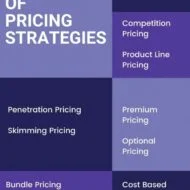
Price Discrimination is nothing but a pricing strategy that charges customers different prices for the same product or service. Price discrimination is adopted by most of the firms in order to group their customers into different segments and fix different prices for each segment for identical products and services. This helps them to increase their revenue as well to cater to the needs of different customer groups. The negative aspect of this exercise is increased administrative costs in segmenting the markets and some people end up paying higher costs. But it has to be remembered that by discriminating prices, firms are able to cut through and exploit all layers of the market, helping them to expand. Elasticity of Demand Price discrimination can be practiced by a firm only which has some control over the price. Backgroung Image Source: Image by Gerd Altmann from Pixabay Obviously a price taker cannot indulge himself in price discrimination. It must be possible to group different markets in terms of price elasticity of demand. Suppose a firm identifies two potential markets, fixes high price for one market and low for another, caution is the key word in that, both the markets should be separable. Otherwise there is the danger of purchasing a product in one market for a lower price and the same being resold in another at a higher price. It might damage the market reputation of the firm as well. Skimming the Profit The process of price discrimination is followed by most of the firms existing in monopolistic and oligopolistic markets, where there is a necessity to exploit potential customers at the earliest in order to skim the profit. Premium customers are targeted first, followed by middle income group and then lower income group. Recent marketing strategies allow middle and lower income group to enjoy all the material comforts and luxuries available for the premium class, by arranging for loans to be settled in equated monthly installments over a period of time. The firms are also engaged in associating themselves with financial institutions and banks, which proves to be a win-win situation for both. Following are some examples cited for your understanding about price discrimination: In legal and medical professions, charging of lower fees to the low income than to high income group.Charging of lower prices abroad than at home for a variety of products and services ranging from books and medicines to movies.Charging of lower prices for elders and children in public transportation and airlines.Charging of lower hotel rates for conventions and meetings.Electronic industry, where the price set initially is high and then it falls down gradually. Firms believe that by offering different prices to different customer groups, can retain the customers and prevent them from switching over to another supplier. Travel agencies offer fanciful package tours with attractive and competent prices that are irresistible. Such is the power of marketing when presented in the right mix targeting the right customers at the right...
Posted by Managementguru in Business Management, Marketing, Principles of Management
on Mar 4th, 2014 | 0 comments
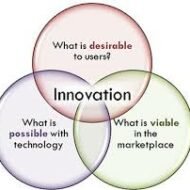
The Realm of Product Innovation A manufacturer or a service provider, who aspires to be successful in a business market, must indulge himself in research, pertaining to consumer preference as well as the various stages of a product life cycle. This will give him a better chance to make his future decisions concerning the product and also the wisdom to evolve strategies accordingly. Developing a product and introducing it into the market demands certain amount of forethought and prudence. The first step is to study the market, to understand consumer preference as well as to gauge whether your product will be appealing to the customers existing in that market. The prerequisite for this would be market segmentation, that is to statistically estimate the demographic quotient (people belonging to different age groups and ethnic societies) of the sample population and decide on the customers whom you want to target. A product’s success depends mainly on two things: 1) Innovation-lateral thinking, by which you let loose of all your unorthodox methods and stick onto some novel ideas of marketing. 2) Customer-oriented marketing rather than product oriented. This customer oriented concept is advocated by modern marketing consultants and it has proven to be a fantastic proposition. More than the actual product, people like to know more about the values that they obtain out of that product. The secret behind success will be to hit the right note, by propagating more about the value added services that go with the product. Expectations Created by the Product When a product is introduced in a market, say, automobiles for example, since every tom, dick and harry is fond of cars and bikes and they talk a lot about it. It is looked upon by prospective customers with great expectations, which might be due to the great hype created by the manufacturer through advertisements in electronic media, papers and magazines. The product as it hits the market will instantaneously make it big, if it has the right mix of intangible and augmented benefits that make customers happy and they feel that they have bought something worth the money paid for. A luxury car is well received by the market, irrespective of the price tag that is stuck to it, just because of the value added benefits such as, delicacy, great speed, high-performance, safety, insurance and warranty. Product Pre-Launch Analysis Before launching a product, industry analysis is a must, as various similar products might exist and it comes to the question of how different and appealing your product is, for market acceptance. Even minor things can make a big difference, say, for instance, if you are able to float the cheapest car, in terms of price but with great fuel efficiency, the results are obvious. The strategy would be to introduce innovations not only in your product but also in your thinking. Best products emerge as a result of tuning in your wavelength with that of the consumers’. Product Life Cycle A product gets introduced, grows, matures, stabilises and slowly withers off, just like a human being. No man is eternal and so is a product. You may argue that some products are in the limelight for more than their share of lifetime. If you keenly observe, that would have been the result of makeover changes to the product in lieu of the change in people’s liking and analysis of market trend. Some products have a second chance to prove their mettle. They go into hibernation for a while and then re-enter when market conditions seems to be favorable. The perspective from which you look at the life cycle of a product may cast a different idea...
Posted by Managementguru in Business Management, Marketing, Principles of Management, Strategy
on Mar 4th, 2014 | 0 comments
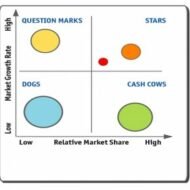
Product Modification – Solid Strategy to Capture Untouched Market Segments There is a pressing need for business firms to bring about changes in the physical attributes of their existing products periodically, to retain the customer base as well as to tide over the competition in the market. A number of factors may prompt the manufacturer to modify his product. To make best use of the technological advancement for the benefit of the firm Modification in lieu of competition To regenerate a product suffering from sales decline Product Attributes: What could be modified; it may be anything, the color, size, material, functional features, styling and engineering, etc., or a combination of these could be considered for modification. Ultimately these modifications should result in products emerging with better quality, features and styling. Consumer goods are offered with a wide range and variety to appease the different taste of the consumers as well as to stand unique in the market; Bathing soaps, talcum powders and cosmetics to name a few. Even producers, who are involved in core industries like textiles and garments, come out with a range of products to cater to the specific requirements of the customers. Product modification is different from product specialization that applies to high end customers whose specifications are based on the end use of the product and the target market. For example, mélange yarn is a specialized product used for producing better color shades for knitted fabrics (hosiery sector). Product modification concentrates more on increasing the appeal of the product by presenting it with attractive and improved attributes like, better packing and features. Strategy to Improve Quality: The strategy of quality improvement aims at increasing the functional performance of the product- its durability, reliability, speed, taste, etc. The added advantages would be versatility, safety and convenience. The benefits of feature improvement includes, Builds company’s image Can aid in winning over the target market Gives free publicity for the firm Infuses enthusiasm in the internal environment of a firm, amongst the sales force and distributors Style Improvement: Style improvement aims at improving the aesthetic appeal of the product. Why do you think automobile manufacturers are in the process of introducing new models of cars every so often? It is a strategy that amounts to style competition rather than quality or feature competition. This kind of style modification has to be done after extensive market research to gauge the preference of the people in the target market and to avoid colossal monetary loss if in case there is a negative feedback from the market. Manufacturers of house hold products can always take the risk of going for small modifications in terms of texture and style as new features can be adapted quickly, dropped quickly and often made optional at the least expense. A firm has to mix and match its product modification strategies to maintain its competitive position and to keep itself abreast of the latest developments in the market...