Posted by Managementguru in Economics, Human Resource
on Feb 16th, 2014 | 0 comments
Key Issues of Unemployment Stats: The population of India has increased by more than 181 million during the decade 2001-2011. The population of India, at 1210.2 million, is almost equal to the combined population of U.S.A., Indonesia, Brazil, Pakistan, Bangladesh and Japan put together (1214.3 million) Important questions relating to unemployment The unemployment rate in India is estimated at 9.4 percent or 94 persons out of 1000 persons How can millions of people be unemployed when so much of work has to be done? What flaw in the modern mixed economy forces so many who want to work remain idle? Should nations take steps to alleviate the hardships of joblessness? Do high unemployment benefits just reduce the incentive to work and end up raising the unemployment rate? These questions always come up every time there is a rise in the unemployment ratio. Unemployment continues to plague the modern world. Another reason which can be attributed to unemployment is that, there exist a lack of correlation or can we call it a ‘mismatch’ between the subject of study and the line of action. It has been stated that for every two percent fall in the GDP, there is one percent rise in unemployment rate. The association between the output market and the labor market can be clearly understood from this statistics. Economic as well as a social problem Unemployment is not only an economic problem but also a social problem. As an economic problem, it is a waste of valuable resources. As a social problem, it is a source of enormous suffering, as unemployed workers or workers who are temporarily employed suffer and struggle due to reduced incomes. The distress spills over to affect people’s emotions and has a direct impact on their family lives. A mismatch between the supply and demand of workforce also can create what is called as structural unemployment. This can happen because the demand for one kind of labor is rising while the demand for any other kind is falling and supplies do not quickly adjust. Cyclical unemployment is another kind, where the overall demand for labor is low. Picture Courtesy: Businessinsider Recession We have seen that unemployment and recessions impose great costs on societies. Yet countries do not attempt to reduce unemployment to zero or even close to zero. Moreover when output approaches its potential, the central banks often begin to raise their interest rates and slow the expansion. Just why is that, countries don’t stimulate their economies until involuntary unemployment disappears? The reason is that super-full employment leads to shortage in labor and product markets and soon inflation would rise to intolerable levels. Business Cycle Business cycle is one of the key issues of macro economics. The economic pattern of a country never follows a smooth trend. Several years of economic prosperity will be followed by a sudden recession or a panic. Then the national output falls, real income declines followed by a jump in unemployment rates to uncomfortably high levels as legions of workers lose their job. Eventually the bottom is reached and recovery begins. There exist many theories to explain the cyclical pattern of an economy but none is valid at all times and places. Governments have to anticipate recessions and stop them from snowballing into depressions. Crude oil price is an important economic indicator for developing nations which helps them to predict the fluctuations in the business cycle that is to follow. Related Posts: 1. How to Make Money Selling Anything and Everything 2. Photoshop CS6 Crash Course...

Posted by Managementguru in Economics
on Feb 16th, 2014 | 0 comments

Monetary and Fiscal Policy Countries worldwide are concerned about the following issues while setting up monetary and fiscal policies; namely, the appropriate level of aggregate demand and the best blend of monetary and fiscal mix. Monetary policy focuses on the movement of money within the country, the inflow of foreign exchange and varying interest rates fixed by the Reserve Bank. Fiscal policies are concerned about stabilizing the economy and handle public revenue, expenditure and debts. The pattern of resource allocation and distribution of income affect the drafting of fiscal policies. Monetary policy is very well restricted by the government’s decision on public expenditure and taxation. The tactical combination of both will help determine the composition of GDP. The purpose of monetary policy: The purpose of monetary policy is to ensure availability of credit to the productive sectors of the economy and also regulation of money supply. Econometric models, which use statistical techniques to assess the impact of monetary policy changes on the macro economy, usually find that changes in money supply have a major impact on production in the short term, with greater impact on the proportion of nominal GDP in terms of wage and price inertia as time progresses. Annual budgets are always a nightmare for the common people as tax imposed on commodities has a say on their disposable income. For example, if the price of crude oil is on the rise, the government can do nothing but to increase the fuel prices. Inflation leads to an increase in interest rates charged by banks nationalized or private, affecting small-and medium-scale business firms. Some terminologies related to monetary policy: Let us get ourselves familiar with some of the terminologies in connection with monetary policy. This may help you to understand the subject in a better way. Repo rate: Rate at which RBI lends to other banks against securities Reverse Repo Rate: Rate at which RBI borrows from other banks Cash Reserve Ratio (CRR): Amount of money to be set aside by the banks with RBI against their deposits Statutory Liquidity Ratio (SLR): Percentage of bank funds to be maintained in government securities Capital Adequacy Ratio: Capacity of banks to work within the time line and risks. Bank Rate: Minimum interest rate at which the Central Bank offers commercial loans to other banks Inflation: Steady rise in prices of commodities Money Supply: Sum total of money circulating in the economy Money flow, policy variables and liquidity conditions have a direct bearing on savings, investment, consumption, inflation, employment and GDP.The ability of a country to improve its standard of living over time depends almost entirely on its ability to improve technology and capital used by the workforce. In short, the budget deficit should be reduced, which guarantees the rate of national savings and increased purchasing power parity (PPP). Main objectives of monetary policy: There have been changes in the objectives of monetary policy from time to time and vary from country to country. Sometimes the monetary policy adopted by a country may have different objectives, which are contradictory. In such cases, the country may have to compromise by setting the priorities. Some of the main objectives of monetary policy: • Price stability • Exchange rate stability • Full employment • High rate of economic growth • Equitable distribution of income Main objectives of Fiscal Policy: Post the Great Depression of the 1930s, it was well realized that governments should actively participate in economic activities to achieve economic growth and equity, through sound fiscal policies. The purpose of fiscal policy lies in: • Achieving full employment • The maintenance of stability • Increasing the rate of capital formation • Development of a model of...
Posted by Managementguru in Economics
on Feb 16th, 2014 | 0 comments
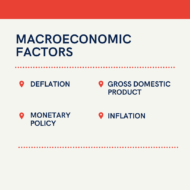
Science of Macro Economics: Macroeconomics is the branch of economics that studies the behavior and performance of an economy as a whole. The part of economics concerned with large-scale or general economic factors, such as interest rates and national productivity. The sales and profit quotient of business enterprises in a market is dependent on the vigor of the overall economy to a greater extent. During expansion, the real GDP can accelerate to 4 to 5 % a year and during recessions the pace of growth declines for an extended period. The overall economic growth is subject to many cyclical fluctuations and the reasons for change in the pace and pattern of economic scenario still remains a mystery. Macroeconomic Concept What are the fundamental concerns of macro economics? Business Cycles: Business cycles are rhythmic patterns of expansion and contraction due to inflations and recessions. It is still an intriguing factor that unemployment persists even during times of expansion and production of goods and services fall down during cyclical downturn making millions of people lose their job. If macroeconomics can find the appropriate solution to these problem situations, better will be the prospects of many people’s lives and fortunes. Monetary and fiscal policies should be formulated in the light of reducing the severity of business cycles. The purpose of monetary policies is to stabilize the prices by managing the expansion and contraction of the volume of money in circulation, full employment and stability of exchange rates. Fiscal Policy: Fiscal policy is linked with the government’s stand on public revenue, expenditure and debt. The idea is to reduce inequalities in income and wealth and develop a socially optimum investment pattern. Resources available in a country influence the kind of investment pattern. Developing countries like India has its focus of activity centered on telecommunication and power generation through information technology and alternate fuel resources. Availability of skilled labor is an additional plus in countries like India and China and many countries prefer to outsource their business processes to offshore companies present here. Tax Structure: Tax structure is a source of revenue generation aimed at economic stability. During inflation, an increase in tax rates will reduce the buying power of people thereby reducing the prices in the economy. A reduction in tax rates during depression will encourage economic investment and consumption. Generous subsidies and reforms in industrial policies alone cannot bring about the desired growth in the economy. A nation should aspire to increase its growth ratio by providing the necessary infrastructure. Economic scholars of each nation have to vigilantly analyze the previous patterns of business cycles for the benefit of the society and this kind of review will lead to dependable forecasts on the basis of which proactive measures could be devised. Note: What is VAT: VAT is a multi-point levy where the tax paid on local purchases from the registered dealer can be set off against the tax payable on the sale of goods, other than special...
Posted by Managementguru in Business Management, Human Resource, Principles of Management
on Feb 15th, 2014 | 0 comments

It all began with ADAM SMITH (1776), the Scottish economist when he lashed out against the abuses of monopoly and mercantilism. He highlighted that productivity was a result of specialization, division of work and exchange. We witness the evidence of managerial practices right from the Sumerian age as early as 5000 B.C., from their written records to administer the governmental and commercial activities. Koutilys’a ARTHASASTHRA and Thiruvalluvar’s THIRUKKURAL have spelt out management principles in a coherent way that suits any time period. MILESTONES IN THE DEVELOPMENT OF MANAGEMENT THOUGHT: 5000 B.C SUMERIANS RECORD KEEPING 4000 B.C EGYPTIANS PLANNING,ORGANISING AND CONTROLLING 500 B.C GREEKS SPECIALISATION 1800 ELI WHITNEY MASS PRODUCTION MADE POSSIBLE 1822 CHARLES BABBAGE PRODUCED DIFFERENCE MACHINE,A FORERUNNER OF TODAY’S COMPUTER 1911 F.W.TAYLOR SCIENTIFIC MANAGEMENT 1916 HENRI FAYOL MANAGEMENT FUNCTIONS 1943 ABRAHAM MASLOW MOTIVATION MODEL 1954 PETER DRUCKER POPULARISED MBO-MANAGEMENT BY OBJECTIVES 1961 RENSIS LIKERT CONTINGENCY LEADERSHIP PRE-SCIENTIFIC MANAGEMENT SCHOOL Management is as old as civilization and it is a separate entity by itself. The full boom of management was witnessed with the advent of INDUSTRIAL REVOLUTION in Europe in the late 18th century. There was mass exodus of people to urban cities in search of jobs due to mechanisation and there arose a necessity to manage people. Initially they were treated as slaves by the owners but later the link factor called “Managers” came into the picture to negotiate and solve issues between the union and management. Important contributors to the management theories Robert Owen: He introduced a system of open rating for workers’ work on a daily basis. He insisted that improving the lives of the working individuals through labor welfare measures was the only way to increase productivity. Charles Babbage: He was a visionary who could foresee scientific management. His difference engine or the modern day computer has made people’s lives easy and has replaced manual operations with machines. Captain Henry Metcalfe: He formed the Bureau of Personal Administration in New York Introduced time cards and material cards Fredrick Winslow Taylor: Founder of scientific management and is called the “Father of scientific management.” He emphasized on the need for management planning and standardization of tools and materials, the former to gauge the capability of men and machine and the latter to save time and increase productivity. He was one of the founders of “Time and Motion study.” His theory was based on the following assumptions: · Production planning and control is the main function of an organization · Insisted on functional foremanship · Time study as the basis for arriving standard time · Standardisation of all tools and parts · The use of ‘slide-rules’ and similar time saving implements · Inroduced ‘time-cards’ for workmen · The ‘differential rate system of wages Henry Gantt: He proposed the Gantt Chart, a visual method to compare production output with time it took to complete a task. This is considered to be a forerunner of today’s PERT-PROGRAMME EVALUATION and REVIEW TECHNIQUE). He also developed · Work quota systems · Bonus systems for workers or managers Objectives of Scientific Management · To ensure continuous employment opportunities for the work force · To gauge market tendencies · To render workers a high standard of living; this motivates them to contribute more · To increase the income of the workers · To assure a socially agreeable condition of working environment · Proper selection, training, assignment, transfer and promotion of workers · To develop self-confidence and self-respect among workers through opportunity and participation · To promote justice through elimination of discrimination in wage-rates · To eliminate causes of friction and to promote understanding, tolerance and the spirit of team-work-Espirit de...
Posted by Managementguru in Business Management, Principles of Management
on Feb 15th, 2014 | 0 comments

Functions of Management MANAGEMENT FUNCTIONS The objective of this topic is to make students understand the functions of management and the role of managers in an organization. The five basic management functions are listed below: · PLANNING · ORGANISING · STAFFING · LEADING · CONTROLLING PLANNING: The managerial activities aid in selecting the objectives, examine and forecast changes, develop policies, procedures and choose future course of action from among alternatives. Planning proceeds from “Where we are” to “Where we want to go.” Planning activities are 1. Analysing the current situation (also called the SWOT Analysis) 2. Anticipating or predicting the future based on the analysis 3. Determination of organizational objectives to be achieved 4. Deciding on the action plan 5. Evolving proper strategies 6. Pooling the resources (physical, financial and monetary) to accomplish enterprise objective ORGANISING: It is a process which integrates people and tasks; In order to achieve their tasks people are given sufficient authority, tools and information. Organising activities include 1. Specification of job responsibilities 2. Grouping of jobs into respective work units 3. Allocation of resources STAFFING: Human resource management is one of the key areas that decides the success of a firm’s activity. Staffing involves the selection of “Right person for the right job.” The activities are 1. Recruitment 2. Selection 3. Training and Development 4. Compensation 5. Promotion 6. Evaluation and 7. Rewarding people to achieve enterprise goals. LEADING: Leadership is the set of interpersonal behaviors that influence people to contribute to the organization and group goals. The activities under this category are 1. Providing proper direction 2. Guidance and Motivation 3. Clarity in communication to the work force CONTROLLING: This is a process that is necessary to keep track of the performace of individuals by setting some standards for direction. The activities include 1. Establishing performance standards enabling the work force to achieve the goals (both short term and long term) 2. Enhancing the employee performance through performance appraisal or rating of work 3. Comparison of performance against the standards to identify deviation or work problems and take corrective measures 4. Bench marking is one of the management techniques that facilitates an organization to uplift its performance levels to the best of industry standards and also catch hold of the strengths of the competitors and rectify the weaknesses prevailing in one’s own firm. CO-ORDINATION: It is regarded as a key function of a manager to bring in harmony among individuals and an effort towards accomplishment of goals. 1. Marginal decision making and 2. Sub Optimisation are some of the new approaches developed in the field of decision making. MANAGERIAL SKILLS: Skill is the resultant effect of knowledge, experience and expertise. It is the ability of an individual to perform a task which is obvious from the results he/ she shows. There are 3 kinds of skills that a manager should possess in order to excel. 1. The Conceptual Skill: Assessing a situation and acting accordingly depicts the manager’s perceiving ability of the abstract elements in force. A manager has to improve this kind of skill as he moves up the ladder in the management level or let us say that he can move up the ladder only if he possesses this kind of skill. · Management Consultants · Managing Director of a firm · President of a company · Economists · Startegists are conceptual analytic experts 2. The Technical Skill: This skill is purely based on one’s knowledge and on the job experience. This is needed at a lower level of management · Computer Operators · Engineers · Accountants · Machine Operators possess this kind of skill 3. The Human Relations Skill: This...