Posted by Managementguru in B-Schools, How To
on Jul 2nd, 2015 | 0 comments
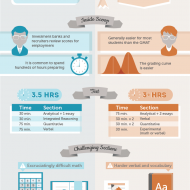
Overall MBA Application #strategy: Average scores are creeping higher every year at the top MBA programs, making it hard to offset a bad GMAT score. Timing and planning are key to reducing the stress of the application process. Since both GMAT and GRE scores are valid for five years, getting the exams out of the way years in advance would free you to focus on all of the other elements of the application. If, like most applicants, you didn’t have the foresight to take the exam right after college, the next best step is to plan your application strategy so that the GMAT is finished before you finalize your list of schools. Your score isn’t everything, but it is an important part of the admissions equation. For whatever MBA admissions round you’re targeting, your target date for taking the GMAT should be at least two months before your first application is due. The deadline for taking the GMAT will vary dramatically depending on the admission procedures of each school to which you apply, and the term in which you are planning to enroll. Keep in mind that you can take the GMAT up to 5 times, but never more than once per calendar month (including a month in which you cancel your score), even if you have cancelled your score. Most applicants devote at least 100 hours to test preparation, and depending on where you are in the process, you may have to take a prep class and perhaps take the test more than once. If this is the case, the first round may not be a realistic option unless you’re able and prepared to completely immerse yourself in the process. A1 Applications usually open in the summer, but start thinking before then. It’s never too early to start planning! How to avoid mistakes in MBA applications? From disorganized resumes to poorly written personal statements, there are a number of mistakes an applicant can make when applying to business school. With some guidance, though, they can avoid these pitfalls and stand out from other prospective students. Many applicants turn to admissions experts for help and advice on which admissions round to enter, how to get strong letters of recommendation and what to say during an admissions interview. “Whether you’re a star candidate or an average one, you can play up your best qualities.” You just need to understand what it is about your background that will make you the best possible candidate – and then prove it clearly in your application and interview. Your resume needs to tell the story of the ‘real’ you – the person behind those #GMAT scores and that work experience. So don’t pretend to be the perfect MBA candidate. For one thing, that person doesn’t even exist. An MBA admissions officer at a leading US business school says the most common error she sees is applicants who are “trying to be someone they are not, and trying to impress the admissions committee.” GMAT scores: Stanford University had the highest average GMAT score for incoming full-time students in fall 2014, according to data submitted to U.S. News. Below are the 10 business schools with the highest average GMAT scores for incoming full-time students in fall 2014. Business school Enrollment (fall 2014) Average GMAT score B-School rank Stanford University (CA) 410 732 1 University of Pennsylvania (Wharton) 859 728 3 Harvard University (MA) 935 726 2 University of Chicago (Booth) 583 724 4 New York University (Stern) 344 721 11 (tie) Yale University (CT) 323 719 13 (tie) University of California—Berkeley (Haas) 241 717 7 Columbia University (NY) 743 716 8 Dartmouth College (Tuck) (NH) 281 716 9 University of...

Posted by Managementguru in Operations Management, Project Management
on Jun 17th, 2015 | 0 comments
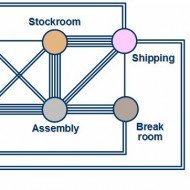
Info on Objectives and #Principles of Plant Layout: Plant layout refers to the physical arrangement of production facilities. It is the configuration of departments, work centres and equipment in the conversion process. It is a floor plan of the physical facilities, which are used in production. A plant layout study is an engineering study used to analyze different physical configurations for a manufacturing plant. It is also known as Facilities Planning and Layout. Some Precise Definitions for Plant Layout: According to Moore “Plant layout is a plan of an optimum arrangement of facilities including personnel, operating equipment, storage space, material handling equipment and all other supporting services along with the design of best structure to contain all these facilities”. “Plant layout is the #arrangement of machines, work areas and service areas within a factory”. —George R. Terry “Plant layout involves the development of physical relationship among building, equipment and production operations, which will enable the manufacturing process to be carried on efficiently”. —Morris E. Hurley “Plant layout can be defined as a technique of locating machines, processes and plant services within the factory so as to achieve the greatest possible output of high quality at the lowest possible total cost of manufacturing”. —Sprigal and Lansburg “Plant layout ideally involves the allocation of space and the arrangement of equipment in such a manner that overall operations cost can be minimised.” —J. Lundy From these definitions it is clear that plant layout is arrangement and optimum utilisation of available resources in such a manner so as to ensure maximum output with minimum input. Objectives of Plant Layout: The primary goal of the plant layout is to maximise the profit by arrangement of all the plant facilities to the best advantage of total manufacturing of the product. The objectives of plant layout are: Streamline the #flow of materials through the plant. Facilitate the manufacturing process. Maintain high turnover of in-process inventory. Minimise materials handling and cost. Effective utilisation of men, equipment and space. Make effective utilisation of cubic space. Flexibility of manufacturing operations and arrangements. Provide for employee convenience, #safety and comfort. Minimize investment in equipment. Minimize overall production time. Maintain flexibility of arrangement and operation. Facilitate the #organizational structure. Principles of Plant Layout: Principle of integration: A good layout is one that integrates men, materials, machines and supporting services and others in order to get the optimum utilisation of resources and maximum effectiveness. Principle of minimum distance: This principle is concerned with the minimum travel (or movement) of man and materials. The facilities should be arranged such that, the total distance travelled by the men and materials should be minimum and as far as possible straight line movement should be preferred. Principle of cubic space utilisation: The good layout is one that utilise both horizontal and vertical space. It is not only enough if only the floor space is utilised optimally but the third dimension, i.e., the height is also to be utilised effectively. Principle of flow: A good layout is one that makes the materials to move in forward direction towards the completion stage, i.e., there should not be any backtracking. Principle of maximum flexibility: The good layout is one that can be altered without much cost and time, i.e., future requirements should be taken into account while designing the present layout. Principle of safety, #security and satisfaction: A good layout is one that gives due consideration to workers safety and satisfaction and safeguards the plant and machinery against fire, theft, etc. Principle of minimum handling: A good layout is one that reduces the material handling to the...
Posted by Managementguru in Leadership, Quotes and Quotes Only
on Jun 15th, 2015 | 0 comments

My take on a leader: L – Lead by Example E – Empower People A – Aspire D – Dare Devil Driver E – Empathy R – Responsible...
Posted by Managementguru in Entrepreneurship, Human Resource
on May 14th, 2015 | 0 comments
An Insight on Traits of Successful People 1. They have a definite aim in life. “It is our choices that show what we truly are, far more than our abilities.” -J. K Rowling (from “Harry Potter and the Chamber of Secrets”) They want to accomplish something. They have #enthusiasm, commitment, and pride. They have self-discipline. They’re willing to work hard and to go the extra mile. They have a burning desire to succeed. They’re willing to do whatever it takes to get the job done. Dhirubhai Ambani was one such persona who went the extra mile to establish his empire called Reliance Industries. He believed in largest, biggest, fastest etc. Reliance textile at its introduction had production capacity greater than all of india’s need. Reliance refinery is still world’s largest refinery complex. 2. They are self-confident. “As long as the mind can envision the fact that you can do something, you can do it, as long as you really believe 100 percent.” -Arnold Schwarzenegger To be capable of setting ambitious goals, you need to believe you can follow the plans to achieve them. And when you believe in yourself, others tend to believe in you as well. In Gandhi’s words, a person can make progress and achieve success only with self-confidence. This applies to a person as well as to a nation, Gandhi said. 3. They show #initiative. “Find out who you are and be that person. That’s what your soul was put on this Earth to be. Find that truth, live that truth and everything else will come.” -Ellen DeGeneres The only way to rise up the corporate hierarchy or to develop your own business is to to look for other things to accomplish once you’ve fulfilled your regular duties. You need to outperform the already set standards and create new benchmarks for others to follow. 4. They are imaginative. “What the mind of man can conceive and believe, it can achieve.” -Napoleon Hill A lack of the driving force of initiative and the creative power of imagination is “the main reason why 95% of the adult people of the world have no definite aim in life, which, in turn, is also the reason why this same 95% constitute the followers in life”. What is lost in imagining about great things – it might only lead you to constructive creativity. 5. They are active. “Do one thing every day that scares you.” -Eleanor Roosevelt You may have earned multiple degrees from elite universities and have read history’s most important books, but none of it means anything if you don’t turn knowledge into action. This is what they call in Tamil, ஏட்டு சுரைக்காய் கறிக்குதவாது meaning Simple theoretical knowledge alone will not help in real life practical situations. 6. They are enthusiastic. “Nothing great was ever achieved without enthusiasm.” -Ralph Waldo Emerson They’re excited by what they’re doing, and that excitement is contagious. They draw people to them because these people want to work with them, do business with them, and be with them. Enthusiasm is probably one of the most attractive qualities a person can have. It’s a quality that makes you attractive in all kinds of relationship – personal or professional – and it’s a wonderful quality to find in other people. 7. They go beyond what’s required of them. “It takes 20 years to build a reputation and five minutes to ruin it. If you think about that, you’ll do things differently.” -Warren Buffett The most successful people outperform their competition, and when they make it to the top, they compete with themselves. ‘I want more’ will be their mantra. 8. They know how to separate truth from bias. “I’ve learned that people...
Posted by Managementguru in Motivation, Quotes and Quotes Only, Strategy
on May 9th, 2015 | 0 comments

Top 50 Popular Quotes from Management Gurus Leadership and Management philosophies differ from a management guru to another management guru. Here are 50 useful quotes from top notch management doyens that will help you understand the various facets of management from their rich experience. You can treat these quotes as a starting point to build your dreams. Michael Porter Strategy Quotes from Michael Porter Strategy is about making choices, trade-offs; it’s about deliberately choosing to be different.”“The underlying principles of strategy are enduring, regardless of technology or the pace of change.”“The essence of strategy is that you must set limits on what you’re trying to accomplish.”“The essence of strategy is choosing what not to do.”“The chief strategist of an organization has to be the leader – the ceo.”“If all you’re trying to do is essentially the same thing as your rivals, then it’s unlikely that you’ll be very successful.”“Finally, strategy must have continuity. It can’t be constantly reinvented.”“Innovation is the central issue in economic prosperity.”“Sound strategy starts with having the right goal.”“So companies have to be very schizophrenic. On one hand, they have to maintain continuity of strategy. But they also have to be good at continuously improving.” Stephen Covey Leadership Quotes from Stephen Covey “Effective leadership is putting first things first. Effective management is discipline, carrying it out.”“There are three constants in life… Change, choice and principles.”Every human has four endowments- self awareness, conscience, independent will and creative imagination. These give us the ultimate human freedom… The power to choose, to respond, to change.”“The main thing is to keep the main thing the main thing.”“We are not animals. We are not a product of what has happened to us in our past. We have the power of choice.”“Management is efficiency in climbing the ladder of success; leadership determines whether the ladder is leaning against the right wall.”“The key is not to prioritize what’s on your schedule, but to schedule your priorities.”“Public behavior is merely private character writ large.”“When you really listen to another person from their point of view, and reflect back to them that understanding, it’s like giving them emotional oxygen.”“Trust is the glue of life. It’s the most essential ingredient in effective communication. It’s the foundational principle that holds all relationships.” Daniel Goleman Emotional Intelligence Quotes from Daniel Goleman “Emotional intelligence begins to develop in the earliest years. All the small exchanges children have with their parents, teachers, and with each other carry emotional messages.”“Well, any effort to maximize your potential and ability is a good thing.”“Teachers need to be comfortable talking about feelings.”“There is zero correlation between iq and emotional empathy… They’re controlled by different parts of the brain.”“People tend to become more emotionally intelligent as they age and mature.”“Mindful meditation has been discovered to foster the ability to inhibit those very quick emotional impulses.”“If your emotional abilities aren’t in hand, if you don’t have self-awareness, if you are not able to manage your distressing emotions, if you can’t have empathy and have effective relationships, then no matter how smart you are, you are not going to get very far.”“the emotional brain responds to an event more quickly than the thinking brain.”But once you are in that field, emotional intelligence emerges as a much stronger predictor of who will be most successful, because it is how we handle ourselves in our relationships that determines how well we do once we are in a given job.”“My hope was that organizations would start including this range of skills in their training programs – in other words, offer an adult education in social and emotional intelligence.” Ken Blanchard Productivity Quotes from Ken Blanchard “The productivity of a work group...