Posted by Managementguru in Startups
on Apr 10th, 2015 | 0 comments
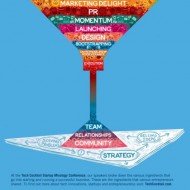
Let’s start the discussion traditionally with a Merriam-Webster definition, a startup means “the act or an instance of setting in operation or motion” or “a fledgling business enterprise.” What does the American Heritage Dictionary suggests is “a business or undertaking that has recently begun operation.” A startup is an organization formed to search for a repeatable and scalable business model. A startup is a business that has the capability to grow very rapidly, ultimately becoming a “real company” with an HR department, divisions, and processes. Steve Blank calls #startups a “temporary organization designed to discover a business model.” Startups, when they begin, have no procedure, no culture, and no recurring business model. All they know is that they have the potential to address a huge market if they can figure their business model out, and then scale quickly enough to stay ahead of the competition. As a founder you set off with a vision of a #product with a set of features and a series of assumptions about all the pieces of the business model. The inevitable questions to be answered are: Who are the customers/users? What’s the distribution channel? How do we price and position the product? How do we create end user demand? Who are our partners or Co-Founders? Where/how do we build the product? How do we finance the company, etc. When you go around and ask people however, startup really means a young company generally building something focused on technology. Every business goes through the same four phases: #Idea Startup Growth Maturity This maps rather well to Steve Blank’s 4 stages described in four steps to the epiphany: Customer discovery Customer validation Customer creation Company creation When is a startup no longer a startup? “A startup is no longer a startup when the product/market fit has absolutely been achieved, profitability or considerable revenue with a path to profitability has been obtained, and if any one person left the company would still survive and not get swayed by the departure.” Being a start-up is mostly about work environment and employee interactions. A start-up graduates to being no longer a start-up when interactions across hierarchies become formalised. For example, if you can no longer walk into the CEOs office to pitch your idea and (s)he does not know you by name, you are no longer working for a start-up. Also, if a company begins to have rules about employee progression (such as you need to spend 2 years before being promoted or moving into a new role etc) then it stops being a start-up. #Companies which have strict rules on which schools to hire from or firm ideas on how many years of experience should be required for which role, are no longer start-ups. I am not saying that start-ups do not have any criterion for hiring but these criterion, in a start-up, these would be based on things other than simply the pedigree or the number of years of experience. Start-ups hire people if they see passion and willingness to go the extra mile rather than for merely the right pedigree. Source: http://www.quora.com/Faguni-Jain Having made the above points – if a company crosses a certain threshold of revenues and/or profits, it should also declassify itself as a start-up – though it can continue to maintain the ‘start-up environment’ for its employees. Some Startup Mantras for Beginners would be: Be Careful with Cofounders Startups Take Over Your Life It’s an Emotional Roller-coaster It Can Be Fun Persistence Is the Key Think Long-Term Lots of Little Things to be considered It’s much more of a grind than glamorous Start with Something Minimal Engage Users Be Willing to Change Your Idea after User Interaction...

Posted by Managementguru in Marketing, Social Media, Startups, Technology
on Apr 8th, 2015 | 0 comments
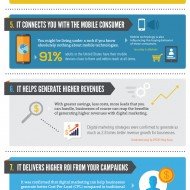
Disclaimer: This content is curated and since information related to digital marketing is available aplenty on the Internet, I thought of compiling data in a sequential and comprehensive manner for the benefit of the readers. One of the easiest, fastest and cheapest ways for businesses to reach consumers today is via the Internet. Read on: Fed Fix: What is Inbound Marketing? This resourceful article explains essential inbound marketing strategies and tactics that companies can use to boost their campaigns’ effectiveness. Digital marketing, also known as Internet or online marketing, is quickly replacing print, television and radio advertisement as the marketing approach of choice for businesses of all sizes. Recent research revealed that 1 in 4 of every business-advertising dollar is dedicated to Internet marketing. Digital marketing uses internet connected devices such as smart phones, laptops and tablets to engage customers online via technologies such as web and email in conjunction with digital customer data such as characteristics and behaviour. Channels include display advertising, search engine optimisation (SEO) and search engine marketing (SEM). It also includes email, RSS, blogging, podcasting, video streams, social networks and instant response messaging. If you are looking for an edge over your competitors, a digital marketing strategy can provide many benefits to today’s savvy business owner. Benefits of Digital Marketing for Small Business 👇 Instant Access Wide reach to internet users in a single click. Cost Effective A well planned and targeted digital marketing campaign can help your business reach your target audience at a lower cost compared to traditional marketing tactics. Open 24/7 Your website is available to your target audience 24/7. Increases Customer Retention and Loyalty Engage with your customers in a more personalised way when you advertise your products and services. Community Building and Reputation Social media provides the perfect platform to build customer loyalty and build strong online reputation. Research Provides the possibility for an immediate response and feedback from today’s connected consumer. It’s Measurable Track your online campaign’s success in real time. Digital Marketing Channels or Campaigns Online marketing doesn’t only revolve around your website. Although this is an important part of it, you should be aware of other channels that will aid your digital marketing strategy. Whether you’re looking at low budget or blow–the- budget campaigns, these forms of digital marketing are ideal for small businesses as you can adapt your activity to suit your financial situation: 👇 Discover a huge collection of digital assets on Social Media Marketing here! 1. Content Marketing Your website is a powerful tool within your marketing strategy. Most of the time this is where you will be directing your customers to when you engage with them so it’s important to ensure you have interesting content to keep your customers on the site for longer. Start by keeping an interesting blog so that you can share relevant content with your customers and draw them to your site. With new technologies, more people are reading content on their mobile phones and tablets than ever before. It’s important to ensure your website is easy to browse and interact with on these different devices so that customers can have a good user experience on the move. 2. Search Engine Marketing Stay ahead of your competitors by driving traffic to your website using Search Engine Optimisation (SEO). It works by optimising your site to increase its organic ranking in search engine results (for example how high up you would appear in a search list on Google), so that customers will be more likely to visit your site. Search engine marketing focuses on improving your ranking using specific methods such as improving your use of keywords (words and phrases...
Posted by Managementguru in Startups
on Apr 5th, 2015 | 0 comments
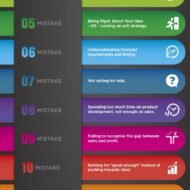
Enjoy this Infographic on a list of “Startup Mistakes to be Avoided.” Source: 15 Startup Mistakes You Should Avoid #startupmistakes #businessplan #teamdevelopment #hiring #vision #interpersonalrelationship #finance Some Brilliant Tweets on Startups – Quote them or Tweet Them What’s the one mistake all entrepreneurs make? http://t.co/hW41Ne6yWL pic.twitter.com/VjT5qgNyMY — CNN International (@cnni) April 4, 2015 Words of #wisdom for the #determined #entrepreneur planning the next big #startup. #Marketing #quotes for #life pic.twitter.com/pPlUGoMP3E — BreMobile Inc. (@BreMobileInc) April 3, 2015 Sure Steps Lead To Great Destinations via http://t.co/ofQajdrNPD #wisewords #knowyourvalue #startup #quotes #success pic.twitter.com/kXVRFCw16H — SuccessFastlane.com (@SuccessFastlane) April 2, 2015 Your Business Tip Of The Day via http://t.co/ofQajdrNPD #businesstips #wisewords #entrepreneur #quotes #Startup pic.twitter.com/2ktrGg7RCh — SuccessFastlane.com (@SuccessFastlane) April 1, 2015 A Series Of Great #Opportunity @10MillionMiler #quote #leadership #entrepreneur #startup #quotes RT @MeredithBlis pic.twitter.com/hZkjwpeRDE — Wright Thurston (@10MillionMiler) April 3,...
Posted by Managementguru in How To, Intellectual Property Rights, Marketing, Sales, Strategy
on Apr 3rd, 2015 | 0 comments

A brand is more than just a logo or colors—it’s the story you share, the feelings you inspire, and the trust you build. Let’s create a brand identity that truly stands out. Shall we get started? The visible elements of a brand (such as colors, design, logotype, name, symbol) that together identify and distinguish the brand in the consumers’ mind. Investopedia Defines Brand Identity as: How a business wants a brand’s name, communication style, logo and other visual elements to be perceived by consumers. Kapferer’s Brand Identity Prism Model: The brand identity prism by Kapferer describes the brand through six different facets. The identity of a brand describes what makes it stand out and special, as well as the attractiveness of the brand. By the brand’s physique the physical appearance is meant. This includes a prototype of the brand: the product that represents the brand’s qualities. The brand personality connects the brand with human characteristics to differentiate. It is the way a brand speaks to its customers. Every brand tries to build a relationship with its customers. This relationship is more obvious for service brands, but product brands like Porsche and Morgan build relationships with their clients. The question here is what role the brand occupies in the relationship. It could be being a friend or being dominant. The culture of the company is reflected by the values the brand is communicating. Values can be linked for example to the origin of the company and their heritage. The reflection of a brand can be seen as the typical user of the product it is the outward mirror of the brand. It therefore often gets confused with the target market. The self-image is the way customers see themselves when using the brand and how this makes them feel. (Kapferer, 2012) What are the Top 3 Things That Make Customers Loyal to a Brand? Quality – Quality in business, engineering and manufacturing has a pragmatic interpretation as the non-inferiority or superiority of something; it is also defined as fitness for purpose. Qulaity is a perceptual, conditional, and somewhat subjective attribute and may be understood differently by different people. Customer Service – The process of ensuring customer satisfaction with a product or service. Often, customer service takes place while performing a transaction for the customer, such as making a sale or returning an item. Customer service can take the form of an in-person interaction, a phone call, self-service systems, or by other means. Price – For many consumers, price is a very important attribute. The attribute price can indeed be more important on decision making than that of quality, brand name and others. We can conclude that consumer consideration to decide product brand is mainly based on price. The main question is how consumer brand decision is affected by price fluctuations. Does consumer move to another brand as price rises? Branding Gone Bad Pizza Hut Tries to Lose the Pizza For some bizarre reason, Pizza Hut made an attempt to rebrand in 2009 by calling themselves “The Hut.” As a result, the fast-food chain received a significant amount of ridicule from the public, and had to revert back to the original name. Although the company may deny rumors regarding the name change, photographic evidence of the redesigned logo is still circulating online. When British Airways Removed the Union Jack In 1997, British Airways executive Bob Ayling stated, “Perhaps we need to lose some of our old-fashioned Britishness and take on board some of the new British traits.” The company then embarked on a project that saw the Union Jack tail fin flag being replaced with other designs. After receiving numerous complaints from customers, this decision was...
Posted by Managementguru in How To, Organisational behaviour
on Mar 30th, 2015 | 0 comments
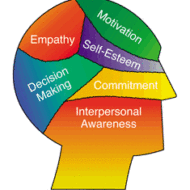
This discussion is centred around an article from WIKIHOW.COM and an infographic from AMERICAN EXPRESS.COM both talking about “Inter Personal Skill Development at workplace via Clear Communication and Body Language.” Inter personal relationship between personnel in workplace has become a serious issue of debate and most of the organizations spend maximum effort and money to make organizational atmosphere bearable devoid of tension and heat. The wikihow article places four important points before us to be considered: Building strong relationshipsDemonstrating ethical behaviorCommunicating clearly andWorking effectively in teams. As Beatrice Vincent rightly puts it “The people with whom you work reflect your own attitude. If you are suspicious, unfriendly and condescending, you will find these unlovely traits echoed all about you. But if you are on your best behavior, you will bring out the best in the persons with whom you are going to spend most of your working hours.” Conflict is the in-thing to be resolved in a work place which is achieved only through motivating the work-force to accomplish some common objectives, that is, the objectives of the organization. How to Develop Interpersonal Skills This infographic stresses the importance of body language like gestures, eye contact, eye rolling, dressing etc. which openly reveals your inner thinking. Explicitly revealing your frutration or unpleasantness over something or someone is definitely not going to help you in getting along with other employees. If your mannerisms do not reflect your self-control, you are in big trouble. Being open and honest may be contextual but being open and rude becomes subjective. 6 Body Language Mistakes to Avoid The most basic of all human needs is the need to understand and be understood. According to Stephen Covey “The Inside-Out approach to personal and interpersonal effectiveness means to start first with self; even more fundamentally, to start with the most inside part of self — with your paradigms, your character, and your motives. The inside-out approach says that private victories precede public victories, that making and keeping promises to ourselves recedes making and keeping promises to others. It says it is futile to put personality ahead of character, to try to improve relationships with others before improving ourselves. So, first understand where you really stand in terms of your EQ or EI (Emotional Intelligence) the vital quality that decides the kind of inter personal relationship you are going to enjoy with your colleagues. Be emphathetic and open minded and never jump to any...