Posted by Managementguru in Business Management, Decision Making, Entrepreneurship, Human Resource, Motivation, Quotes and Quotes Only
on Sep 25th, 2014 | 0 comments

Best Leadership Quotes “Only one man in a thousand is a leader of men — the other 999 follow women. Groucho Marx The Leader In You – #Dale Carnegie “Leadership is the capacity to translate vision into reality. – Warren Bennis Developing the Leader Within You – “You don’t lead by pointing and telling people some place to go. You lead by going to that place and making a case. – Ken Kesey Awaken the Leader in You – Mitesh Khatri “No man will make a great leader who wants to do it all himself, or to get all the credit for doing it.– Andrew Carnegie How To Win Friends Influence People – “Outstanding leaders go out of their way to boost the self-esteem of their personnel. If people believe in themselves, it’s amazing what they can accomplish. – Sam Walton The Leader in You – Peter Miller “To lead people, walk behind them.” – Lao Tzu “The best leader is the one who has sense enough to pick good men to do what he wants done, and the self-restraint to keep from meddling with them while they do it – Theodore Roosevelt “The challenge of leadership is to be strong, but not rude; be kind, but not weak; be bold, but not bully; be thoughtful, but not lazy; be humble, but not timid; be proud, but not arrogant; have humor, but without folly– Jim Rohn “Leadership is a potent combination of #strategy and character. But if you must be without one, be without the strategy – Norman Schwarzkopf “Successful leaders see the opportunities in every difficulty rather than the difficulty in every opportunity – Reed Markham “The problem with being a leader is that you’re never sure if you’re being followed or chased – Claire A. Murray “Do not follow where the path may lead. Go instead where there is no path and leave a trail – Harold R. McAlindon “Learn to see things backwards, inside out, and upside down – John Heider, Tao of Leadership “The real leader has no need to lead- he is content to point the way. #Henry Miller “A leader is a dealer in hope – Napoleon Bonaparte From Manager to Leader “If your actions inspire others to dream more, learn more, do more and become more, you are a leader – John Quincy Adams “The art of leadership is saying no, not yes. It is very easy to say yes – #Tony Blair “Never tell people how to do things. Tell them what to do and they will surprise you with their ingenuity – George Patton “Leadership does not always wear the harness of compromise – Woodrow Wilson “Take time to deliberate; but when the time for action arrives, stop thinking and go in – Andrew Jackson “To be a great leader and so always master of the situation, one must of necessity have been a great thinker in action. An eagle was never yet hatched from a goose’s egg – James Thomas “A good general not only sees the way to victory; he also knows when victory is impossible – Polybius “Leadership is being the first egg in the omelet – Jarod Kintz “Leadership consists of nothing but taking responsibility for everything that goes wrong and giving your subordinates credit for everything that goes well – Dwight D. Eisenhower “##management is doing things right; leadership is doing the right things – Peter F. Drucker...

Posted by Managementguru in Business Management, Decision Making, Entrepreneurship, Marketing
on Sep 21st, 2014 | 0 comments
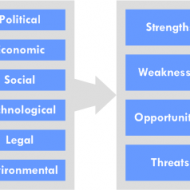
Business Viability Checklist for Entrepreneurs Hey Folks, here is a checklist for business viability or feasibility analysis, the fore-most step before starting a venture. Whether you are a dare devil driver yearning to embrace entrepreneurship as a result of your eternal frustration of saying” Yes-Boss” 24/7, or a first generation entrepreneur , this checklist will be of immense help in that it will reduce the elements of uncertainty and risk. Unlock massive growth using the business development channel. Learn pitching, BD strategy, cold emailing, & deal closing. Bestselling **** Many businesses look at profit within quotes as ultimate viability. Even if the business is not currently profitable or undergoing a growth surge, or just going through a bad patch – there is an anticipation of being profitable at some future date. This hope of future profit warrants continued investment. We can also consider the social and environmental aspects of an organization adding value, if it satisfies any social costs. You need to know what is viability? Viability is defined as the ability to survive or persist. In a business sense, that ability to survive is ultimately linked to financial performance and position. A business is viable where either: it is returning a profit that is sufficient to provide a return to the business owner while also meeting its commitments to business creditors it has sufficient cash resources to sustain itself through a period when it is not returning a profit. ASK YOURSELF THE FOLLOWING QUESTIONS BEFORE STARTING-UP THE OPEARTIONS: Why are some companies PROFITABLE and some not? Why do some companies CONTINUE TO EXIST and some not? What does success and survival mean? How ESSENTIAL is profit? How can a company survive when it is not making a profit? How can a company NOSE-DIVE when it is making a large profit? How VITAL is growth? Can a company become NON-VIABLE simply because it fails to maintain its year-on-year growth? How imperative is CORPORATE IMAGE? Are these factors relevant to business viability? The following post from franchisesunder10k.net provides great insight on easy online businesses to start in 2018. https://franchisesunder10k.net/these-are-the-easy-online-business-opportunities-you-ve-been-looking-for Fundamentals of a Feasibility Plan • Provide key information needed by investors and bankers • Reasons for its chance of success/failure • Supporting Documents • Explanation of the principal concept underlying your venture and what sets it apart from other businesses. Infographic Courtesy : Entrepreneur.com SOME OF THE REASONS WHY NEW VENTURES FAIL • Lack of Objective Evaluation • No Real Insight into the Market • Inadequate Understanding of Technical Requirements • Poor Finance Understanding • Lack of Unique Selling Proposition • Ignorance of Legal Issues Let us now look at some of the important dimensions of business viability: Market viability Technical viability Business Model viability Management model viability Economic and Financial Model viability Market Viability: Utilize Porter’s 5 Competitive Forces Model to understand market viability and industry position. Technical Viability: You do not have to incorporate specific financial information in the technical portion of your feasibility study, but all data in this component must support your financial figures represented elsewhere. Basic things that most businesses need to include in their technical feasibility study include: Materials Labor Transportation or Shipping Physical Location Technology Business Model Viability: P.E.S.T. Analysis A PEST analysis is a business measurement tool. PEST is an acronym for Political, Economic, Social and Technological factors, which are used to assess the market for a business or organizational unit. Management Model Viability: Decision making process Training and Cross-training Management Capability to effectively lead the organization in a sustainable growth mode Management Systems and processes, and General Leadership Capabilities are scrutinized. Economic and Financial Mode Viability: Capital Structure Cash Management Profitability and Liquidity are dealt with when...
Posted by Managementguru in Business Management, Human Resource, Leadership, Strategy
on Sep 8th, 2014 | 0 comments
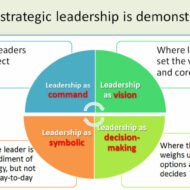
Strategic Leadership in Organizations Every person is bestowed with innumerable opportunities through-out his/her life time. Very few are able to identify those angelistic gateways to success; I don’t agree with the age-old saying “Opportunity knocks the door only once.” In this dynamic world we are in a position to create opportunities and build our businesses around to witness our dreams turning into reality. What is strategic leadership? Have you got the spark in you? What started as a small spark of starting an online book store has instigated Sachin and Binny Bansal to build the top most online retail selling platform Flipkart. Bharat Matrimony founder Murugavel Janakiraman identified the unexplored niche of prospective marriage alliances over the internet by creating an online portal which facilitated girls and boys to project their profiles suitably and search for the man or woman of their dreams with ease minus embarrassment. A spark or an idea is what is needed to get into the groove to achieve something that delivers value not only to the creator but to the public over a period of time. Strategic leaders are not born, they are definitely made; they learn from their mistakes, have an eye for chances, molded by the environment they are exposed to and groom themselves to adapt to the setting. What is Strategic Leadership? Strategic leadership provides the vision and direction for the growth and success of an organization. A strategic leader institutionalizes a vision and helps the members of the organization to learn how to convert the objectives into action. A strategic leader also helps to sustain the momentum and interest of the people working under him by exuding the passion towards accomplishing the objectives in the long run. Organizations steered by strategic leaders are more successful in learning, both at the individual and group levels. Both the administrative and visionary traits of leadership are essential for organization-wide learning initiatives to succeed. The organization always needs to learn new things and at the same time, to systematize newly discovered approaches of learning. Strategic leaders believe human capital as an important factor in innovation and the creation of core competencies, and they invest considerable effort sustaining the health of this resource. These leaders attach consideration in building their organization’s resources, capabilities and competencies in order to gain appropriate, sustained competitive advantages. Strategic leaders very well know that focusing on the short term and forgetting about core competencies in the face of changing circumstances will prove to deliver disastrous results. Top Ten Characteristics of a Strategic Leader: Mission focusedAbility to see the big pictureCapable of matching organization’s objectives with the changing environmentCreative approach to problem solvingFuturistic thinkingEmotionally IntelligentBuild a strong team of capable peopleClear about their choicesCombine analytical vigor with serendipityExcellent communicators 3 Key Responsibilities of Strategic Leadership Take Responsibility for Vision, Alignment and DeploymentCreate a Culture of EmpowermentBuild...
Posted by Managementguru in Accounting, Financial Accounting
on Aug 24th, 2014 | 0 comments
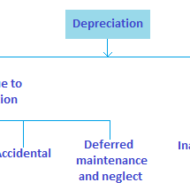
What is meant by Depreciation? It means reduction in the value of a fixed asset used in the business due to #wear and tear and effluxion of time. What is depreciation? Internal and External Causes of depreciation: i. Wear and tear: Caused mainly due to constant use, erosion, rust etc. ii. Efflux of time: Mere passage of time will cause a fall in the value of an asset, even if it is not used. iii. Obsolescence: A new invention or change in fashion or a permanent change in demand may render the asset useless. iv. Depletion: When raw materials or natural resources like mines, quarries and oil wells are extracted continuously, they deplete. v. Accident: An asset may reduce in value because of meeting with an accident, like fire accidents. vi. Fall in the market price. Watch this video on What Is Depreciation – How It Affects Profit And Cash Flow What is the necessity for providing depreciation? According to International Accounting Standard Committee (IASC) “Depreciation is the allocation of the depreciable amount of an asset over its estimated useful life. Depreciation for the accounting period is charged to income either directly or indirectly.” The need for depreciation arises because of the following reasons: To ascertain the true profit of the business for a particular periodTo show the asset at its true value in the balance sheetTo provide funds for replacement of the old asset with a new one Objectives of providing depreciation: To recover the cost incurred on fixed assets over its lifeTo facilitate the purchase of new asset, when the old asset is disposedTo find out the correct profit or loss for the particular periodTo find out correct financial position through balance sheet Factors to be considered while determining the amount of depreciation: I. The total cost of the asset including all freight, insurance and installation charges II. The estimated residual or scrap value at the end of its life III. Estimated number of years of its usefulness It is concerned with charging the cost of fixed assets to operations. But the term depletion refers to the cost allocation for natural resources, whereas the term amortization relates cost allocation for intangible assets. What are the various methods for depreciation? Fixed installment or Straight line or Original cost method.Diminishing Balance Method or Written down value method or Reducing Installment method.Annuity Method.Depreciation fund method or Sinking fund amortization fund method.Insurance policy method.Revaluation method.Sum of the year’s digits method (SYD).Double declining balance method.Depletion method. Related Posts : How to Manage Working Capital?Short Term...
Posted by Managementguru in Video Lecturers
on Aug 20th, 2014 | 0 comments

Know the secrets and tips to personality development, positive attitude and gaining unshakable confidence. ...