Posted by Managementguru in Business Management, Human Resource, Organisational behaviour, Training & Development
on Mar 30th, 2014 | 0 comments
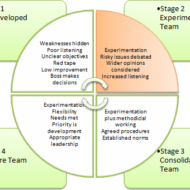
Ideal Team Development How to effect ideal team development? As the saying goes, there is no ‘I’ in TEAM WORK. Every organization should understand the importance and highlight the need for TEAM DEVELOPMENT amongst their employees. In a small group there are chances for the ‘WE’ feeling to predominate for obvious reasons. In case of larger groups as seen in big corporate, individual interaction becomes complex and gives rise to conflicts which hold back the progress. The “I” Factor: Even philosophers don’t support or advocate the “I” FACTOR in individuals. It is purely a result of SUPER EGO as Sigmund Freud has put it rightly. Man is a MYRIAD OF EMOTIONS and his mind always picks up wrong cues and signals perfectly. So, TRAINING plays a major part in tuning the individual’s mind or shall I say, SYNCHRONISING his understanding with that of the organisation’s. Try to clearly explain during the induction as to: What is the ultimate goal of your organization in terms of productivity? What is expected of each individual in his own capacity? What is the culture of the organization? What is the leader of the organization like? How do you interact with your team mates? Code of conduct and disciplinary procedures What is his role regarding the team’s development? Picture Courtesy: Popyourcareer.com Self Awareness: Self awareness is the key factor for the growth of any individual.A mind that is PHILOSOPHICALLY BENT would prove prosperity to the team as well as the organization. Western countries have realized the importance of keeping the mind cool which can be well achieved through MEDITATION AND YOGA. Sensitivity training is of paramount importance to any organization as an intervention for achieving the overall goals of the organization. Inter Personal Human Behavior: Effective human interactions are the backbone of efficient organizations and this is not possible unless the interpersonal human behavior is CONTROLLABLE AND OPEN TO DISCUSSION. There should always be SCOPE for improvement and SPACE to express one’s feelings and offer ideas, i.e., sense of participation must be groomed. Team leaders and Managers are to be suitably trained to steer their ship and also rewards are welcome to motivate the crew. Why don’t leaders experiment with new behavior of effective leadership casting away conservative methods and also design flexible norms? It will constitute for a well behaved group and paves way for your organization to be UNIQUE. While organizing a group, a manager should carry out the process with a humane perspective taking into account, the human values, vision, creative thinking and better means of motivation. These factors align and bind the organization together paving way for holistic thinking and collaborative...

Posted by Managementguru in Business Management, Entrepreneurship, Human Resource, Organisational behaviour, Principles of Management, Training & Development
on Mar 30th, 2014 | 0 comments

What are Values and Beliefs in an Organization? Organizational values are the guiding principles that define ethical behavior, decision-making, and corporate culture. In 2025, with AI integration, sustainability goals, and hybrid work models influencing businesses, values must evolve while staying authentic. Infosys Narayana Murthy on Value System “Our team was unique in its commitment to a strong value system. We believed in putting the interest of the company ahead of our own. We upheld ethical business practices and legal integrity. A robust value system is what distinguishes long-term players from others.” The emergence of ESG (Environmental, Social, and Governance) factors has reinforced the importance of ethical leadership. Core Values of a Future-Ready Organization Organizations in 2025 are actively reshaping core values to suit the dynamic business environment. These values guide employee behavior and corporate strategies: Customer-Centricity – Personalization and data-driven customer experience Employee Well-being – Work-life balance in remote and hybrid settings Competitiveness & Agility – Rapid adaptation to AI & automation Diversity & Inclusion – Creating equitable workplaces Innovation – Fostering technological advancements Sustainability – Environmentally responsible business practices Growth Mindset – Continuous learning and skill development Ethical Governance – Transparent and fair leadership Data Security & Privacy – Compliance with digital regulations Team Collaboration – Strong networks despite digital transformation Beyond Definition: How to Put Values into Action A value-driven company does not just define principles—it integrates them into daily operations, employee training, and leadership policies. Gamification of corporate learning, AI-assisted HR frameworks, and transparent communication drive successful implementation. Leading by Example: Imitation as a Behavioral Catalyst Leadership sets the tone for company culture. Employees subconsciously emulate the behaviors of their leaders, much like students learning from teachers. In 2025, AI-driven mentorship programs enable leaders to inspire teams remotely. Interactive training modules reinforce value-based decision-making. Imitation remains a cornerstone in shaping the workforce, but with enhanced digital engagement. Coercion is NOT the Right Approach: Ingraining Values from Day One Rather than enforcing values through rigid policies, organizations must instill them naturally. Values should be embedded in hiring strategies – Recruit for cultural alignment. Leadership training must focus on emotional intelligence – Influence without coercion. AI-driven behavioral analytics help detect gaps in value adherence early. With AI-enhanced work environments, molding employees to value-driven approaches becomes seamless. Influencing Employees the Right Way: The Role of Every Individual Each role in an organization contributes to reinforcing core values and ensuring long-term success: Clerical Staff – Maintain efficiency and ethical compliance. Supervisors – Organize, control, and enforce value alignment in teams. Managers – Define success, overcome obstacles, and inspire strategic thinking. Senior Leaders – Keep the organization focused on sustainable profitability. Executives – Drive innovation while navigating complexities with integrity. With AI tools and data-driven leadership, maintaining value alignment is easier than ever. Performance of Value-Oriented Organizations in 2025 Companies that prioritize values consistently outperform competitors due to trust, strong employee engagement, and sustainable innovation. Reliance Industries Limited exemplifies value-driven leadership with customer satisfaction at its core. Global firms integrate ESG and AI ethics into corporate strategies, reinforcing long-term credibility. To scale new heights in business, organizations need: ✅ Strong-willed leadership ✅ Adaptive strategies ✅ Sustainability-driven policies ✅ Digital transformation readiness ✅ Passion for innovation Maintaining integrity comes at a price, but organizations with strong values reap exponential rewards in brand reputation, employee loyalty, and customer...
Posted by Managementguru in Business Management, Decision Making, Financial Management, Human Resource, Principles of Management, Strategy
on Mar 30th, 2014 | 0 comments
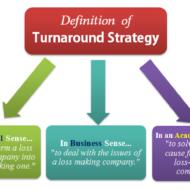
What is Turnaround Strategy Distress signals start flying around when a particular company, whether multinational, corporate or medium sized, is subjected to financial pressure and is at the brink of bankruptcy. What was happening all along? No body knows and nobody wants to be held responsible. The CEO has to bear the brunt and alas, extermination! Aim of Turn-around Strategy: The overall aim of a turn around strategy is to bring back a firm to normalcy which has been under distress in terms of acceptable levels of profitability, solvency, liquidity and cash flow. Turn around strategies should be very carefully formulated so as to stabilize the firm in distress, i.e., to bring the company out of the hole and then go for long term planning. Turn around can be in the form of operational efficiency management, financial restructuring, marketing management or savings in the form of cost reduction or liquidity in the form of asset reduction. Facebook Marketing: A Step-by-Step to Your First 1000 Fans! Turn around to see what is around: We have seen so many such occurrences at the global level and micro level. Some companies rejuvenate like a phoenix bird from the ashes, some go haywire, and some dissolve into thin air. It all depends how well you handle the situation with either the help of an external expert consultant or you might want to go for joint venture or collaboration in order to save you skin from mounting interest payments or you right royally sell the company if somebody is ready to takeover. Either way you have to do something! “Turn around to see what is around”. Don’t see what you want to see See what has to be seen Change the CEO (He is the Ideal Victim!) Resurrect your employees’ confidence Cut down costs Look for Alternatives Lie low for Sometime(till the situation favors) Slowly capture the market by innovative Campaigns and ads Paint a new picture about your company Review your Mission and Vision statements Work on targets Bang on the right target customers and clients Strengthen your Channel of Distributors Go smooth with the bankers (You need them always!) Have confidence in yourself Crisis management is necessary Stress busters like yoga and meditation mandatory Evolve Strategies One step at a time (Slow and steady) Fear and Panic grips the organization in situations of crisis. So the first step would be to stay cool to assess the situation by calmly reviewing the damage with all the concerned people. The next step would be to stop the bleeding by cutting all unwanted costs, unnecessary overheads, and the final stage would be renaissance, recovery, renewal or by whatever name you want to call it, even if it means negative investment or profit. Proper Planning, Inventory Control, Strategic prepositions, Renewal of old strategies in accordance with the situation, Tightening finance controls, Defining the credit management limits, all these are precautionary measures which will hold you from falling into the danger of handling a crisis situation, as” recovery of damaged integrity is going to cost you more than ploughing back your profits....
Posted by Managementguru in Business Management, Human Resource, Organisational behaviour, Principles of Management, Training & Development
on Mar 30th, 2014 | 0 comments
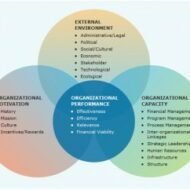
Organizational Assessment – Motive and Means Organizational assessment involves creating a picture of “what it is”. The snapshot should provide a clear view of the present position of the company and it should indicate whether there is a need to go for a change process. The data provides a baseline which can be used as a reference point to measure change in the future. Employee opinion surveys and climate surveys form a critical part of this measurement process. The key to an effective assessment is being clear about the goal of the process and being specific about the questions the intended exercise must answer. Cultural assessment: This provides information about core dimensions of organizational culture which includes satisfaction with the work itself, satisfaction with pay and benefits, opportunities for advancement, satisfaction with leadership and supervision, motivation, common values and performance commitment. If the leader proves to be aggressive, committed, value driven, so will be the employees who obviously take after their leader to fulfill his vision. The purpose behind analyzing the culture of an organization is to determine its efficiency level and to generate recommendations for continuous improvement. This exercise should not be a one-time affair as periodical inputs and feedback are excellent ways to align culture with the vision. In this way, management is better able to anticipate and prevent any potential problem, and to assess employee attitudes regularly. Survey administration: Surveys are administered to large groups of employees at one time and it is emphasized to be anonymous to erase any apprehensions in their minds. Open-ended questions allow employees to express their opinions about areas that need improvement and also the problem areas or bottlenecks that hinder their development. Report generation: The statistics collected is summarized and presented for each and every dimension covered in the survey. The report compares the organization’s current culture with previous administrations of the survey. Such open ended discussions bring out the problem areas which the management had not been previously aware of. Feedback to management and employees: The managers discuss the outcome of the survey in order to gain a better understanding of the various issues facing the organization, and decide on a plan to give feedback to their employees. This is a kind of human resource strategy which helps the management to bridge the gap between various levels of the organization and its members. Recommendations to the management: A final report submission by managers of the respective departments along with their recommendations for management’s perusal is the final step in organizational diagnosis and with the approval of “the big boss” action plans are executed that aid in improving the organizational effectiveness. The notion of this entire exercise is to provide insight into the current skill levels of the work force and to design an effective plan for performance improvement based on the assessment of total development needs....
Posted by Managementguru in Business Management, Change management, Human Resource, Organisational behaviour, Principles of Management, Project Management
on Mar 30th, 2014 | 0 comments
Effective people are preferred to rather than efficient people as the former does the right thing and the latter does things right. Redesigning your workplace not only refers to the infrastructure but also the internal factors that might affect the productivity of your firm. Big corporate firms generally face challenges in the form of Lack of co-operation between subunitsIncreasing complaints from the customersRising Operating costsDip in the moraleMajor changes in technology All these signs are indications of a not so enterprising organizational climate. And it calls for quick decision making regarding introducing some changes that bring some positive development in terms of improved efficiency and increase in productivity. Redesigning Workplace in Response to Exogenous Factors Growth of Organizations The challenges mentioned above may make an organization’s existing structure, management practice or its culture obsolete for the new situation. Growth of an organization should be a result of collaborative effort of all the units of an organization and it is objective and not subjective. An organization is comprised of different elements which interact in deciding the organizational effectiveness. The task or goal, technology, structure, people and the internal and external environment of the firm; all these coexist and hold the firm together. Be it a school, a hospital, a union, a club or a business enterprise the interactive nature of these elements make the process of managing very difficult. Medical tourism and business travel are becoming more popular in Asian countries as it increases the scope of collaboration of industries that can coexist to enjoy a win-win situation. Who is an Effective Manager ? An effective manager anticipates these challenges and proactively initializes a planned change. He strategically prepares the organization to be subject to planned change by manipulating the structure, technology and behavior. Understanding the dimensions of change helps him to manage change better as people are always resistant to change. Modern enterprises right from the start have to install and implement “systems” that are technologically most modern and hire suitable people who are techno-savvy; Because technology rules the world and the development of new software programmes and hardware components feed on themselves every day. Developing an Organization as a Whole Behavior of people is unpredictable but controllable. Individually oriented training and development programmes does not prove much to the benefit of the organization as it creates apprehensions in the minds of the individual that are related to the culture and attitude of his superior and subordinates. The idea of developing the organization as a whole through team building is a better perspective as it renews the enthusiasm of people working for you and as a team they feel more cohesive and adhered. Synergy plays its role in improving the interpersonal relationship amongst the team members. Firms are becoming more modern in their outlook. For instance, a showroom whose purpose is to showcase your products also provides entertainment by its aesthetic value. Only if the customer is impressed by the artistic way of your exhibit, will he enter your showroom. Change is inevitable and it improves the health of an organization. The focus should be on “total system change” and the orientation is towards achieving desired results as a consequence of planned activities. Flat Organizational Structure You would have come across the latest buzz word “flat organizational structure”. This is designed in order to bridge the gap between front line employees and the executive level. If there is only few levels of management, the process of communication is more effective, the art of delegation becomes mandatory and need for participation in the decision making process involves all the employees which in turn reduces bureaucracy. There is no set pattern...